
As a practitioner deeply involved in the specialized field of manufacturing ductile iron castings using the iron mold sand-coating process, I have encountered and resolved numerous technical challenges. Our product line includes critical automotive components such as engine crankshafts, brake calipers for heavy-duty vehicles, air suspension parts, and air compressor crankshafts. One particularly severe incident in October 2015 brought production to a halt and demanded a rigorous, systematic investigation. We were producing a 436 crankshaft model when, during the third production shift, a catastrophic quality failure occurred: 1,664 consecutive castings exhibited severe subsurface blowholes. The financial impact was immediate and significant, exceeding 120,000 RMB in direct losses. The defect was not only irreparable by machining but was also faintly visible on non-machined surfaces, representing a critical failure.
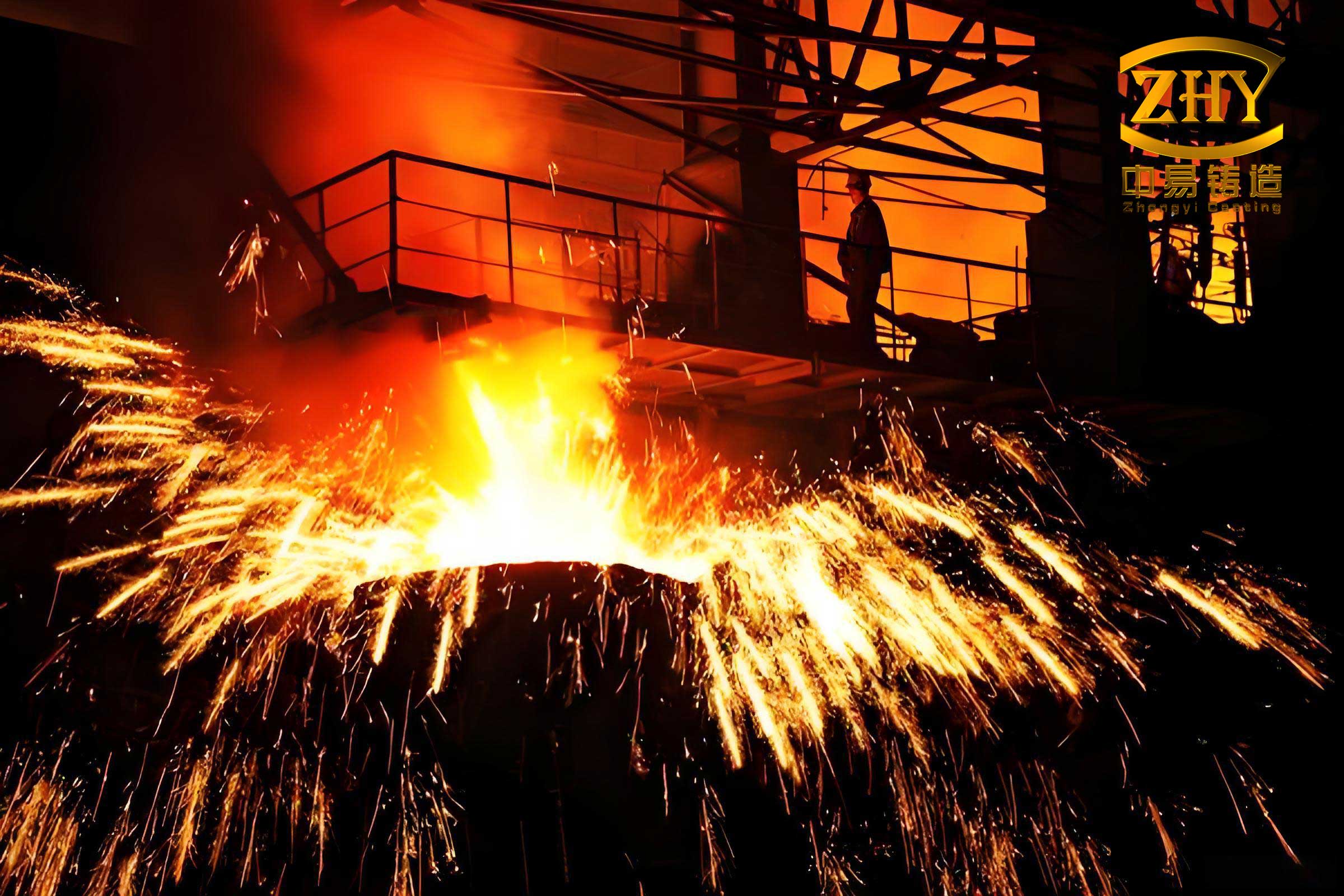
The urgency of the situation led to an immediate shutdown and the formation of a dedicated task force with full managerial backing and a mandate to identify the root cause within one week, regardless of cost. Our initial approach was grounded in the metallurgical principles governing subsurface blowhole formation in ductile iron castings. These defects are typically classified as either precipitated (from gases dissolving in the molten metal) or invasive (from gases generated in the mold cavity entering the metal). Given the sudden and batch-wise nature of the defect, an invasive source from the mold system was strongly suspected. We brainstormed and listed all potential contributing factors related to our specific iron mold sand-coating process.
Systematic Analysis of Potential Causes
The investigation was structured around a fault tree analysis, focusing on variables that could alter the gas generation or equilibrium at the metal-mold interface during the casting of ductile iron castings.
1. Raw Material and Melt Chemistry
Variations in charge materials or inoculants can subtly change the melt’s surface tension, affecting its resistance to gas invasion. Elements like nitrogen (N) and oxygen (O) increase surface tension, while elements like sulfur (S) and certain inoculants can decrease it. A lower surface tension facilitates the penetration of mold gases into the solidifying metal. Our first step was to verify the consistency of all charge materials, alloying elements, and the carbon equivalent (CE) for the affected batches compared to previous good batches. The chemical composition of ductile iron castings is critical, and even minor trace element shifts can have outsized effects.
2. Pouring Temperature
Higher pouring temperatures reduce the melt’s viscosity and surface tension, making it more susceptible to gas entrapment. Furthermore, excessive heat can dramatically increase the rate and volume of gas generation from the organic binder in the coated sand. We needed to scrutinize temperature logs and equipment calibration.
3. Sand Coating Properties (Resin Sand)
The heart of the iron mold sand-coating process is the thin layer of thermosetting resin-coated sand. Any deviation in its composition—especially the catalyst content—directly impacts its gas generation characteristics. Excessive gas evolution from the sand layer before the metal skin forms is a prime suspect for invasive blowholes in ductile iron castings.
4. Mold (Iron Type) Condition and Venting
Although the iron mold itself is non-permeable, the sand coating and the mold joints must allow gases to escape. Blocked vents or damaged mold seals could increase back-pressure in the cavity, forcing gases into the metal.
5. Process Change Points
A fundamental principle in quality troubleshooting is that a systematic failure requires a systematic cause. We operated on the assumption that a significant, undocumented change had occurred in the process chain leading up to the defective shift.
The Methodical Investigation Process
The task force directed a step-by-step verification of each hypothesis.
| Suspect Factor | Investigation Method | Finding | Status |
|---|---|---|---|
| Raw Materials & Melt Chemistry | Review of purchase orders, batch records, and spectral analysis data for C, Si, Mn, P, S, and trace elements. | No change in suppliers, batches, or recorded chemistry. All parameters within specification. | Ruled Out. |
| Pouring Temperature | Cross-calibration of pyrometers, review of furnace and pouring log sheets. | Recorded temperatures were within spec and consistent with previous shifts. | Initially Ruled Out. |
| Resin Sand Quality | Review of internal sand plant formula records for resin, catalyst, and other additives. | No documented changes in formulation or mixing ratios. | Initially Ruled Out. |
| Mold Condition & Venting | Physical inspection of molds and patterns used during the shift. | No recent repairs or damage found that would impair venting. | Ruled Out. |
| Process Records & Operator Input | Interview with operators from molding, closing, and pouring stations; review of all production logs. | No anomalies reported or recorded. Microstructure (nodule count and shape) was normal. | No Clear Lead. |
The initial排查 was frustratingly inconclusive. With obvious causes eliminated, we focused on the two most likely, yet unverified, culprits: actual pouring temperature (despite records) and the resin sand’s behavior. We designed controlled experiments.
Experiment 1: Varying Pouring Temperature
Holding all other parameters constant, we systematically reduced the furnace tap temperature in 10°C increments from the standard 1540°C down to 1500°C. The result was counterproductive: lower temperatures led to dross and slag defects, but the subsurface blowholes in the ductile iron castings persisted unabated. This confirmed that temperature was not the primary root cause, though it could be a contributing factor for other defects.
Experiment 2: Isolating the Resin Sand Variable
We turned our attention to the resin sand. The catalyst used in our phenolic resin-coated sand is hexamethylenetetramine, commonly known as urotropine or hexamine. Its decomposition at high temperatures is a well-documented source of hydrogen and nitrogen, which can lead to fine, clustered subsurface pores. The chemical reactions are as follows:
$$ \text{(CH}_2\text{)}_6\text{N}_4 \xrightarrow{\Delta} \text{Gas Products (including NH}_3\text{)} $$
$$ 2\text{NH}_3 \rightleftharpoons \text{N}_2 + 3\text{H}_2 $$
The small, round, clustered nature of the pores in our castings perfectly matched the description of hydrogen-nitrogen blowholes. We initiated a tight-loop experiment: a technician was sent to supervise the production of a single batch of resin sand from start to finish under strict adherence to the standard formula. This “known-good” sand was then used in a trial production run. The result was definitive: zero subsurface blowholes. Repeating this with several small batches confirmed the finding. The problem was isolated to the sand plant.
Root Cause Identification: A Discrepancy in Records
With evidence pointing squarely at the resin sand, an audit was launched. While the formula records showed no change, a meticulous cross-check between the inventory withdrawal logs for hexamine and the sand plant’s usage logs revealed a critical discrepancy. For the period covering the defective sand batch, approximately 23% more hexamine had been withdrawn from the warehouse than was recorded as being used in production.
This pointed to a human factor: an operator had likely overdosed the catalyst and falsified the records to hide the deviation. To confirm, we deliberately produced a batch of sand using the hexamine quantity indicated by the withdrawal records. Castings produced with this sand immediately exhibited the characteristic subsurface blowholes. The root cause was confirmed: excessive hexamine catalyst in the resin-coated sand, leading to excessive generation of $\text{N}_2$ and $\text{H}_2$ gas during pouring, which invaded the solidifying skin of the ductile iron castings.
Corrective and Preventive Actions
The following immediate and long-term measures were implemented to prevent recurrence in the production of ductile iron castings:
- Catalyst Dosage Limit: The technical standard was formally revised to state that the hexamine catalyst addition must not exceed 15% of the resin weight under any circumstances.
- Strict Process Adherence & Auditing: A plant-wide campaign reinforced the absolute necessity of following documented procedures. A strict penalty system for violating critical process parameters (process “red lines”) was established.
- Enhanced Material Traceability Protocol: A new rule mandated a two-point check for all raw materials: (a) verifying that the batch number used in production matched the batch number received from inventory, and (b) reconciling the physical quantity of material consumed with the recorded usage logs to detect any unexplained variance.
A Secondary Critical Factor: Iron Mold Temperature
Months later, a smaller but significant recurrence (10.2% defect rate in one shift) provided another vital lesson. Traceability led to specific pouring batches and, subsequently, to the molds used. Investigation revealed an uncontrolled variable: the pre-heat temperature of the iron molds themselves. The standard required a mold temperature between 200°C and 280°C before sand coating. However, due to cold winter conditions, the molds for the affected batches were measured at only 110°C to 170°C.
This low temperature prevented the thermosetting resin sand from fully curing during the coating process, leaving “green” or under-cured sand. Upon contact with the molten iron, this under-cured sand generated a much larger volume of gas instantaneously, overwhelming the venting system and again causing invasive blowholes. The correlation was proven: using under-heated molds produced defects; pre-heating the same molds to the proper specification eliminated them.
This led to an additional permanent countermeasure: the implementation of a mandatory mold pre-heating station to ensure every iron mold reaches the specified temperature range before entering the coating line, regardless of ambient conditions.
Conclusion and Technical Summary
Resolving subsurface blowholes in ductile iron castings produced via the iron mold sand-coating process requires a disciplined approach that considers the intricate interplay between metallurgy and mold materials. This case underscores two paramount factors:
- Resin Sand Catalyst Control: Precise control of the hexamine catalyst level is non-negotiable. Excessive catalyst leads to decomposition gases ($\text{N}_2$ and $\text{H}_2$) that directly cause invasive subcutaneous porosity. The relationship can be seen as a function of gas pressure ($P_{gas}$):
$$ P_{gas} \propto C_{hex} \cdot e^{-E_a/(R T)} $$
where $C_{hex}$ is the hexamine concentration, $E_a$ is the activation energy for decomposition, $R$ is the gas constant, and $T$ is the temperature at the metal-sand interface. Controlling $C_{hex}$ is the primary lever to manage $P_{gas}$.
- Iron Mold Thermal Management: Adequate mold pre-heat temperature ($T_{mold}$) is essential for complete sand curing. Incomplete curing creates a reservoir of high gas potential. The curing degree ($\alpha$) can be conceptually related to temperature and time:
$$ \alpha = 1 – \exp(-k(T_{mold}) \cdot t_{cure}) $$
where $k$ is a temperature-dependent rate constant. A low $T_{mold}$ results in a low $\alpha$, leaving uncured resin that generates gas explosively upon contact with molten iron.
| Control Parameter | Target Range / Limit | Effect of Deviation | Monitoring Method |
|---|---|---|---|
| Hexamine Catalyst (% of Resin) | ≤ 15% | >15%: High risk of H2/N2 blowholes. | Strict weighing logs, inventory reconciliation. |
| Iron Mold Pre-heat Temperature | 200°C – 280°C | <200°C: Risk of under-cured sand and explosive gas generation. | Direct pyrometer measurement before coating. |
| Pouring Temperature | Process Specific (e.g., ~1540°C tap) | Too High: Lowers metal surface tension, increasing gas invasion risk. Too Low: Promotes slag and misrun defects. |
Calibrated pyrometers, automated logging. |
| Sand Coating Curing | Full, uniform cure | Under-cure: High, instantaneous gas evolution. | Visual inspection, mold temperature control. |
By implementing rigorous controls on these parameters—particularly through material accountability and thermal process stability—the chronic issue of subsurface blowholes in our ductile iron castings was permanently resolved. This experience highlights that robust process control, combined with a culture of strict procedural adherence and thorough traceability, is fundamental to achieving consistent high quality in complex casting operations. The production of reliable ductile iron castings demands vigilance at every stage, from the sand mixing room to the mold pre-heat station.