
The pursuit of perfection in metal casting is a relentless endeavor, and nowhere is this more critical than in the production of high-integrity components for demanding applications. Among various casting processes, investment casting stands out for its ability to produce complex, near-net-shape parts with excellent surface finish and dimensional accuracy. However, this precision is constantly threatened by internal flaws, with porosity being one of the most pervasive and detrimental defects. From my extensive experience on the foundry floor, I have observed that porosity can single-handedly undermine yield rates, increase scrap costs, and compromise the performance of safety-critical components. This article delves deep into the nature of porosity in investment casting, systematically analyzes its root causes from a practical, first-hand perspective, and formulates a comprehensive set of improvement strategies backed by theoretical principles and empirical data.
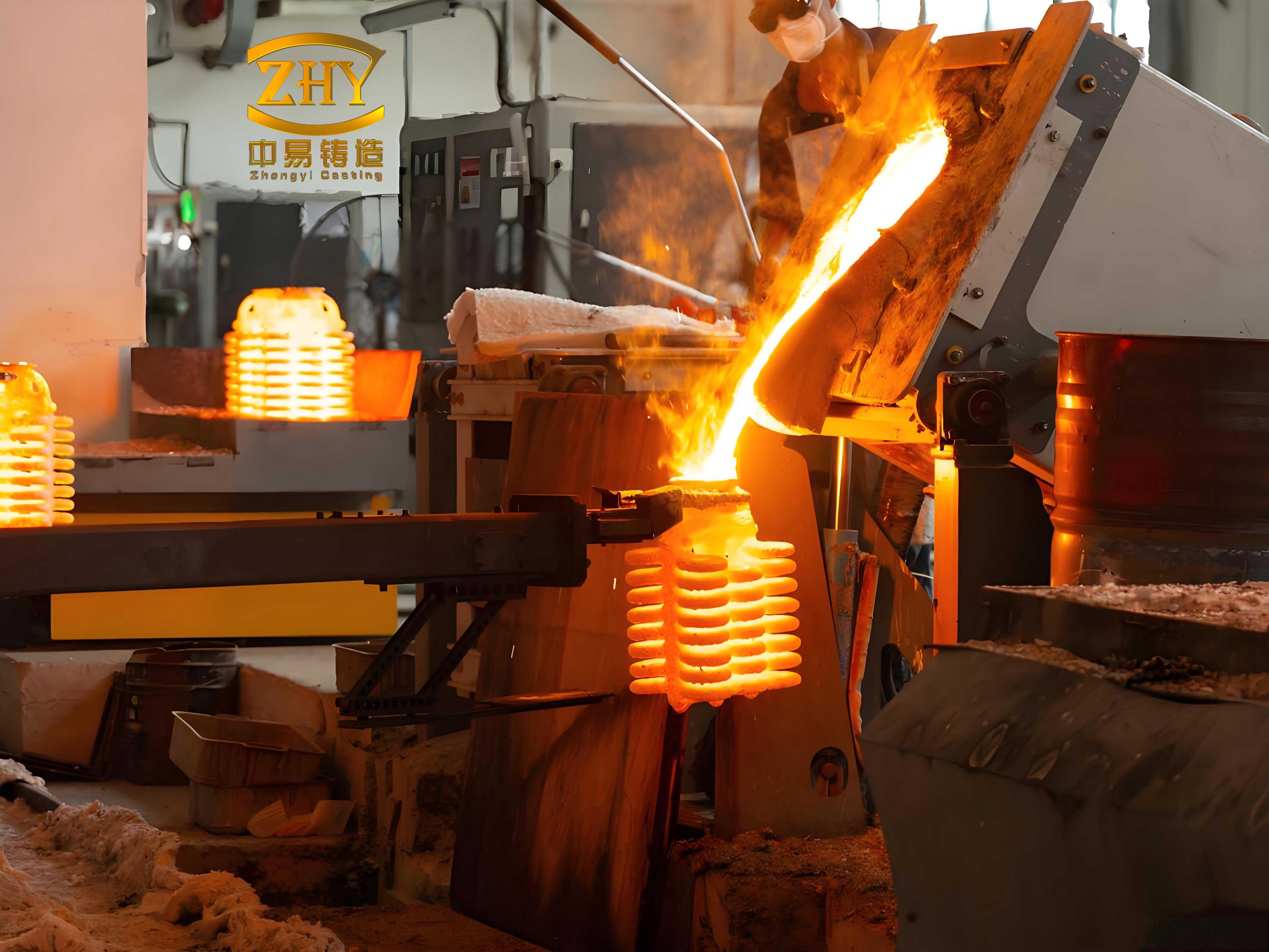
The fundamental principle of investment casting—creating a ceramic shell around a wax pattern, which is then melted out and filled with molten metal—inherently creates conditions where gases can become trapped. The fight against porosity is a fight against these gases at every stage: during shell creation, metal melting, and the final pour. A holistic understanding is required, viewing the process not as discrete steps but as an interconnected system where a deviation in one parameter can cascade into a defect in the final casting.
1. Deconstructing Porosity: Types and Formation Mechanisms
Not all pores are created equal. Effective troubleshooting in investment casting begins with correctly identifying the type of porosity, as each points to a different failure in the process chain. Broadly, we categorize them into three primary types, each with a distinct signature and cause.
| Porosity Type | Typical Location & Morphology | Primary Source of Gas | Key Influencing Process Factors |
|---|---|---|---|
| Included Gas (or Inert Gas) Porosity | Spherical or oval, smooth walls, often in upper sections or isolated pockets. | Air or inert gas (N₂, Ar) entrained during turbulent pouring or from furnace atmosphere. | Pouring system design, gating velocity, furnace cover gas pressure. |
| Shrinkage Porosity | Irregular, dendritic or spongy structure, often in last-to-freeze regions (hot spots). | Not a gas defect per se, but cavity formation due to lack of feed metal during solidification. | Alloy solidification range, casting geometry, feeder (riser) design and placement. |
| Reaction Porosity (Micro-porosity/Pinholes) | Small, often subsurface, may be oxidized. Can be scattered or localized. | Chemical reaction between melt and mold/binder (e.g., H₂O + Al → H₂) or within melt (e.g., C + O → CO). | Mold binder chemistry, alloy cleanliness (O, H content), metal-mold reactivity. |
In many practical scenarios, especially in ferrous investment casting, the defects encountered are often a combination, particularly of included and reaction gases. The solubility of gases like hydrogen and nitrogen decreases dramatically as the metal transitions from liquid to solid. The governing relationship for the ideal gas law is foundational:
$$ PV = nRT $$
Where $P$ is pressure, $V$ is volume, $n$ is the number of moles of gas, $R$ is the gas constant, and $T$ is temperature. During solidification, if the local gas pressure $P_{gas}$ built up from dissolved gas exceeding solubility exceeds the sum of ambient pressure and metallostatic pressure, a pore will nucleate and grow:
$$ P_{gas} > P_{atm} + \rho g h $$
Here, $\rho$ is the metal density, $g$ is gravity, and $h$ is the height of metal above the point of interest. The rate of pore growth can be approximated by diffusion-controlled growth models.
2. Systemic Root Cause Analysis: A Foundry Process Audit
When faced with a chronic porosity issue, a systematic audit of the entire investment casting process is indispensable. The following breakdown aligns common foundry observations with the underlying physical and chemical failures.
2.1 Shell-Related Causes: The First Barrier
The ceramic shell is not merely a negative mold; it is a reactive, porous membrane that must manage heat and gas evolution. Key failure modes include:
- Inadequate Dewaxing & Firing: Incomplete removal of wax residue (carbonaceous material) from low-temperature dewaxing leaves a high gas potential. Subsequent firing at insufficient temperature or time fails to develop sufficient ceramic sintering and permeability. The shell remains “green” with high residual volatiles.
- Low Permeability: This is a function of shell composition, particle size distribution, and layer count. Dense slurries, excessive stucco fines, or too many seal coats can create a nearly impermeable barrier. Darcy’s law for flow through a porous medium highlights the critical parameters:
$$ Q = \frac{k A \Delta P}{\eta L} $$
Where $Q$ is the gas flow rate, $k$ is the intrinsic permeability of the shell, $A$ is the area, $\Delta P$ is the pressure differential, $\eta$ is the gas viscosity, and $L$ is the shell thickness. A low $k$ or high $L$ severely restricts $Q$, trapping gas. - High Gas Generation from Binders: Certain organic binders or additives in shell coats, if not fully fired, decompose during metal pour, generating large volumes of gas at the worst possible moment.
2.2 Metal Preparation & Melting: The Source of Internal Gas
The melt chemistry and handling are paramount. For alloys like steel or cast iron in investment casting, the primary culprits are hydrogen and oxygen.
- Charge Contamination: Using rusty, oily, or damp charge materials (returns, scrap, alloys) introduces hydrogen (from moisture $H_2O$) and oxygen. The reaction $2Al + 3H_2O \rightarrow Al_2O_3 + 3H_2$ is particularly potent for hydrogen pickup if aluminum is present as a deoxidizer.
- Insufficient Deoxidation & Degassing: Failure to properly deoxidize (e.g., with Al, SiCa, etc.) leaves oxygen in solution, which can later combine with carbon to form CO gas during solidification: $[C] + [O] \rightarrow CO_{(g)}$. This is a classic reaction for pinhole formation in steels.
- High Pouring Temperature Discrepancy: While a high superheat improves fluidity, it also increases gas solubility in the melt ($S_g \propto e^{-\Delta H/RT}$, where $S_g$ is solubility and $\Delta H$ is heat of solution). If not paired with effective degassing, more gas is held in solution, ready to precipitate upon cooling.
2.3 Pouring & Solidification Dynamics: The Final Trap
This is where all prior preparations are put to the test. Improper pouring parameters can create porosity even from a good shell and sound metal.
- Sub-Optimal Pouring Temperature: Too low a temperature increases viscosity $\eta$, dramatically reducing the ability of entrapped bubbles to float out (Stokes’ Law velocity: $v \propto d^2 / \eta$). Too high a temperature can increase metal-mold reaction rates and shrinkage problems.
- Improper Pouring Speed: A slow pour leads to excessive heat loss and metal skin formation, blocking escape paths for gas. A turbulent, fast pour entraps air in the metal stream itself. There is a critical “gate velocity” to avoid turbulence, often related to the Reynolds number: $Re = \frac{\rho v D}{\eta}$.
- Inadequate Gating/Risering: A gating system that does not promote laminar flow or directional solidification towards a riser can trap gas in isolated pockets and exacerbate shrinkage porosity, which can sometimes be mistaken for gas defects.
3. A Structured Improvement Framework: From Theory to Practice
Based on the analysis above, countermeasures must be equally systematic. The following framework outlines actionable strategies, categorized by the process stage they address.
| Process Stage | Improvement Action | Mechanism & Target | Key Control Parameters & Quantitative Guidance |
|---|---|---|---|
| Shell Making & Preparation | Optimize Firing Cycle | Remove volatiles, develop permeability, sinter ceramic. | Increase peak temperature to 900-1000°C. Extend hold time (e.g., 2.0-2.5 hrs). Ensure no “black core”. |
| Enhance Shell Permeability | Increase gas escape rate $Q$ (Darcy’s Law). | Adjust stucco grit size distribution. Optimize slurry viscosity. Minimize seal coats. Consider drainable backing layers. | |
| Control Binder Chemistry | Reduce high-temperature gas evolution. | Use low-residual binders. Ensure complete polymer burnout during dewaxing/firing. | |
| Metal Melting & Treatment | Implement Rigorous Charge Control | Minimize source of H₂O, oil, rust. | Pre-heat charge materials (>200°C). Use clean, processed returns. Store alloys in dry conditions. |
| Enforce Effective Degassing/Deoxidation | Reduce dissolved [H] and [O] content. | Use vacuum melting or argon purging. Employ balanced deoxidizers (e.g., Al + SiCa). Perform reduced pressure test for aluminum alloys. | |
| Optimize Pouring Temperature Window | Balance fluidity vs. gas solubility & reaction kinetics. | Establish a process-specific window (e.g., 1550-1600°C for steel). Use calibrated pyrometry. | |
| Pouring & Solidification | Optimize Pouring Speed/Time | Minimize air entrainment while avoiding premature freezing. | Use poured weight vs. time studies. Target a fill time that avoids turbulence (e.g., 3-4 sec for a cluster). Design for gating ratio to control velocity. |
| Enhance Casting Orientation & Venting | Promote natural gas escape and directional solidification. | Tilt molds to position thick sections/risers high. Consider strategic shell vents or permeable ceramic filters in the gating system. |
3.1 Quantitative Relationships and Process Windows
The success of these measures often hinges on finding the correct quantitative balance. For instance, the relationship between shell firing, gas evolution, and metal pour is time-dependent. The gas evolution rate from the shell $G(t)$ must be managed so that peak evolution occurs when the metal is still highly fluid, allowing time $t_{ex}$ for escape. We can model a simplified requirement:
$$ \int_{0}^{t_{skin}} G(t) dt < \phi \cdot k \cdot A \cdot \frac{\Delta P_{max}}{\eta L} \cdot t_{ex} $$
Where $t_{skin}$ is the time to form a solid skin, $\phi$ is a geometric factor, and $\Delta P_{max}$ is the maximum safe pressure at the metal-shell interface. Increasing firing temperature and time reduces the integral on the left (total gas generated). Increasing permeability $k$ and time $t_{ex}$ (by faster pouring) increases the right-hand side capacity.
For the metal, the critical solidification parameter is the **Niyama criterion**, often used to predict shrinkage porosity but also indicative of gas pore susceptibility in fed regions:
$$ N_y = \frac{G}{\sqrt{\dot{T}}} $$
Where $G$ is the temperature gradient and $\dot{T}$ is the cooling rate. A low Niyama value indicates a mushy zone conducive to both shrinkage and gas pore entrapment. Process improvements that increase $G$ (e.g., mold preheat control, chills) or reduce local solidification time can be beneficial.
4. Case Integration and Expected Outcomes
Implementing the above framework as an interconnected system, rather than isolated fixes, yields dramatic results. A holistic intervention might involve:
- Shell Reformulation: Switching to a more permeable stucco system and extending the high-temperature firing soak.
- Melt Practice Overhaul: Instituting charge pre-heating, standardized deoxidation additions, and argon stirring for degassing.
- Pouring Parameter Optimization: Using data loggers to establish a precise temperature-speed window that ensures rapid, non-turbulent filling.
The quantitative outcome of such a systemic approach in an investment casting operation is typically a step-change reduction in defect rates. Where porosity-related scrap might have been chronically at 8-10%, implementation of these measures can consistently yield scrap rates below 3%, with many batches achieving near-zero porosity. The economic impact is profound, but more importantly, the reliability and performance of the cast components are significantly enhanced, solidifying the reputation of investment casting as a premier method for manufacturing high-integrity metal parts.
In conclusion, defeating porosity in investment casting is a battle fought on multiple fronts. It requires a deep understanding of materials science, fluid dynamics, and heat transfer, applied with disciplined process control. By viewing the shell, the metal, and the pour as an integrated system and methodically addressing the root causes in each domain, foundries can transform porosity from a costly variable into a well-controlled parameter, unlocking the full potential of the investment casting process.