
The pursuit of optimal surface properties in engineering components is a constant endeavor in manufacturing. Among various surface enhancement techniques, induction hardening stands out for its ability to locally impart high hardness and wear resistance with minimal distortion. A critical, yet sometimes overlooked, aspect of this process is its profound influence on surface topography. This article delves into a detailed investigation of how planar induction hardening specifically affects the surface roughness of components manufactured from spheroidal graphite iron. The implications are significant: if the process can consistently improve surface finish to meet specified thresholds, secondary finishing operations like grinding can be eliminated, leading to substantial cost savings and streamlined production.
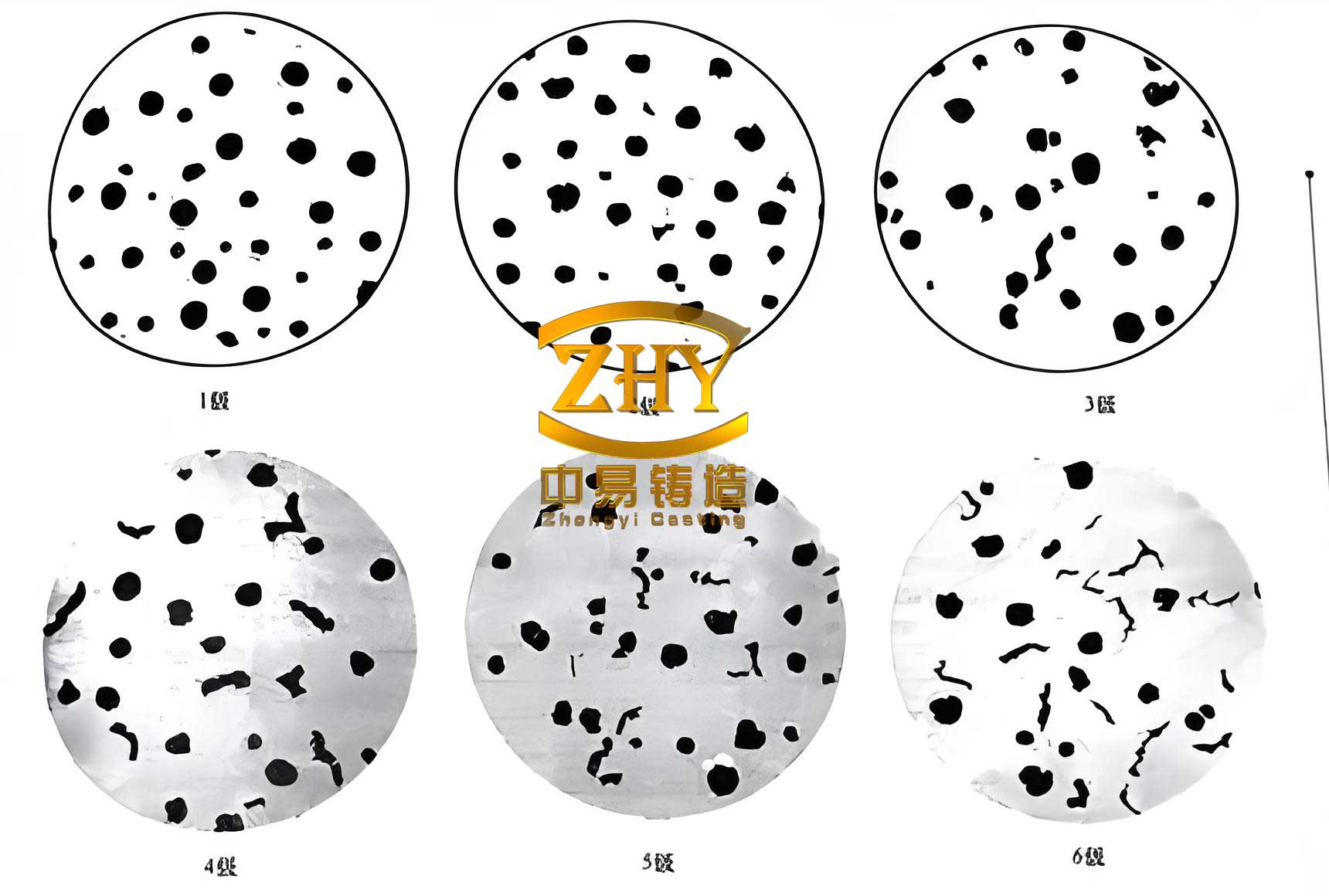
Spheroidal graphite iron, particularly grades like QT700-2, is favored for its excellent combination of strength, ductility, and castability, making it ideal for demanding applications such as gear hubs, where high contact stresses are encountered. In a specific case, a gear hub component made from spheroidal graphite iron QT700-2 required planar induction hardening on both its end faces. These faces are in contact with plane bearings, necessitating a surface roughness value of Ra ≤ 0.8 μm to ensure proper lubrication and minimize wear. Machining via precision turning typically achieves a surface roughness of Ra ≈ 1.6 μm for spheroidal graphite iron. The conventional route to achieve the finer 0.8 μm finish would involve a subsequent grinding operation. This study was conceived to critically evaluate whether the induction hardening process itself could bridge this roughness gap, thereby potentially rendering the grinding step superfluous.
1. Experimental Methodology: Quantifying the Topographic Shift
The experimental procedure was meticulously designed to isolate and measure the effect of induction hardening on surface roughness. The material under investigation was spheroidal graphite iron, grade QT700-2, with its characteristic microstructure of graphite nodules in a ferritic-pearlitic or tempered matrix. A batch of ten precision-turned gear hubs was prepared as test specimens.
| Stage | Activity / Parameter | Details / Value |
|---|---|---|
| Material & Initial State | Base Material | Spheroidal Graphite Iron, QT700-2 |
| Initial Machining | Precision Turning | |
| Target Initial Roughness | Ra ≈ 1.6 μm (for both Face A and Face B) | |
| Pre-Hardening Measurement | Equipment | Stylus-type Surface Roughness Profilometer |
| Measured Parameter | Arithmetic Mean Roughness (Ra) | |
| Procedure | Multiple traces on both Face A and Face B of all 10 specimens; data recorded. | |
| Induction Hardening Process | Equipment | Ultra-high Frequency (30-40 kHz) Induction Generator |
| Process Type | Planar (Face) Hardening | |
| Target Case Depth | 2.2 mm | |
| Resultant Surface Hardness | 55 – 58 HRC | |
| Post-Hardening Treatment | Low-Temperature Tempering | |
| Post-Hardening Measurement | Equipment & Parameter | Same Profilometer, Ra measurement |
| Procedure | Identical measurement locations on Faces A and B after hardening and tempering. |
The core of the experiment followed a simple before-and-after protocol. First, the initial surface roughness (Ra) of both functional faces (designated Face A and Face B) on all ten spheroidal graphite iron specimens was meticulously measured using a calibrated stylus profilometer. Subsequently, the faces underwent induction hardening using an ultra-high frequency (30-40 kHz) power source, optimized to produce a hardened case depth of approximately 2.2 mm with a surface hardness of 55-58 HRC, followed by a standard tempering cycle to relieve stresses. Finally, the surface roughness was measured again on the same faces at consistent locations.
2. Results and Data Analysis: A Clear Trend of Improvement
The data collected presents unequivocal evidence of surface topography modification. The table below summarizes the roughness values for each specimen face before and after the induction hardening of the spheroidal graphite iron component.
| Specimen ID | Face A Roughness Ra (μm) | Face B Roughness Ra (μm) | ||||
|---|---|---|---|---|---|---|
| Before | After | Δ (After – Before) | Before | After | Δ (After – Before) | |
| 1 | 1.211 | 0.360 | -0.851 | 1.216 | 0.427 | -0.789 |
| 2 | 1.280 | 0.679 | -0.601 | 1.256 | 0.516 | -0.740 |
| 3 | 1.242 | 0.485 | -0.757 | 1.236 | 0.476 | -0.760 |
| 4 | 1.201 | 0.406 | -0.795 | 1.219 | 0.423 | -0.796 |
| 5 | 1.235 | 0.456 | -0.779 | 1.227 | 0.446 | -0.781 |
| 6 | 1.226 | 0.424 | -0.802 | 1.246 | 0.431 | -0.815 |
| 7 | 1.218 | 0.419 | -0.799 | 1.233 | 0.428 | -0.805 |
| 8 | 1.263 | 0.532 | -0.731 | 1.252 | 0.493 | -0.759 |
| 9 | 1.251 | 0.492 | -0.759 | 1.231 | 0.467 | -0.764 |
| 10 | 1.257 | 0.509 | -0.748 | 1.235 | 0.473 | -0.762 |
| Average | 1.238 | 0.476 | -0.762 | 1.235 | 0.458 | -0.777 |
The results are striking. The average surface roughness for Face A improved from Ra = 1.238 μm to Ra = 0.476 μm, an average reduction (Δ) of -0.762 μm. Similarly, Face B showed an improvement from Ra = 1.235 μm to Ra = 0.458 μm, an average reduction of -0.777 μm. Critically, the post-hardening roughness values for all measured faces on the spheroidal graphite iron parts were consistently below the required Ra = 0.8 μm threshold. This statistical evidence strongly suggests that for this grade of spheroidal graphite iron, planar induction hardening is not merely a hardening process but also an effective surface finishing operation.
3. Theoretical Mechanisms Governing Surface Smoothing
The observed reduction in surface roughness can be attributed to a confluence of thermal, metallurgical, and mechanical phenomena intrinsic to the rapid induction heating and quenching cycle. Surface roughness is fundamentally a measure of the vertical deviations of a real surface from its ideal form. Key parameters include the height of peaks ($R_p$), the depth of valleys ($R_v$), and the arithmetic mean of absolute values ($R_a$). The induction hardening process modifies these micro-geometrical features through several mechanisms:
3.1. Peak Tip Melting and Rounding
During induction heating, energy is concentrated at the surface due to the skin effect. The extremely high heating rates can cause the microscopic asperities, especially the sharp peaks, to reach temperatures exceeding the austenitization point and even approach or briefly surpass the solidus temperature of the spheroidal graphite iron matrix. These peak tips can undergo localized melting or extreme thermal softening. Upon subsequent rapid quenching, these rounded or melted peaks solidify, effectively reducing the peak height ($R_p$). This can be conceptually modeled as a reduction in the effective peak curvature.
3.2. Relief of Machining-Induced Residual Stresses
The turning operation leaves a surface layer with plastic deformation and associated compressive residual stresses, particularly in the valley regions. The heating cycle during induction hardening provides the thermal activation energy for stress relaxation. As these locked-in compressive stresses are relieved, the material in the valleys experiences a slight elastic recovery or micro-expansion. This phenomenon elevates the valley floor, effectively increasing the valley depth parameter ($R_v$) in a relative sense, or more accurately, reducing the depth relative to the new, lower peaks. The net effect is a decrease in the peak-to-valley distance.
3.3. Microstructural Transformation and Grain Refinement
The core of induction hardening is the phase transformation from ferrite/pearlite to austenite and then to martensite. This transformation is accompanied by a volumetric expansion. More importantly, the rapid heating restricts austenite grain growth, leading to a very fine-grained austenite which transforms into an even finer martensitic structure. This grain refinement occurs uniformly but has a pronounced effect in the sub-surface region, including the valleys. The collective volumetric change and the refined microstructure can induce subtle but critical changes in the surface topology, contributing to the overall smoothing effect. The transformation-induced strain ($\epsilon_t$) can be a factor in the final surface conformation.
We can synthesize these effects into a simplified conceptual model. Let the initial profile height be $z_i(x)$. The induction hardening process applies a transformation function $H$ that modifies this profile to a final state $z_f(x)$.
$$ z_f(x) = H(z_i(x)) = z_i(x) – M(z_i(x)) + S(z_i(x)) + T(z_i(x)) $$
where:
- $M(z_i(x))$ represents the melting/rounding function, dominant where $z_i(x)$ is high (peaks).
- $S(z_i(x))$ represents the stress-relief expansion function, dominant where $z_i(x)$ is low (valleys).
- $T(z_i(x))$ represents the transformation strain function, acting on the entire surface but influenced by local geometry and heat transfer.
The combined action of $H$ results in a reduction of the standard roughness metrics. For the arithmetic mean roughness:
$$ R_{a,\ final} = \frac{1}{L} \int_0^L |z_f(x) – \bar{z}_f| , dx \quad < \quad R_{a,\ initial} = \frac{1}{L} \int_0^L |z_i(x) – \bar{z}_i| , dx $$
This inequality, $R_{a,\ final} < R_{a,\ initial}$, is consistently validated by the experimental data on spheroidal graphite iron.
4. Broader Implications and Comparative Advantages
The ability of induction hardening to improve surface finish has substantial practical implications, extending beyond the specific case of spheroidal graphite iron gear hubs.
4.1. Cost and Process Efficiency
Eliminating a grinding operation translates to direct savings in capital equipment costs, tooling (grinding wheels), labor, energy consumption, and process time. It also simplifies the production flow and reduces work-in-process inventory. Furthermore, induction hardening itself is an energy-efficient process with high thermal efficiency ($\eta_{th}$), often estimated between 60-80% for high-frequency applications, compared to the 30-50% typical of conventional furnace-based treatments for spheroidal graphite iron. The combined energy savings can be significant.
$$ E_{savings} \approx E_{grinding} + (E_{furnace} – E_{induction}) $$
Where $E_{grinding}$ is the energy for the omitted grinding step, $E_{furnace}$ is the energy for a potential through-hardening furnace treatment, and $E_{induction}$ is the energy for the selective hardening.
4.2. Enhanced Component Performance
The benefits are not merely economic. The surface produced by induction hardening on spheroidal graphite iron is often superior from a functional standpoint. The rapid, direct quenching (often using integrated spray quenches) promotes a uniform, fully martensitic case with high hardness and minimal soft spots. The fine martensitic structure, combined with the improved surface finish (lower Ra), enhances fatigue strength and wear resistance. The reduced likelihood of stress concentration from sharp micro-notches (smoothed peaks) directly contributes to improved fatigue life, governed by equations like:
$$ \Delta \sigma_f \propto \frac{1}{\sqrt{R_a}} $$
where $\Delta \sigma_f$ is the fatigue strength range. A lower $R_a$ directly implies a higher potential fatigue limit for the spheroidal graphite iron component.
4.3. Comparison with Other Heat Treatments
It is instructive to contrast induction hardening with other common surface treatments for spheroidal graphite iron:
| Heat Treatment Process | Typical Effect on Surface Roughness (Ra) | Primary Contributing Factors |
|---|---|---|
| Planar Induction Hardening | Significant Improvement (Decrease) | Peak melting, stress relief, phase transformation. |
| Carburizing & Quenching | Often Degrades (Increases) | High-temperature, long-cycle exposure leading to oxidation and potential carburizing inhomogeneity. |
| Through Hardening (Furnace Quench) | Minor Degradation or No Change | Oxidation and possible distortion from slower, less uniform quenching. |
| Nitriding (Gas or Plasma) | Minor Improvement or No Change | No phase transformation; can sometimes fill valleys with compound layer. |
| Laser Hardening | Can Improve or Degrade | Highly dependent on scan strategy; can cause rippling or remelt smoothing. |
This comparison highlights the unique position of induction hardening as a process that concurrently enhances both mechanical properties and surface finish for spheroidal graphite iron components.
5. Conclusion and Industrial Relevance
This detailed investigation confirms that planar induction hardening induces a definitive and beneficial modification of the surface topography of spheroidal graphite iron components. The experimental data demonstrates an average improvement in surface roughness (Ra) from approximately 1.24 μm to below 0.48 μm, successfully meeting a stringent 0.8 μm specification without any post-hardening finishing. The underlying mechanisms—comprising the melting and rounding of microscopic peaks, the relief of machining-induced residual stresses in the valleys, and the volumetric effects of a fine-grained martensitic transformation—act in concert to smooth the surface.
The implications for manufacturing are profound. For designers and process engineers working with spheroidal graphite iron, induction hardening should be evaluated not only as a solution for wear resistance and fatigue strength but also as a potential substitute for secondary finishing operations when surface roughness requirements are in the vicinity of Ra 0.4 – 0.8 μm. This integrated approach—where one thermal process achieves both property enhancement and surface finishing—epitomizes lean and efficient manufacturing. It reduces cost, saves energy, shortens lead times, and can potentially yield a component with superior in-service performance. Future work could focus on modeling the precise relationship between induction hardening parameters (frequency, power density, scan speed) and the final surface roughness for different grades of spheroidal graphite iron, enabling predictive process design for optimal surface integrity.