
The demands for high-performance, geometrically complex components in advanced manufacturing sectors, such as aerospace and biomedical engineering, are escalating significantly. Traditional titanium alloy casting techniques often encounter limitations concerning dimensional accuracy, energy consumption, and the economic feasibility of producing intricate, low-volume parts. In this context, Additive Manufacturing (AM), or 3D printing, emerges as a transformative force. Its inherent capability for near-net-shape fabrication of complex geometries is driving a structural evolution within the precision casting technology system. While processes like Selective Laser Melting (SLM) have found application in producing titanium molds, challenges persist in areas like microstructural control and process repeatability. For critical applications like medical implants, the concurrent optimization of surface bioactivity and mechanical strength remains a key hurdle. I believe that the systematic exploration of hybrid pathways, integrating AM with the conventional investment casting process, holds immense strategic value for overcoming manufacturing壁垒 in high-end equipment.
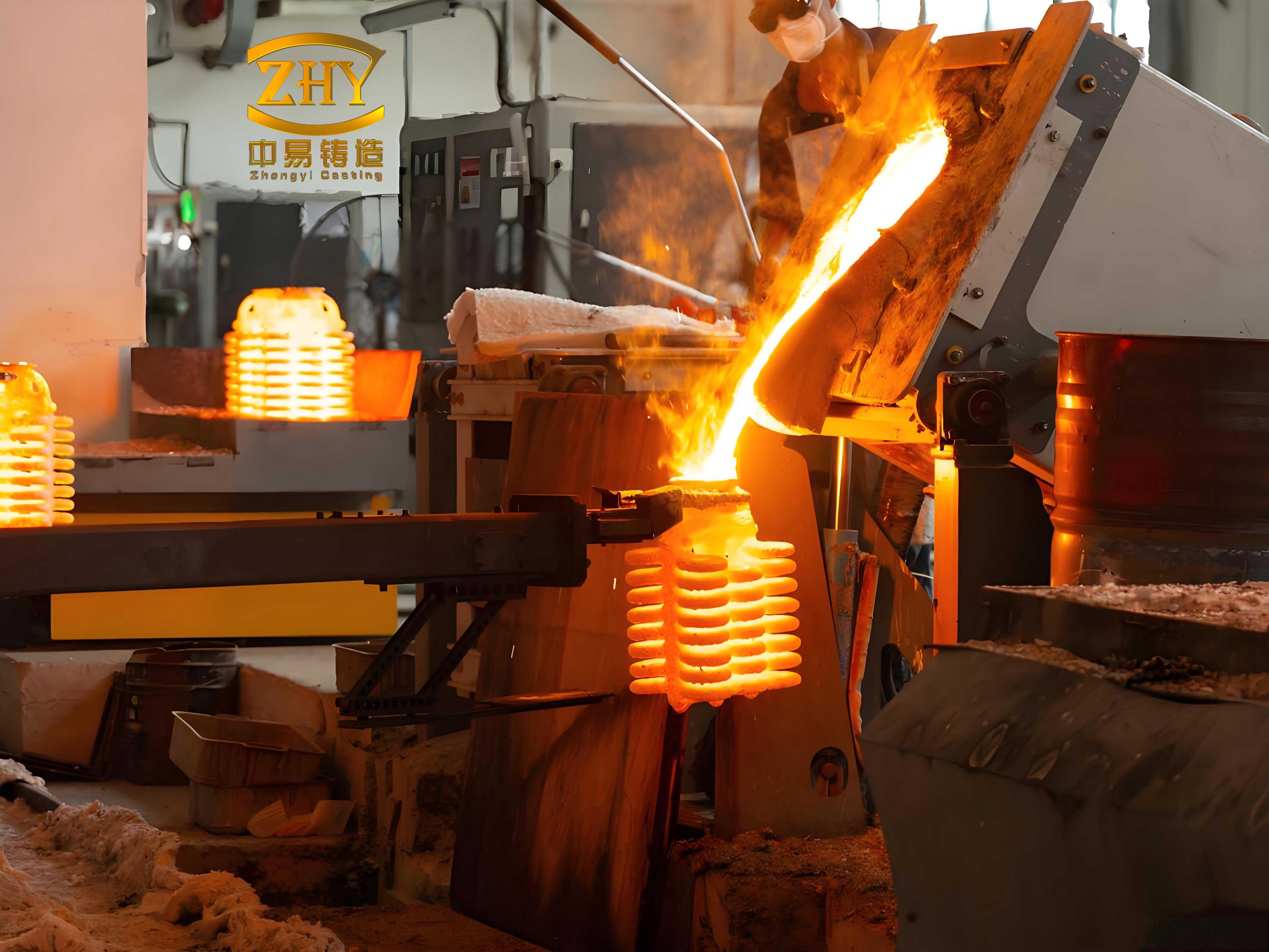
Overview of 3D Printing Technologies
Contrasting with conventional subtractive manufacturing, Additive Manufacturing exhibits unique advantages. By building components layer-by-layer, it bypasses traditional machining constraints, enabling the direct fabrication of complex parts while dramatically improving material utilization. Since its inception in the 1980s, numerous AM processes have been developed. A comparison of key technologies relevant to casting is shown below:
| Process Category | Typical Materials | Mechanism | Relevance to Investment Casting |
|---|---|---|---|
| Vat Photopolymerization (SLA/DLP) | Photopolymer Resins | UV laser or light cures liquid resin layer-by-layer. | High-resolution patterns for ceramic shell molds or sacrificial models. |
| Material Extrusion (FDM/FFF) | ABS, PC, PLA | Thermoplastic filament is heated and extruded through a nozzle. | Low-cost prototyping of casting patterns; specialized filaments for burnout. |
| Powder Bed Fusion (SLM, SLS, EBM) | Metals (Ti-6Al-4V), Polymers, Ceramics | Laser or electron beam selectively fuses powder particles. | Direct part manufacturing; creation of complex sand molds/cores; tooling. |
| Binder Jetting | Sand, Metal, Ceramic Powders | Liquid binder is jetted onto powder bed to bond particles. | Direct fabrication of sand molds and cores for metal casting. |
For instance, Fused Deposition Modeling (FDM) with engineering plastics like ABS and PC is common. ABS offers good printability but requires a heated build plate to mitigate warping from thermal contraction. PC provides superior mechanical strength and heat resistance, though it can be more brittle. The fundamental principle across all these technologies is additive layering. The print head or energy source follows a pre-programmed path, depositing or fusing material to form a 3D structure. Applications are vast: aerospace agencies utilize high-strength nickel-based superalloys printed via SLM for fuel components; wide-body aircraft incorporate AM titanium parts achieving significant weight savings. In healthcare, patient-specific anatomical models and implants are produced. Automotive industries employ AM for lightweight, optimized components like wheel hubs and intake manifolds.
Characteristics of Titanium and Its Alloys
Physical Properties
Titanium alloys are indispensable in modern industry due to their unique combination of properties. Their density ($\rho \approx 4.43-4.51 \text{ g/cm}^3$) is significantly lower than steel ($\sim7.8 \text{ g/cm}^3$) yet they offer comparable or superior specific strength. This makes them ideal for aerospace and biomedical implants. They possess a high melting point (e.g., $\sim1660^\circ\text{C}$ for Ti-6Al-4V) and good thermal stability. Their elastic modulus ($E \approx 110 \text{ GPa}$) is favorable, providing resistance to deformation while avoiding excessive stiffness that can lead to stress shielding in implants. A key attribute is the spontaneous formation of a tenacious, self-healing oxide layer (primarily TiO$_2$), which grants exceptional corrosion resistance. Their relatively low thermal conductivity is advantageous for thermal management systems.
| Property | Ti-6Al-4V (Grade 5) | Ti CP (Grade 2) | Significance for Investment Casting |
|---|---|---|---|
| Density ($\rho$) | 4.43 g/cm³ | 4.51 g/cm³ | Lightweight components. |
| Tensile Strength | $\geq 895$ MPa | $\geq 345$ MPa | High structural integrity. |
| Elastic Modulus ($E$) | ~110 GPa | ~105 GPa | Balanced stiffness. |
| Melting Range | ~1600-1660°C | ~1670°C | High process temperature required. |
| Thermal Conductivity ($k$) | ~6.7 W/m·K | ~16.4 W/m·K | Affects solidification kinetics in casting. |
Chemical Properties
The corrosion resistance of titanium is legendary, particularly in chloride-containing environments like seawater, due to its stable oxide film. Alloying with elements like palladium or molybdenum enhances this further. However, at elevated temperatures ($>300^\circ\text{C}$), oxidation can become significant, described by parabolic kinetics:
$$ x^2 = k_p t $$
where $x$ is the oxide thickness, $k_p$ is the parabolic rate constant, and $t$ is time. Surface modification or alloying with Al, Cr, or Si improves high-temperature oxidation resistance. Its excellent biocompatibility stems from this chemical inertness and the ability to osseointegrate, making it the material of choice for permanent implants. This stability is crucial for the reliability of cast components in demanding applications.
Application Standards for 3D Printing in Titanium Investment Casting
The integration of AM into the titanium investment casting process necessitates strict adherence to international and industry standards to ensure reliability and quality. These standards form a comprehensive framework covering materials, processes, and final parts.
| Standard | Scope | Key Requirements/Parameters |
|---|---|---|
| ASTM B367-22 | Titanium & Titanium Alloy Castings | Specifies chemical composition, mechanical properties (e.g., tensile, yield strength), and corrosion resistance for grades C-2 to C-38. Provides the baseline for validating AM-produced castings. |
| ASTM F3049-14 | Metal Powders for AM | Defines characteristics of Ti alloy powders: particle size distribution, flowability, apparent density, and oxygen/nitrogen content. Limits oxygen increment to control oxidation during processing. |
| ISO/ASTM 52920:2023 | Qualification Principles for AM | Outlines a systematic approach for qualifying AM processes and production sites. Emphasizes process validation, including post-processing like Hot Isostatic Pressing (HIP) to eliminate internal defects and achieve required density. The HIP process can be critical for castings, with pressure ($P$) and temperature ($T$) following: $$ P_{\text{HIP}} \geq \text{Yield Strength of material at } T_{\text{HIP}} $$ |
| AMS 4999 | Ti-6Al-4V Titanium Alloy Laser Powder Bed Fusion Parts | Aerospace Material Specification detailing requirements for feedstock, process, heat treatment, and properties of AM Ti-6Al-4V parts, often referenced for high-integrity applications. |
This standardized ecosystem is vital for producing flight-critical aerospace components and FDA-approved medical implants via the hybrid investment casting process.
Current Status: Prospects and Challenges
Application Prospects
The fusion of AM with titanium investment casting process is a major advancement. Topology optimization driven by AM design freedom leads to components with superior strength-to-weight ratios. Reported weight reductions of 12-15% in aerospace structures directly enhance fuel efficiency. In automotive, AM-enabled design of suspension components has shown fatigue life improvements by a factor of 1.8. The technology provides innovative material solutions, allowing for local microstructure and property control. Digital compensation techniques in tooling design can boost material utilization in the casting process to over 92%. The potential extends to on-demand, decentralized manufacturing of spare parts and highly customized medical devices.
Technical and Economic Challenges
Despite the promise, significant hurdles remain. The high capital cost of industrial AM systems and the expense of qualified titanium powder present economic barriers for widespread adoption in cost-sensitive markets. The portfolio of AM-compatible titanium alloys, though growing, is still narrower than that available for conventional casting, limiting options for specific property profiles. Technical gaps exist in consistently achieving the desired surface finish, dimensional accuracy, and microstructural homogeneity comparable to forged or machined parts. Post-processing requirements for AM patterns or molds—such as support removal, sintering, or infiltration—add complexity. Furthermore, the qualification and certification of hybrid manufacturing routes for safety-critical parts is a lengthy and costly endeavor, requiring extensive data generation to demonstrate equivalence to established investment casting process routes.
Specific Applications in the Investment Casting Workflow
Application in Mold and Pattern Manufacturing
AM introduces groundbreaking capabilities in mold and pattern fabrication. It excels in rapid prototyping and producing customized, complex tooling. The layer-wise approach breaks geometrical constraints, enabling conformal cooling channels within injection molds or intricate core assemblies for casting. For titanium investment casting process, two primary applications stand out:
- Direct Printing of Wax or Resin Patterns: Technologies like SLA or Material Jetting can produce high-resolution, disposable patterns directly from CAD data. This eliminates the need for hard tooling for prototype or low-volume runs, drastically reducing lead time. The pattern’s accuracy directly influences the final casting dimensional tolerance.
- Fabrication of Ceramic Shell Molds or Cores: Binder Jetting or Vat Photopolymerization can be used to create the ceramic mold itself. Binder Jetting of foundry sand enables direct digital production of complex sand molds and cores. Alternatively, SLA of a ceramic-loaded resin can produce a “green” ceramic shell, which is then debound and sintered. This allows for internal geometries impossible with traditional dipping and stuccoing methods.
The benefits are multifold: single-step fabrication replaces multi-stage tooling, production cycles are shortened from weeks to days, and material waste is minimized through on-demand manufacturing. Intelligent topology optimization further pushes模具 towards multifunctional, lightweight designs.
Application in the Casting Process Enhancement
Beyond tooling, AM can be integrated to enhance the casting process itself. One approach is the hybrid manufacturing of preforms: a near-net-shape titanium component is printed via SLM or EBM and then used as a preform in a subsequent casting operation to add features or improve surface characteristics. More directly, AM enables the design and production of advanced gating and risering systems optimized via simulation software. The thermal management during solidification can be actively controlled using AM-fabricated mold inserts with tailored thermal properties. The optimization of the feeding system can be described by modeling the solidification time ($t_f$) using Chvorinov’s rule:
$$ t_f = B \left( \frac{V}{A} \right)^n $$
where $V$ is volume, $A$ is surface area, $B$ is a mold constant, and $n$ is an exponent (often ~2). AM allows for designing risers with optimal $V/A$ ratios and placement, minimizing shrinkage defects in the critical sections of the titanium casting.
Application in Casting Quality Inspection and Control
AM facilitates the creation of sophisticated quality control tools. Customized fixtures and gauges for inspecting complex castings can be 3D printed quickly and economically. Furthermore, AM enables the integration of sensor cavities within sand molds or ceramic shells for in-situ process monitoring—measuring temperature gradients and cooling rates in real-time. This data feeds into adaptive control systems that can dynamically adjust pouring parameters. For post-casting inspection, reference models and calibration phantoms for non-destructive testing (NDT) like X-ray Computed Tomography (CT) can be additively manufactured to match the exact geometry of the cast part, improving inspection accuracy. A closed-loop quality management system can be established: CT scan data identifies porosity locations, which are correlated back to thermal data from in-mold sensors. Machine learning algorithms can then suggest adjustments to the AM mold design or investment casting process parameters for the next iteration, continuously improving yield. The defect detection sensitivity can be linked to the resolution of the inspection method and the feature size, often following a probability of detection (POD) curve.
Strategies for Effective Application
Improved Model and Mold Design
Optimization must be multi-disciplinary. Structural design should employ topology optimization algorithms (solving problems of the form:
$$ \min_{\rho} C(\rho) = \mathbf{U}^T \mathbf{K} \mathbf{U} = \sum_{e=1}^{N} (\rho_e)^p \mathbf{u}_e^T \mathbf{k}_0 \mathbf{u}_e $$
subject to volume constraint, where $\rho$ is material density per element) to derive lightweight, stiff layouts. Conformal cooling channels in mold inserts should be designed using Computational Fluid Dynamics (CFD) simulations to ensure uniform heat extraction. For casting patterns, digital compensation for shrinkage must be applied anisotropically based on part geometry and solidification analysis.
Optimal Printing Material Selection
Material choice is paramount and depends on the application within the investment casting process chain.
| Application | Recommended Material Type | Key Considerations |
|---|---|---|
| Burnout Patterns | Specialized Casting Wax Resins, PMMA | Complete, clean burnout with minimal ash content ($< 0.01\%$). |
| Sand Molds/Cores | Silica Sand, Zircon Sand, Chromite Sand with binder | Thermal stability, collapsibility, surface finish. |
| Direct Metal Tooling (Inserts) | Tool Steels, Copper Alloys, Maraging Steel | Thermal conductivity, wear resistance, polishability. |
| Prototype Metal Castings | Ti-6Al-4V ELI powder, Ti-6Al-4V wire | Powder flowability, oxygen content, resulting mechanical properties. |
For final titanium castings, the alloy grade (e.g., Ti-6Al-4V, Ti-5Al-2.5Sn) must be selected based on the required balance of strength, ductility, and creep resistance for the service environment.
Adjustment of Process Parameters
Parameter optimization is iterative and material-specific. Key variables interact complexly. For laser-based powder bed fusion of a titanium pattern or mold insert, the primary parameters are laser power ($P$), scan speed ($v$), hatch spacing ($h$), and layer thickness ($t$). The volumetric energy density ($E_v$) is a common but simplistic metric:
$$ E_v = \frac{P}{v \cdot h \cdot t} $$
While a suitable $E_v$ range (e.g., 50-100 J/mm³ for Ti-6Al-4V) is a starting point, each parameter must be fine-tuned. Scan speed that is too high causes lack-of-fusion defects; too low causes keyholing and excessive residual stress. Similarly, in printing sand molds, binder saturation levels and drying/curing parameters are critical to achieve sufficient green strength and casting surface quality. A systematic Design of Experiments (DoE) approach is essential to map the parameter space and establish a stable, repeatable investment casting process window. Support structure design must balance part stability during printing with ease of removal post-processing.
Conclusion
The performance requirements for complex components in high-end manufacturing continue to intensify, highlighting limitations in traditional titanium casting concerning precision and efficiency. Additive Manufacturing, with its ability to transcend geometric limitations and deliver near-net-shape forms, is catalyzing a fundamental restructuring of the precision casting paradigm. While technologies like SLM have demonstrated viability for titanium tooling and direct part production, there remains substantial scope for advancement in areas such as grain structure tailoring and process robustness. In fields like medical implant manufacturing, the synergistic optimization of surface characteristics and bulk mechanical properties is a critical frontier. I am convinced that the strategic exploration and development of integrated, hybrid manufacturing routes that combine the design freedom of AM with the metallurgical and economic benefits of the investment casting process are of paramount importance. This synergistic integration presents a powerful pathway to overcome longstanding manufacturing barriers and secure technological leadership in the production of critical titanium components for aerospace, medical, and other advanced industries.