
In my research and development work, I have focused on integrating advanced manufacturing techniques to address the challenges in rapid prototyping and small-batch production of complex metal components. One significant application is the production of transmission case shell castings, which are critical parts in automotive powertrains. These shell castings require high dimensional accuracy, structural integrity, and resistance to leakage, making traditional methods like die casting less flexible for prototype development. Here, I present a comprehensive analysis of using 3D printing wax model investment casting with plaster molds for manufacturing aluminum alloy transmission case shell castings. This approach combines the agility of additive manufacturing with the precision of investment casting, offering a viable solution for fast iteration and testing in product development cycles.
Plaster mold investment casting, developed in the 1970s, is a precision casting technique that uses plaster as the primary molding material. The plaster slurry is poured around a wax pattern, solidified, dried, and then burned out to create a mold cavity. This process excels in replicating intricate details, enabling the production of thin-walled, complex-shaped shell castings with minimal machining allowances. On the other hand, 3D printing, or additive manufacturing, builds physical objects layer by layer from digital models, allowing for rapid, tool-less fabrication of patterns. By leveraging 3D printed wax patterns in investment casting, I have achieved significant reductions in lead time and cost for prototyping shell castings, while maintaining high quality. This integration is particularly beneficial for industries like automotive and aerospace, where customization and speed are paramount.
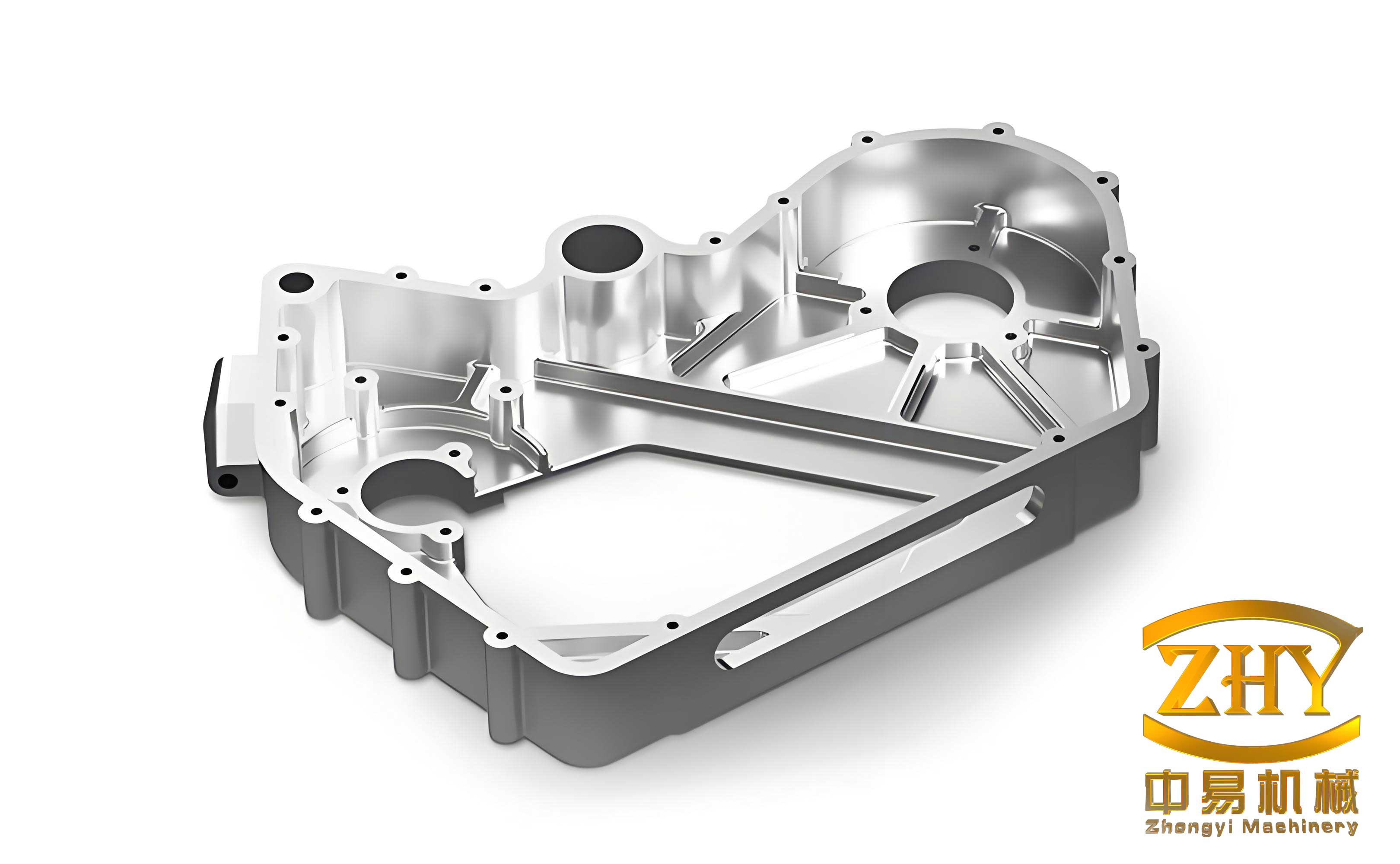
The transmission case shell castings in this study are designed for a manual 6-speed gearbox, with specifications including a maximum torque of 310 Nm, overall dimensions of 513 mm × 358 mm × 155 mm, and a casting weight of 9.6 kg. Traditionally, these shell castings are mass-produced using aluminum die casting (material ADC12), but for prototype testing, the long lead times and high costs of mold fabrication are prohibitive. My goal was to develop an alternative method that could produce shell castings with comparable or superior properties, suitable for machining, assembly, and performance testing. After evaluating various options, I selected the 3D printing wax model-plaster mold investment casting route due to its technical and economic advantages.
| Process Type | Prototyping Cost | Lead Time | Adaptability to Design Changes | Suitability for Production |
|---|---|---|---|---|
| Metal Die Casting | High (molds cost over hundreds of thousands) | Approximately 3 months | Low (expensive mold modifications, risk of scrap) | Mass production of finalized products |
| 3D Printing Wax Model Investment Casting | Low (around $1,000 per piece for wax pattern and casting) | Approximately 25 days | High (tool-less, no mold alteration costs) | Single-piece or small-batch customized shell castings |
From Table 1, it is evident that the 3D printing-based method offers substantial savings in cost and time for prototyping shell castings. Moreover, the material properties achievable with this process are competitive. For instance, using ZL101A aluminum alloy in plaster mold investment casting with T6 heat treatment yields a tensile strength of 275 MPa, elongation of 2%, and hardness of approximately 85 HBS, outperforming die-cast ADC12 in key metrics. The general dimensional tolerance for shell castings produced this way ranges from CT5 to CT7 per GB/T 6414, and surface roughness (Ra) is between 3.2 and 12.5 μm per GB/T 6060.1, meeting the requirements for transmission applications.
The technical route I adopted involves several sequential steps: first, creating a 3D printed wax pattern from the digital model of the transmission case shell casting; second, preparing a plaster mold around the wax pattern; third, employing vacuum-pressure casting to fill the mold with molten aluminum; and finally, post-processing and validation. This integrated workflow is depicted in the following process flow diagram, which emphasizes the synergy between digital and traditional manufacturing for shell castings.
Key to this process is the fabrication of the wax pattern using Selective Laser Sintering (SLS) 3D printing. SLS utilizes a laser to sinter layers of polymer powder, building the pattern layer by layer, which is then infiltrated with wax to enhance its properties for investment casting. The SLS wax patterns for shell castings offer high strength, dimensional accuracy, and efficiency, with production rates typically ranging from 80 to 200 g/h. For the transmission case, I used an AFS500 rapid prototyping system with the parameters listed in Table 2. The wax pattern was printed from a .STL file derived from the CAD model, with a layer thickness of 0.15 mm and a total of 1,074 layers, resulting in a robust pattern suitable for subsequent molding.
| Parameter | Value |
|---|---|
| Build Chamber Dimensions (mm) | 500 × 500 × 450 |
| Material | PSB Powder Infiltrated with Wax |
| Laser Sintering Power (W) | 31 |
| Build Chamber Temperature (°C) | 110 |
| Layer Thickness (mm) | 0.15 |
| Total Number of Layers | 1,074 |
The dimensional accuracy of SLS wax patterns is critical for producing precise shell castings. Errors can arise from data conversion (e.g., CAD to STL), laser scanning positioning, and post-processing shrinkage. I quantified these errors using optical scanning (ATOS-CS-2M) and analysis in GEOMAGIC software. The point cloud data from the scanned wax pattern was compared to the original digital model, which included allowances for casting shrinkage. The standard deviation of the deviations was calculated as $\sigma = 0.5468 \text{ mm}$, with 98.89% of data points within $\pm 3\sigma$. This indicates that the wax patterns for shell castings are highly accurate, with most deviations being minimal. The error distribution can be modeled using a normal distribution: $$ P(x) = \frac{1}{\sigma\sqrt{2\pi}} e^{-\frac{(x-\mu)^2}{2\sigma^2}} $$ where $\mu$ is the mean deviation (close to zero for well-calibrated systems), and $\sigma$ is the standard deviation. For shell castings, maintaining $\sigma$ below 0.6 mm ensures that the patterns meet precision requirements.
Next, the plaster mold is prepared by mixing semi-hydrated plaster (α or β type) with refractory fillers and additives in water to form a slurry. The basic composition is detailed in Table 3. The slurry is poured around the wax pattern in a flask, allowed to solidify, and then dried. The mold undergoes a controlled burn-out process to remove the wax and strengthen the plaster for casting. The burn-out curve involves gradual heating to 750°C to prevent cracking, as rapid moisture evaporation can compromise the mold integrity for shell castings. This step is vital to ensure a defect-free cavity that accurately replicates the wax pattern’s geometry.
| Component | Type/Typical Composition | Proportion (wt%) |
|---|---|---|
| Plaster | α or β Semi-hydrated Gypsum | 30–50% |
| Fillers | Quartz Powder, Kaolin, Bauxite, Talc, etc. | 50–70% |
| Additives | Modifiers (e.g., Silica Sol, Sulfates, Cement for Setting Control, Strength, Crack Resistance) | <5% |
| Water Added | Temperature 30–40°C | 50–80% of total solids |
The casting process employs vacuum-pressure technology to enhance mold filling and solidification for shell castings. After burn-out, the hot plaster mold is placed in a vacuum-pressure casting chamber. The chamber is evacuated to below 1 kPa, and molten ZL101A aluminum alloy is poured in. Immediately after pouring, the chamber is pressurized to 0.6 MPa to promote feeding and reduce porosity. This combination minimizes defects and improves the mechanical properties of the shell castings. The pressure applied during solidification can be described by the equation: $$ P_{applied} = P_{atm} + \Delta P $$ where $\Delta P$ is the additional pressure (0.6 MPa in this case), which increases the metallostatic head and reduces shrinkage voids. The vacuum aids in removing gases, ensuring complete filling of thin sections in complex shell castings.
To evaluate the final product, I measured the dimensional accuracy of the cast transmission case shell castings using the same optical scanning method. The point cloud data from the casting was compared to the designed casting model, yielding a standard deviation of $\sigma = 0.483 \text{ mm}$, with 97.34% of points within $\pm 3\sigma$. This demonstrates that the plaster mold investment casting process preserves the accuracy of the wax pattern, resulting in shell castings that conform to CT5 tolerance grades. Key dimensions of the shell castings, such as bore center distances and flange spacings, were also verified with manual measurements, as shown in Table 4. All measured values fell within acceptable limits, confirming the process’s reliability for producing precision shell castings.
| Measurement Location | Theoretical Dimension | Measured Dimension | Deviation |
|---|---|---|---|
| Center Distance (Bore A – Bore B) | 78.0 | 78.4 | +0.4 |
| Center Distance (Bore A – Bore C) | 85.0 | 84.5 | -0.5 |
| Center Distance (Bore A – Bore D) | 193.15 | 193.8 | +0.65 |
| Distance (Flange G – Flange H) | 141.0 | 141.8 | +0.8 |
| Distance (Bore A – Boss E) | 151.0 | 151.6 | +0.6 |
| Distance (Bore A – Boss F) | 185.0 | 185.8 | +0.8 |
The application of this integrated process for shell castings was demonstrated in a trial batch of 10 transmission cases. The total lead time was 21 days, compared to over 3 months for die casting mold fabrication, representing a reduction of more than 50%. Each shell casting was machined, assembled, and subjected to performance testing, meeting all functional requirements for gearbox operation. The mechanical properties, as summarized in Table 5, highlight the suitability of ZL101A alloy processed via this route for high-stress applications. The tensile strength and hardness exceed those of die-cast ADC12, ensuring durability in shell castings under operational loads.
| Material Grade | Casting Method | Heat Treatment | Tensile Strength (MPa) | Elongation (%) | Hardness (HBS) |
|---|---|---|---|---|---|
| ZL101A | Plaster Mold Investment Casting | T6 | 275 | 2 | ≈85 |
| ADC12 | Die Casting | As-cast | 228 | 1.4 | 74 |
To further optimize the process for shell castings, I analyzed the factors influencing dimensional accuracy. The total error in the final casting can be expressed as a sum of contributions from various stages: $$ E_{total} = E_{print} + E_{mold} + E_{cast} $$ where $E_{print}$ is the error from 3D printing the wax pattern, $E_{mold}$ is the error from plaster mold fabrication, and $E_{cast}$ is the error from casting and solidification. Based on my measurements, $E_{print}$ and $E_{cast}$ are on the order of 0.5 mm each, while $E_{mold}$ is minimal due to the high replication fidelity of plaster. By controlling parameters like layer thickness, burn-out temperature, and pressure during casting, these errors can be minimized. For instance, the casting shrinkage for aluminum alloys is typically around 1.2%, which is compensated in the wax pattern design. The compensated dimension $D_{wax}$ is given by: $$ D_{wax} = D_{final} \times (1 + S) $$ where $D_{final}$ is the desired casting dimension, and $S$ is the shrinkage factor (e.g., 0.012 for ZL101A). This ensures that the shell castings meet dimensional specifications after solidification.
In terms of surface quality, the plaster mold investment casting process produces shell castings with smooth surfaces, reducing the need for extensive finishing. The surface roughness Ra can be estimated using empirical formulas related to mold material and casting parameters. For plaster molds, Ra often falls in the range of 3.2 to 12.5 μm, which is adequate for many automotive components. However, for critical sealing surfaces on shell castings, post-casting machining may be applied to achieve lower Ra values. The process also enables the production of complex internal features, such as ribs and channels, which are essential for lightweight and high-strength shell castings in transmission systems.
The economic benefits of this approach extend beyond prototyping to small-batch production of shell castings. For quantities up to 100 pieces, the per-unit cost remains competitive due to the absence of hard tooling. I developed a cost model based on the following equation: $$ C_{unit} = C_{wax} + C_{mold} + C_{metal} + C_{labor} $$ where $C_{wax}$ is the cost of 3D printing the wax pattern (dependent on material and machine time), $C_{mold}$ is the plaster mold cost, $C_{metal}$ is the aluminum alloy cost, and $C_{labor}$ is the labor for process steps. For the transmission case shell castings, $C_{unit}$ was approximately $1,000, significantly lower than the tens of thousands required for die casting molds. This makes the method ideal for customized or low-volume shell castings in niche markets.
From a sustainability perspective, the 3D printing wax model investment casting process for shell castings reduces material waste compared to subtractive methods. The wax patterns can be recycled or burned out completely, and the plaster molds are typically disposable but made from abundant minerals. Additionally, the ability to produce near-net-shape shell castings minimizes machining scrap, aligning with green manufacturing principles. I estimate that the energy consumption per shell casting is lower than in die casting for small batches, as the latter involves high energy for mold heating and maintenance.
Looking ahead, this integrated process can be enhanced by incorporating real-time monitoring and simulation. For example, finite element analysis (FEA) can predict thermal stresses during solidification of shell castings, optimizing gate and riser design. The governing heat transfer equation during casting is: $$ \rho c_p \frac{\partial T}{\partial t} = \nabla \cdot (k \nabla T) + Q $$ where $\rho$ is density, $c_p$ is specific heat, $k$ is thermal conductivity, $T$ is temperature, $t$ is time, and $Q$ is heat source term (e.g., latent heat of solidification). By simulating this, I can refine process parameters to reduce defects like hot tears in shell castings. Furthermore, advancements in 3D printing materials, such as higher-temperature waxes or composites, could improve pattern strength and surface finish for even more precise shell castings.
In conclusion, my analysis demonstrates that 3D printing wax model investment casting with plaster molds is a robust and efficient method for manufacturing aluminum alloy transmission case shell castings. The process achieves high dimensional accuracy (CT5 tolerance), excellent mechanical properties, and significant reductions in lead time and cost for prototyping and small batches. The integration of digital and traditional techniques offers flexibility for design changes, making it invaluable for product development in the automotive sector. Future work will focus on scaling the process for larger shell castings and exploring other alloys to broaden its applicability. This approach underscores the transformative potential of additive manufacturing in foundry practices for producing high-quality shell castings.