
In my years of experience in the manufacturing industry, I have observed that the production of machine tool castings is a critical yet challenging process. These castings form the backbone of various machining equipment, and their quality directly impacts the performance, precision, and longevity of the entire machine tool. Unlike general equipment, machine tool castings possess complex and intricate structures, demanding stringent technical requirements. During production, defects such as distortion, cracking, porosity, and sand inclusions often arise, leading to significant economic losses and tarnishing a company’s reputation. Therefore, a comprehensive understanding of the characteristics of machine tool castings, coupled with continuous improvement in technical processes, is essential to mitigate these defects and enhance overall quality and management standards. This article delves into the common defects encountered in machine tool castings and outlines effective technical countermeasures, supported by data, formulas, and practical insights.
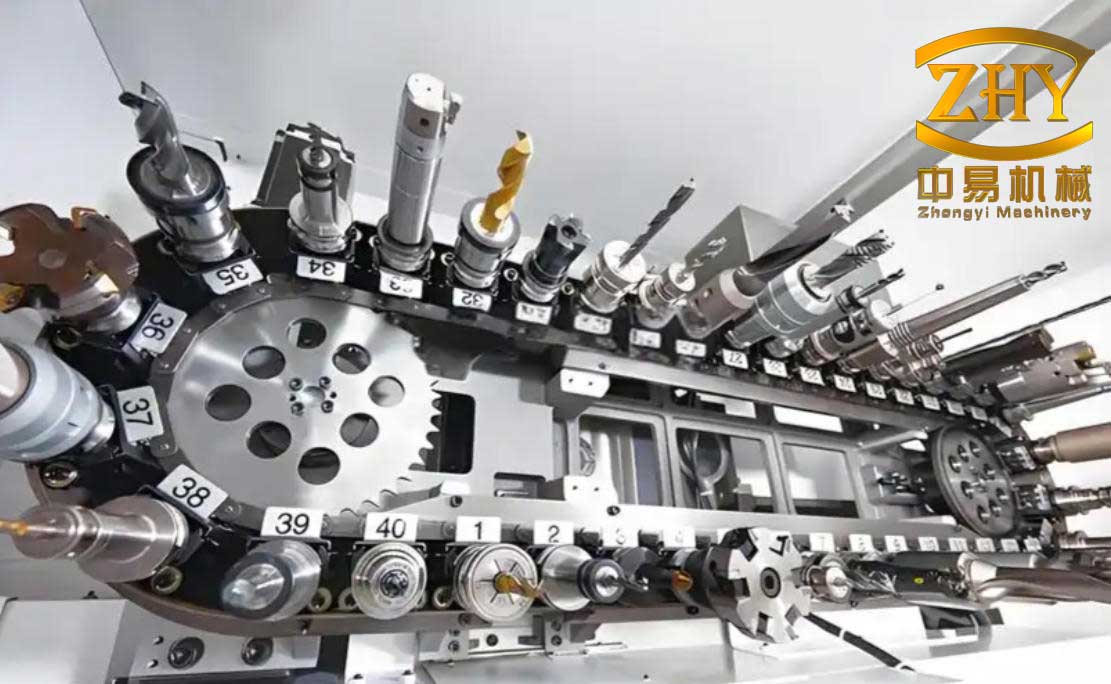
The importance of machine tool castings cannot be overstated. They are designed to exhibit high wear resistance, stability, and excellent vibration damping properties, all while maintaining a relatively compact size. This often necessitates the use of ribbed plates and internal cavities, which introduce complexities in the casting process. As the manufacturing sector advances, the variety and functionality of machine tools have expanded, leading to even stricter quality demands from consumers. However, production processes are prone to errors that result in quality incidents, disrupting operations. By summarizing past experiences and refining casting techniques, we can significantly improve the quality of machine tool castings. In this discussion, I will explore common defects, their root causes, and the technical strategies I have found effective in addressing them.
1. Common Defects in Machine Tool Castings and Their Process Countermeasures
The fabrication of machine tool castings involves multiple stages, each susceptible to specific issues. Below, I detail three prevalent defects: core lift, cracking, and distortion, along with their process solutions.
1.1 Core Lift in Machine Tool Castings
Core lift, or “floating core,” occurs when the sand core inside the mold displaces during metal pouring, leading to dimensional inaccuracies and internal voids. This is particularly common in machine tool castings with internal cavities supported by chaplets. The functional requirements of machine tools demand high耐磨性 and stability, often achieved through ribbed connections that create numerous cavities. These cavities are formed by cores, which are fixed using chaplets. If not properly managed, the core may float due to metallostatic pressure.
From my practice, the following technical countermeasures are crucial:
- Chaplet Design and Material: Chaplets must be made from materials that can withstand high temperatures and integrate well with the molten metal. I typically use cast iron rods for chaplets in the upper sections of the mold. The diameter of the chaplet should be selected to provide sufficient support under high-temperature iron flow while ensuring good fusion. A key ratio I adhere to is the chaplet diameter to casting wall thickness, approximately 1:4. This ensures a larger fusion area and minimizes discontinuities. Mathematically, this can be expressed as:
$$ d_c \approx \frac{t_w}{4} $$
where $d_c$ is the chaplet diameter and $t_w$ is the wall thickness of the machine tool casting at the support location. - Gating System Design: The gating system should be designed to avoid direct冲击 of the molten metal on the chaplets. This prevents premature erosion or displacement. I often use tangential gating or multiple gates to distribute flow evenly.
- Pouring Temperature Control: Adjusting the pouring temperature within an optimal range can reduce buoyancy forces on the core. While maintaining other process parameters, a moderate pouring temperature (e.g., 1350–1400°C for cast iron) helps stabilize the core.
To summarize, here is a table outlining the causes and solutions for core lift in machine tool castings:
| Cause | Process Countermeasure | Key Parameters |
|---|---|---|
| Inadequate chaplet support | Use cast iron chaplets with diameter-to-wall-thickness ratio of 1:4 | $d_c/t_w \approx 0.25$ |
| Direct metal冲击 on chaplets | Design gating to avoid direct flow on chaplets | Gate angle > 90° from chaplet |
| High pouring temperature causing buoyancy | Optimize pouring temperature based on alloy | Typical range: 1350–1400°C for cast iron |
1.2 Cracking in Machine Tool Castings
Cracking is a severe defect that often occurs at junctions between thick and thin sections or at sharp corners in machine tool castings. This arises due to thermal stresses and uneven cooling. The design of machine tools frequently involves significant variations in wall thickness, leading to stress concentration points.
Based on my observations, the following strategies effectively mitigate cracking:
- Geometric Modifications: At thick-thin junctions, I incorporate “reinforcement ribs” to distribute stress. If these ribs affect final dimensions, they can be removed during rough machining. For corners, increasing the fillet radius reduces stress concentration. The fillet radius $r$ can be determined as a function of wall thickness $t$:
$$ r \geq 0.3 \times t $$
for typical machine tool castings. - Material Enhancement: Using inoculants for孕育处理 improves the strength and crack resistance of the casting. For cast iron machine tool castings, I often add ferrosilicon-based inoculants. The inoculation effect can be quantified by the increase in tensile strength $\Delta \sigma$:
$$ \Delta \sigma = k \cdot I $$
where $k$ is a material constant and $I$ is the inoculation amount. - Gating for Simultaneous Solidification: Designing the gating system to promote simultaneous凝固 is vital. This ensures uniform cooling and minimizes thermal gradients. I employ multiple gates and chills to achieve this. The pouring time $t_p$ should be minimized to reduce temperature differentials, often calculated as:
$$ t_p = \frac{V}{Q} $$
where $V$ is the casting volume and $Q$ is the pouring rate. - Extended Mold Cooling Time: Prolonging the in-mold cooling time allows for gradual stress relief. However, excessive time can hinder productivity. I adjust this based on seasonal variations—longer in winter, shorter in summer—to balance quality and efficiency.
- Artificial Aging Treatment: For stress-prone machine tool castings, artificial aging (stress relief annealing) is indispensable. The process involves heating the casting to 500–550°C for 2–4 hours, followed by slow cooling. Uniform heating and support during aging are critical to prevent distortion.
The table below consolidates these approaches:
| Cause | Process Countermeasure | Technical Details |
|---|---|---|
| Stress concentration at junctions | Add reinforcement ribs or increase fillet radius | $r \geq 0.3t$ |
| Low material strength | Apply孕育处理 with inoculants | Inoculant addition: 0.2–0.5% of melt weight |
| Uneven cooling | Design gating for simultaneous凝固 | Pouring time $t_p$ minimized |
| Thermal stresses | Adjust in-mold cooling time seasonally | Winter: +20% time; Summer: -10% time |
| Residual stresses | Perform artificial aging treatment | 500–550°C for 2–4 hours, slow cool |
1.3 Distortion in Machine Tool Castings
Distortion, or warping, is common in machine tool castings with high length-to-width ratios, leading to dimensional inaccuracies and scrap. This defect results from uneven cooling and residual stresses.
In my work, I address distortion through these methods:
- Anti-camber Design: Incorporating an anti-camber (reverse deformation) in the pattern compensates for expected warping. The反挠度 is typically set between 2‰ and 4‰ of the casting length $L$. The camber value $C$ can be expressed as:
$$ C = \delta \cdot L $$
where $\delta$ is the反挠度 factor (0.002 to 0.004). - Uniform Mold clamping Force: Ensuring even clamping forces across the mold prevents uneven stresses during solidification. For large machine tool castings using pit molding, I maintain uniform压箱力 through balanced weights or hydraulic systems.
- Symmetric Gating: Designing the gating system with two gates at opposite ends enables simultaneous pouring, promoting uniform temperature distribution. The gate area $A_g$ is calculated based on the casting mass $m$ and pouring time $t_p$:
$$ A_g = \frac{m}{\rho \cdot t_p \cdot v} $$
where $\rho$ is metal density and $v$ is flow velocity. - Corrective Aging: For slightly distorted machine tool castings, artificial aging can be used to rectify the shape. The casting is heated under controlled conditions to relieve stresses.
Here is a summary table for distortion control:
| Cause | Process Countermeasure | Calculation/Parameters |
|---|---|---|
| Uneven cooling in long castings | Apply anti-camber in pattern design | $C = (0.002 \text{ to } 0.004) \cdot L$ |
| Non-uniform mold clamping | Ensure even clamping force across mold | Force variation < 5% |
| Asymmetric metal flow | Use symmetric gating with multiple gates | Gate area $A_g$ from mass and time |
| Residual stresses | Employ artificial aging for correction | Heating at 500°C for stress relief |
2. Casting Defects in Machine Tool Guideways and Process Countermeasures
The guideway is a critical component of machine tool castings, requiring precise dimensions and high surface hardness. After finishing, no defects are permissible; any flaw typically results in scrap. I have encountered several issues specific to guideways, which demand tailored solutions.
2.1 Shrinkage Porosity and Hardness Deficiency
Shrinkage porosity and inadequate hardness in guideways stem from improper solidification and material composition. To address these in machine tool castings, I focus on the following:
- Material Selection: Choosing the right material is paramount. I opt for a low carbon equivalent (CE) with high silicon content to enhance fluidity and reduce shrinkage. The carbon equivalent for cast iron is given by:
$$ CE = C + \frac{Si}{4} + \frac{P}{2} $$
where C, Si, and P are percentages of carbon, silicon, and phosphorus, respectively. For guideways, I target a CE of 3.8–4.2 to balance strength and castability. If hardness is insufficient, I add low-alloy elements like chromium or molybdenum. - Pouring Temperature Management: Avoiding immediate pouring after high-temperature tapping is crucial. I allow the metal to cool to a lower temperature (e.g., 1300–1320°C) to reduce shrinkage tendency. The temperature drop $\Delta T$ can be modeled as:
$$ \Delta T = k \cdot t $$
where $k$ is a cooling constant and $t$ is time. - Use of External Chills: External chills are effective in promoting directional solidification. For guideways, I use chills with a thickness of 30–40% of the guideway热节直径 $D_h$:
$$ t_{chill} = (0.3 \text{ to } 0.4) \times D_h $$
The width is typically 8 cm, 10 cm, or 12 cm, and the length is 0.5–1 cm shorter than the guideway width. Chills are placed at distances of 1.5–2.5 cm apart, but only on the sides or bottom—never on the top of the casting.
Table 4 outlines these strategies:
| Defect | Process Countermeasure | Formulas/Values |
|---|---|---|
| Shrinkage porosity | Control carbon equivalent (low C, high Si) | $CE = C + Si/4 + P/2$, target 3.8–4.2 |
| Low hardness | Add low-alloy elements (Cr, Mo) | Alloy addition: 0.2–1.0% |
| Poor solidification | Use external chills with specific dimensions | $t_{chill} = 0.3D_h$ to $0.4D_h$ |
| High pouring temperature | Pour at reduced temperature after tapping | Optimal: 1300–1320°C for cast iron |
2.2 Porosity and Sand Inclusions in Guideways
When using furan cold-set resin for molding, porosity (especially subsurface pores) and sand inclusions often appear on guideways of machine tool castings. These become visible after rough machining.
My recommended countermeasures include:
- Resin Control: Limiting the nitrogen content in the resin is essential, as high nitrogen leads to gas formation. I keep the resin addition to about 1% of the sand weight and ensure it has low nitrogen levels (< 5%).
- Coating and Drying: When using water-based coatings, thorough drying is necessary. In winter, delayed mold closing can cause moisture condensation; I pre-heat the mold before closing to eliminate moisture. The drying temperature $T_d$ and time $t_d$ are critical:
$$ T_d \approx 150^\circ C, \quad t_d \geq 2 \text{ hours} $$ - Gating Design for Cleanliness: The gating system should prevent sand erosion and inclusion. I position the guideway at the bottom of the mold to reduce turbulence and use filters in the gating. The gating ratio (sprue:runner:gate) is often set at 1:2:1.5 for平稳 flow.
Table 5 summarizes these points:
| Defect | Process Countermeasure | Parameters |
|---|---|---|
| Subsurface porosity | Limit resin nitrogen content and addition rate | Resin ≤ 1%, N₂ < 5% |
| Moisture-related pores | Dry coatings thoroughly; pre-heat molds in cold weather | Drying at 150°C for 2+ hours |
| Sand inclusions | Place guideway at mold bottom; use gating filters | Gating ratio 1:2:1.5 |
3. Advanced Considerations for Machine Tool Castings Quality
Beyond specific defects, I have found that overall quality of machine tool castings depends on integrated process controls. This includes material science, thermodynamics, and simulation techniques.
3.1 Material Optimization for Machine Tool Castings
Selecting the right alloy is fundamental. For cast iron machine tool castings, I often use gray iron or ductile iron, with composition tailored for strength and damping. The tensile strength $\sigma_t$ can be estimated using empirical formulas:
$$ \sigma_t = a \cdot (CE)^2 + b \cdot (CE) + c $$
where $a$, $b$, $c$ are constants based on alloy type. Additionally, I consider the modulus of elasticity $E$ for stiffness:
$$ E = \frac{\sigma}{\epsilon} $$
where $\sigma$ is stress and $\epsilon$ is strain. High $E$ is desirable for machine tool castings to resist deformation under load.
3.2 Thermal Analysis and Solidification Modeling
To predict defects like shrinkage and hot tears, I employ solidification simulation. The Chvorinov’s rule estimates solidification time $t_s$:
$$ t_s = B \cdot \left( \frac{V}{A} \right)^n $$
where $V$ is volume, $A$ is surface area, $B$ is a mold constant, and $n$ is an exponent (typically 2). For complex machine tool castings, finite element analysis (FEA) helps visualize temperature gradients and stress fields.
3.3 Process Parameter Optimization
Key parameters such as pouring speed, mold temperature, and cooling rate must be optimized. I use Design of Experiments (DOE) to identify optimal settings. For example, the relationship between hardness $H$ and cooling rate $R$ for cast iron can be expressed as:
$$ H = H_0 + k_H \cdot \log(R) $$
where $H_0$ is base hardness and $k_H$ is a material constant.
4. Conclusion
In conclusion, the production of high-quality machine tool castings requires a meticulous approach to process design and control. By understanding common defects like core lift, cracking, distortion, and guideway issues, and implementing targeted technical strategies—such as proper chaplet design, geometric modifications, material enhancement, and optimized gating—we can significantly reduce scrap rates and improve performance. The use of tables and formulas, as discussed, aids in standardizing these practices. Moreover, advanced techniques like thermal simulation and material optimization further enhance reliability. As the manufacturing industry evolves, continuous improvement in casting processes for machine tool castings will remain pivotal to meeting stringent quality demands and fostering technological advancement.
Throughout this article, I have shared insights based on my firsthand experience, emphasizing that a proactive, knowledge-driven approach is key to overcoming the challenges in producing machine tool castings. By adopting these strategies, manufacturers can not only avoid defects but also elevate their technical management水平, ensuring that machine tool castings meet the highest standards of precision and durability.