
Grinding mills are fundamental equipment across numerous industrial sectors for pulverizing raw materials. The key consumable components within these mills are the grinding media—balls and rods—and the liners that protect the mill shell. Historically, the selection of materials for these parts has been inconsistent, leading to highly variable and often excessive wear rates. In many operations, the consumption of grinding balls per ton of processed material can be several times higher than international benchmarks established for forged steel or specialized white cast iron balls. Similarly, the service life of conventional liner materials like Hadfield manganese steel falls short compared to modern white cast iron alternatives. The economic impetus for improvement is immense; a nationwide reduction in wear rates for these components could yield savings valued in the billions. This underscores the critical need to standardize consumption metrics and, more importantly, to promote the widespread adoption of superior wear-resistant materials, with white cast iron standing out as a prime candidate.
The performance and longevity of grinding balls and liners are influenced by design, manufacturing quality, and critically, material choice. A persistent issue has been the slow adoption of advanced materials despite their proven benefits. To justify the use of white cast iron, which is often perceived as brittle, a thorough analysis of the operational stresses is essential.
Inside a rotating mill, the charge of grinding media and ore is lifted by the mill wall due to centrifugal and frictional forces. Upon reaching a dynamic equilibrium, the charge cascades or cataracts down onto the toe of the charge, as shown in the schematic. This action subjects the grinding balls to direct impact with other balls and ore particles, while the liners experience indirect impact through the intervening charge layer. Simultaneously, ore particles are subjected to crushing and abrasion. The relative motion between balls, and between balls and liners, leads to the shear crushing and fine grinding of interposed ore particles. Consequently, the surfaces of balls and liners are primarily degraded by the abrasive cutting action of sharp, fragmented ore particles and, for balls, by impact/ gouging during the cascading motion.
Selecting white cast iron for these components first requires ensuring resistance to impact fracture. The impact energy absorbed by a grinding ball is a function of mill diameter (D), ball diameter (d), and operational parameters. A theoretical calculation for the kinetic impact energy (E_k) of a ball can be expressed as:
$$ E_k = \frac{1}{2} m v^2 $$
Where mass \( m \) is derived from the ball’s volume and density, and the velocity \( v \) is related to the mill’s rotational speed and diameter. A more specific formulation relates the potential energy at the peak of the lift to the impact energy:
$$ E_k \propto \rho \cdot d^3 \cdot g \cdot H $$
Here, \( \rho \) is density, \( d \) is ball diameter, \( g \) is gravity, and \( H \) is the drop height. For a typical mill with a diameter of several meters using balls of 100mm diameter, the calculated impact energy is on the order of several tens to hundreds of Joules. International experience shows that martensitic white cast iron grades, such as nickel-chrome types with unnotched Charpy impact toughness around 10 J, are successfully employed for grinding balls. High-chromium white cast iron offers even higher toughness and is rapidly becoming a standard for grinding media, especially in wet grinding applications in the iron ore industry. In domestic applications, high-chromium white cast iron balls are widely used in cement plants, and medium-chromium/low-chromium white cast iron balls have demonstrated excellent performance in large coal pulverizers, with breakage rates below 1% and wear rates meeting advanced international levels.
The relationship between component size and fracture resistance is crucial. A larger component volume can absorb more deformation energy. White cast iron inherently possesses high resistance to crack initiation but low resistance to crack propagation, making it sensitive to defects. Under impact or high-strain-rate loading, stress concentration at defects can readily lead to cracking. Furthermore, sharp ore particles impinging on the ball surface can cause localized cracking if the material’s plasticity is insufficient. The critical indentation depth for cracking is related to the material’s fracture toughness (K_IC) and hardness (H). A general guideline is that white cast iron for grinding balls should possess a minimum Charpy impact toughness of 4-6 J to prevent fracturing and minimize overall wear.
The core advantage of white cast iron lies in its exceptional abrasion resistance, derived from its microstructure. The presence of hard carbide phases provides superior resistance to both gouging abrasion and high-stress grinding (scratching) abrasion compared to other ferrous materials. This is clearly illustrated by laboratory tests measuring the “Gouging Abrasion Ratio” and “Scratching Abrasion Weight Loss,” where white cast iron consistently outperforms steels of similar macro-hardness. The high micro-hardness of the carbides, often exceeding that of common abrasive minerals like quartz, forms the backbone of its wear resistance, capable of blunting and even fracturing the abrasive particles. The supporting matrix, when sufficiently hard, protects these carbides from being undercut and lost.
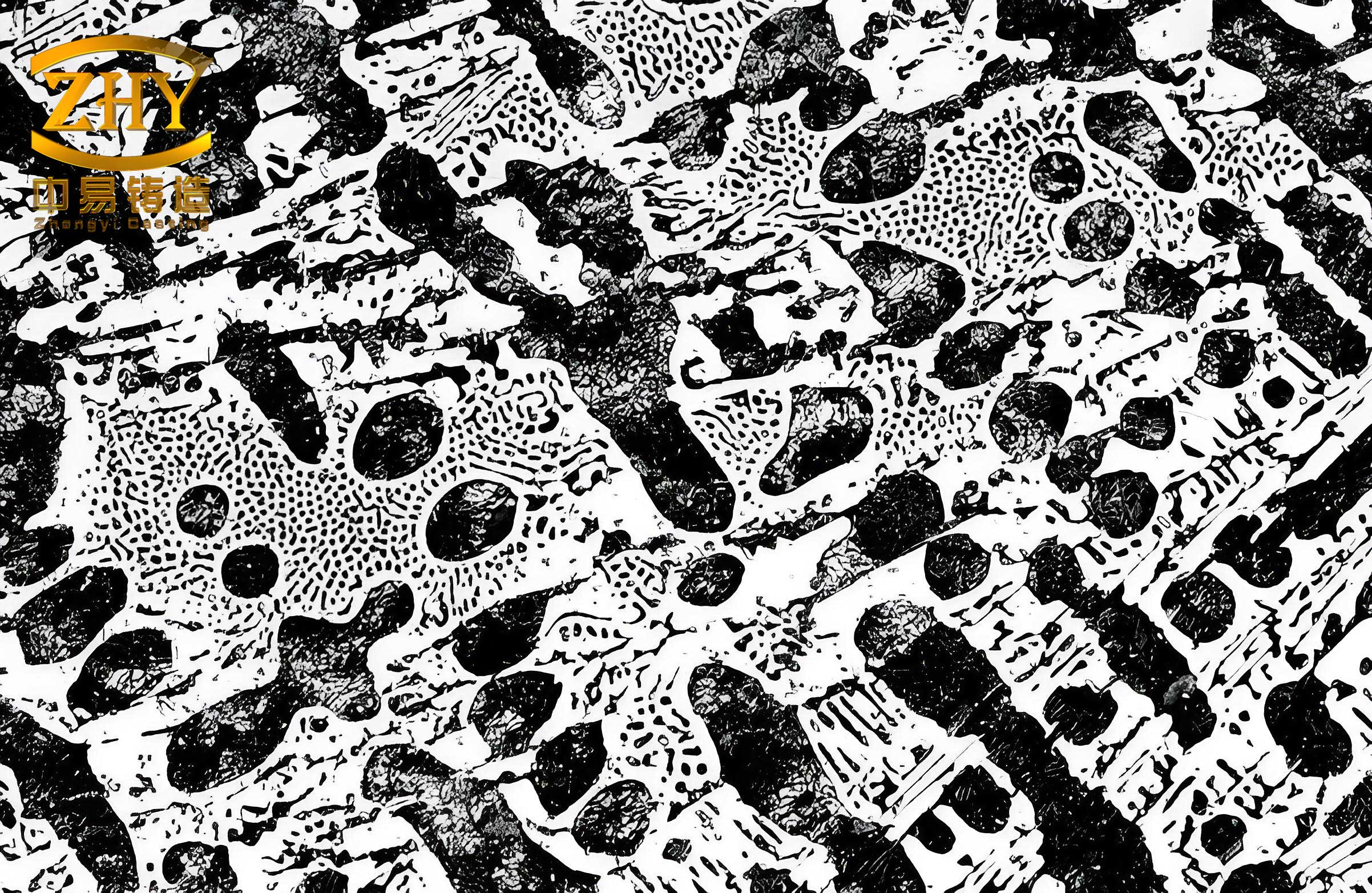
The following table compares the relative wear resistance of various ferrous materials under different test conditions, highlighting the consistent superiority of white cast iron, particularly the high-chromium types.
| Material | Laboratory Gouging Test | Laboratory Scratching Test (Quartz) | Field Test: Ball Wear (Quartz Ore) |
|---|---|---|---|
| Pearlitic Steel | 1.0 (Baseline) | 1.0 (Baseline) | 1.0 (Baseline) |
| Austenitic Mn Steel | 0.9 | 1.2 | 1.1 |
| Martensitic Low-Alloy Steel | 1.3 | 1.5 | 1.4 |
| Martensitic Cr-Mo Steel | 1.6 | 1.8 | 1.7 |
| Martensitic Low-Cr White Cast Iron | 2.5 | 3.0 | 2.8 |
| Martensitic High-Cr White Cast Iron | 4.0 | 5.5 | 5.0 |
Data from field applications further solidifies this advantage. The relative wear rates of balls and liners made from different materials in wet grinding environments are summarized below. While rubber liners offer benefits like reduced noise and easier handling, they are unsuitable for dry or hot material processing and are less effective against sharp abrasives. Therefore, white cast iron remains the most technically suitable liner material for a wide range of applications.
| Material | Relative Wear Rate of Balls (Wet Grinding) | Relative Wear Rate of Liners (Wet Grinding) | Relative Wear Rate of Liners (General) |
|---|---|---|---|
| Austenitic Manganese Steel | 1.00 | 1.00 | 1.00 |
| Pearlitic Steel | 0.90 | – | – |
| Martensitic Low-Alloy Steel | 0.70 | 0.80 | 0.85 |
| Martensitic Medium-Alloy Steel | 0.55 | 0.65 | 0.70 |
| Martensitic High-Cr White Cast Iron | 0.20 | 0.25 | 0.30 |
The ultimate metric for adoption is cost-effectiveness. Although high-chromium white cast iron has the highest wear resistance, its initial cost and alloy content (like molybdenum) can be prohibitive. This has driven the development of more economical alternatives, such as high-chromium-manganese white cast iron. A comprehensive technical-economic comparison, evaluating relative wear resistance, relative cost, and the resulting “Relative Wear Resistance per Unit Cost,” decisively proves the superiority of white cast iron. For instance, high-chromium white cast iron liners can last three times longer than manganese steel liners in iron ore grinding, offering a lower total cost per operating hour.
| Material | Relative Wear Resistance (RWR) | Relative Cost (RC) | RWR / RC (Economic Index) |
|---|---|---|---|
| Low-Alloy Quenched & Tempered Steel | 1.0 | 1.0 | 1.00 |
| Austenitic Manganese Steel | 1.1 | 1.2 | 0.92 |
| Martensitic Cr-Mo Steel | 1.7 | 1.8 | 0.94 |
| Low-Chromium White Cast Iron | 2.8 | 1.5 | 1.87 |
| High-Chromium White Cast Iron | 5.0 | 3.0 | 1.67 |
| RE-Modified Medium-Mn White Cast Iron | 3.5 | 1.3 | 2.69 |
Domestically developed alloys, such as rare-earth (RE) modified medium-manganese white cast iron and RE-Boron modified high-chromium-manganese white cast iron, leverage local resource advantages. Heat-treated RE-modified medium-manganese white cast iron liners have demonstrated a service life 2.5 times that of high manganese steel at only 70% of the cost, showcasing exceptional economic potential.
To further enhance the performance of white cast iron grinding elements, a deep understanding of their failure mechanisms is required. Based on morphological analysis of worn surfaces and subsurface regions, the primary wear mechanisms for grinding balls are: 1) Impact Deformation Wear, 2) Abrasive Cutting Wear, 3) Impact Fatigue Wear, and 4) Impact Fretting Wear. For liners, abrasive cutting wear is more dominant, while impact-related mechanisms are less severe, supplemented by sliding contact fatigue wear.
During repeated impacts, the ball surface experiences high stress, leading to plastic flow, “fish-scale” deformation, and work hardening. Subsequent impacts can cause cracking in this deformed layer. The continuous propagation and networking of these cracks under cyclic loading lead to spalling, termed impact deformation wear. Resistance to this mechanism demands higher toughness, lower carbon content, and favorable carbide morphology in the white cast iron.
Abrasive cutting wear is the dominant material removal process. The hardness ratio between the material and the abrasive mineral is critical. The hard carbides in white cast iron provide the primary defense. However, if the supporting matrix is worn away, carbides can be undercut and fractured. Therefore, high macro-hardness must be coupled with a high micro-hardness matrix (e.g., martensite) to properly support the carbides. This explains the superior performance of high-chromium white cast iron, where the martensitic matrix is significantly harder than the pearlitic or austenitic matrices of other irons.
Repeated elastic impacts generate sub-surface shear stresses, which can initiate and propagate fatigue cracks parallel to the surface, eventually causing spalling (impact fatigue wear). The resistance to this depends on the strength and ductility of the white cast iron. A lower retained austenite content can be beneficial here, as its strain-induced transformation to martensite under cyclic loading generates internal stresses that may accelerate fatigue.
The role of retained austenite in martensitic white cast iron is complex. For liner applications, an optimal content around 20% has been reported to minimize wear loss. Excessive retained austenite leads to deeper cutting grooves and carbide fracture due to a softer matrix. Too little austenite compromises toughness and the beneficial energy absorption during deformation-induced transformation. The optimal level for grinding balls, which suffer higher impact, is likely lower and requires further study.
In wet grinding, corrosion significantly accelerates wear. The galvanic couple between the carbide phase and the metallic matrix in an electrolyte (slurry) leads to electrolytic corrosion. Alloying elements like chromium and copper can elevate the electrode potential of the matrix, reducing corrosion. Chromium also aids in forming a passive surface film. However, in high-chromium white cast iron, severe pitting corrosion can occur at the matrix-carbide interface, and the wear rate increases with carbide volume fraction, as corrosion selectively attacks the matrix around carbides. The relationship can be conceptually modeled, where corrosion-assisted wear loss increases with carbide content (C_carbide) and decreases with matrix chromium content (Cr_matrix):
$$ \text{Wear Rate}_{corr} \propto \frac{C_{carbide}}{Cr_{matrix}} $$
Grinding in sulfurous ores or with slurry pH >7 exacerbates chemical corrosion. Casting defects can initiate crevice corrosion, creating localized anodic sites that severely degrade the component.
In conclusion, the evidence strongly supports several key findings. First, white cast iron grinding balls and liners offer the highest wear resistance among common ferrous materials. When alloyed and processed appropriately, they also provide the highest wear resistance per unit cost, making them ideal for widespread adoption in mills under 4 meters in diameter. A Charpy impact toughness of around 5 J is generally sufficient for reliable service in many applications, though research towards even tougher grades remains vital, particularly focusing on carbide morphology modification.
Second, tailoring the white cast iron composition and microstructure to the specific wear mechanism is crucial. Grinding balls require a better balance of high toughness and high hardness, while liners prioritize maximum hardness with adequate toughness. The optimal content of microstructural constituents, including retained austenite in martensitic grades, should be selected based on the specific operating conditions (impact severity, abrasiveness, wet/dry).
Third, for wet grinding applications, the corrosion resistance of the white cast iron must be enhanced through alloy design to mitigate synergistic corrosion-abrasion wear.
Finally, continued research and development should focus on creating high-toughness, cost-effective white cast iron grades based on domestic resource and production capabilities to fully capitalize on their technological and economic superiority.