
As a foundational material in modern engineering, nodular cast iron has revolutionized design paradigms since its mid-20th century inception. Its unique combination of strength, ductility, and castability, derived from the spheroidal graphite morphology within a metallic matrix, has enabled its widespread adoption across demanding applications such as crankshafts, gears, and heavy-duty components. However, the relentless push for enhanced performance under more severe operating conditions—higher temperatures, corrosive environments, and demands for improved strength-to-weight ratios—has necessitated the development of advanced grades. Among these, high-silicon nodular cast iron stands out as a material engineered through solid solution strengthening, offering a remarkable suite of properties that extend the boundaries of conventional ferritic grades.
This article delves into the scientific and practical aspects of high-silicon nodular cast iron. We will explore its defining chemical composition, the resultant microstructure, and the subsequent mechanical, physical, and chemical properties. Through comparative analysis with standard grades and the integration of predictive formulas, we will delineate its advantages and limitations. Furthermore, we will outline critical production methodologies and discuss its growing application landscape, concluding with perspectives on its future industrial integration.
Chemical Composition and Metallurgical Principles
The fundamental distinction of high-silicon nodular cast iron lies in its elevated silicon content. While standard ferritic nodular cast iron typically contains 2.0–3.0 wt.% Si, the high-silicon variant pushes this range to 3.0–4.3 wt.%. Silicon serves a dual purpose: it is a potent graphitizer, ensuring the stability of the carbon as graphite rather than cementite, and, more critically, it acts as a ferrite stabilizer and solid solution strengthener. The strengthening mechanism can be conceptually described by the interaction of solute atoms with dislocation motion. The increase in yield strength ($\sigma_y$) due to solid solution strengthening can be approximated by a relationship proportional to the concentration of the solute:
$$\Delta \sigma_{ss} \propto C^{n}$$
where $C$ is the concentration of silicon and $n$ is an exponent typically between 0.5 and 1. This leads to a significant enhancement in the base strength of the ferritic matrix without the need for pearlite formation.
However, achieving optimal properties requires stringent control over the entire chemical profile. A typical composition range is summarized in the table below:
| Element | Typical Range (wt.%) | Function/Reason for Control |
|---|---|---|
| Carbon (C) | 3.4 – 3.8 | Ensures adequate graphite formation and fluidity. High carbon equivalent promotes graphitization. |
| Silicon (Si) | 3.5 – 4.2 | Primary solid solution strengthener and graphitizer. Core defining element. |
| Manganese (Mn) | < 0.20 | Kept low to avoid pearlite stabilization and segregation at cell boundaries, which can impair toughness. |
| Phosphorus (P) | < 0.03 | Strongly limited to prevent the formation of brittle phosphide eutectic networks at grain boundaries. |
| Sulfur (S) | < 0.015 | Kept extremely low post-treatment to prevent nodularizer consumption and avoid graphite degeneracy. |
| Magnesium (Mg) | 0.03 – 0.05 | Essential nodularizing element for spheroidal graphite formation. |
| Copper (Cu), Tin (Sn) | < 0.10 | Strong pearlite promoters; minimized to maintain a predominantly ferritic matrix. |
The precise control of tramp elements is crucial. The “purity” of the base iron, achieved through careful selection of raw materials (high-purity pig iron, low-residual steel scrap), is a prerequisite for consistent performance, particularly for low-temperature applications.
Microstructural Characteristics
The microstructure of properly produced high-silicon nodular cast iron is characterized by a matrix consisting of over 95% silicon-strengthened ferrite, with spheroidal graphite nodules uniformly dispersed within it. The high silicon content effectively suppresses the formation of pearlite, even at moderate cooling rates. This results in a near-single-phase ferritic matrix. The graphite nodules are typically finer and more numerous compared to some standard grades, a consequence of the enhanced nucleation effect from silicon and effective inoculation.
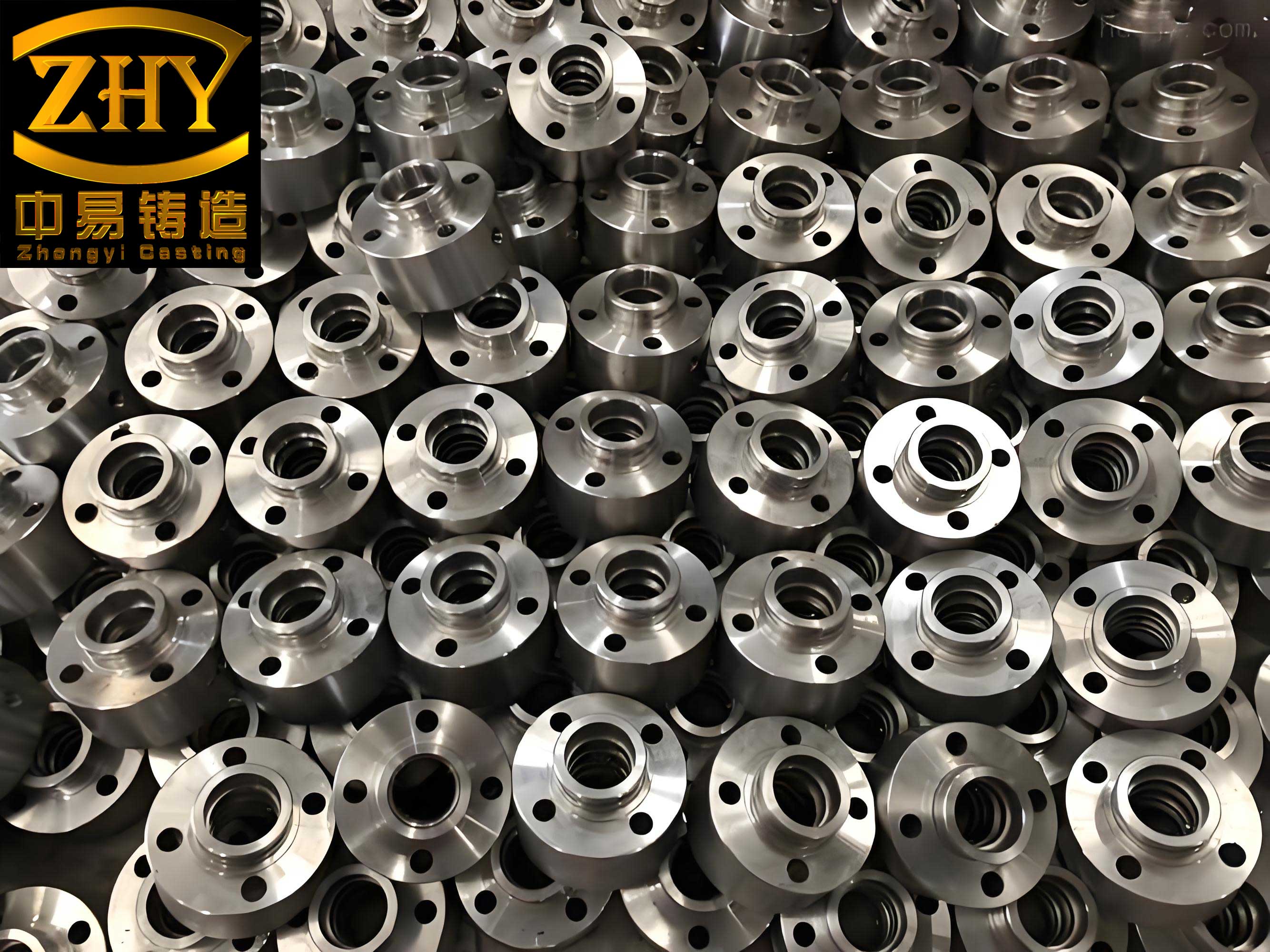
The stability of this ferritic matrix is the key to many of its properties. The absence of hard, brittle pearlite colonies contributes to good ductility and machinability. However, if silicon content exceeds the optimal window (e.g., >4.5 wt.%), the increased lattice strain can lead to the precipitation of brittle silicides or cause a transition to a more ordered structure, significantly reducing toughness. The relationship between silicon content and the risk of embrittlement is a critical consideration in alloy design.
Mechanical Properties: A Quantitative Analysis
The mechanical profile of high-silicon nodular cast iron is its most compelling feature. It successfully bridges the gap between high strength and high ductility, a combination often mutually exclusive in metallic materials.
Tensile Properties: The solid solution strengthening from silicon directly elevates both tensile strength ($R_m$) and yield strength ($R_{p0.2}$), while the fully ferritic matrix maintains excellent elongation ($A$). The following table compares standardized grades of conventional and high-silicon nodular cast iron:
| Material Designation | Matrix | Tensile Strength, min (MPa) | Yield Strength, min (MPa) | Elongation, min (%) | Typical Hardness (HBW) |
|---|---|---|---|---|---|
| EN-GJS-450-10 | Ferritic-Pearlitic | 450 | 310 | 10 | 160-210 |
| EN-GJS-500-7 | Pearlitic-Ferritic | 500 | 320 | 7 | 170-230 |
| EN-GJS-600-3 | Pearlitic | 600 | 370 | 3 | 190-270 |
| High-Si GJS-450-18 | Ferritic (Si-strengthened) | 450 | 350 | 18 | 170-200 |
| High-Si GJS-500-14 | Ferritic (Si-strengthened) | 500 | 400 | 14 | 185-215 |
| High-Si GJS-600-10 | Ferritic (Si-strengthened) | 600 | 470 | 10 | 200-230 |
The enhancement is clear: for equivalent tensile strength, the high-silicon grades offer substantially higher yield strength and ductility. The increase in yield strength is particularly valuable for design, allowing for smaller safety factors and potential weight reduction. The effect of silicon on tensile strength can be modeled empirically. For a primarily ferritic nodular cast iron, a simplified relationship might take the form:
$$R_m (Si) \approx R_{m,0} + k_{Si} \cdot (\%Si – \%Si_0)$$
where $R_{m,0}$ is the base strength at a reference silicon content $\%Si_0$, and $k_{Si}$ is a strengthening coefficient specific to the composition and processing.
Elongation and Toughness: Ductility remains high within the optimal silicon window (3.5–4.2%) due to the crack-blunting effect of the spherical graphite and the absence of brittle phases. However, toughness, particularly impact toughness, has a more complex relationship. While room-temperature toughness can be good, it decreases with lower temperatures. The ductile-to-brittle transition temperature (DBTT) is raised by high silicon content. This is a critical design limitation for components intended for sub-zero service. The impact energy ($KV$) can show a steep decline below a certain temperature $T_c$:
$$KV(T) \approx KV_{RT} \cdot \exp\left(-\frac{T_c – T}{\alpha}\right) \quad \text{for} \quad T < T_c$$
where $KV_{RT}$ is room-temperature impact energy, $T$ is the service temperature, and $\alpha$ is a material constant. Therefore, meticulous control of silicon, phosphorus, and other trace elements is paramount for applications requiring any degree of low-temperature toughness.
Fatigue and Hardness: High-silicon nodular cast iron exhibits excellent fatigue properties. The high yield strength directly contributes to a higher fatigue limit. Furthermore, the homogeneous, single-phase ferritic matrix with uniformly distributed nodules creates a consistent stress field, minimizing sites for fatigue crack initiation. The hardness range is notably narrow (as seen in the table above, often within a 30 HBW band). This homogeneity translates to exceptional machinability, predictable tool wear, and excellent surface finish, reducing secondary processing costs significantly.
Physical and Chemical Properties
Elevated Temperature Performance: This is a domain where high-silicon nodular cast iron excels. Silicon increases the scaling resistance by promoting the formation of a dense, adherent layer of silica ($SiO_2$) within the iron oxide scale, which acts as a diffusion barrier against further oxidation. This grants it superior performance up to approximately 800°C compared to standard grades. More importantly, the solid solution strengthening is largely retained at elevated temperatures, leading to superior high-temperature tensile and yield strength. The creep resistance is also improved, although for very high temperatures, austenitic or high-nickel nodular cast iron may be more suitable. The time to rupture ($t_r$) under constant stress ($\sigma$) and temperature ($T$) can be described by the Larson-Miller parameter ($P_{LM}$):
$$P_{LM} = T \cdot (C + \log t_r)$$
where $C$ is a constant. For a given $P_{LM}$, high-silicon grades can withstand a higher stress $\sigma$ than conventional ferritic grades.
Corrosion Resistance: Silicon elevates the electrochemical potential of the ferrite matrix. This reduces the potential difference between the matrix (anode) and the graphite nodules (cathode) in an electrolytic environment, thereby decreasing the driving force for galvanic corrosion. The corrosion rate ($CR$) in a given medium often follows a trend where it decreases with increasing silicon content up to a point:
$$CR \propto \frac{1}{(\%Si)^m}$$
where $m$ is a positive exponent. This makes certain high-silicon nodular cast iron grades suitable for applications involving mild corrosive environments, such as water handling components or certain chemical processing equipment.
Thermal Conductivity: It is important to note that while silicon improves several properties, it reduces the thermal conductivity of the iron. This must be accounted for in applications involving significant heat flux, such as brake discs or cylinder heads, where thermal fatigue resistance is critical.
Key Production Process Considerations
Producing consistent, high-quality high-silicon nodular cast iron demands rigorous process control at every stage.
1. Melting and Charge Design: Use of low-residual raw materials is non-negotiable. The melt should be superheated sufficiently (often above 1500°C) to ensure dissolution of carbides and homogeneity. The high silicon target allows for a higher carbon equivalent, improving castability and reducing shrinkage tendencies.
2. Nodularization: The Mg-treatment process must be robust and consistent. The high silicon content does not negatively affect nodularization. Standard methods like sandwich ladle treatment, tundish cover, or inmold processes are used. The residual Mg must be controlled to ensure full nodularization without excessive dross formation.
3. Inoculation: This is arguably the most critical step. The goal is to generate a large number of graphite nucleation sites to achieve a fine, uniform nodule count. Powerful inoculants containing elements like Ca, Ba, Sr, or rare earths are essential. Late-stream inoculation (e.g., during pouring) is highly effective. The inoculant addition ($I_{add}$) can be related to the desired nodule count ($N_n$) and section thickness ($t$):
$$I_{add} \propto \frac{N_n}{f(t)}$$
where $f(t)$ is a function accounting for cooling rate. Effective inoculation counteracts any chilling tendency and ensures the desired fully ferritic matrix.
4. Heat Treatment: High-silicon nodular cast iron is typically used in the as-cast condition to leverage its cost-effectiveness. If stress relieving is required, temperatures should be kept below approximately 550°C to avoid any precipitation embrittlement. Through-hardening treatments like quenching and tempering are challenging due to the high silicon’s strong inhibition of carbon diffusion from the ferrite, limiting hardenability. Austenitizing temperatures also need to be adjusted upwards.
Application Spectrum and Future Outlook
The unique property matrix of high-silicon nodular cast iron has opened doors to numerous advanced applications:
- Automotive: Exhaust manifolds, turbocharger housings, and brake components benefit from its high-temperature strength and oxidation resistance. Its high fatigue strength and good machinability make it suitable for high-performance crankshafts and suspension components seeking weight reduction.
- Energy & Heavy Machinery: Components for wind turbine gearboxes, hydraulic valve bodies, and pump housings utilize its high yield strength, good fatigue resistance, and pressure tightness.
- Industrial Equipment: Used in parts for compressors, heavy-duty presses, and machine tool frames where vibration damping, strength, and stiffness are required.
- Corrosion-Resistant Applications: Select grades are employed for fittings and valves in water distribution and mild chemical processing systems.
The future development of high-silicon nodular cast iron is tied to the broader trends of lightweighting, sustainability, and performance maximization. Research is ongoing into optimized alloying strategies (e.g., combined Si-Mo or Si-Cu additions for specific property enhancements), improved process controls using real-time thermal analysis, and the development of even more robust inoculation techniques.
For successful industrialization, a collaborative effort across the supply chain is vital. Design engineers must understand and design for its specific property advantages and limitations (like low-temperature toughness). Foundries must invest in process control and monitoring systems to ensure consistent quality. End-users must be willing to validate new designs based on this material’s unique data sheets. The creation of comprehensive material databases and design codes will further accelerate its adoption.
Conclusion
High-silicon nodular cast iron represents a significant evolution in cast iron technology. By harnessing solid solution strengthening via silicon, it achieves an outstanding balance of static and dynamic strength, ductility, and elevated temperature performance that surpasses conventional ferritic and pearlitic grades. Its homogeneous structure grants it superior machinability and consistency. While challenges exist regarding low-temperature toughness and limited hardenability, these are well-defined and manageable through precise compositional and process control.
As industrial demands for efficient, reliable, and cost-effective materials intensify, the role of engineered materials like high-silicon nodular cast iron will only grow. Its ability to meet demanding specifications often reserved for more expensive forged or fabricated steel components makes it a compelling choice for forward-thinking design. Continued research, process refinement, and cross-industry collaboration are key to unlocking its full potential, solidifying its position as a premium-grade engineering material within the versatile family of nodular cast iron.