
As a foundry engineer and researcher with extensive experience in cast iron metallurgy, I have witnessed firsthand the transformative impact of Compacted Graphite Iron (CGI) on the manufacturing of high-performance components, particularly for material testing machines and, most notably, for machine tool casting. The material, often achieved through rare-earth treatments, represents a significant advancement in engineering materials. While its research and application history spans only a few decades, its unique combination of properties has rapidly propelled it to the forefront for demanding applications. Its ability to bridge the gap between the virtues of gray iron and ductile iron, while introducing its own set of superior characteristics, has made it indispensable. In our production, CGI now constitutes a substantial portion of our annual casting output, successfully applied to critical parts such as the bases of universal testing machines, fatigue testers, and a comprehensive range of machine tool casting components including lathe beds, boring mill columns, saddles, and worktables. The adoption of CGI has consistently yielded far better technical and economic outcomes compared to traditional inoculated or wear-resistant cast irons.
Mechanical and Physical Properties: A Superior Balance
The defining feature of CGI is its performance envelope, which strategically lies between that of flake graphite gray iron and spheroidal graphite ductile iron. It successfully incorporates the most desirable attributes of both. Certain properties, such as resistance to thermal fatigue, pressure tightness, and damping capacity, even surpass those of its counterparts. This balance is crucial for machine tool casting, where both structural integrity and dynamic stability are paramount.
The following table summarizes the key mechanical and physical properties, illustrating this intermediate yet superior position:
| Property | High-Strength Gray Iron | Compacted Graphite Iron | Ductile Iron |
|---|---|---|---|
| Tensile Strength (MPa) | 250 – 400 | 350 – 450 | 400 – 800+ |
| Modulus of Elasticity, E (GPa) | 105 – 130 | 140 – 165 | 165 – 180 |
| Elongation (%) | < 1 | 1 – 6 | 5 – 25 |
| Damping Capacity (Relative) | High (1.0 baseline) | 0.6 – 0.8 | 0.2 – 0.3 |
| Thermal Fatigue Resistance | Moderate | Excellent | Good |
| Castability & Shrinkage Tendency | Excellent / Low | Very Good / Very Low | Good / High |
The elevated modulus of elasticity is a critical parameter for machine tool casting as it directly correlates with stiffness. The static stiffness (S_s) of a structure under a load (F) is proportional to E:
$$S_s = \frac{F}{\delta} \propto E$$
where $\delta$ is the deflection. Therefore, a higher E value for CGI directly translates to less deformation under load, enhancing machining accuracy.
Furthermore, the damping capacity, which is superior to ductile iron and comparable to high-grade gray iron, is vital for dynamic stiffness and vibration suppression. The combination of high E and good damping is rare and makes CGI exceptionally suited for machine tool casting structures, allowing for designs that are both rigid and stable during high-speed operation.
Wear Resistance: Extending Service Life
The performance of a machine tool casting, especially its guideways, is heavily dependent on wear resistance. Comparative tests under lubricated sliding friction conditions have demonstrated that CGI exhibits wear resistance approximately 1.5 to 2 times greater than that of standard pearlitic gray iron (like Grade 300). This superiority persists even when the CGI matrix contains a significant amount of ferrite. Practical, long-term evaluations on lathe beds in service for over six years confirmed that CGI guideways required major refurbishment much later than those made from inoculated iron, despite sometimes having lower initial hardness. This intrinsic wear resistance, which can be further enhanced by promoting a pearlitic matrix through process control, is a major economic driver for adopting CGI in machine tool casting.
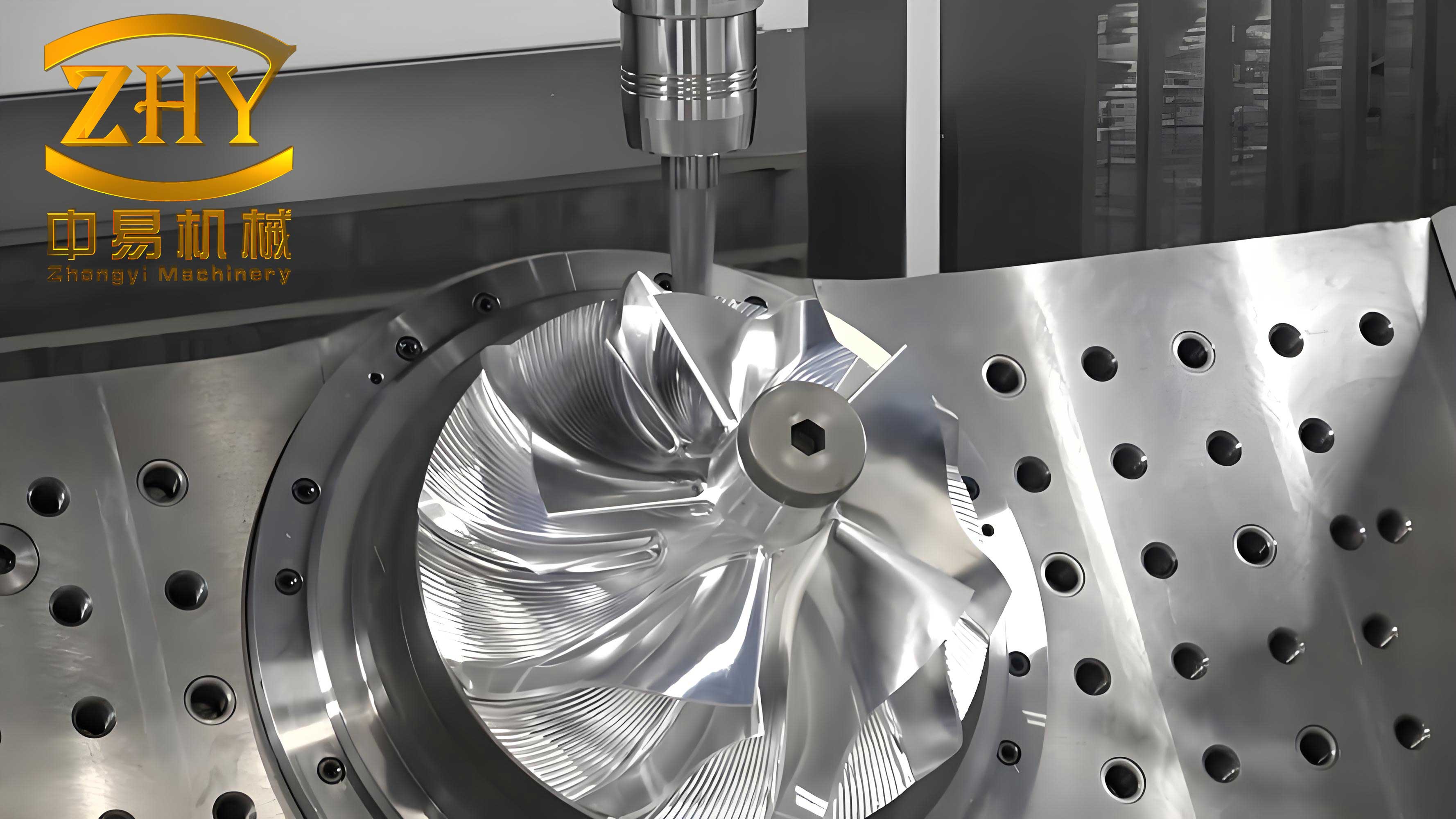
Castability and Soundness: Enabling Complex Geometries
The casting performance of CGI is outstanding, particularly its low shrinkage tendency. Measurements using standard body shrinkage specimens show that CGI exhibits a significantly lower volumetric shrinkage porosity compared to inoculated gray iron:
$$ \text{Shrinkage Porosity}_{CGI} \approx 1.2\% $$
$$ \text{Shrinkage Porosity}_{Inoculated Iron} \approx 2.8\% $$
This difference stems from the solidification morphology. CGI solidifies with a eutectic-like structure, avoiding the large austenite dendrites of hypereutectic gray irons and the severe micro-shrinkage between austenite shells common in the pasty solidification of ductile iron. This results in exceptionally sound castings, even in sections with extreme thickness variations common in machine tool casting like machine bases. Risers often show no shrinkage but even expansion, and ultrasonic inspection typically reveals a dense, defect-free structure.
The section sensitivity, influenced by the choice of compacting agent (rare-earth-silicon, rare-earth-zinc-magnesium, etc.), is manageable. While all agents show a tendency for graphite shape to vary with cooling rate, rare-earth-zinc-magnesium-aluminum alloys minimize chilling tendencies, making them ideal for complex machine tool casting with both thick and thin sections.
Structural Rigidity and Lightweighting Potential
The high elastic modulus and good damping of CGI directly enable more rigid and lighter castings. A comparative rigidity test on the base of a universal testing machine clearly demonstrated this. Under identical loading conditions, the CGI base exhibited significantly less deflection and higher load-bearing capacity before fracture than its inoculated iron counterpart.
| Load (kN) | Deflection – Inoculated Iron Base (mm) | Deflection – CGI Base (mm) |
|---|---|---|
| 200 | 0.38 | 0.25 |
| 400 | 0.75 | 0.50 |
| 600 (Fracture Load for Inoc. Iron) | Fractured | 0.74 |
| 800 (Fracture Load for CGI) | – | Fractured |
This inherent stiffness allows for radical redesigns. For instance, a boring mill bed originally designed in gray iron with wall and rib thicknesses of 20-22 mm was successfully redesigned in CGI with thicknesses reduced to 14-16 mm, and complex diagonal ribs were simplified to straight ones. This redesign maintained, and even improved, the component’s static and dynamic stiffness while reducing the raw casting weight by hundreds of kilograms per unit. This lightweighting principle for machine tool casting can be generalized. The specific stiffness, a key metric for structural efficiency, favors CGI:
$$ \text{Specific Stiffness} \propto \frac{E}{\rho} $$
where $\rho$ is density. Since CGI’s E is much closer to ductile iron while its density is similar to gray iron, its specific stiffness is superior to gray iron, validating the potential for weight reduction in machine tool casting.
Economic Impact and Cost Effectiveness
The transition to CGI delivers compelling economic benefits across several dimensions:
- Raw Material Flexibility and Quality Assurance: CGI can be reliably produced from high-carbon base iron, reducing dependency on scarce steel scrap and ensuring consistent production of high-quality castings.
- Reduced Scrap Rates: The excellent castability and low shrinkage of CGI drastically lower rejection rates due to casting defects like shrinkage porosity or hard spots, which were significant issues with high-strength gray irons in complex shapes.
- Material Cost Savings: Despite the cost of rare-earth treatments, the total metallic raw material cost for CGI melt is competitive. More importantly, the significant weight reduction per part leads to direct material savings.
- Extended Component Life: The superior wear resistance of CGI in machine tool casting applications, such as guideways, extends service intervals and reduces long-term maintenance costs.
A comparative cost analysis of typical castings highlights the advantage:
| Casting Name | Original Material | CGI Material | Weight Saving | Relative Material Cost Reduction per Casting |
|---|---|---|---|---|
| Testing Machine Base | Inoculated Iron | CGI (RE-Zn-Mg) | ~10% | ~8% |
| Boring Mill Bed | Inoculated Iron | CGI (RE-Zn-Mg) | ~20% | ~22% |
Note: Calculations are based on raw material costs per ton of molten metal and final casting weight. Savings from reduced scrap and improved machinability further enhance the overall cost benefit.
Processing and Metallurgical Control
The successful production of CGI for critical machine tool casting requires controlled melting and treatment. Standard practice involves using a cupola or electric furnace to achieve a base iron temperature exceeding 1400°C. The key is the post-inoculation treatment with a compacting agent. The treatment process must account for the base sulfur content, which typically ranges between 0.06% and 0.10%. The effectiveness of the treatment can be quantified by the蠕化率 (Compacted Graphite Ratio), which should ideally exceed 80% for optimal properties:
$$ \text{CGI Ratio} (\alpha) = \frac{\text{Area of Compacted Graphite}}{\text{Total Graphite Area}} \times 100\% $$
where $\alpha > 80\%$ is targeted. A balanced treatment using rare-earth-zinc-magnesium alloys has proven effective in achieving this high ratio while minimizing chill in thin sections and ensuring a consistent matrix structure (pearlitic or ferritic-pearlitic) throughout the variable sections of a machine tool casting.
Conclusion
Compacted Graphite Iron has established itself as a superior engineering material for demanding structural applications. Its unique property matrix—high strength and stiffness, excellent damping capacity, outstanding wear resistance, and exceptional castability—makes it ideally suited for the realm of machine tool casting. The material enables not just a direct substitution but a fundamental redesign philosophy: creating lighter, stiffer, more durable, and more cost-effective cast components. The economic benefits, derived from material savings, reduced scrap, and longer service life, are substantial and proven in long-term industrial application. As the demands for precision, speed, and efficiency in machine tools continue to grow, CGI stands as a key enabling material technology, offering a path towards next-generation machine tool casting that is both high-performing and economically sustainable. Its continued development and adoption will undoubtedly play a critical role in advancing manufacturing capabilities.