
As a critical grinding equipment in modern industrial processes, the ball mill plays an indispensable role in cement production. This article delves into the current application status of ball mill in China’s cement sector, emphasizing their operational principles, technological advancements, and contributions to energy efficiency and sustainability. By analyzing key factors such as grinding efficiency, material adaptability, and environmental impact, this study aims to provide actionable insights for optimizing ball mill performance and fostering industry-wide innovation.
1. Introduction
The cement industry is a cornerstone of China’s infrastructure development, contributing significantly to urbanization and economic growth. Central to cement manufacturing is the ball mill, a device designed to grind raw materials such as limestone, clay, and iron ore into fine powders. These powders undergo subsequent processes like calcination to form clinker, which is then mixed with additives to produce cement.
Ball mill dominate this sector due to their versatility, reliability, and ability to handle diverse material properties. However, challenges such as high energy consumption, noise pollution, and dust emissions necessitate continuous technological upgrades. This article explores how modern ball mill address these challenges while enhancing productivity and sustainability.
2. Working Principles of Ball Mill
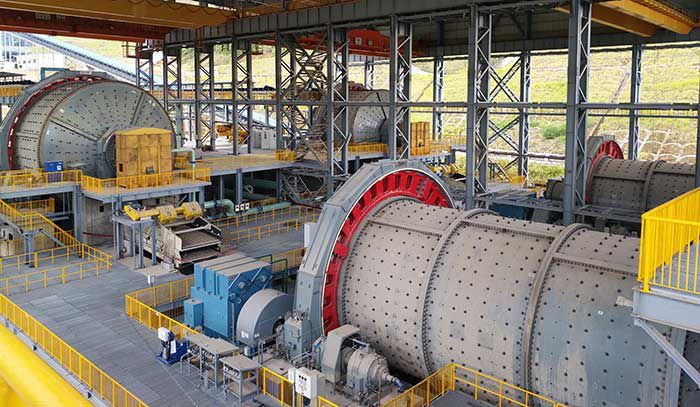
A ball mill operates by rotating a cylindrical shell partially filled with grinding media (e.g., steel balls) and raw materials. The rotation induces cascading and cataracting motions, generating impact and shear forces that pulverize materials. The grinding efficiency (EE) can be expressed as:E=PWE=WP
Where:
- EE = Grinding efficiency
- PP = Output power (kW)
- WW = Energy consumption (kWh/t)
Key factors influencing efficiency include:
- Rotational speed: Optimal speed ensures media cascade without excessive centrifugal force.
- Media size and density: Larger media enhance impact grinding, while smaller media improve abrasion.
- Material feed size: Smaller feed sizes reduce grinding time.
3. Classification of Ball Mill
Ball mill is categorized based on operational modes and structural designs. The table below summarizes common types:
| Type | Description | Applications |
|---|---|---|
| Batch Ball Mill | Operates intermittently; suitable for small-scale or experimental grinding. | Laboratories, small cement plants |
| Continuous Ball Mill | Runs non-stop with automated feed/discharge; ideal for large-scale production. | High-capacity cement plants |
| Vertical Ball Mill | Vertical orientation reduces floor space; integrates drying and grinding. | Moisture-sensitive materials |
| Horizontal Ball Mill | Traditional design with horizontal cylinder; widely used in cement industry. | General-purpose grinding |
Each type offers distinct advantages. For instance, continuous ball mill dominate large cement plants due to their high throughput, while vertical mills excel in energy efficiency.
4. Current Application Status in China
China’s cement industry relies heavily on ball mill, with over 85% of plants utilizing horizontal ball mill for clinker grinding. Recent advancements focus on:
4.1 Energy-Saving Technologies
Modern ball mill incorporate:
- High-efficiency classifiers: Separate fine particles early, reducing over-grinding.
- Advanced liners: Wear-resistant materials extend service life and reduce downtime.
- Variable-frequency drives (VFDs): Optimize motor speed based on load, cutting energy use by 15–20%.
The energy consumption of ball mill in China has decreased from 45 kWh/t in 2010 to 32 kWh/t in 2023, aligning with national carbon neutrality goals.
4.2 Environmental Mitigation
To address dust and noise pollution, manufacturers employ:
- Closed-circuit systems: Minimize dust leakage.
- Soundproof enclosures: Reduce noise levels below 85 dB.
- Waste heat recovery: Utilize excess heat for pre-drying raw materials.
5. Technological Challenges and Future Trends
Despite progress, challenges persist:
- High maintenance costs: Frequent replacement of grinding media and liners.
- Limited automation: Many plants still rely on manual operation.
Future trends include:
- AI-driven optimization: Machine learning algorithms to predict media wear and optimize feed rates.
- Hybrid grinding systems: Combining ball mill with roller presses for ultra-fine grinding.
- Circular economy integration: Recycling industrial waste (e.g., slag) as supplementary cementitious materials.
6. Conclusion
Ball mill remains pivotal to China’s cement industry, driving both productivity and sustainability. By adopting energy-efficient technologies, enhancing automation, and prioritizing environmental safeguards, the sector can further reduce its carbon footprint while maintaining global competitiveness. Continued investment in R&D and cross-industry collaboration will ensure ball mill evolve to meet future demands.
Tables and Formulas
Table 1: Energy Consumption Comparison (2010 vs. 2023)
| Parameter | 2010 | 2023 |
|---|---|---|
| Average energy use (kWh/t) | 45 | 32 |
| CO2 emissions (kg/t) | 820 | 580 |
Formula 2: Critical Speed Calculation
The critical speed (NcNc) at which grinding media centrifuge is:Nc=42.3DNc=D42.3
Where DD = Internal diameter of the mill (meters).