
From my extensive experience in the field of metalworking and restoration, the challenge of defects in cast components is a universal and costly reality. The pursuit of reliable, efficient, and non-destructive repair methods is not merely a technical exercise but a critical economic imperative. Among the various flaws that plague castings, porosity in casting stands out as one of the most pervasive and troublesome. This article delves into the core principles, technological advancements, and practical applications of a novel repair methodology that has revolutionized how we approach salvage operations for defective castings. My focus will be on a specific class of equipment designed to address these issues with minimal thermal impact, thereby preserving the integrity of the base material.
Casting, as a foundational manufacturing process, inherently contends with the statistical certainty of defects. Scrap rates, while improving with technology, still represent significant material, energy, and financial loss. Traditional repair techniques, such as conventional arc welding or TIG welding, often introduce new problems while solving the old. The intense, concentrated heat input can lead to microstructural changes, hardening, cracking (especially in cast irons), residual stress, and distortion. These secondary defects can be as detrimental as the original flaw, sometimes rendering the repair attempt more damaging than the initial condition. It was within this context that the development of specialized casting defect repair systems emerged, offering a paradigm shift focused on precise, cold-repair processes.
The Spectrum of Casting Imperfections: A Systematic Analysis
Before exploring the repair technology, it is essential to categorize the enemies we face. Defects in castings originate from a complex interplay of factors including mold design, gating systems, pouring temperature, metal chemistry, and cooling rates. The table below summarizes the primary defect types, their characteristics, and common causes.
| Defect Type | Visual/Tactile Description | Primary Causes | Critical Impact |
|---|---|---|---|
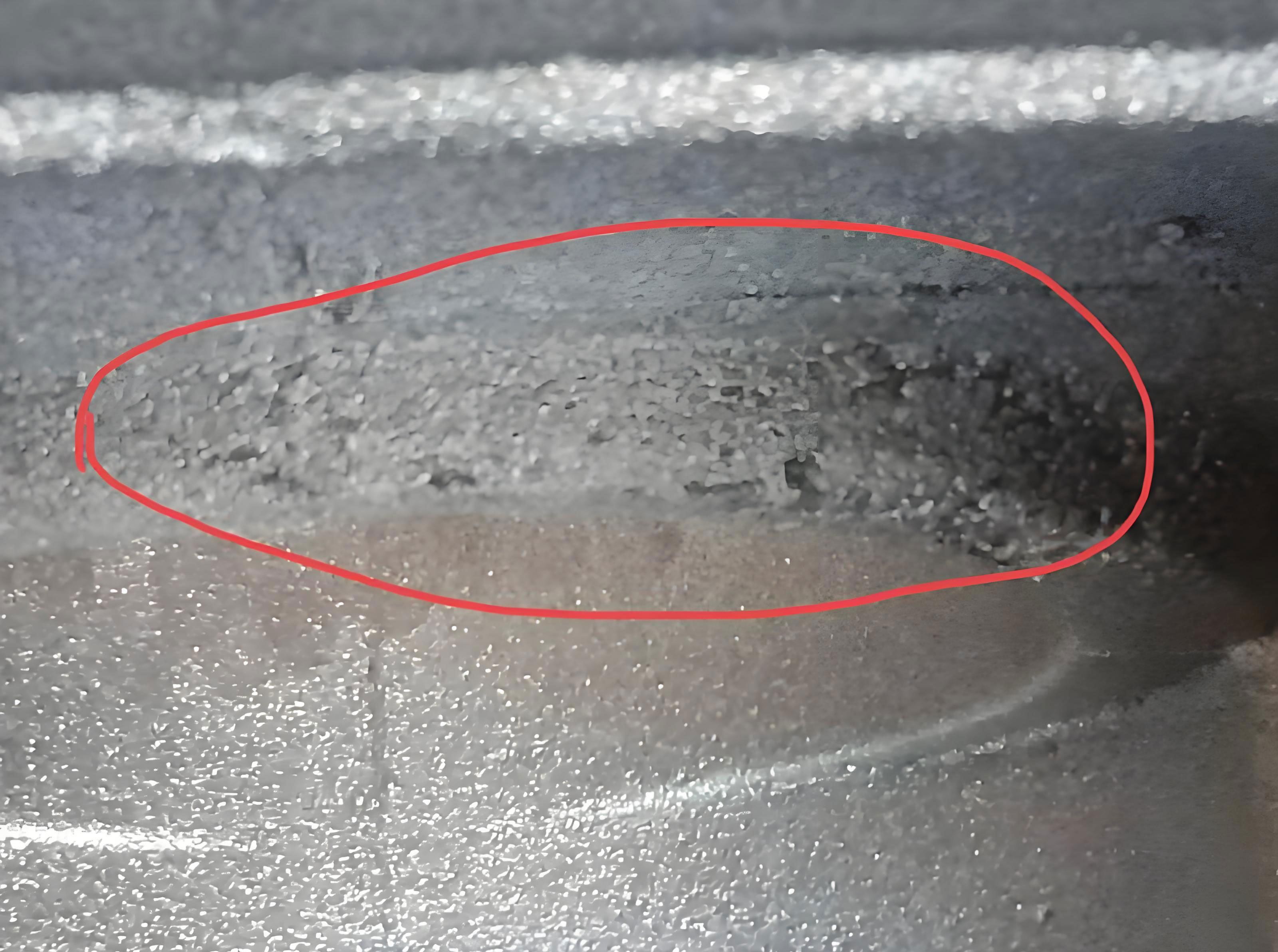
| Porosity (Gas) | Spherical or elongated smooth-walled cavities within the casting wall or on the surface. | Entrapped air/gases from mold, moisture, or dissolved gases in molten metal. | Reduces effective load-bearing area, creates stress concentrators, often leads to pressure-tightness failure. |
| Shrinkage Cavity/Porosity | Irregular, dendritic-shaped cavities often in thermal centers (hot spots) of the casting. | Inadequate feeding during solidification; lack of risers or improper riser design. | Similar to gas porosity but often larger and more structurally compromising. |
| Sand Inclusions (Sand Hole) | Cavities containing or lined with molding sand or core sand. | Erosion of mold/core surfaces, low mold strength, turbulent metal flow. | Creates discontinuous material, acts as a notch under stress, can cause machining tool damage. |
| Slag Inclusions | Cavities filled with non-metallic oxides or dross. | Poor slag removal during pouring, oxidation of molten metal. | Similar to sand inclusions, often weaker and more brittle. |
| Cold Shuts/Misruns | Visible seams or incomplete filling where metal streams failed to fuse. | Low pouring temperature, slow filling, narrow cross-sections. | Severe structural discontinuity, often a complete lack of bonding. |
It is crucial to understand that porosity in casting can be a symptom of multiple root causes. The effective repair strategy must not only fill the void but also create a metallurgical bond that restores the component’s functional properties without altering the surrounding matrix. The heat-affected zone (HAZ) is the Achilles’ heel of thermal repair; its minimization is the key to success.
The Core Technology: Principles of the Casting Defect Repair System
The equipment under discussion operates on the principle of pulsed resistance micro-welding or electro-spark deposition. It is fundamentally different from continuous arc processes. The system delivers short-duration, high-current, low-voltage electrical pulses to a consumable electrode (the filler material) and the workpiece. Each pulse generates an instantaneous, highly localized high-temperature plasma or arc that melts a microscopic amount of both the filler and the substrate. This micro-pool solidifies in milliseconds before the next pulse is delivered at an adjacent spot.
The governing physics can be simplified through the Joule heating equation for the energy input per pulse:
$$ Q = I^2 R t $$
Where \( Q \) is the heat energy (Joules), \( I \) is the pulse current (Amperes, often >1000A), \( R \) is the dynamic resistance at the contact point (Ohms), and \( t \) is the pulse duration (typically milliseconds). This energy is concentrated in a volume of less than 1 mm³, leading to an extremely high energy density. The instantaneous temperature at the discharge point can be estimated by:
$$ T_{melt} = \frac{Q}{m \cdot c} + T_{ambient} $$
Where \( m \) is the mass of material melted and \( c \) is the specific heat capacity. In practice, temperatures can exceed 3000–5000°C at the micro-zone, sufficient to melt any engineering metal, but this thermal spike is so brief and localized that the overall part remains near ambient temperature. The critical parameter is the ratio of energy used for melting versus energy conducted into the part. Advanced systems employ intelligent control to maximize this ratio, often claiming over 90% efficiency for the melting process.
The process involves several key parameters that can be adjusted for different materials and defect types:
- Pulse Frequency (f): The number of energy pulses per second (Hz). Lower frequencies allow more cooling time between pulses, reducing heat build-up.
- Pulse Energy/Amplitude (I²t): Governs the size of each melted nugget.
- Arc Ratio/Duty Cycle: The proportion of pulse-on time within a cycle.
- Electrode Material and Form: The filler metal, which must be compatible with the substrate (e.g., same alloy or one with similar properties).
| Base Material | Pulse Frequency (Hz) | Current Amplitude | Filler Material Form | Special Consideration |
|---|---|---|---|---|
| Gray Cast Iron (HT250) | 30 – 100 | High | Iron shavings, thin low-C steel strip | Pre-heat generally not required; control cooling to avoid carbides. |
| Ductile Iron (QT450-10) | 50 – 150 | High | Ductile iron shavings, Ni-Fe wire | Minimize heat to preserve nodular graphite structure. |
| Aluminum Alloys (A356, etc.) | 100 – 500 | Medium | Aluminum wire (ER4043/5356) | Often uses argon shielding gas; requires high frequency. |
| Copper Alloys (C95800, etc.) | 80 – 300 | Medium-High | Copper alloy wire or strip | May use argon shielding; high thermal conductivity demands precise control. |
Metallurgical and Performance Outcomes: Analysis of Repaired Zones
The true measure of any repair technology lies in the quality of the repaired zone. Through microscopic examination and mechanical testing, the outcomes of this pulsed repair process can be quantified.
1. Microstructural Integration: In a successful repair, the filler metal and the base metal inter-diffuse and form a continuous crystalline structure across the interface. The heat-affected zone (HAZ) is exceptionally narrow, often spanning only 2-3 grains. There is no evidence of coarse grain growth, martensite formation (in steels/irons), or precipitation of deleterious phases. For gray iron, the repaired zone shows a continuous growth of fine, dendritic grains from the base metal’s silicon-rich regions. This seamless integration is what allows the repair to withstand dynamic loading and thermal cycling without failure initiation at the bond line.
2. Mechanical Property Restoration:
- Hardness: The hardness of the repaired nugget is typically very close to that of the base material. For example, on a surface-hardened machine tool guideway (HRC 50-55), the repair point and the adjacent HAZ showed no measurable softening. The hardness profile can be modeled as a step function rather than a gradient, confirming the minimal thermal penetration: $$ H_{repair} \approx H_{base}, \quad \text{for } d > d_{HAZ} $$ where \( d_{HAZ} \) is on the order of 0.1-0.3 mm.
- Strength and Leak Tightness: Repairs on pressure-containing components like engine blocks, manifolds, and pump housings are routinely tested. The bond strength and density are sufficient to withstand hydrostatic test pressures exceeding the component’s service requirements (e.g., 0.5-1.0 MPa for water jackets, 10-20 MPa for hydraulic bodies). The absence of micro-cracks, confirmed by dye penetrant testing (PT) at 10x magnification, is critical for this performance.
- Machinability: Repaired zones on machined surfaces are readily machinable using standard tools (turning, milling, grinding). There is no hard spotting or abrasive inclusions that would cause tool wear or tear-out.
3. Defect-Filling Efficiency and Surface Finish: The process builds the repair layer by overlapping micro-welds. For surface defects, a final “leveling” pass without additional filler material can be used to create a surface texture comparable to shot-blasted or as-cast surfaces, often eliminating the need for post-repair peening. The visual match is excellent, with no color difference when using matching filler alloys, which is paramount for cosmetic or unmachined surfaces.
Practical Application Protocols for Critical Components
The effectiveness of the theory is proven in practice. Below are detailed protocols for repairing different component types, highlighting the adaptability of the process.
| Component & Material | Defect Type & Location | Pre-Repair Preparation | Repair Parameters & Filler | Post-Repair Validation |
|---|---|---|---|---|
| Engine Cylinder Block (Gray Iron, HT250) | Gas porosity in casting and sand holes (φ1-3mm) on water jacket/oil gallery walls or sealing faces. | Drill/grind defect to φ≥4mm, depth ≥3mm to create clean, accessible cavity. Degrease thoroughly. | Device: 5th Gen. Model. Filler: HT250 shavings or 08F steel strip. Freq: 60 Hz, Amplitude: 70%. Build layer-by-layer. | 1) Visual: No trace, color match. 2) Dye PT: No cracks. 3) Pressure Test: 0.4 MPa, 3 min, no leak. 4) Final machining to dimension. |
| Valve Body (Ductile Iron, QT450-10) | Leaking gas porosity (φ2-4mm) on pressure face; sand holes on machined flange. | Enlarge porosity to φ≥5mm, depth 3-5mm. For machined-face holes, clean to sound metal. | Filler: QT450-10 shavings or fine Ni-Fe wire. Freq: 80 Hz for build, 40 Hz for final leveling (non-machined faces). | 1) Macroscopic: Surface state matches surrounding area. 2) 10x Magnification: No micro-cracks. 3) Dye PT: Pass. 4) System Pressure Test: 1.6 MPa, no leak. |
| Aluminum Cylinder Head (A356-T6) | Shrinkage porosity in casting and gas holes (φ1-2mm) in combustion chamber wall or water passage. | Enlarge defect to φ≥3mm, depth 3-4mm. Use sharp tools to avoid smearing. | Device: Non-ferrous model with Argon shield. Filler: ER4043 Al wire (φ1mm). Freq: 200 Hz, Arc Ratio: 30%, Speed: Medium. | 1) Visual: Dense, no痕迹. 2) 10x Magnification: Crack-free. 3) Pressure Test (water jacket): 0.3 MPa, no leak. 4) Machining to final spec. |
| Machine Tool Guideway (Gray Iron, Flame Hardened) | Graphite pits, sand holes (φ2-5mm, depth 0.5-2mm) on precision guiding surface. | Clean out loose material, undercut slightly for mechanical keying. No pre-heat. | Filler: Same-grade iron shavings or fine steel wire. Use lower energy to minimize HAZ. | 1) Hardness Test: Repair point HRC 50-55, adjacent HAZ HRC 50-55 (no softening). 2) Dye PT: Pass. 3) Final grinding to Ra 0.8μm, visual inspection for color uniformity. |
| Large Ingot Mold & Bottom Plate (Gray Iron) | Slag erosion pits, massive shrinkage cavities, graphite degeneration zones. | Remove all damaged/oxidized material back to sound, clean metal. May require shaping. | Filler: Bulk fill with iron shavings, finish surface with iron sheet. High energy for deep filling. | 1) Service Simulation: After casting hot iron (≈1400°C) and cooling, inspect repair zone. 2) Macroscopic: No cracks, spalling, swelling, or detachment. Good fusion with base. |
Comparative Advantages and Economic Rationale
Why does this technology represent a significant advancement? The answer lies in a direct comparison with conventional methods and a clear cost-benefit analysis.
| Repair Criterion | Traditional TIG/Welding | Polymer/Epoxy Filling | Pulsed Micro-Welding Repair |
|---|---|---|---|
| Thermal Input | Very High, Continuous. Large HAZ. | None (Ambient Cure). | Extremely Low, Pulsed. Microscopic HAZ. |
| Risk of Cracking/Distortion | High (esp. in cast irons). Requires pre/post-heat. | None. | Negligible. No pre/post-heat required. |
| Metallurgical Bond | Fusion Weld, but may alter microstructure. | Mechanical/Adhesive only. | True Metallurgical Fusion with minimal microstructural change. |
| Service Temperature | Can match base metal. | Limited (typically <150-200°C). | Matches base metal (can withstand >500°C). |
| Pressure/Strength Recovery | Good, if no cracks induced. | Poor for structural/ pressure applications. | Excellent, restores near-parent strength. |
| Machinability & Finish | Possible, but may be hard spots. | Poor, often not machinable. | Excellent, matches base metal machinability. |
| Visual/Aesthetic Result | Often discolored, visible weld bead. | Color mismatch, can deteriorate. | Excellent color match, seamless appearance. |
| Economic Impact | Saves part but may require extensive post-work. | Low-cost but temporary/ non-structural fix. | Saves high-value part with minimal rework, high first-pass yield. |
The economic equation is compelling. For a high-value casting like a large diesel engine block or a complex hydraulic valve manifold, the cost of the raw casting and the machining invested prior to defect discovery can be enormous. The cost of repair using this technology is a fraction of the scrap loss. If the process can salvage even 50% of what was previously scrapped—especially for defects like surface porosity in casting or minor leaks—the return on investment for the equipment is rapid. The formula for the savings (\( S \)) on a batch of parts is:
$$ S = N_{salvaged} \times (C_{new} + C_{machining} – C_{repair}) – C_{capital} $$
Where \( N_{salvaged} \) is the number of parts saved, \( C_{new} \) is the cost of a new casting, \( C_{machining} \) is the value-added machining cost already invested, \( C_{repair} \) is the average repair cost per part (labor + consumables), and \( C_{capital} \) is the amortized cost of the repair equipment. In foundries and machine shops with high-value components, \( S \) quickly becomes a significant positive figure.
Future Perspectives and Concluding Synthesis
The evolution of casting defect repair technology is ongoing. Future developments are likely to focus on increased automation, integrating the repair head with CNC systems or robotic arms for consistent, high-throughput repair of defects identified by automated vision systems. Enhanced process monitoring with real-time feedback on arc stability and deposition quality will further improve reliability. The principles are also being explored for additive repair of worn surfaces and dimensional restoration, blurring the line between defect repair and metal-additive manufacturing.
In conclusion, the advent of specialized pulsed micro-welding systems has provided the manufacturing and maintenance industries with a powerful tool to combat the perennial problem of casting defects. By fundamentally decoupling the act of metallurgical joining from the detrimental effects of bulk heat input, it solves the core dilemma that plagued traditional methods. Whether addressing the intricate porosity in casting of an aluminum cylinder head, the shrinkage in a massive cast iron press frame, or the sand hole in a precision bronze bearing housing, this technology offers a reliable, structurally sound, and economically viable salvage path. It transforms what was once inevitable scrap back into valuable, functional components, contributing significantly to resource efficiency and sustainable manufacturing practices. The science behind it is robust, the procedural protocols are well-established, and the results consistently demonstrate that high-integrity repair is not just a possibility, but a practical reality.