
The pursuit of superior metallurgical quality, cost-effectiveness, and environmental sustainability in foundry operations has driven the evolution of melting technologies. Among these, the Blast Furnace (BF) and Medium-Frequency Induction Furnace (IF) duplex short-process melting has emerged as a compelling strategy, particularly for the production of demanding components like machine tool castings. This process, which involves the direct hot-charging of molten iron from a blast furnace into an induction furnace for final adjustment, superheating, and treatment, eliminates the energy-intensive step of remelting solid pig iron. While its benefits in energy savings and economic efficiency are widely acknowledged for standard iron castings, its application for high-grade, high-performance machine tool castings presents distinct technical challenges that require a nuanced understanding and specific countermeasures.
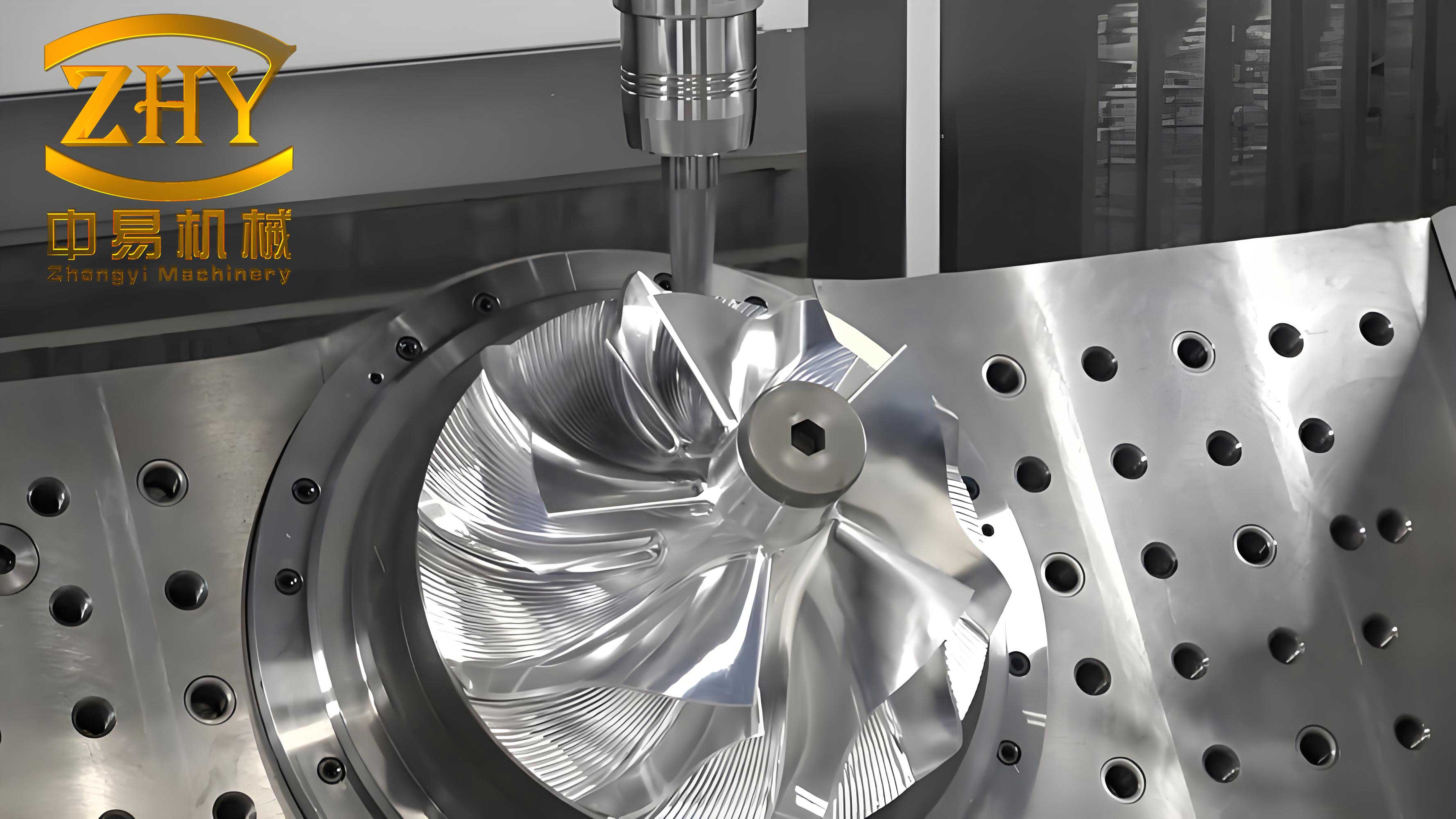
Machine tool castings, such as beds, columns, and saddles, are quintessential applications for gray iron, demanding an optimal balance of tensile strength, damping capacity, dimensional stability, and machinability. The graphite morphology and matrix structure are paramount, where fine, uniformly dispersed A-type graphite within a pearlitic matrix is desired. The inherent characteristics of blast furnace molten iron within the short-process route necessitate a departure from conventional melting practices used for machine tool castings.
The core challenge lies in the “genetic” influence of the iron source. Compared to the remelting of pig iron, hot metal from a blast furnace has spent less time in a solid state, resulting in fewer precipitated coarse graphite flakes and carbides. While this leads to better micro-uniformity, it also means a significant reduction in potent heterogeneous nucleation sites for graphite during solidification. Consequently, short-process iron exhibits a greater undercooling tendency, promoting the formation of undercooled (D-type) graphite, increased hardness, shrinkage propensity, and section sensitivity—all detrimental to the performance and castability of premium machine tool castings.
Comparative Analysis of Melting Processes for Machine Tool Castings
To contextualize the short-process method, it is essential to understand the metallurgical fingerprints of other common melting routes for producing iron for machine tool castings.
| Melting Process | Primary Charge | Key Metallurgical Characteristics | Advantages for Machine Tool Castings | Disadvantages/Limitations |
|---|---|---|---|---|
| Cupola Melting | Pig Iron, Scrap | Intense carburization in coke bed; strong冶金 effect; inherent desulfurization/oxidation. | High superheating capability; provides active carbon nuclei; good graphite structure. | High environmental footprint; sensitive to coke quality; less compositional control. |
| IF Melting (Pig Iron) | Pig Iron | Low superheat; minimal冶金; “genetic” inheritance of coarse graphite from pig iron. | Excellent temperature and composition control. | High undercooling; hard spots; poor graphite nucleation without treatment. |
| IF Melting (Synthetic Iron) | Steel Scrap, Graphitized Carburizer | High “active” carbon addition; carbon nuclei from high-quality carburizer. | Excellent graphite morphology (fine, dispersed); low shrinkage tendency; high strength. | Dependent on high-quality, low-sulfur carburizer and clean scrap availability. |
| Cupola + IF Duplex | Pig Iron via Cupola | Combines carburization/冶金 of cupola with control/保温 of IF. | Good nucleation potential; adjustable chemistry/temperature; suitable for high volume. | Still requires solid pig iron; involves two melting units. |
| BF + IF Short-Process | Hot Blast Furnace Metal | Direct use of liquid iron; fewer inherited nuclei; high undercooling tendency. | Highest energy efficiency; low operational cost; environmentally favorable. | Requires precise control of nucleation; sensitive to trace elements; needs robust inoculation. |
The table underscores that the BF-IF short-process offers unparalleled energy and economic benefits but starts with a metallurgical handicap for high-grade applications. Therefore, the production of HT250, HT300, and higher grade machine tool castings via this route is not a simple substitution but a technology requiring tailored process engineering.
Foundational Process Control for Short-Process Machine Tool Castings
The successful production of high-integrity machine tool castings via the short-process hinges on a multi-faceted control strategy addressing raw materials, chemistry, melt practice, and liquid treatment.
1. Raw Material Selection and Logistics
The quality of the blast furnace hot metal is the first critical parameter. It should ideally correspond to a high-grade铸造 pig iron (e.g., Z18 or equivalent). The use of very low-silicon steelmaking iron should be avoided as it increases the risk of chill and shrinkage defects in the final machine tool castings. A robust logistics and保温 system is vital. The discontinuous tapping of the blast furnace must be synchronized with the induction furnace’s batch cycle. Specially designed保温 ladles with multiple lining layers and insulating covers (e.g., using vermiculite as a cover flux) are necessary to minimize temperature loss and surface oxidation during transport and holding.
Scrap steel is used primarily to lower the carbon equivalent and dilute the concentration of inherited trace elements. Clean, low-alloy carbon steel scrap is preferred. The carburizer is arguably the most critical additive. For producing high-quality machine tool castings, a high-purity, graphitized synthetic carburizer is mandatory. Key specifications include: Fixed Carbon $$ω_{C} > 99.5\%$$, Sulfur $$ω_{S} < 0.03\%$$, Nitrogen $$ω_{N} < 0.003\%$$. Poor quality carburizers lead to low absorption rates, high gas content, and inadequate nucleation.
2. Chemistry Design and the Role of Key Ratios
The chemical composition must be optimized to counteract the short-process iron’s tendencies. A higher Carbon Equivalent (CE) is generally employed to improve castability and reduce shrinkage, but it must be combined with effective inoculation and alloying to maintain strength.
For machine tool castings, the Carbon Equivalent is calculated as: $$CE = C + \frac{1}{3}(Si + P)$$
A critical parameter is the Silicon-to-Carbon ratio ($$ω_{Si}/ω_{C}$$). Research and practice indicate that for a given CE, there is an optimal $$ω_{Si}/ω_{C}$$ that maximizes strength. For CE around 3.9-4.1%, a ratio of 0.7-0.85 often yields the best results for grades like HT250. This ratio influences the undercooling tendency and graphite morphology.
Sulfur plays a paradoxical but crucial role. Unlike in ductile iron, a minimum sulfur level is beneficial in gray iron for machine tool castings as it provides sulfide particles that can act as nucleation sites for graphite. An optimal range is $$ω_{S} = 0.08\% – 0.12\%$$. If the hot metal is too low in sulfur, deliberate inoculation with FeS is necessary. This leads to the importance of the Manganese-to-Sulfur ratio ($$ω_{Mn}/ω_{S}$$). Manganese is added to neutralize sulfur by forming MnS inclusions. The ratio must be controlled to ensure all sulfur is balanced without excessive manganese, which can harden the matrix excessively. A typical target is: $$ω_{Mn} ≈ 1.7 \times ω_{S} + 0.3\%$$
Based on production experience, the following compositional windows have proven effective for short-process machine tool castings:
| Grade | CE | C (%) | Si (%) | $$ω_{Si}/ω_{C}$$ | Mn (%) | S (%) | P (%) |
|---|---|---|---|---|---|---|---|
| HT200 | 4.00-4.30 | 3.30-3.45 | 1.90-2.30 | 0.58-0.70 | 0.6-0.8 | 0.08-0.12 | < 0.20 |
| HT250/CrCu250 | 3.85-4.10 | 3.25-3.35 | 1.85-2.20 | 0.65-0.85 | 0.7-1.0 | 0.08-0.12 | < 0.20 |
| HT300 | 3.75-3.90 | 3.20-3.30 | 1.80-2.15 | 0.65-0.90 | 0.8-1.2 | 0.08-0.12 | < 0.15 |
3. Trace Element Management
This is a distinctive and vital aspect of using blast furnace hot metal for precision machine tool castings. The hot metal can carry a cocktail of trace elements (Pb, Ti, As, Sb, Te, etc.) from the iron ore, which can severely degrade properties. Spectroscopic full-element analysis is essential.
- Lead (Pb) and Tellurium (Te) strongly promote undercooling and can cause Widmanstätten graphite. Limits: $$ω_{Pb} < 0.002\%$$, $$ω_{Te} < 0.0035\%$$.
- Titanium (Ti), commonly from the blast furnace, forms hard Ti(C,N) compounds that impair machinability. Limit: $$ω_{Ti} < 0.04\%$$ for best machining, can be tolerated up to ~0.08%.
- Nitrogen (N) can be beneficial at low levels (0.007-0.012%) for stabilizing pearlite, but excess causes porosity. Its interaction with Ti is important: $$ω_{N_{absorbed}} ≈ \frac{ω_{Ti}}{3.42}$$. Titanium can be used intentionally to “fix” excess nitrogen.
- Elements like Cr, Cu, Sn, Sb in controlled amounts (<0.2%, <1.0%, <0.08%, <0.02% respectively) are often added intentionally as alloying elements to strengthen the matrix and are generally not harmful if within limits.
The strategic use of high proportions of steel scrap in the charge is an effective method to dilute the concentration of these harmful trace elements in the final iron for machine tool castings.
4. Melting Practice in the Induction Furnace
The operational practice in the IF must address the low nucleation state of the hot metal. Superheating temperature is a key lever. A temperature of $$1500 – 1520\,^{\circ}\mathrm{C}$$ is recommended to promote dissolution and homogenization. However, prolonged holding at high temperature (>10 min above $$1500\,^{\circ}\mathrm{C}$$) must be avoided as it leads to carbon loss, destruction of nuclei, and increased oxidation/contraction tendency. If such a “dead melt” occurs, corrective action with fast-dissolving carburizer or pig iron addition is needed.
The charging sequence is optimized for efficiency and quality: Carburizer (base) → Steel Scrap → Returns → Hot Blast Furnace Metal → Alloys (FeSi, etc.) → Final Carburizer adjustment. Adding a layer of carburizer initially helps protect the subsequent charge from oxidation.
The Imperative of Enhanced Inoculation for Machine Tool Castings
Given the inherent nucleation deficiency of short-process iron, inoculation is not merely an enhancement but a fundamental requirement for producing sound, high-strength machine tool castings. The goals are to: 1) Promote A-type graphite formation, 2) Minimize chill in thin sections, 3) Reduce section sensitivity, and 4) Improve tensile strength consistency.
For machine tool castings, the choice of inoculant is application-specific. Composite inoculants often outperform simple FeSi. Key inoculant types and their applications are summarized below:
| Inoculant Type | Typical Composition | Key Features/Mechanism | Recommended Application for Machine Tool Castings | Addition Rate (%) |
|---|---|---|---|---|
| Ferrosilicon (FeSi) | Si 72-80%, Ca 0.5-1.5% | Standard graphitizer; short-lived effect (~8 min). | Simple HT200 castings; fast pouring. | 0.25 – 0.60 |
| Si-Ba-Mn | Si 60-65%, Ba 4-6%, Mn 9-11% | Long-lasting effect (~15 min); powerful against chill. | Complex, thick-walled castings; long pouring times. | 0.20 – 0.40 |
| Si-Sr | Si 73-78%, Sr 0.8-1.0% | Excellent for thin sections; low gas tendency; reduces micro-shrinkage. | Hydraulic parts, thin-walled housings (dense castings). | 0.15 – 0.35 |
| RE-Ca-Ba Composite | Si ~40%, RE ~4%, Ca, Ba | Strong graphitizing power; modifies harmful trace elements (Pb,As). | High CE (3.9-4.3%) thin-walled, high-strength castings (e.g., CrCu250). | 0.20 – 0.50 |
| RE-Cr-Mn Composite | Si ~38%, Cr ~15%, RE ~7% | Combines inoculation with carbide stabilization. | High-strength, wear-resistant grades (HT300/350). | 0.20 – 0.50 |
The inoculation temperature is critical and should be between $$1420 – 1460\,^{\circ}\mathrm{C}$$. The inoculant must be dry (<450°C preheated) and of appropriate size (e.g., 5-20 mm for ladle treatment). For machine tool castings requiring very long pouring times or transfer from furnace ladle to pouring ladle, a secondary stream inoculation with fine-grade inoculant (0.2-1.0 mm) at ~0.1% addition is highly effective in maintaining nucleation potency.
Microalloying for Property Enhancement
To achieve the required strength and hardness levels in high-carbon equivalent iron necessary for good castability, microalloying is indispensable for machine tool castings. The aim is to refine and strengthen the pearlitic matrix without creating excessive hard spots or shrinkage.
- Copper (Cu) and Tin (Sn) are potent pearlite stabilizers. Copper (0.4-0.7%) also improves corrosion resistance and fluidity. Tin is extremely effective at low levels (0.05-0.08%). Their combination is very efficient.
- Chromium (Cr) is a strong carbide former, increasing hardness and wear resistance but also increasing chilling tendency. Its negative effect is mitigated when added with Copper. A typical combination for wear-resistant guides on machine tool castings is Cr: 0.1-0.2% with Cu: 0.4-0.7%.
- Molybdenum (Mo) (e.g., 0.3%) may be added for very high-strength grades (HT350) to improve hardenability and thermal stability.
The addition method is important. Alloys like Cu and Sn are best added to the ladle via the pocket method to ensure high recovery and uniform distribution.
Mitigating Specific Defects in Short-Process Machine Tool Castings
Two major defect categories require focused attention: shrinkage porosity and impaired machinability.
Shrinkage Control: The combination of high strength and low shrinkage is a central challenge. Strategies include:
1. Utilizing a high Carbon Equivalent with microalloying as the fundamental principle.
2. Maximizing the use of high-quality graphitized carburizer to increase active carbon nuclei, which actually reduces shrinkage tendency.
3. Controlling the total inoculation silicon addition to around 0.3%, avoiding excessive amounts which can increase contraction.
4. Strictly controlling pouring temperature. A temperature increase of just $$20-30\,^{\circ}\mathrm{C}$$ can significantly raise shrinkage risk. The IF must have precise temperature control to prevent sequential batches from becoming progressively hotter.
5. Minimizing melt oxidation by fast melting cycles and using protective slag formers.
Machinability Enhancement for High-Speed Cutting: Machine tool castings must often be machined at high speeds. Key factors include:
1. Graphite Morphology: Fine, uniformly distributed A-type graphite is the primary factor for good chip breaking and tool life. This is achieved through effective inoculation and carburizer quality.
2. Hard Phase Control: Eliminating grain boundary carbides, massive phosphides, and other hard spots through proper chemistry and inoculation improves toughness but not necessarily chip breaking. Controlled micro-hardness from fine, dispersed carbides (e.g., from Cr) can actually aid chip fracture.
3. Trace Element Control: Strict limits on elements like Vanadium (V) and Lead (Pb) are critical as they severely degrade high-speed machining performance.
4. Stress Relief: A proper thermal stress relief (aging) treatment is highly beneficial. It relieves internal casting stresses concentrated at grain boundaries, reducing cutting resistance and significantly extending tool life during the machining of large machine tool castings.
Conclusion
The Blast Furnace-Induction Furnace duplex short-process melting represents a technologically advanced and sustainable pathway for the production of gray iron castings. Its application to the demanding sector of machine tool castings is not merely a logistical change but a metallurgical re-engineering task. Success hinges on a deep understanding of the process’s inherent characteristics—namely, the nucleation-deficient, high-undercooling nature of the hot metal.
Producing high-grade machine tool castings like HT250, HT300, and above via this route requires a systematic approach: meticulous selection and handling of raw materials, optimization of key chemical ratios (CE, $$ω_{Si}/ω_{C}$$, $$ω_{Mn}/ω_{S}$$), vigilant management of trace elements, controlled superheating practices, and, most critically, the implementation of robust and tailored inoculation strategies complemented by precise microalloying. Composite inoculants such as Rare Earth-Calcium-Barium or Rare Earth-Chromium-Manganese types have proven particularly effective in overcoming the genetic limitations of the short-process iron, enabling the consistent production of castings with fine graphite, high strength, and good integrity.
While challenges related to shrinkage propensity and machinability require specific countermeasures, they are fully addressable within the process framework. The duplex short-process, when executed with this level of technical rigor, fulfills its promise—delivering high-performance machine tool castings with exceptional economic and environmental efficiency, thereby establishing a viable and competitive model for modern foundries, especially those integrated with or located near ironmaking facilities.