
The relentless pursuit of cleaner, higher-performance steel is a cornerstone of modern metallurgy. In this quest, the removal of non-metallic inclusions (NMIs)—oxides, sulfides, and other impurities that act as stress concentrators and initiate failure—is paramount. Among the various filtration techniques employed, ceramic foam filters (CFFs) have emerged as a highly effective and widely adopted solution for the deep purification of molten steel, directly enhancing the quality and reliability of the final steel castings. Their unique three-dimensional, open-cell structure provides a tortuous path for the melt, enabling the efficient capture of inclusions through mechanisms of interception, sedimentation, and adhesion, far surpassing the capabilities of simpler strainer cores or flat tile filters.
The predominant and most cost-effective method for manufacturing these intricate porous structures is the polymer sponge replica technique. This process, while conceptually straightforward, involves a sophisticated interplay of materials science and process engineering to transform a flexible organic template into a rigid, refractory ceramic network capable of withstanding the brutal environment of a steel casting operation. This article provides a detailed, first-person perspective on the significant advancements in this field, systematically dissecting the process from raw materials to final performance, with a constant focus on the demanding application of filtering molten steel for high-integrity steel castings.
I. The Foundational Process: Polymer Sponge Replica Technique
The journey of a ceramic foam filter begins with a synthetic, open-cell polyurethane (PU) foam. This template defines the final filter’s pore size (typically expressed in pores per inch, PPI), porosity, and macro-architecture. The basic steps are: template preparation, slurry formulation, impregnation (or “slurrying”), removal of excess slurry, drying, and finally, thermal processing to burn out the organic phase and sinter the ceramic skeleton.
1.1 Template Pre-Treatment: Engineering the Interface
Virgin PU foam is hydrophobic and possesses a smooth strut surface, often with residual “windows” or membranes between the struts. These characteristics lead to poor slurry adhesion and blocked pores. Therefore, pre-treatment is critical. The primary objectives are to enhance hydrophilicity and create surface roughness.
- Chemical Roughening: Immersion in a concentrated NaOH solution partially hydrolyzes the polyurethane, etching the surface, removing inter-strut membranes, and increasing micro-roughness. This drastically improves the mechanical keying of the ceramic slurry.
- Wetting Agent Coating: Subsequent treatment with surfactants (e.g., alkyl polyglycosides) or dilute binders (like polyvinyl alcohol) further modifies the surface energy, rendering it hydrophilic. This ensures complete wetting and uniform coating by the aqueous ceramic slurry during impregnation.
1.2 The Heart of the Process: Formulating High-Performance Ceramic Slurries
The ceramic slurry is a complex colloidal suspension whose properties dictate the quality of the coated foam and, consequently, the final filter. Key parameters are solid loading, particle size distribution, and the carefully balanced cocktail of additives.
1.2.1 Solid Loading and Particle Packing: A high solid loading is desirable to maximize the thickness and density of the ceramic struts after sintering, which directly relates to mechanical strength. However, too high a viscosity impedes slurry penetration and leads to pore blockage. The optimum is a compromise, often achieved through multimodal particle size distributions that enhance packing density. The relationship between slurry viscosity ($\eta$) and volume fraction of solids ($\phi$) can often be described by models like the Krieger-Dougherty equation:
$$\eta = \eta_0 \left(1 – \frac{\phi}{\phi_{max}}\right)^{-[\eta]\phi_{max}}$$
where $\eta_0$ is the viscosity of the liquid medium, $\phi_{max}$ is the maximum packing fraction, and $[\eta]$ is the intrinsic viscosity.
1.2.2 The Additive Suite: A typical slurry for steel castings filters contains the following functional additives:
| Additive Type | Primary Function | Common Examples | Key Consideration for Steel Filters |
|---|---|---|---|
| Dispersant | Prevents particle agglomeration via electrostatic or steric stabilization; reduces viscosity. | Ammonium polyacrylate, sodium silicate, tetraethyl orthosilicate (TEOS). | Must be stable at high pH (often 9-11) for oxide systems. Must decompose cleanly without harmful residues. |
| Binder | Provides “green strength” to the coated foam after drying. | Cellulosics (CMC, HPMC), polyvinyl alcohols, colloidal alumina/silica. | Burn-out behavior is critical to avoid cracking during pyrolysis. In carbon-bonded filters, resins/pitches act as both binder and carbon source. |
| Rheology Modifier | Imparts shear-thinning (pseudoplastic) behavior: high viscosity at rest to hold slurry on struts, low viscosity under shear during impregnation. | Some binders (e.g., certain grades of CMC) also serve this function. Specific clays or thickeners. | Essential for achieving a uniform coating without draining from the top struts or clogging pores. |
The formulation is material-specific. For instance, a slurry for alumina-based filters will differ from one for silicon carbide or zirconia-based filters used in specialized steel castings.
1.3 Impregnation, Drying, and Thermal Treatment
The pre-treated foam is immersed in the slurry, often under mild vacuum to evacuate air from the pores and ensure complete infiltration. The saturated foam is then subjected to a rigorous “de-blobbing” process—typically rolling between rollers or centrifugation—to remove excess slurry from the cell interiors, leaving a thin, uniform coating on the strut network. This step is crucial to maintaining open porosity.
Drying must be controlled to prevent cracking from rapid water removal. The subsequent thermal treatment is a two-stage process:
- Pyrolysis/Burn-out (200–600°C): A very slow heating rate (1–2°C/min) is used to gradually oxidize and vaporize the PU foam and organic additives without causing violent gas evolution that could fracture the fragile ceramic network.
- Sintering (>1200°C – 1650°C): The temperature is raised to facilitate diffusion and bonding between ceramic particles. The mechanism depends on the material:
- Solid-State Sintering: For high-purity oxides like Al2O3.
- Liquid-Phase Sintering: For SiC or some oxide systems using additives (e.g., Al2O3-SiO2) that form a transient glassy phase.
- Reaction Bonding: In systems like Si3N4-bonded SiC or Al2O3-C, where in-situ reactions during firing create the binding phase.
II. Overcoming Inherent Weaknesses: The Strut Imperative
A major limitation of the basic replica process is the formation of hollow, triangular struts—a negative image of the polymer foam’s edges. These struts are mechanically weak and prone to cracking under thermal or mechanical shock, which is catastrophic when filtering tons of molten steel. Advanced techniques have been developed to densify these struts.
2.1 Multiple Coating / Vacuum Infiltration
The most significant advancement is post-processing the initially sintered, but still weak, open-foam skeleton.
- Secondary Slurry Coating: The once-fired foam is re-impregnated with a finer, lower-viscosity slurry. As the primary skeleton is now rigid, centrifugal force is often used to distribute the slurry evenly. This fills cracks and thickens struts.
- Vacuum Infiltration: A more effective variant. The porous ceramic foam is placed under vacuum and a thin slurry or colloidal sol is introduced. The pressure differential forces the material deep into the micro-cracks and hollow strut cores, leading to near-complete densification upon re-sintering. This can increase compressive strength by 100-300% while marginally affecting overall porosity.
The transformation is critical for filters in steel castings, where thermal shock resistance and resistance to metal static pressure are non-negotiable.
2.2 Material Systems for Demanding Steel Casting Applications
The choice of ceramic is dictated by chemical compatibility with molten steel, refractoriness, and thermal shock resistance. The main categories are:
| Material System | Key Characteristics | Sintering Aids / Bonding | Advantages for Steel Castings |
|---|---|---|---|
| Alumina-Based (Al2O3) | High refractoriness, chemically inert to most steels. | Excellent stability, wide applicability. | |
| Silicon Carbide-Based (SiC) | High thermal conductivity, excellent thermal shock resistance. | Superior thermal shock resistance for large casting pours. | |
| Zirconia-Based (ZrO2) | Extremely high chemical inertness, particularly against reactive melts. | Ideal for high-alloy, reactive steels and superalloys. | |
| Carbon-Bonded (Al2O3-C, MgO-C) | Contains a carbon matrix (from resin/pitch) bonding ceramic grains. | Very good thermal shock, the carbon can reduce oxides at the filter-metal interface, aiding inclusion capture. |
III. From Passive to Active: The Functionalization of Filters
Modern research has moved beyond just making a mechanically robust sieve. The focus is on engineering the filter’s surface chemistry to actively interact with inclusions, thereby enhancing filtration efficiency for critical steel castings. This is achieved through functional coatings.
3.1 Coating Strategies and Mechanisms
Functional coatings are applied to the sintered filter skeleton via dipping, spraying, or electrophoresis, followed by a final heat treatment.
| Coating Type | Mechanism of Action | Target Inclusions | Example |
|---|---|---|---|
| Active (Isochemical) | The coating material is chemically identical to the primary inclusion. Promotes wetting and assimilation via chemical affinity. | Alumina coatings are highly effective at capturing endogenous Al2O3 clusters. | An Al2O3 coating on an Al2O3-C filter. |
| Reactive | The coating chemically reacts with the inclusion to form a new, stable compound that adheres to the filter. | Spinel-forming coatings for capturing alumina. | A MgO coating reacts with Al2O3 inclusions to form a MgAl2O4 spinel layer at the interface. |
| Nanostructured / High-Surface Area | Increases the specific surface area and reactivity of the filter struts, enhancing physical capture and potential chemical interaction. | Broad spectrum, can also aid in deoxidation. | Incorporation of carbon nanotubes (CNTs) or deposition of nano-oxide particles. |
The interaction at the filter/steel interface is dynamic. For example, in a carbon-bonded filter with a magnesia coating, the following sequence may occur at casting temperatures (~1600°C):
$$ \text{MgO}_{(s)} + \text{C}_{(s)} \rightarrow \text{Mg}_{(g)} + \text{CO}_{(g)} $$
The released magnesium vapor can then react with alumina inclusions in the adjacent steel:
$$ 3\text{Mg}_{(g)} + \text{Al}_2\text{O}_{3(s, inclusion)} \rightarrow 3\text{MgO}_{(s)} + 2[\text{Al}] $$
The newly formed MgO can integrate with the coating or further react with Al2O3 to form a strongly adherent spinel halo around the inclusion, permanently trapping it.
IV. Performance in Service: Key Considerations for Steel Castings
The ultimate test of a CFF is its performance in a foundry. Key performance indicators (KPIs) include:
- Filtration Efficiency: The percentage of inclusions removed, often quantified by metallographic analysis (e.g., according to ASTM E45) or liquid metal cleanliness analyzers. Efficiency depends on PPI, coating functionality, and steel grade. It can be modeled based on single-collector efficiency mechanisms (interception, Brownian diffusion, sedimentation).
- Thermal Shock Resistance: The filter must survive the immense thermal gradient upon contact with molten steel without spalling. Materials with high thermal conductivity (SiC, C-bonded) and tailored microstructure (micro-cracks, porous coatings) perform better.
- Mechanical Strength at Temperature: The filter must support the metallostatic head of the melt. Compressive strength, while low in absolute terms (0.5–5 MPa), is critical and is related to relative density by a power-law relationship:
$$ \frac{\sigma_f}{\sigma_s} \propto \left( \frac{\rho_f}{\rho_s} \right)^n $$
where $\sigma_f$ and $\sigma_s$ are the foam and solid material strength, $\rho_f$ and $\rho_s$ are their densities, and $n$ is typically between 1.5 and 2. - Metal Flow Rate: The open porosity and pore size must allow the required throughput without causing excessive turbulence or premature freezing, especially in thin-section steel castings.
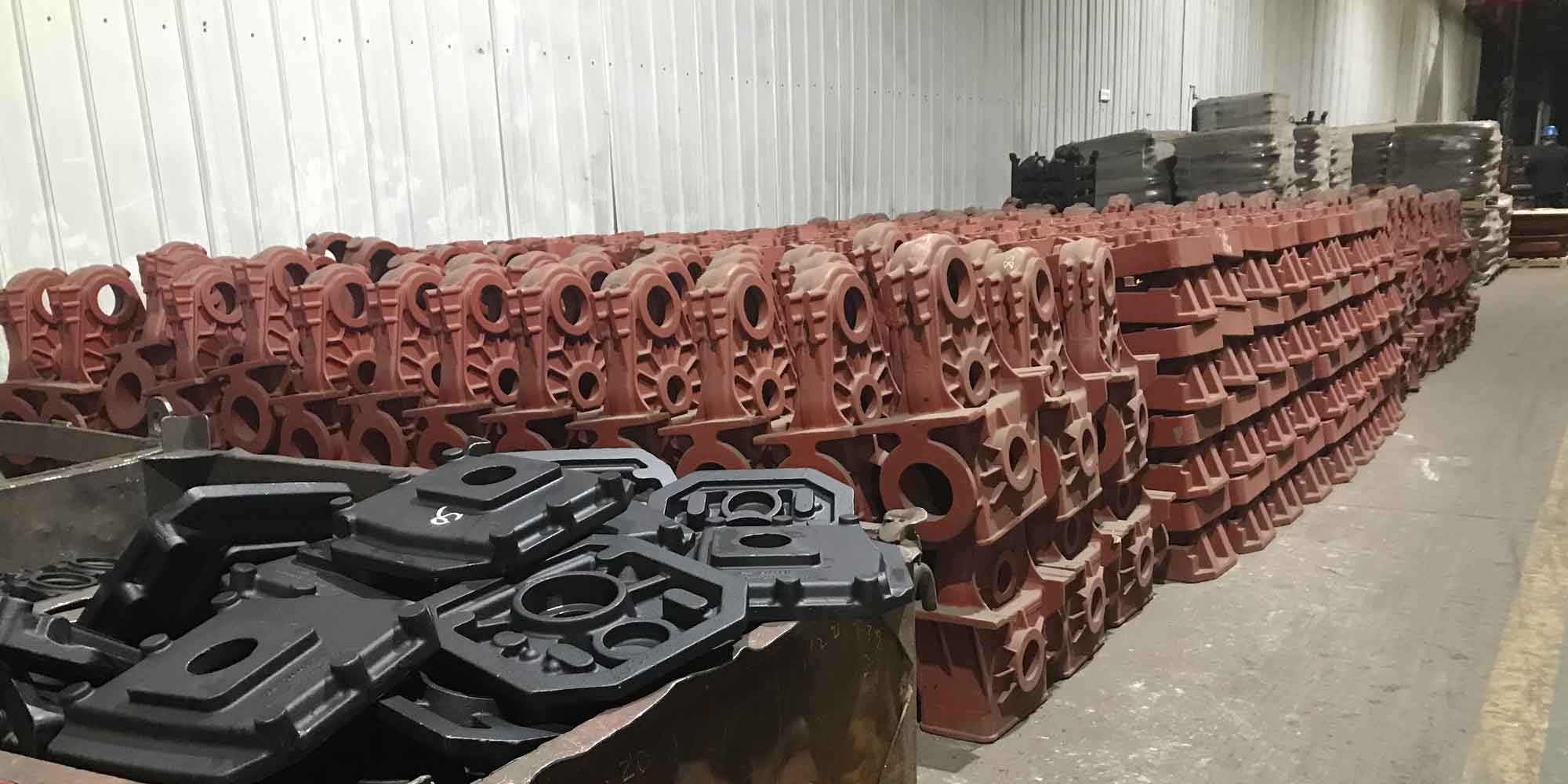
The image above underscores the industrial context: these advanced ceramic components are not laboratory curiosities but essential tools in the production of high-quality steel castings, from massive industrial components to precision aerospace parts. Their reliable performance directly impacts yield, cost, and product integrity.
V. Future Trajectories and Concluding Perspective
The development of ceramic foam filters via the polymer sponge technique is a mature yet still evolving field. Future research directions are likely to focus on:
- Multi-Functional & Graded Architectures: Designing filters with gradient pore sizes (fine at the inlet, coarse at the outlet) or zonally applied different functional coatings to sequentially remove different inclusion types.
- Advanced Coating Deposition: Using techniques like atomic layer deposition (ALD) to apply ultra-thin, perfectly uniform functional layers, or electrophoretic deposition (EPD) for complex composite coatings.
- Predictive Modeling and AI: Integrating computational fluid dynamics (CFD) with inclusion population models to simulate filtration events and optimize filter design (PPI, thickness, coating) for specific steel castings alloys and inclusion types.
- Sustainability: Developing greener binder systems, recycling spent filters, and optimizing processes to reduce energy consumption during sintering.
In conclusion, the polymer sponge replica technique has proven to be an incredibly versatile platform for manufacturing ceramic foam filters. Through continuous refinement—from intelligent slurry design and strut densification strategies to the sophisticated application of active and reactive coatings—these filters have evolved from simple mechanical sieves into sophisticated, chemically interactive purification devices. As the demands for cleaner and more sophisticated steel castings intensify, particularly in sectors like energy, transportation, and aerospace, the role of advanced ceramic foam filters will only become more critical. The ongoing research and development in this area are fundamental to pushing the boundaries of what is possible in steel metallurgy, ensuring that the filters not only withstand the rigors of the casting process but actively participate in achieving new standards of metal purity and performance.