
In my extensive research and practical experience within advanced manufacturing, I have consistently observed that the synergy between innovative processes can yield transformative results. One such powerful combination is the integration of additive manufacturing technologies with the traditional investment casting process. This fusion is particularly impactful in the domain of agricultural machinery manufacturing, where the demand for complex, high-performance, and cost-effective components is ever-present. The investment casting process itself is a cornerstone of industrial manufacturing, renowned for its ability to produce intricate metal castings with excellent surface finish, high dimensional accuracy, and superior cost-performance ratio. My work has focused on harnessing additive manufacturing to augment and streamline this venerable investment casting process, unlocking new levels of efficiency and capability in producing parts for tractors, harvesters, and other vital agricultural equipment.
The core premise of my approach is that additive manufacturing, often colloquially termed 3D printing or rapid prototyping, allows for the creation of complex geometries without the need for dedicated tooling or molds. This capability dovetails perfectly with the investment casting process, which inherently excels at replicating intricate shapes in metal. By employing additive manufacturing to produce the sacrificial patterns or even the ceramic molds directly, we can drastically shorten lead times, reduce costs for low-volume or prototype parts, and achieve geometries previously deemed impossible or economically unviable with conventional pattern-making techniques. Throughout this discussion, I will delve into the specifics of how various additive manufacturing technologies interface with and enhance the investment casting process for agricultural components.
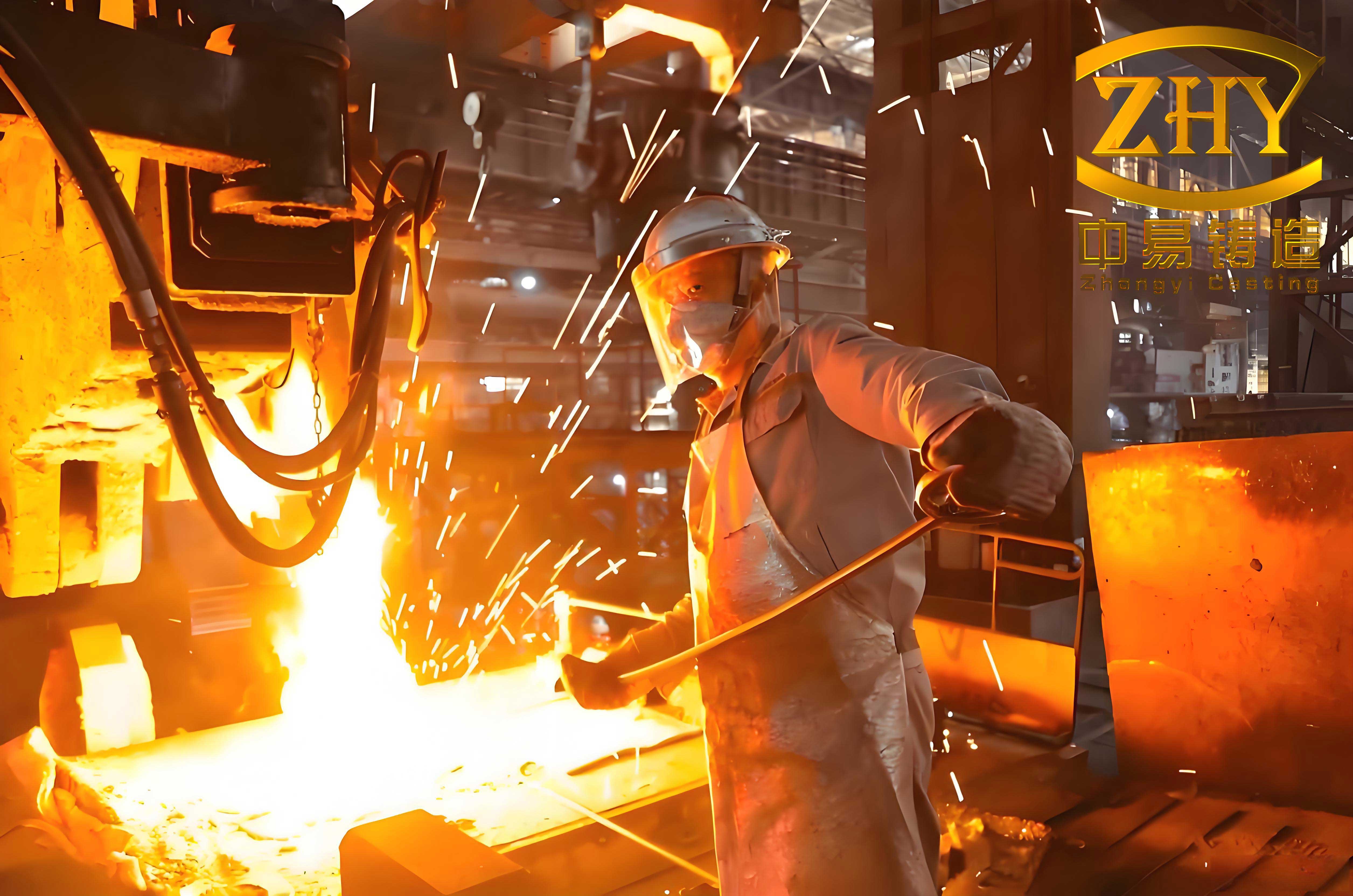
To lay a proper foundation, I must first elaborate on the fundamental types of additive manufacturing technologies I have worked with in the context of the investment casting process. Each technology offers distinct advantages depending on the requirements of the final metal part and the stage of the investment casting process it is applied to.
A Technical Overview of Pertinent Additive Manufacturing Modalities
Additive manufacturing is not a monolithic technology but a family of processes, each with its own principles, materials, and optimal use cases. For enhancing the investment casting process, several key technologies have proven exceptionally valuable. I have categorized them based on their interaction with the casting workflow, whether they are used for pattern creation, mold fabrication, or core production.
| Technology | Primary Material Form | Energy Source | Typical Application in Investment Casting Process | Key Advantages for Agriculture Parts |
|---|---|---|---|---|
| Selective Laser Sintering (SLS) | Polymer or Sand Powder | Laser | Direct fabrication of burn-out patterns or sand molds/cores. | Excellent for complex, internal geometries in gearbox housings. |
| Stereolithography (SLA) | Photopolymer Resin | UV Laser | High-resolution burn-out patterns for superior surface finish. | Ideal for intricate hydraulic valve bodies with fine details. |
| Fused Deposition Modeling (FDM) | Thermoplastic Filament | Thermal Extrusion | Robust, low-cost patterns for prototype and functional castings. | Durable patterns for large, structural components like bracket arms. |
| Binder Jetting (3D Printing) | Sand or Ceramic Powder | Liquid Binder | Direct printing of full ceramic molds for the investment casting process. | Enables rapid, tool-less production of complex, single-piece molds for impellers. |
| Laminated Object Manufacturing (LOM) | Paper or Foil Sheets | Laser Cutting/Adhesion | Creating patterns or mold masters for shallow-cavity tooling. | Cost-effective for producing patterns for sheet-metal forming dies used in cabin parts. |
The selection of the appropriate additive technology is a critical decision point. It depends on factors such as the required pattern resolution, ash content upon burnout, material cost, and build volume. From my experiments, the thermal and chemical behavior of the additive material during the subsequent stages of the investment casting process is paramount. For instance, when creating a pattern, the coefficient of thermal expansion and decomposition characteristics must be carefully matched to the investment shell material to prevent shell cracking. This relationship can be modeled to a first approximation by considering the stress ($\sigma$) developed during pattern expansion:
$$\sigma = E \cdot \alpha \cdot \Delta T$$
where $E$ is the Young’s modulus of the shell, $\alpha$ is the coefficient of thermal expansion mismatch between the pattern and shell, and $\Delta T$ is the temperature change during burnout. Minimizing $\sigma$ is crucial for a successful investment casting process.
Deep-Dive Integration: Enhancing Each Stage of the Investment Casting Process
My research applies these additive technologies not as a replacement, but as a powerful augment to each sequential stage of the traditional investment casting process. Let me walk through the hybrid workflow I have developed and optimized.
Pattern Fabrication via Additive Manufacturing
The most common application is the additive manufacture of the sacrificial pattern. In a standard investment casting process, a wax pattern is injected into a metal die. Additive manufacturing eliminates the need for this expensive die for prototypes or small batches. I have utilized SLA and SLS extensively for this purpose. SLA patterns, built from photopolymer resins, offer superb surface finish and dimensional accuracy, directly translating to high-quality metal castings. The governing equation for the curing depth ($C_d$) in SLA, which affects the pattern’s strength and resolution, is given by:
$$C_d = D_p \ln\left(\frac{E}{E_c}\right)$$
where $D_p$ is the penetration depth of the laser, $E$ is the exposure dose, and $E_c$ is the critical exposure dose for the resin. Controlling $C_d$ is essential for producing patterns with fine features needed for, say, a complex fertilizer spreader nozzle via the investment casting process.
For larger or more robust patterns, such as those for a tractor transmission housing, I often prefer SLS with polyamide-based powders. These patterns are porous and mechanically strong, requiring careful infiltration with wax or other materials to achieve a smooth surface for shell building. The bulk density ($\rho_b$) of the SLS part, crucial for its burnout behavior, can be related to the laser parameters:
$$\rho_b \propto P \cdot v^{-1} \cdot \hat{\ } \eta$$
where $P$ is laser power, $v$ is scan speed, and $\eta$ is an efficiency factor. Optimizing this density ensures clean burnout without residue, a critical step for the integrity of the subsequent investment casting process.
Direct Mold and Core Fabrication
A more revolutionary application is bypassing the pattern stage entirely. Binder jetting technology allows for the direct 3D printing of the ceramic mold used in the investment casting process. In this approach, a liquid binder is selectively jetted onto a bed of foundry sand or ceramic powder, layer by layer, building the complete mold with integrated cores. This is a paradigm shift. The permeability ($k$) of such an additively manufactured mold, which affects gas escape during metal pouring, is a key design parameter and can be estimated from the particle packing model:
$$k = \frac{\phi^3 d_p^2}{150(1-\phi)^2}$$
where $\phi$ is the porosity and $d_p$ is the effective particle diameter. For a mold printing a water pump volute for an irrigation system, achieving the right $k$ is vital to prevent gas defects in the final casting, ensuring the reliability of the part produced through this direct digital investment casting process.
The economic implications are significant, especially for large, one-off, or highly complex parts. The cost model for a direct-printed mold versus a traditional pattern-based shell can be simplified as:
$$C_{total} = C_{machine} \cdot t_{build} + C_{material} \cdot V_{mold}$$
where $C_{machine}$ is the hourly machine rate, $t_{build}$ is the build time, $C_{material}$ is the material cost per unit volume, and $V_{mold}$ is the mold volume. For low volumes, this often undercuts the high fixed cost of pattern tooling, making the investment casting process more accessible for customized agricultural machinery components.
| Metric | Traditional Wax Pattern Process | Additive (SLA) Pattern Process | Direct Binder-Jetted Mold Process |
|---|---|---|---|
| Lead Time (Days) | 35-45 | 7-10 | 5-8 |
| Tooling Cost (Relative Units) | 100 | 15 | 10 |
| Design Change Flexibility | Very Low | Very High | Extremely High |
| Achievable Geometric Complexity | High (but limited by pattern tooling) | Very High | Extremely High (no assembly required) |
| Typical Surface Roughness (Ra, μm) | 3.2 – 6.3 | 3.2 – 6.3 | 6.3 – 12.5 (mold surface) |
Process Optimization and Simulation
Integrating additive manufacturing into the investment casting process is not merely a substitution of steps; it requires a holistic re-engineering. I have spent considerable time on process simulation to predict and prevent defects. For example, the burnout cycle for an additively manufactured polymer pattern differs from that for traditional wax. The thermal degradation kinetics can be described by the Arrhenius-type equation:
$$\frac{d\alpha}{dt} = A \exp\left(-\frac{E_a}{RT}\right) f(\alpha)$$
where $\alpha$ is the degree of conversion, $A$ is the pre-exponential factor, $E_a$ is the activation energy, $R$ is the gas constant, $T$ is temperature, and $f(\alpha)$ is a reaction model. By characterizing the specific polymer used, I can optimize the furnace ramp rates to ensure gradual, non-disruptive removal of the pattern material, safeguarding the delicate ceramic shell in the investment casting process.
Furthermore, the filling of a potentially more complex mold cavity, especially one with conformal cooling channels printed via binder jetting, requires careful analysis. I often use modified versions of the Bernoulli and continuity equations to model the metal flow. The pressure drop ($\Delta P$) through a gating system with variable cross-section can be approximated as:
$$\Delta P = \frac{1}{2} \rho v^2 \left( K_{entrance} + f \frac{L}{D_h} + K_{exit} \right)$$
where $\rho$ is metal density, $v$ is velocity, $K$ are loss coefficients, $f$ is the friction factor, $L$ is length, and $D_h$ is the hydraulic diameter. Optimizing this gating design digitally before committing to printing the final mold for the investment casting process saves immense time and material.
Material Considerations and Metallurgical Outcomes
The ultimate goal is a sound metal component. The choice of additive manufacturing material for patterns or molds directly influences the metallurgy of the final casting. For instance, certain SLA resins leave a higher ash content than others. This ash can react with the molten metal or become trapped, creating inclusions. I have developed a cleanliness index ($CI$) for evaluating pattern materials for the investment casting process, based on the ratio of non-volatile residue ($NVR$) to the pattern’s original volume ($V_p$), normalized by the surface area to volume ratio ($\beta$):
$$CI = \frac{1}{\left(\frac{NVR}{V_p}\right) \cdot \beta}$$
A higher $CI$ indicates a cleaner-burning pattern, leading to a higher integrity investment casting process outcome.
The table below summarizes my findings on the interaction between common additive pattern materials and the resulting casting quality for agricultural-grade steels and aluminum alloys.
| Pattern Material (AM Process) | Ash Content (%) | Typical Deformation Temp. (°C) | Recommended Alloy | Potential Defect Mitigation Strategy |
|---|---|---|---|---|
| Standard Photopolymer (SLA) | 0.5 – 2.0 | 60 – 80 | Aluminum, Ductile Iron | Extended, low-temperature burnout cycle with oxygen access. |
| Wax-like Photopolymer (SLA) | < 0.1 | 40 – 60 | Stainless Steel, Titanium | Standard wax-like burnout cycle can often be used. |
| Polyamide (SLS) | 1.0 – 3.0 | 170 – 180 | Carbon Steel, Bronze | Pre-infiltrate with dedicated burnout wax; aggressive thermal debinding. |
| Polystyrene (FDM) | < 0.05 | 70 – 100 | Aluminum, Magnesium | Good for large parts; ensure complete depolymerization during burnout. |
The success of the investment casting process when using additive patterns also hinges on the shell-building technique. I have found that employing alternative refractory materials, such as fused silica for its low thermal expansion, can better accommodate the different expansion behaviors of polymer patterns compared to wax. The shell’s mechanical strength ($S$) after drying and firing is a critical multi-variable function:
$$S = f(\rho_{slurry}, \eta_{binder}, n_{coatings}, d_{stucco})$$
where $\rho_{slurry}$ is slurry density, $\eta_{binder}$ is binder viscosity, $n_{coatings}$ is the number of coating layers, and $d_{stucco}$ is stucco grain size. Empirical models derived from my work help in tailoring the shell system specifically for additive-manufactured patterns in the investment casting process.
Economic and Environmental Impact Analysis
Adopting additive manufacturing within the investment casting process framework is not just a technical decision but an economic and environmental one. For agricultural machinery manufacturers, who often deal with moderate production volumes of highly varied components, the flexibility is invaluable. I have constructed a detailed model to analyze the total cost of ownership. The break-even point ($Q_{be}$) between traditional and additive-enhanced investment casting process for a given part can be found by equating the total costs:
$$C_{tooling}^{traditional} + Q_{be} \cdot C_{part}^{traditional} = C_{setup}^{additive} + Q_{be} \cdot C_{part}^{additive}$$
Here, $C_{tooling}^{traditional}$ is the high initial tooling cost (mold for wax injection), $C_{part}^{}$ are the variable costs per part, and $C_{setup}^{additive}$ is the digital setup cost for additive manufacturing. For most prototype and low-volume scenarios common in specialized农机 component development, $Q_{be}$ is often greater than the required production quantity, favoring the additive-enhanced investment casting process.
From a sustainability perspective, the benefits are pronounced. The investment casting process augmented with additive manufacturing is inherently less wasteful. Traditional pattern making involves machining wax or machining metal dies, generating significant scrap. Additive manufacturing is a near-net-shape process. The reduction in material waste ($W_{reduction}$) can be estimated as:
$$W_{reduction} \approx V_{pattern} \cdot (\rho_{bulk}^{machining} – \rho_{bulk}^{AM})$$
where $V_{pattern}$ is the pattern volume, and $\rho_{bulk}^{}$ represents the bulk material utilization efficiency for machining versus additive manufacturing. Furthermore, the ability to create lightweight, topology-optimized parts directly through the digital design process leads to less metal used in the final casting and lower energy consumption during the part’s operational life in the field—a crucial consideration for sustainable agriculture.
Future Trajectories and Concluding Synthesis
Looking forward, my research indicates that the convergence will only deepen. Emerging areas include the use of multi-material additive manufacturing to create graded patterns that facilitate shell removal, or the incorporation of active sensor elements within 3D-printed molds to monitor temperature and pressure in real-time during the investment casting process. The development of new, specialized ceramics and binders for direct printing will further improve the surface finish and dimensional accuracy of molds, closing the quality gap with traditional methods.
In my professional judgment, the integration of additive manufacturing into the investment casting process represents one of the most pragmatic and high-impact applications of 3D printing in industrial manufacturing today. For the agricultural sector, this means the ability to rapidly innovate, customize equipment for specific terrains or crops, and maintain older machinery with on-demand spare parts that are no longer in mass production. The investment casting process, thus supercharged, becomes a flexible, digital, and responsive pillar of modern农机制造. The journey from a digital CAD model to a robust, field-ready metal component is now shorter, more efficient, and more creative than ever before, thanks to this powerful hybrid methodology that I have had the privilege to help pioneer and refine.