
As I reflect on the current state of the manufacturing sector, particularly the machine tool industry, a profound concern emerges regarding the foundational components that determine the performance, longevity, and precision of these essential devices. Machine tool castings form the bedrock of most structural and key components in machine tools, from lathes and mills to advanced CNC systems. The quality of these machine tool castings directly influences the overall machine quality, operational lifespan, and, critically, the ability to maintain precision over time. In recent years, while the global demand for machine tools has surged, driven by rapid industrial expansion, I have observed a disconcerting trend: the quality of machine tool castings in many regions has not kept pace. Instead, there appears to be a decline, a slippage in both intrinsic and extrinsic attributes, which threatens to undermine the competitiveness and technological advancement of the entire industry. This article, from my firsthand perspective, delves into the pressing issues, analyzes the root causes, and proposes comprehensive strategies to reverse this trend, emphasizing the urgent need to prioritize the enhancement of machine tool castings.
The machine tool industry is a cornerstone of modern manufacturing, enabling the production of everything from consumer goods to aerospace components. Within this ecosystem, castings—primarily made of gray iron, ductile iron, or other alloys—serve as the skeletal framework. High-quality machine tool castings ensure dimensional stability, vibration damping, wear resistance, and adequate strength, all of which are paramount for precision machining. However, my investigations and visits to various production facilities reveal a stark reality. Despite advancements in casting technologies like resin-bonded sand molding, which should theoretically yield superior surface finish and accuracy, the actual output often falls short. The focus has disproportionately shifted towards quantitative output, neglecting the rigorous process controls necessary for consistent quality. This misalignment is evident in multiple facets, which I will elaborate on using data summaries, formulas, and comparative analyses.
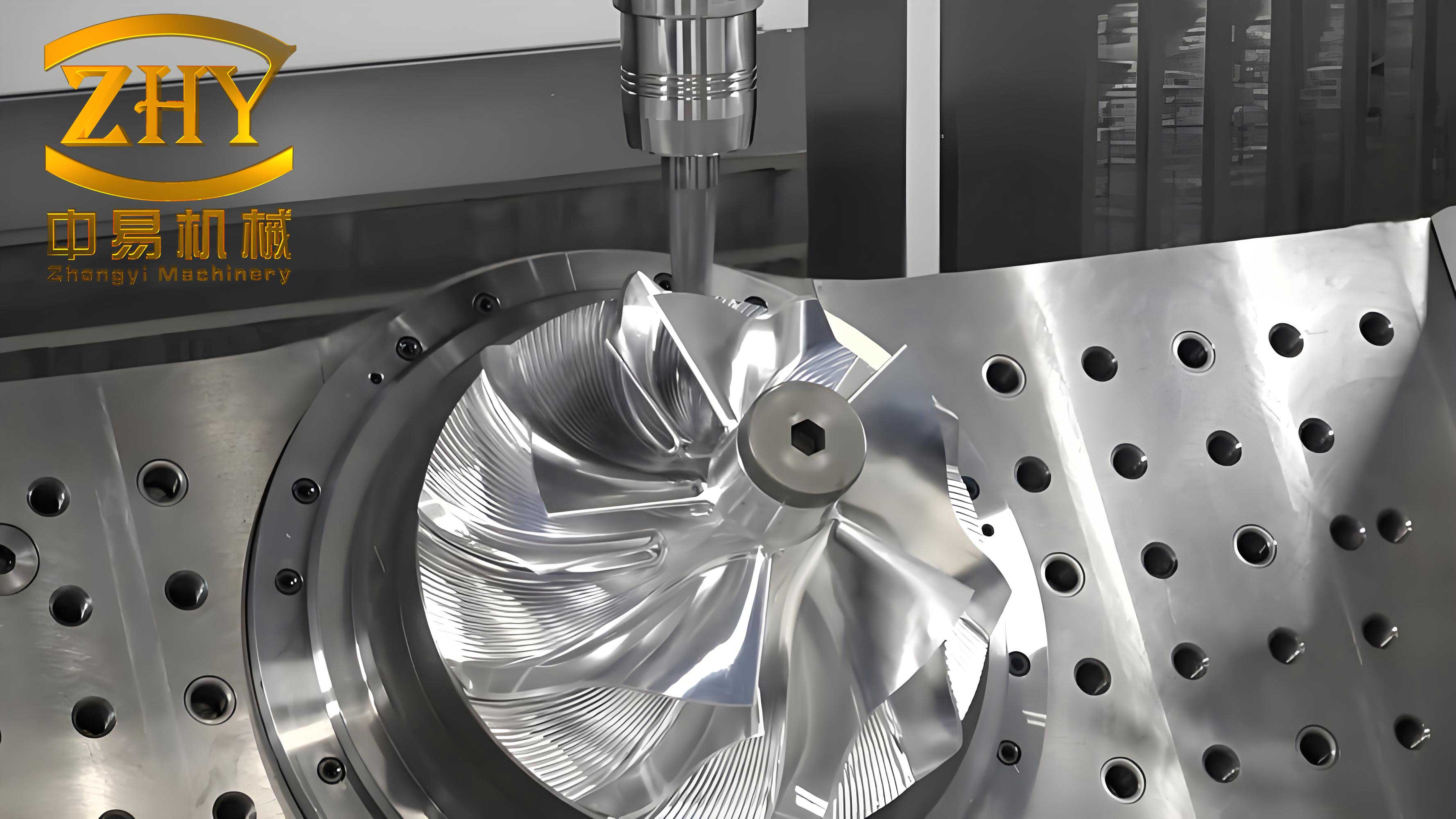
One of the most visible aspects of machine tool castings is their外观质量, encompassing dimensional accuracy, surface roughness, and macro-straightness. The transition from traditional clay sand dry molds to resin self-hardening sand processes was supposed to revolutionize these parameters. Yet, in practice, the potential remains largely untapped. During my visits, I noted that many foundries lack essential equipment like vibration compaction tables for medium-sized machine tool castings, relying instead on manual ramming, which is often inconsistently applied. This leads to common defects such as mold cracking, sand burning, and冲砂, resulting in poor surface quality that requires extensive finishing work. To quantify, dimensional accuracy should adhere to international standards like ISO 8062, typically targeting grades CT8 to CT10 for machine tool castings. However, without systematic measurement and statistical process control, these grades are seldom achieved. Surface roughness, a key indicator of casting finish, is frequently overlooked. According to standards like ISO 1302, critical surfaces of machine tool castings should have an arithmetic mean roughness (Ra) not exceeding 12.5 µm, with general surfaces below 25 µm. Yet, most facilities do not routinely assess this using comparator blocks, leading to significant variability. The macro-straightness, especially on guideways, is crucial for machine alignment; it should be within 1 mm per meter length, but few enterprises provide verified data, and visual inspections often reveal deviations.
Beyond外观, the内在质量 of machine tool castings is where the gravest concerns lie. This primarily involves metallurgical structure and mechanical properties, which are governed by rigorous process controls from melting to pouring. A central issue is the失控 of the金相组织 (microstructure). For gray iron machine tool castings, the microstructure—comprising graphite morphology, size, and matrix composition—dictates critical performance attributes. Standards such as ISO 945 specify that graphite should be predominantly Type A (flaky, uniformly distributed) with length grades around 3-5, and the matrix should consist of at least 90% pearlite with fine interlamellar spacing. However, in many foundries I surveyed, microstructure examination is either perfunctory or entirely abandoned. For instance, reports might superficially note “Type A graphite” without quantitative analysis, when in reality, the sample may contain less than 50% Type A. This negligence stems from a lack of process discipline: inconsistent charge material management, suboptimal melting practices, inadequate inoculation, and uncontrolled pouring temperatures. The consequence is a degradation in properties like strength, damping capacity, and machinability, directly impacting the performance of machine tool castings.
Perhaps the most telling indicator of quality regression is the neglect of弹性模量 (elastic modulus) for machine tool castings. The elastic modulus (E) is a fundamental property that defines the stiffness and dimensional stability of a material under load. For machine tool castings, high elastic modulus is essential to minimize elastic deformation during machining operations, thereby preserving accuracy. It is influenced primarily by graphite characteristics: shape, length, and volume fraction. The relationship can be approximated by: $$E = E_0 – k \cdot V_g$$ where \(E_0\) is the elastic modulus of the iron matrix (around 210 GPa), \(k\) is a factor dependent on graphite morphology, and \(V_g\) is the volume fraction of graphite. With proper inoculation and microstructure control, \(k\) decreases, leading to higher E. Historically, comparisons show a gap: for example, gray iron grade HT250 (similar to ISO 250) had elastic modulus values around 125-135 GPa in advanced economies, but only 110-120 GPa in many local productions. Today, this parameter is rarely monitored, let alone optimized. Below is a comparative table of target elastic modulus values for key grades of machine tool castings:
| Gray Iron Grade (Approx. ISO) | Target Elastic Modulus (GPa) | Typical Past Values in Local Productions (GPa) |
|---|---|---|
| HT200 (ISO 200) | 120-130 | 105-115 |
| HT250 (ISO 250) | 130-140 | 115-125 |
| HT300 (ISO 300) | 140-150 | 125-135 |
The decline in attention to such metrics reflects a broader systemic issue: the erosion of technical rigor in favor of output volume. This is exacerbated by organizational changes, such as the spin-off or relocation of foundries, which often lead to loss of experienced personnel and dilution of expertise. The result is that the overall quality of machine tool castings has slid below levels seen decades ago, even as production volumes have skyrocketed. For instance, while annual machine tool output has grown by over 50% in recent years, the self-sufficiency rate in terms of value has dropped to around 50%, with high-end machines relying heavily on imports. From my analysis, inferior machine tool castings contribute significantly to this gap, manifesting in poor外观, reduced precision retention, and shorter service life.
To address these challenges, a multifaceted approach is imperative, focusing on standardization, human resource development, and technological integration. First, establishing and enforcing stringent industry standards for machine tool castings is crucial. These standards should encompass dimensional tolerances, surface roughness, mechanical properties, and microstructure requirements. For example, based on ISO 8062, dimensional accuracy for critical machine tool castings should be at least CT10, with permissible mismatch strictly controlled. Surface roughness Ra should not exceed 12.5 µm for guideways and 25 µm for general surfaces, as per ISO 1302. Mechanically, alongside tensile strength (e.g., HT250 with ≥250 MPa), hardness uniformity on guideways must be enforced, with variations within 30 HB. Most importantly, elastic modulus should be a mandatory self-inspection parameter, with targets as high as 140 GPa for premium grades. Microstructurally, quantitative criteria are needed: for instance, graphite should be ≥80% Type A with length ≤5级, pearlite content ≥90%, and carbide content ≤5%. Implementing such standards will require robust quality management systems, moving beyond mere ISO 9001 certification to actual process control.
Second, the human element cannot be overstated. Producing high-quality machine tool castings is not a menial task; it demands deep knowledge in metallurgy, thermodynamics, fluid dynamics, and materials science. However, there is a chronic shortage of skilled personnel due to aging workforce, lack of training programs, and the perception of casting as low-tech. I advocate for a structured talent development initiative, modeled after successful programs in countries like Germany and Japan. This should include vocational training for operators, advanced courses for engineers, and management programs for leaders. For instance, curriculum could cover topics like gating design optimization using fluid flow simulations, which can be modeled with the Bernoulli equation: $$P_1 + \frac{1}{2}\rho v_1^2 + \rho g h_1 = P_2 + \frac{1}{2}\rho v_2^2 + \rho g h_2$$ where \(P\) is pressure, \(\rho\) is density, \(v\) is velocity, \(g\) is gravity, and \(h\) is height, applied to ensure smooth filling of molds for machine tool castings. Additionally, continuous education on advanced techniques such as simulation-assisted casting and real-time melt quality monitoring is essential. Only with a competent workforce can foundries achieve consistent quality and innovate.
Third, technological upgrading must go hand-in-hand with environmental and operational improvements. Foundries have historically been associated with poor working conditions—dust, fumes, and heat—which not only harm health but also demotivate workers and impede precision. Modernizing facilities to include efficient ventilation, automated handling, and closed-loop systems is vital. For example, implementing sand reclamation systems can reduce waste and cost, while improving consistency in mold properties for machine tool castings. Energy-efficient melting furnaces and optimized pouring techniques can lower emissions. Moreover, adherence to environmental standards like ISO 14001 should be genuine, not just for certification. Sustainable practices, such as recycling scrap metal and using biodegradable binders, can enhance the eco-footprint. Investing in these areas not only improves product quality but also boosts overall enterprise resilience.
In conclusion, the path to revitalizing the machine tool industry hinges on a fundamental recommitment to excellence in machine tool castings. This requires a paradigm shift from quantity-driven to quality-focused production, underpinned by strict standards, skilled human capital, and sustainable technologies. As I see it, the gap between current practices and international benchmarks is not insurmountable, but it demands immediate and concerted action. By prioritizing the内在 and外观 quality of machine tool castings, we can lay a solid foundation for manufacturing advanced, reliable, and competitive machine tools that meet global standards. The journey begins with recognizing that every casting is not just a component, but the very backbone of precision engineering—a truth that must guide all future endeavors in this critical sector.