
In the production of gray iron castings, the control of chemical composition is paramount. Among the five primary elements—carbon, silicon, manganese, sulfur, and phosphorus—manganese has historically been a source of both utility and misunderstanding. Based on my extensive experience in foundry process control, I have observed that an overemphasis on manganese’s role as a pearlite promoter and strength enhancer can lead directly to significant production issues, primarily in the form of casting defects. This article details my investigation and practical adjustments regarding manganese content, revealing that a lower-than-traditional approach not only mitigates defects but also improves mechanical properties and economic efficiency.
For a long time in our operations, there persisted a belief that manganese, being a strong carbide stabilizer and pearlite promoter, was crucial for achieving high tensile strength, especially in grades like HT300 and HT350. The prevailing philosophy was to maintain manganese content on the higher side of the specification range, typically between 0.7% and 1.0%, under the assumption that “more is better” for strength. This view, however, proved to be an oversimplification that ignored manganese’s complex interactions, particularly with sulfur, and its detrimental effects when in excess.
The turning point came with the persistent appearance of severe casting defects in a batch-produced turbocharger housing. These defects manifested as extensive slag inclusions and subsurface pinholes on the cope surfaces, leading to high scrap rates. Initial troubleshooting focused on molding sands and pouring temperatures, but the problem persisted. Upon deeper analysis of the melt chemistry, a pattern emerged. The typical composition for the problematic heats was: C ~3.09%, Mn ~0.92%, S ~0.064%. Applying the classic formula for the manganese-sulfur balance:
$$w(\text{Mn})_{\text{required}} = 1.7 \times w(\text{S}) + 0.3\%\ \text{to}\ 0.5\%$$
For a sulfur content of 0.064%, the required manganese is calculated as $1.7 \times 0.064 = 0.109\%$, plus an excess of 0.3-0.5%. This yields an optimal range of 0.41% to 0.61%. The actual manganese content of 0.92% represented an “excess Mn” far beyond 0.5%, approximately 0.81%. This severe imbalance was identified as the root cause of the casting defects.
The mechanism linking high manganese to these defects is well-documented in metallurgical theory. Manganese has a high affinity for sulfur, forming manganese sulfide (MnS). While a fine dispersion of MnS can act as nucleation sites for graphite, an excessive amount leads to the formation of larger, deleterious slag inclusions. More critically, the presence of excessive MnO (from oxidized manganese) in the melt can participate in thermochemical reactions that generate gas, leading to pinholes. The sequence of reactions is temperature-dependent:
Above a critical temperature (Tc):
$$ \text{SiO}_2 + 2\text{C} \rightarrow \text{Si} + 2\text{CO} \uparrow $$
$$ \text{MnO} + \text{C} \rightarrow \text{Mn} + \text{CO} \uparrow $$
Within a specific temperature range between Tg and Tc:
$$ \text{SiO}_2 + 2\text{Mn} \rightarrow \text{Si} + 2\text{MnO} $$
$$ \text{C} + \text{MnO} \rightarrow \text{Mn} + \text{CO} \uparrow $$
These reactions, particularly the generation of carbon monoxide (CO) gas, are a direct source of subsurface pinholes, a classic category of casting defects. The temperatures Tg and Tc are influenced by the iron’s carbon and silicon content, as generalized in the table below.
| w(C) (%) | w(Si) (%) | TL (°C) | Tg (°C) | Tc (°C) |
|---|---|---|---|---|
| 3.0 | 1.8 | 1226 | 1427 | 1484 |
| 3.1 | 1.8 | 1213 | 1424 | 1482 |
| 3.2 | 1.8 | 1201 | 1421 | 1480 |
| 3.0 | 2.0 | 1220 | 1432 | 1488 |
| 3.1 | 2.0 | 1208 | 1429 | 1486 |
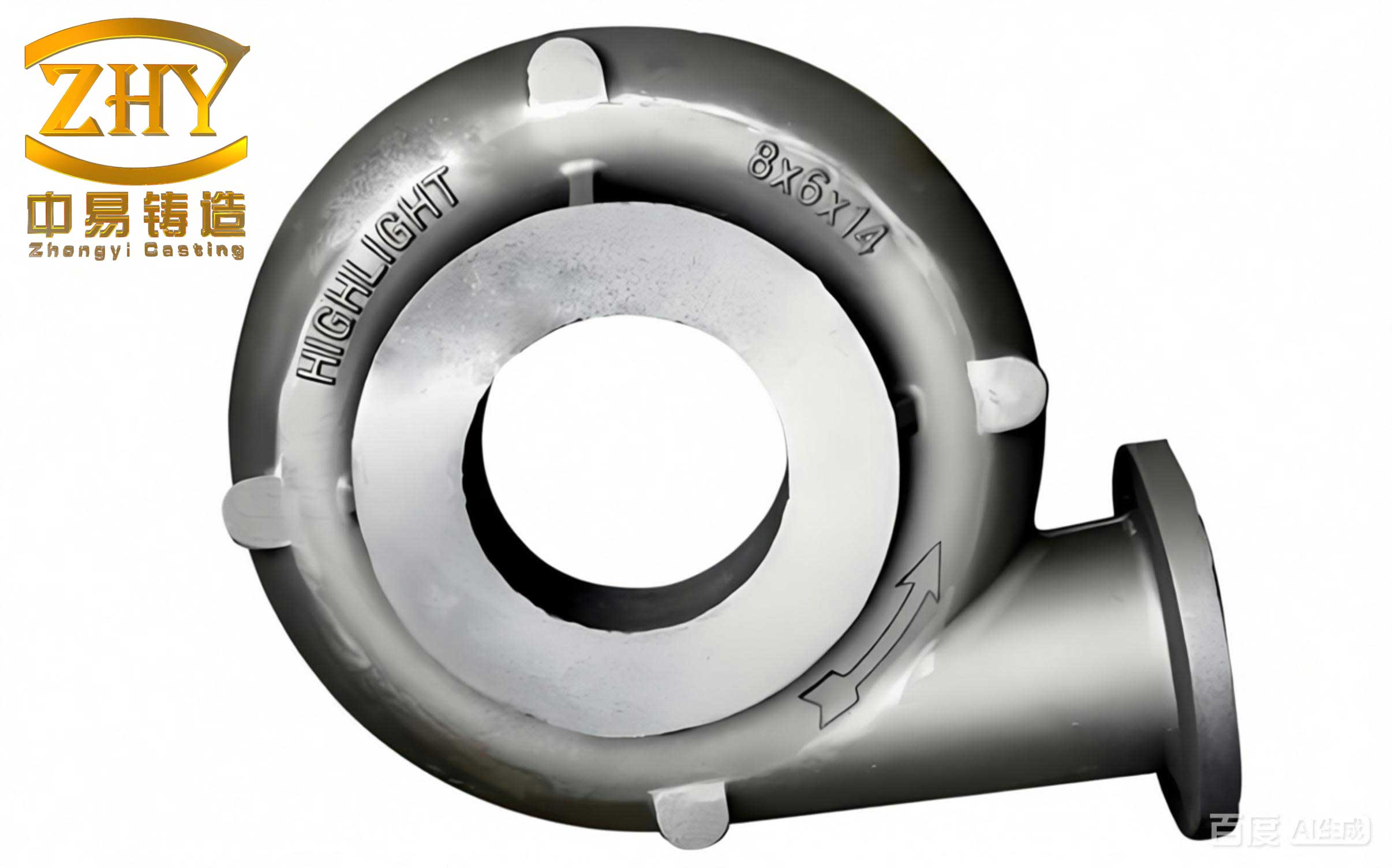
The visual evidence of these defects, as seen in the micrograph and casting photograph, underscores the practical severity of the issue. The micrograph clearly shows clusters of non-metallic inclusions, identified as MnS, which act as initiation points for both slag and gas-related casting defects. This confirmed that our high-manganese practice was fundamentally flawed.
Research from institutions like BCIRA and AFS supports this finding. Their work indicates that the “excess manganese” (the amount above what is needed to neutralize sulfur) should ideally be in the range of 0.2% to 0.3%. An excess below 0.1% can significantly increase tensile strength and hardness, while an excess above 0.3% continues to increase pearlite content but does not necessarily improve strength and can increase hardness and chilling tendency detrimentally. Some studies even show a decrease in tensile strength as manganese increases from 0.4% to 1.0%. This body of knowledge strongly argued for a reduction in our target manganese levels.
Guided by this theory, we initiated a systematic production trial. The goal was to reduce the average manganese content from approximately 1.0% to a target range of 0.55%-0.65%, strictly following the $1.7w(\text{S}) + 0.3\%$ rule. To ensure a fair comparison, trial heats were selected with similar Carbon Equivalence (CE, calculated as $ \text{CE} = w(\text{C}) + \frac{1}{3}w(\text{Si}) $) between 3.65% and 3.80%, and with minimal intentional alloying additions like copper or tin. We compared two datasets: one with high manganese (old practice) and one with optimized low manganese (new practice).
The results were unequivocal and are summarized in the following table. Reducing the average manganese content from 1.01% to 0.64% led to a clear improvement in key metrics.
| Parameter | High Mn Practice (Avg.) | Optimized Low Mn Practice (Avg.) | Change |
|---|---|---|---|
| w(Mn) (%) | 1.01 | 0.64 | -0.37 |
| Tensile Strength (MPa) | 329 | 341 | +12 |
| Hardness (HB) | 219 | 217 | -2 |
| Quality Index (QI)* | 1.13 | 1.18 | +0.05 |
| Carbon Equivalence (CE) | 3.72 | 3.73 | — |
*Quality Index, $ Q_I = \frac{\text{Tensile Strength (MPa)}}{100 \times \text{Brinell Hardness}} $, is a useful measure of the strength-to-hardness ratio, where a higher value is generally desirable.
The increase in tensile strength while maintaining or slightly reducing hardness is particularly significant. It demonstrates that the previous high manganese content was not only unnecessary for strength but was actually suppressing the full potential of the material. The improved QI indicates a more favorable microstructure. Metallographic examination of samples from the low-manganese heats confirmed this, showing a healthy ASTM A-type graphite distribution (sizes 4-5) with a pearlite matrix content exceeding 95%, and a marked reduction in the number and size of inclusion particles. Most importantly, the incidence of slag inclusion and subsurface pinhole casting defects on production castings like the turbo housing dropped to negligible levels.
The financial implications of this change are substantial. For a typical HT300 iron with a target manganese reduction of 0.3%, the saving in ferromanganese addition is approximately 5 kg per metric ton of molten iron. In a facility melting 700 tons per month, this translates to a monthly saving of 3.5 tons of ferromanganese. Considering current alloy costs, this can lead to direct material cost savings exceeding $25,000 annually for a single production line. When scaled across multiple foundries within an organization, the annual savings can easily reach six figures. This proves that quality improvement and cost reduction are not mutually exclusive; in this case, they are directly linked through sound metallurgical practice.
In conclusion, this experience underscores a critical lesson in gray iron metallurgy: the dogma of “more manganese equals more strength” is misleading and costly. Excessive manganese content is a direct contributor to serious casting defects such as slag inclusions and subsurface gas pinholes. The optimal manganese content is primarily dictated by the sulfur content, following the relation $w(\text{Mn})_{\text{optimum}} \approx 1.7w(\text{S}) + 0.3\%$. For most induction-melted gray irons with sulfur levels below 0.1%, this results in a manganese range of 0.55% to 0.65%. Adopting this lower range has been empirically proven to enhance tensile strength, improve the quality index, eliminate associated defect scrap, and generate significant economic savings by reducing alloy addition costs. Therefore, a rigorous review and adjustment of manganese specifications away from historical highs is a highly recommended strategy for any foundry seeking to improve both the quality and profitability of its gray iron casting defects-prone products.