
In the realm of precision investment casting, particularly with stainless steel alloys, the quest to eliminate internal defects is a perpetual challenge. Among these, shrinkage porosity and cavities stand as primary adversaries, directly compromising the structural integrity, pressure tightness, and overall quality of cast components. Through extensive practical experience and analysis, I have observed that while gating system design is crucial, the operational variable of pouring temperature exerts a profoundly underestimated influence on the severity and occurrence of shrinkage in casting. A perfectly designed system on paper can yield defective parts if the pouring temperature is not judiciously controlled and integrated into the initial design logic. This article delves into a detailed, first-person analysis of this relationship, proposing a methodology to harmonize gating design with pouring temperature for robust, high-yield production.
Established Gating System Design Methods and Their Shortcomings
The design of feeding systems (gates and risers) aims to provide a continuous supply of molten metal to compensate for volumetric shrinkage during solidification, thereby preventing shrinkage in casting. Three common approaches are prevalent:
- Empirical Trial-and-Error: Relying on accumulated shop-floor experience to design a system, which is then iteratively modified through a series of costly and time-consuming trial casts. This method is inherently subjective and lacks scientific predictability.
- Theoretical Calculation using Chvorinov’s Rule and Derived Formulae: A more scientific approach involves calculating the required modulus (volume-to-surface area ratio) of feeding channels. A widely used formula for calculating the ingate modulus, often attributed to researchers like Henkin, is:
$$M_g = \sqrt[3]{\frac{11}{4} \cdot \frac{M_c^3 \cdot G}{l_g \cdot M_s}}$$
Where:- $M_g$ is the cooling modulus of the ingate cross-section.
- $M_c$ is the cooling modulus of the casting’s hot spot.
- $G$ is the mass of the casting.
- $l_g$ is the length of the ingate.
- $M_s$ is the cooling modulus of the sprue cross-section.
This method provides a quantitative starting point. However, its significant limitation is that it treats solidification as a purely geometric and thermal phenomenon without accounting for a critical process variable: the superheat of the metal, i.e., the pouring temperature above the liquidus.
- Solidification Simulation Software: Modern simulation tools can model the flow and solidification process, predicting hot spots and potential shrinkage in casting. While powerful, their accuracy is contingent on precise input parameters, including material properties and boundary conditions like mold preheat and cooling rates. Furthermore, shop-floor realities—such as inconsistencies in shell thickness, variations in cooling after pouring, operator skill, and crucially, deviations in recorded pouring temperature—can lead to discrepancies between simulation and reality, causing unpredictable quality fluctuations.
The common thread in these shortcomings is the treatment of pouring temperature as an independent, post-design operational parameter rather than a core design input. This oversight is a root cause of inconsistent results in fighting shrinkage in casting.
The Fundamental Mechanism of Shrinkage Formation
To understand why pouring temperature is so pivotal, we must revisit the physics of solidification. As molten stainless steel cools from the pouring temperature ($T_{pour}$) to ambient temperature, it undergoes three distinct stages of contraction:
| Stage | Temperature Range | Physical Process | Contribution to Shrinkage |
|---|---|---|---|
| Liquid Contraction | $T_{pour}$ to Liquidus ($T_L$) | Thermal contraction of the liquid metal. | High |
| Solidification Contraction | $T_L$ to Solidus ($T_S$) | Phase change from liquid to solid (density increase). For austenitic stainless steels, this is typically 3-4%. | Very High |
| Solid Contraction | $T_S$ to Room Temp. | Thermal contraction of the solid casting. | Manifests as dimensional change, not internal voids. |
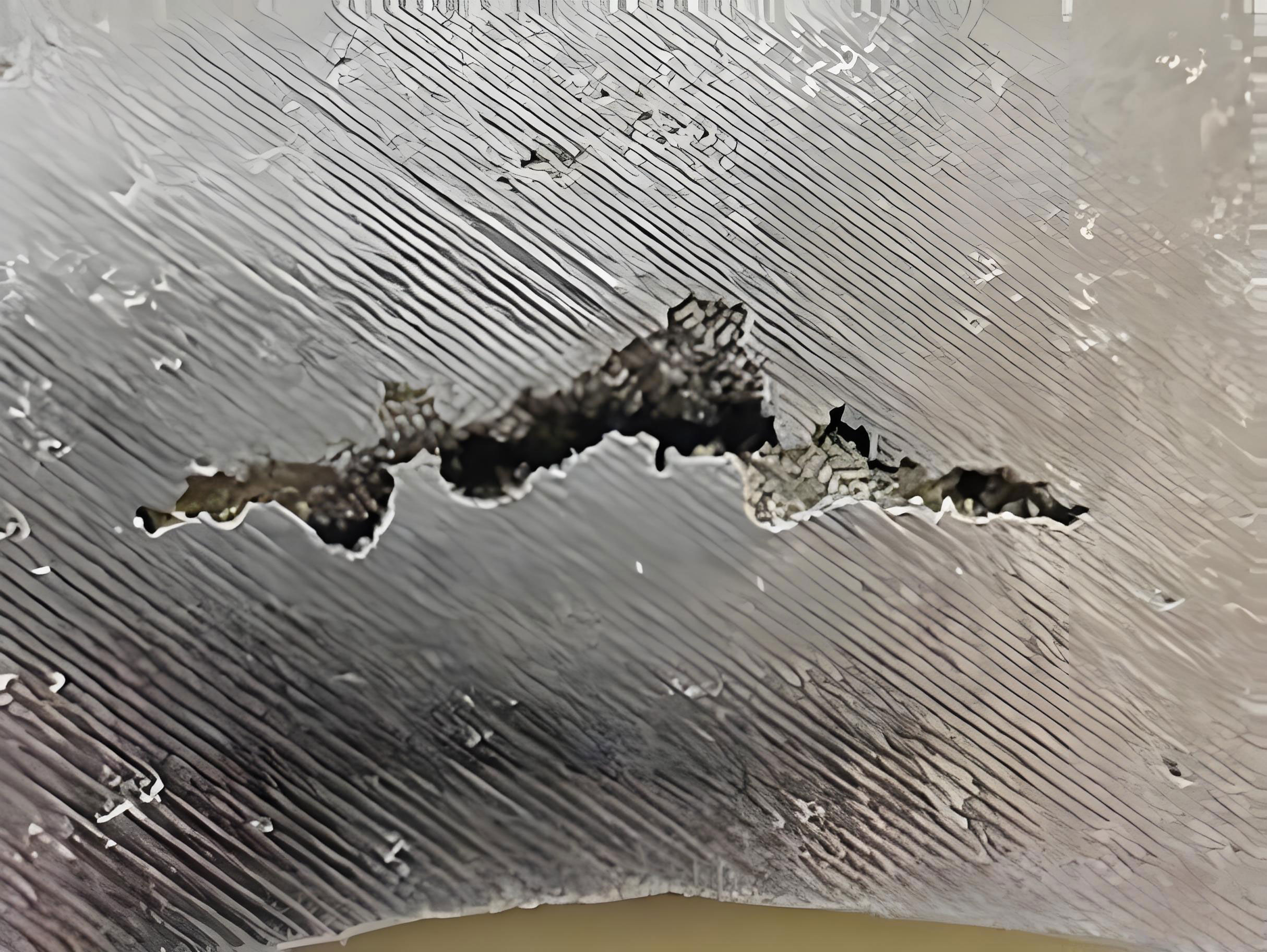
Shrinkage cavities and porosity form during the first two stages. When metal is poured into a cooler ceramic shell, a solid skin (or “shell”) forms almost instantaneously at the mold wall. The remaining liquid within this envelope continues to cool and contract. The total volumetric shrinkage ($\Delta V_{total}$) that must be compensated for by feeding can be approximated by:
$$
\Delta V_{total} = V_{pour} \left[ \alpha_{V}^{liq}(T_{pour} – T_L) + \varepsilon_{V}^{solidification} \right]
$$
Where:
- $V_{pour}$ is the volume of metal at the pouring temperature.
- $\alpha_{V}^{liq}$ is the coefficient of volumetric liquid contraction.
- $\varepsilon_{V}^{solidification}$ is the volumetric solidification shrinkage fraction.
The term $\alpha_{V}^{liq}(T_{pour} – T_L)$ represents the liquid contraction, which is directly proportional to the superheat ($\Delta T = T_{pour} – T_L$). A higher pouring temperature linearly increases this initial liquid contraction. Consequently, the feeding system must supply more liquid volume, and for a longer duration, to prevent shrinkage in casting. If the gating system is designed based on a theoretical lower temperature but operated at a higher one, it will be under-sized, leading to shrinkage porosity or an open cavity in the last-to-freeze hot spot.
Determining the Optimal Pouring Temperature Range
The pouring temperature is not a single value but a range determined by multiple factors: casting weight, section thickness (modulus), geometric complexity, alloy fluidity, and the practicalities of the pouring process itself. For austenitic stainless steels like 304 or 316, which have relatively high viscosity and poor fluidity compared to carbon steels, the following guiding principles apply:
The pouring temperature ($T_{pour}$) is the sum of the alloy’s liquidus temperature ($T_L$) and the necessary superheat ($\Delta T$):
$$ T_{pour} = T_L + \Delta T $$
The superheat $\Delta T$ is selected based on casting characteristics:
- Heavy, Thick-Section Castings: Lower superheat (80-100°C) is sufficient to ensure fill and minimize total liquid contraction, reducing the risk of gross shrinkage in casting.
- Thin-Walled, Intricate Castings: Higher superheat (100-130°C) is required to maintain fluidity through long, narrow passages and prevent mistruns or cold shuts.
- Very Complex, Thin-Walled Parts: Superheat may need to be increased by a further 10-30°C.
Furthermore, one must account for heat loss between furnace tapping and the actual pour, especially in cluster casting where multiple shells are poured sequentially from one ladle. An additional 20-30°C is often added to the target furnace temperature to compensate for this loss.
| Alloy | Approx. Liquidus $T_L$ (°C) | Pouring Temp. for Thick Sections (°C) | Pouring Temp. for Thin Sections (°C) |
|---|---|---|---|
| 304 / 1.4301 | ~1450 | 1530 – 1550 | 1550 – 1580 |
| 316 / 1.4401 | ~1430 | 1510 – 1530 | 1530 – 1560 |
| 17-4PH / 1.4542 | ~1440 | 1520 – 1540 | 1540 – 1570 |
A Practical Modification: Integrating Pouring Temperature into Gating Design
The central thesis of my practical work is that the gating modulus calculated from standard formulae must be corrected for the intended pouring temperature to yield a “robust” design. A modulus calculated at a theoretical temperature will fail if the actual pouring temperature deviates, which it often does in production.
I propose a simple yet effective correction factor based on the ratio of the absolute pouring temperature to the absolute liquidus temperature (using Kelvin scale is most accurate, but Celsius is pragmatically sufficient for this purpose). The Actual Required Modulus ($M_{actual}$) is given by:
$$ M_{actual} = \frac{T_{pour}}{T_L} \cdot M_{calculated} $$
Where $M_{calculated}$ is the modulus derived from the Henkin-style formula.
Rationale: A higher pouring temperature increases the total heat content the ingate must transfer away and extends the time during which it must remain open and feeding. Increasing its modulus (effectively making it thicker or shorter) enhances its thermal capacity and prolongs its solidification time, thereby improving its ability to compensate for the increased liquid contraction and prevent shrinkage in casting.
Application and Validation
Consider a 304 stainless steel casting with a significant hot spot. The theoretical calculation suggests an ingate modulus ($M_{calculated}$) of 2.5 cm.
Scenario 1: Designing for a High Pouring Temperature.
If the process requires a pouring temperature of 1630°C (due to thin sections or complexity), the design must account for it from the start.
$$ M_{actual} = \frac{1630}{1450} \times 2.5 \approx 2.8 \text{ cm} $$
The ingate should be designed with a modulus of 2.8 cm, not 2.5 cm. This larger gate will adequately feed the casting at the high temperature, preventing shrinkage in casting.
Scenario 2: Determining the Allowable Pouring Temperature Range for a Fixed Design.
Conversely, if the tooling has already been made with an ingate modulus of 2.8 cm (based on prior experience), and the theoretical modulus is 2.5 cm, we can rearrange the formula to find the target pouring temperature this design is suited for:
$$ T_{pour} = \frac{M_{actual}}{M_{calculated}} \times T_L = \frac{2.8}{2.5} \times 1450 \approx 1624°C $$
This calculation informs the foundry that to successfully cast this part with the existing tooling, the炉前 (furnace front) pouring temperature should be targeted at approximately 1624°C. This provides a clear, quantitative guideline for operators and grants a practical buffer—minor measurement errors or slight operator variations around this target are less likely to induce shrinkage defects.
| Case | Theoretical Modulus $M_{calc}$ (cm) | Actual Modulus $M_{actual}$ (cm) | Implied/Pour Temp. (°C) | Expected Outcome |
|---|---|---|---|---|
| A | 2.5 | 2.5 (No correction) | ~1590 | Shrinkage likely at higher temps; Ok only at lower temp. |
| B | 2.5 | 2.8 (Corrected) | ~1630 | Sound casting, robust to normal temp. variation. |
| C | 2.5 | 2.5 | ~1630 | High risk of shrinkage porosity/cavity due to under-feeding. |
Extended Analysis: The Interplay with Other Factors
While pouring temperature is critical, it does not act in isolation. Its impact on shrinkage in casting is modulated by other factors:
- Shell Temperature: A preheated shell reduces the thermal gradient, slowing the formation of the initial solid skin. This can extend the feeding time and may allow for a slightly lower pouring temperature, but it also affects the temperature-dependent viscosity of the metal flow.
- Alloy Composition: Elements like silicon and carbon affect fluidity and solidification range. A wider freezing range increases the tendency for dispersed micro-shrinkage (porosity) rather than a concentrated cavity, altering the manifestation of shrinkage in casting.
- Gating Geometry: The correction factor primarily scales the ingate modulus. However, the overall system design—including riser size, placement, and use of chills or insulation—must be coherent. The feeding distance from a riser is also affected by metal temperature.
- Solidification Time: The local solidification time ($t_f$) is related to the modulus and the superheat. An approximate relationship can be considered: $t_f \propto M^n \cdot \Delta T^m$, where n and m are constants. This further underscores that both geometry (M) and temperature ($\Delta T$) are multiplicative factors controlling the time available for feeding to counteract shrinkage in casting.
Quantifying the Risk: A Proposed Shrinkage Risk Index
To aid in process planning, one can conceptualize a non-dimensional Shrinkage Risk Index (SRI) that combines key variables:
$$ SRI = \left( \frac{T_{pour}}{T_L} \right) \cdot \left( \frac{M_c}{M_g} \right) \cdot \left( \frac{1}{1 + \frac{V_{riser}}{V_{casting}}} \right) $$
Where:
- $\frac{T_{pour}}{T_L}$: The pouring temperature factor.
- $\frac{M_c}{M_g}$: The inverse of the feeding efficiency (hot spot modulus / ingate modulus). A larger ratio indicates poorer feeding.
- $\frac{1}{1 + \frac{V_{riser}}{V_{casting}}}$: A factor representing the relative volumetric safety provided by the riser. $V_{riser}/V_{casting}$ is the riser yield.
An SRI value significantly greater than 1 indicates a high propensity for shrinkage in casting. The goal of design and process control is to minimize this index. The first term in this index directly incorporates our core variable: pouring temperature.
Conclusion and Practical Recommendations
The battle against shrinkage in stainless steel investment castings is won through integrated design and precise process control. Pouring temperature is not merely an operational setting but a fundamental design parameter that dictates the thermal demands on the feeding system. Ignoring it leads to fragile processes susceptible to quality fluctuations.
The methodology of correcting the theoretical ingate modulus using the ratio of pouring temperature to liquidus temperature provides a simple, effective, and practical bridge between theory and shop-floor reality. It transforms the pouring temperature from a source of variation into a defined input for a robust design. The recommended workflow is:
- Calculate the initial gating modulus using established theoretical methods.
- Determine the required pouring temperature range based on casting geometry, alloy, and process constraints.
- Correct the calculated modulus using the formula $M_{actual} = (T_{pour}/T_L) \cdot M_{calculated}$ for the upper end of the intended pouring range to ensure robustness.
- Validate the design through simulation or a controlled prototype cast, monitoring temperature precisely.
- Control the production process to maintain pouring temperature within the designed-for range, ensuring the gate performs as intended to prevent shrinkage in casting.
By adopting this temperature-conscious design philosophy, foundries can achieve greater consistency, higher yields, and superior quality in producing stainless steel investment castings, effectively mastering the challenge of shrinkage in casting.