
As a practitioner deeply involved in the field of heavy industrial manufacturing, I can affirm that advanced machine tools, especially large-scale CNC (Computer Numerical Control) types, form the backbone of a nation’s strategic industrial capability. The development and production of these sophisticated machines represent a significant measure of comprehensive national strength. For many years, access to the most advanced high-precision, large-format CNC machine tools was heavily restricted for many nations, creating a reliance on a limited number of international suppliers whose products came at a prohibitive cost. Breaking this technological blockade has necessitated a relentless focus on indigenous innovation and self-reliance. The recent successful development of complex machinery such as seven-axis联动重型数控卧式加工中心, five-axis high-speed gantry mills, and six-axis five-linkage spiral bevel gear grinders marks a pivotal shift, demonstrating a growing capability to manufacture what was once an exclusive domain.
Within our own operations, we have achieved milestones with the development of machines like the数控龙门移动双柱立式车床 and the数控龙门移动式双柱车铣床, which rank among the largest and most technologically advanced of their kind. The creation of such equipment, featuring workpieces with diameters up to 25 meters and weights exceeding 550 tons, places us within a select global group of manufacturers capable of such feats. Similarly, the production of our数控重型卧式车床系列 represents a top-tier capability in large horizontal turning.
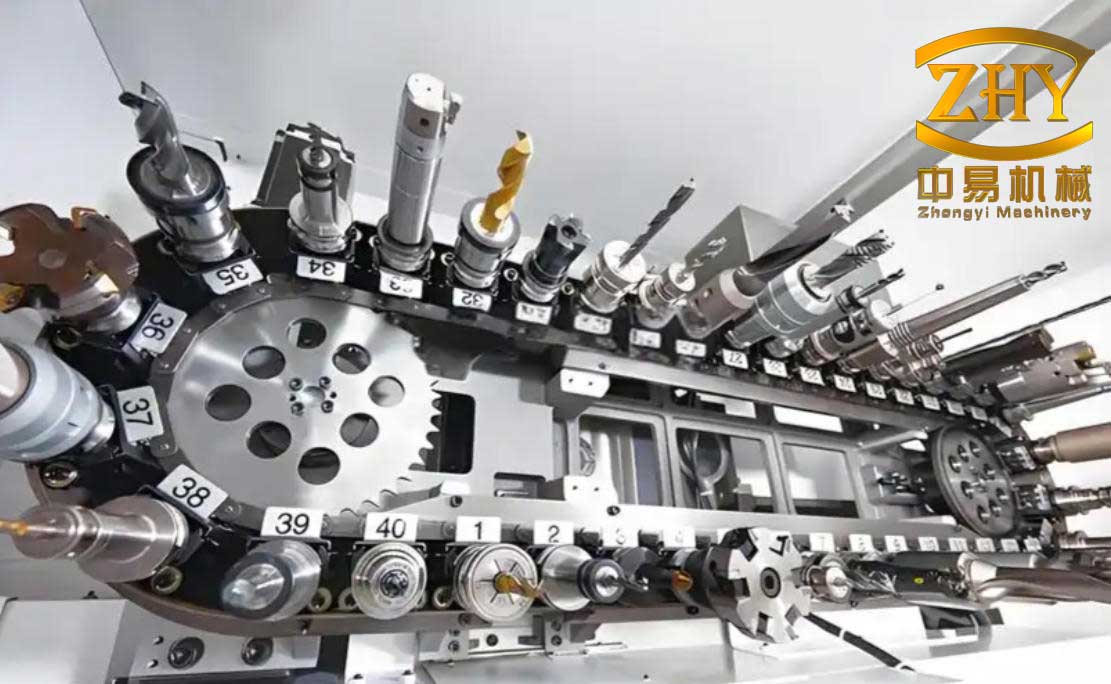
The performance, longevity, and, most critically, the long-term accuracy retention of these magnificent machines are fundamentally rooted in the quality of their foundational components. A substantial majority of a machine tool’s structure and key elements—the bed, column, crossrail, table, and headstock—begin their life as machine tool castings. Therefore, the properties of these castings are not merely a starting point but a definitive factor for the entire machine’s lifecycle. The requirements for machine tool castings in large, high-end CNC applications are exceptionally stringent and multifaceted.
Technical Specifications for Large CNC Machine Tool Castings
The performance indicators of the machines directly translate into rigorous demands on their cast components. For instance, a gantry-type车铣中心 with a 25-meter turning capacity or a heavy-duty卧式车床 handling 18-meter long components subjects its structure to immense static and dynamic forces. The primary machine tool castings must be engineered to meet these challenges.
1. Structural Castings: Beds, Columns, Crossrails, and Saddle.
These components form the skeleton of the machine. Their guiding surfaces (slides/ways) demand exceptional precision, with typical machined surface roughness requirements of $$R_a \leq 0.8 \mu m$$. The material must exhibit high strength and superior wear resistance, with a post-machining hardness often specified above 180 HBW in these critical areas. Crucially, the guiding zones must be entirely free of any casting defects like shrinkage or gas porosity. Common materials are high-grade gray irons such as HT300 or HT350. These castings are massive, with lengths ranging from 8 to 15 meters and poured weights from 25 to over 90 tons. The key performance metric here is stiffness, often quantified by a minimal allowable deflection under load. For a major crossrail, a requirement might be a deflection $$f$$ of less than 5.5 mm under a test load exceeding 11.00 kN.
2. Functional Castings: Tables, Base Plates, Headstocks, and Tailstocks.
These elements directly support and locate the workpiece or cutting spindle. Dimensional stability and rigidity are paramount to prevent distortion under the workpiece’s weight and cutting forces. While strength is important, the elastic modulus ($$E$$), which defines stiffness, is often even more critical for maintaining accuracy. A casting can have sufficient tensile strength but if its elastic modulus is too low, it will deform elastically under load, leading directly to machining errors. The inherent damping capacity (vibration absorption) of the casting material is also a vital property for achieving fine surface finishes.
Comprehensive Quality Control in Production
Producing machine tool castings that meet these elite standards requires meticulous control over every stage of the foundry process.
1. Precise Chemical Composition Control
Stability in chemical composition is the cornerstone of consistent mechanical properties and machinability. For high-strength gray iron used in critical machine tool castings, we enforce very tight control ranges. The aim is to minimize batch-to-batch variation to ensure uniform behavior in every casting.
| Element | Target Range | Allowed Fluctuation | Notes |
|---|---|---|---|
| Carbon (C) | 3.0 – 3.3 | ±0.05 | Primary graphite former |
| Silicon (Si) | 1.6 – 2.0 | ±0.10 | Graphitizer, strengthens ferrite |
| Manganese (Mn) | 0.8 – 1.2 | ±0.10 | Stabilizes pearlite, counters S |
| Phosphorus (P) | < 0.07 | – | Minimized to avoid brittleness |
| Sulfur (S) | < 0.02 | – | Minimized, interferes with graphite |
| Copper (Cu) | ~0.6 | ±0.15 | Added for wear resistance on slides |
| Chromium (Cr) | ~0.3 | ±0.08 | Added for hardness, pearlite refinement |
The Carbon Equivalent (CE) is a critical derived parameter that predicts microstructure and casting behavior. It is calculated as:
$$CE = \%C + \frac{\%Si + \%P}{3}$$
For high-strength machine tool castings, the CE is carefully balanced to achieve the required strength without compromising castability.
2. Optimizing Strength and Castability
A core challenge is achieving high tensile strength (e.g., 300-350 MPa for HT300/350) while maintaining adequate fluidity and low shrinkage tendency. Higher strength typically demands lower carbon equivalent, which worsens casting characteristics. Our strategy involves using a high percentage of steel scrap in the charge, coupled with superheating the molten iron to temperatures above 1500°C. This promotes carbon dissolution and creates a “cleaner” melt. This is followed by powerful inoculation (post-treatment with ferro-silicon or specialized inoculants) to promote a uniform, fine type A graphite formation even at a relatively higher CE. Furthermore, controlling the silicon-to-carbon ratio (Si/C) is a powerful tool. Increasing the Si/C ratio from 0.4-0.5 to 0.7-0.8 at a constant CE can enhance both tensile strength and elastic modulus.
3. Ensuring Mechanical and Physical Properties
While tensile strength ($$ \sigma_b $$) is a standard specification, for machine tool castings, the elastic modulus ($$ E $$) and damping capacity are equally vital. The elastic modulus indicates resistance to elastic deformation; a higher value means greater stiffness. There is a strong correlation between strength and stiffness, but the relationship is not absolute. Microstructural factors, especially graphite morphology, have a profound influence.
| Tensile Strength, $$ \sigma_b $$ (MPa) | Elastic Modulus, $$ E_0 $$ (GPa) | Approx. Grade Equivalent |
|---|---|---|
| 155 | 103.5 | ~HT150 |
| 185 | 111.7 | ~HT200 |
| 215 | 120.0 | ~HT250 |
| 265 | 129.7 | ~HT300 |
| 310 | 137.9 | ~HT350 |
| 355 | 141.4 | High-end HT350 |
| 400 | 144.8 | Alloyed High-Strength |
In design, engineers often use the elastic modulus at a working stress level, typically one-quarter of the tensile strength, denoted as $$ E_{0.25} $$. This provides a more realistic stiffness value for service conditions. The damping capacity, which is excellent in gray iron due to the graphite flakes, is harder to quantify simply but is a key reason iron is preferred over steel for machine structures.
4. Achieving Dimensional Accuracy and Stability
Modern machine tool castings are predominantly produced using no-bake resin sand molding, which yields excellent dimensional reproducibility and surface finish. The dimensional tolerance standard for these large castings typically targets CT8 to CT10 per ISO 8062. For critical mounting surfaces, a flatness requirement of less than 1.5 mm over any 600 mm length is common. Achieving and consistently holding CT8, with flatness under 1 mm/600 mm, represents world-class capability and is essential for minimizing costly machining operations on these massive parts.
5. Stress Relief and Aging Treatments
High-strength castings inherently possess higher residual stresses from the cooling process. To ensure long-term geometric stability and prevent distortion during machining or in service, effective stress relieving is mandatory. The primary methods employed are:
- Thermal Stress Relieving: The traditional and most thorough method. Castings are slowly heated to a temperature between 500-550°C, held for a duration based on thickness (often 1 hour per 25 mm of section), and then slowly cooled. This process reduces residual stresses by 80-90%.
- Vibration Stress Relieving: A faster, energy-efficient alternative where castings are subjected to resonant frequency vibrations. This method is effective for stress redistribution but may not be as comprehensive as thermal treatment for the most critical, complex machine tool castings.
- Low-Stress Cast Iron: This involves metallurgical and process controls (e.g., specific inoculation, controlled cooling) aimed at minimizing the development of residual stresses during solidification, potentially reducing the need for subsequent aging.
Conclusion: The Foundation of Precision Manufacturing
The journey toward manufacturing independence in high-end machine tools is intrinsically linked to mastering the art and science of producing superior machine tool castings. These components are not simple lumps of metal; they are engineered materials whose microstructure and properties dictate the ultimate performance ceiling of the machines they constitute. From the precise chemistry in the furnace to the controlled solidification in the mold, and through meticulous heat treatment, every step is critical. Controlling strength, stiffness, damping, and dimensional accuracy in these massive castings is a complex balancing act. As the demands for higher speeds, greater precision, and heavier cuts continue to grow, the evolution of casting technology—exploring advanced alloys, improved molding techniques, and simulation-driven design—will remain at the forefront. The quality of the machine tool castings truly lays the unshakable foundation upon which national manufacturing prowess and industrial competitiveness are built.