
As an observer deeply embedded in the manufacturing sector, I have witnessed the transformative impact of numerical control (NC) machine tools on the global industrial landscape. The foundation of this revolution lies in the quality and performance of machine tool castings, which serve as the critical structural components in these advanced systems. The development of NC machine tools, driven by technological advancements and economic growth, has placed unprecedented demands on casting enterprises, pushing them to innovate and elevate their production capabilities. This article delves into the intricate relationship between NC machine tool progression and the evolving requirements for machine tool castings, exploring technical challenges, strategic responses, and future directions.
The significance of machine tool castings cannot be overstated; they are the backbone of precision machinery, determining the stability, accuracy, and longevity of NC machine tools. With the global shift towards automation and high-precision manufacturing, the call for superior machine tool castings has intensified. This discussion will traverse the current state of NC machine tool development, the profile of casting manufacturers, specific demands imposed on castings, and the comprehensive measures adopted by the industry. Alongside, tables and formulas will be employed to crystallize key concepts, ensuring a thorough understanding of the technical nuances. The core keyword, ‘machine tool castings,’ will be frequently reiterated to emphasize its centrality in this discourse.
NC machine tools represent the pinnacle of equipment manufacturing, serving as a barometer for a nation’s scientific and technological prowess. Over the past decades, significant strides have been made, particularly in China, where production volumes have surged. For instance, the output of NC machine tools has seen double-digit growth, reflecting robust demand. However, despite quantitative achievements, qualitative gaps persist, especially in high-end, precision NC machine tools. The reliance on imported technology for critical components and a deficit in fundamental research underscore the need for indigenous innovation. Developing mid-to-high-end NC machine tools, such as machining centers, lathes, and grinders, is imperative for sustainable industrial advancement. This pursuit directly translates into stricter specifications for machine tool castings, necessitating enhancements in material properties, dimensional accuracy, and structural integrity.
Parallel to the machine tool industry’s evolution, casting enterprises have undergone substantial modernization. The widespread adoption of furan resin sand molding has replaced older, more polluting methods, marking a leap in environmental stewardship and casting quality. The implementation of duplex melting processes, combining cupola and electric furnace operations, has refined the metallurgical quality of molten iron. Diagnostic tools like direct reading spectrometers, intelligent molten iron analyzers, and coordinate measuring machines have become staples, enabling precise quality control. Furthermore, computer simulation software for solidification processes has accelerated design cycles and improved yield rates. Certifications beyond ISO 9001, such as ISO 14000 and ISO 18000, alongside international product approvals, attest to the industry’s commitment to excellence and global competitiveness. These advancements collectively bolster the capacity to produce high-grade machine tool castings.
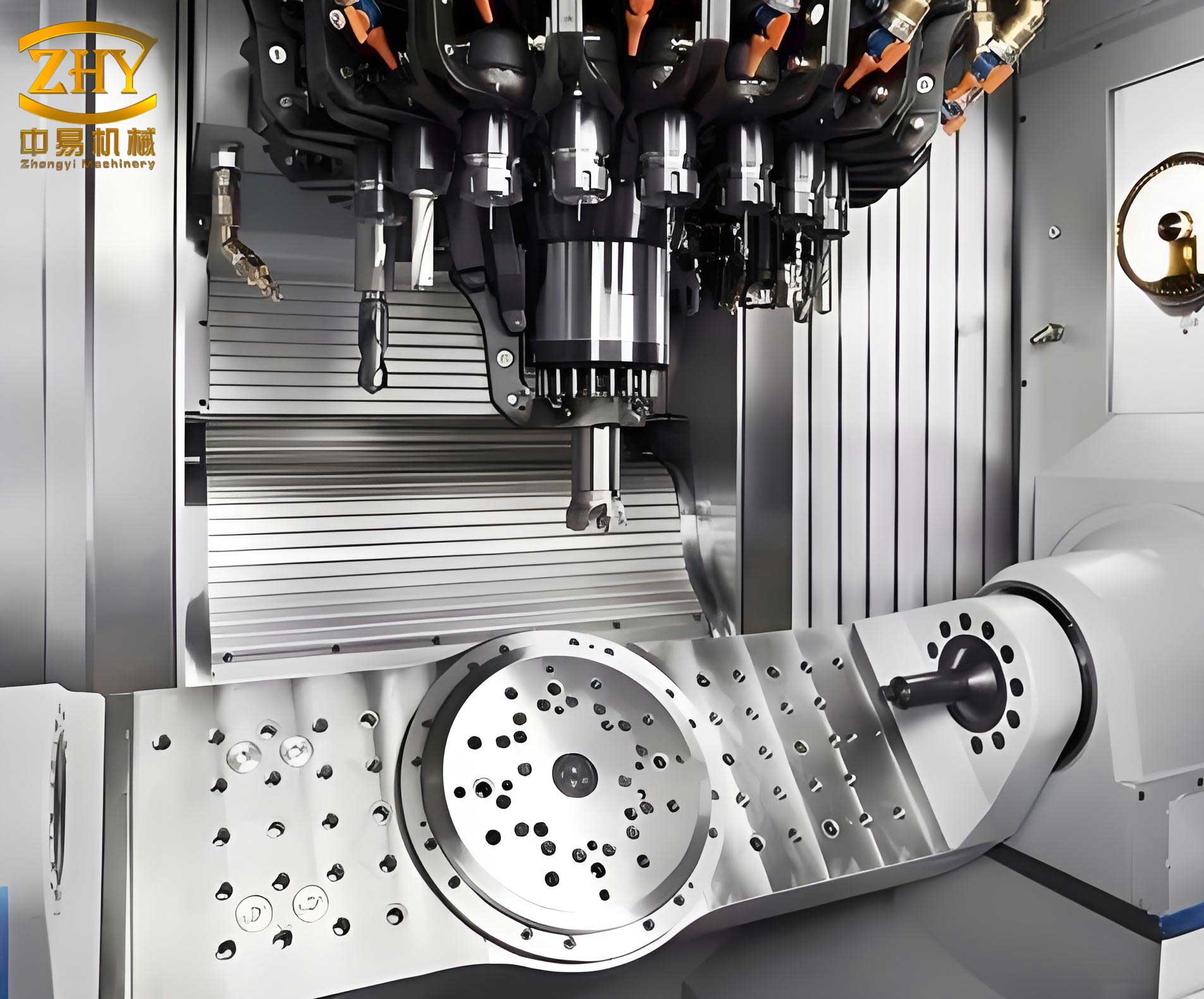
The escalating requirements for machine tool castings stem from the precise and automated nature of NC machine tools. Each aspect—from dimensional tolerance to surface finish—must meet exacting standards to ensure seamless functionality. Below, I outline the primary demands and the corresponding strategies employed by casting enterprises.
First, dimensional accuracy is paramount. NC machine tools integrate complex functions like automatic tool changing and workpiece handling, requiring castings with tight tolerances. While furan resin sand processes are known for their precision, the quality of patterns is often a neglected factor. For small-batch production typical of machine tool castings, wooden patterns are common, but manual crafting can lead to excessive draft angles and surface irregularities, compromising mold quality. To mitigate this, minimizing overall draft angles, utilizing CNC-machined wooden patterns or metal patterns, and employing rigid molding plates are essential. These steps enhance pattern fidelity, thereby improving the dimensional accuracy of the final machine tool castings. The relationship between pattern quality and casting precision can be summarized by the tolerance stack-up formula:
$$ \Delta_{total} = \sqrt{\sum_{i=1}^{n} (\Delta_{pattern,i}^2 + \Delta_{process,i}^2)} $$
where $\Delta_{total}$ is the total dimensional deviation, $\Delta_{pattern,i}$ represents deviations from the pattern, and $\Delta_{process,i}$ accounts for process-induced variations. Controlling $\Delta_{pattern,i}$ through high-precision patterns is crucial for superior machine tool castings.
Second, residual stress and hardness significantly influence the performance and lifespan of machine tool castings. High residual stresses can lead to distortion during machining or in service, while inadequate hardness on sliding surfaces, like guideways, accelerates wear. To address stress, casting enterprises employ extended cooling times in molds and optimize silicon-to-iron ratios to produce low-stress castings. For stress relief, thermal aging is widely regarded as effective, but it requires tailored heating, holding, and cooling cycles based on casting geometry and material grade. In some cases, dual aging—before and after rough machining—is adopted. Vibration aging offers energy savings for initial stress reduction, while natural aging, though thorough, is impractical due to prolonged cycles. Hardness enhancement involves compositional adjustments (e.g., carbon, silicon, manganese content, micro-alloying) and chilling techniques. However, improper thermal aging or furnace temperature inaccuracies can inadvertently reduce hardness, necessitating vigilant process control. For castings requiring surface quenching, a sufficient pearlite content is mandatory, as per the phase transformation equation:
$$ \text{Pearlite \%} = f(C, Si, Mn, Cooling Rate) $$
where alloy elements and cooling conditions dictate the microstructure. Ensuring this enables successful hardening of machine tool castings.
Third, surface quality has gained prominence with the aesthetic and functional demands of modern NC machine tools. Beyond the absence of defects, surface roughness levels must be elevated. While furan resin sand contributes to smoother surfaces, operator skill and coating quality are critical. The transition from brushing to flow coating has markedly improved surface finish by ensuring uniform application. Additionally, mold maintenance and post-processing steps—such as rough machining, shot blasting, and specialized surface treatments—play vital roles. The surface roughness $R_a$ can be modeled as a function of molding sand fineness and coating thickness:
$$ R_a = k_1 \cdot G^{-1/2} + k_2 \cdot e^{-t/\tau} $$
where $G$ is sand grain size, $t$ is coating thickness, and $k_1, k_2, \tau$ are constants. Optimizing these parameters refines the surface of machine tool castings.
Fourth, lightweighting is an emerging trend driven by efficiency goals. Reducing wall thickness without compromising strength necessitates higher-grade cast iron materials. Internationally, low-strength grades like HT150 and HT200 are being phased out in favor of HT300 and above for major machine tool castings. This shift poses challenges, as high-strength irons are prone to shrinkage and gas porosity. To counteract this, duplex melting ensures consistent chemistry, while advanced analysis tools monitor metallurgical quality. The mechanical properties of cast iron can be expressed via empirical relationships, such as the tensile strength $\sigma_t$ as a function of composition:
$$ \sigma_t = A + B \cdot \%C + C \cdot \%Si + D \cdot \%Mn + E \cdot \%P + F \cdot \%S $$
where coefficients $A$ through $F$ are derived from regression analyses. By targeting optimal compositions, casting enterprises produce lightweight yet robust machine tool castings.
Fifth, the demand for large NC machine tools has surged, creating opportunities for oversized machine tool castings. This requires not only ample melting capacity and heavy lifting equipment but also advanced techniques for thick-section castings. Processes like heavy rare-earth inoculation and pit molding are under continuous development to manage solidification and minimize defects in massive castings. The solidification time $t_s$ for a large casting can be estimated using Chvorinov’s rule:
$$ t_s = k \cdot \left( \frac{V}{A} \right)^2 $$
where $V$ is volume, $A$ is surface area, and $k$ is a mold constant. Optimizing $V/A$ ratios through design and molding practices is key to sound large machine tool castings.
To encapsulate these points, the following tables summarize key requirements and measures for machine tool castings.
| Requirement | Description | Impact on Performance |
|---|---|---|
| Dimensional Accuracy | Tight tolerances for precise assembly and automation | Ensures alignment and functionality of NC systems |
| Low Residual Stress | Minimized internal stresses to prevent distortion | Enhances stability and longevity of machine tool castings |
| High Surface Hardness | Enhanced wear resistance on sliding surfaces | Reduces maintenance and improves precision retention |
| Superior Surface Finish | Smooth surfaces free of defects | Aesthetics and reduced friction for moving parts |
| Lightweight Design | Reduced wall thickness with high strength | Lowers inertia, saves energy, and allows faster movements |
| Large-Scale Integrity | Soundness in massive castings for heavy-duty machines | Supports robust framework for large NC machine tools |
| Measure | Implementation | Benefit |
|---|---|---|
| Advanced Molding | Furan resin sand with CNC patterns or metal molds | Improves dimensional accuracy and surface finish of machine tool castings |
| Stress Relief | Thermal aging with customized cycles; dual aging if needed | Reduces residual stresses, preventing distortion |
| Composition Control | Duplex melting, spectroscopy, intelligent analysis | Ensures consistent high-grade material for machine tool castings |
| Surface Enhancement | Flow coating, shot blasting, specialized treatments | Elevates surface quality and hardness |
| Lightweighting Techniques | High-strength iron alloys, optimized wall design | Achieves strength with reduced weight in machine tool castings |
| Large Casting Processes | Heavy inoculation, pit molding, simulation software | Enables defect-free production of oversized machine tool castings |
In addition to these measures, mathematical modeling plays a crucial role in optimizing machine tool castings. For instance, the hardness $H$ of cast iron can be correlated with its microstructure using formulas like:
$$ H = H_0 + \alpha \cdot \%Pearlite + \beta \cdot \%Carbide $$
where $H_0$, $\alpha$, and $\beta$ are material constants. Similarly, the tendency for shrinkage porosity can be predicted via the Niyama criterion:
$$ G / \sqrt{\dot{T}} \geq C $$
where $G$ is temperature gradient, $\dot{T}$ is cooling rate, and $C$ is a critical value. By applying such criteria, casting processes for machine tool castings are refined to minimize defects.
The future trajectory for casting enterprises hinges on relentless innovation. As NC machine tools evolve towards greater precision and intelligence, the specifications for machine tool castings will become even more stringent. Emerging technologies, such as additive manufacturing for molds or AI-driven quality prediction, offer promising avenues. Moreover, sustainability considerations will drive the adoption of greener foundry practices. Casting manufacturers must invest in R&D, foster collaborations with machine tool designers, and cultivate a skilled workforce to stay ahead. The integration of digital twins—virtual replicas of casting processes—could revolutionize the production of machine tool castings, enabling real-time adjustments and predictive maintenance.
In conclusion, the symbiotic relationship between NC machine tool advancement and casting industry progress is undeniable. The rising bar for machine tool castings—encompassing accuracy, stress management, surface quality, lightweighting, and large-scale production—serves as a catalyst for technological uplift in foundries. Through strategic measures outlined here, casting enterprises can not only meet current demands but also anticipate future challenges. The journey towards excellence in machine tool castings is continuous, demanding adaptability, precision, and a forward-looking mindset. As the backbone of advanced manufacturing, high-quality machine tool castings will remain indispensable in powering the next generation of NC machine tools, fueling industrial growth and innovation worldwide.