
As a veteran engineer and researcher immersed in the field of advanced manufacturing, I have dedicated my career to the intricate world of aerospace castings. These components are not merely metal parts; they are the foundational bones and vital organs of flight, bearing immense responsibility for performance, safety, and efficiency. The journey of a modern aerospace casting, from a digital model to a certified component flying at the edge of the atmosphere, encapsulates a symphony of materials science, physics, and precision engineering. This article delves into the core principles, challenges, and innovations that define this critical domain.
The historical trajectory of aerospace castings mirrors the evolution of flight itself. Early aircraft utilized simple sand-cast components from aluminum alloys, prioritizing basic shape and function over optimal properties. However, as the demands for higher speeds, greater altitudes, and improved fuel economy escalated, so did the requirements for cast components. The advent of jet propulsion was a pivotal moment, necessitating materials that could withstand unprecedented thermal and mechanical stresses. This drove the development and adoption of superalloys and the refinement of investment casting processes. Today, aerospace castings are integral to every major system: from complex, thin-walled turbine blades and structural airframe components to critical housings and brackets in guidance systems. The relentless pursuit of weight reduction, often quantified by the specific strength or specific stiffness, has made casting the preferred near-net-shape manufacturing route for an ever-expanding portfolio of parts.
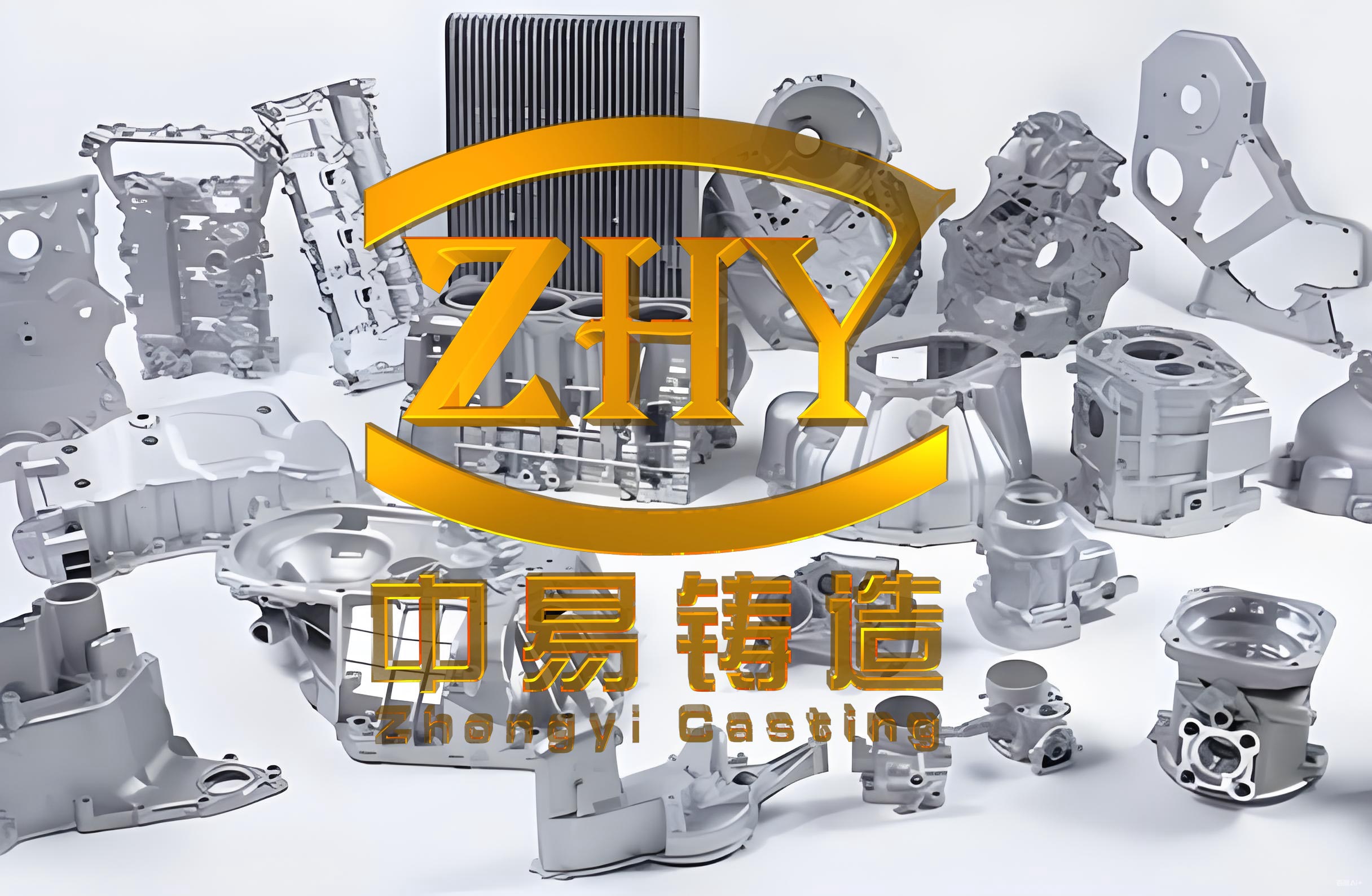
The science behind aerospace castings begins with material selection. The choice of alloy is a complex optimization problem balancing density ($\rho$), yield strength ($\sigma_y$), fracture toughness ($K_{IC}$), creep resistance, fatigue life ($N_f$), and corrosion resistance, all within a specific temperature regime. The following table categorizes primary alloy families used in modern aerospace castings:
| Alloy Family | Key Alloys (Examples) | Typical Applications | Primary Advantages | Key Challenges in Casting |
|---|---|---|---|---|
| Aluminum-Based | A356, A357, 206, 319 | Structural frames, housings, brackets, intake cases | Low density, good specific strength, excellent castability | Solidification shrinkage, hot tearing, porosity control |
| Titanium-Based | Ti-6Al-4V, Ti-6Al-2Sn-4Zr-2Mo | Fan & compressor casings, landing gear components, high-strength fittings | Exceptional specific strength, excellent corrosion resistance | High reactivity with mould materials, high melting point, prone to contamination |
| Nickel-Based Superalloys | Inconel 718, René 80, CMSX-4 (single crystal) | Turbine blades, vanes, combustor components | Unparalleled high-temperature strength, creep & oxidation resistance | Segregation, freckle formation, high thermal stresses, complex heat treatment |
| Magnesium-Based | AZ91, WE43 | Gearboxes, transmission housings (where fire risk is mitigated) | Ultra-low density | Poor corrosion resistance, flammability, limited high-temp strength |
The performance of these materials in a cast state is governed by their microstructure, which is a direct result of the solidification process. The fundamental equation describing the growth velocity of a solidification front is derived from heat transfer:
$$
v = \frac{G \cdot D}{\Delta T}
$$
where $v$ is the growth velocity, $G$ is the temperature gradient at the interface, $D$ is the diffusion coefficient, and $\Delta T$ is the constitutional undercooling. Controlling these parameters is crucial to avoid defects and tailor properties. For instance, in directionally solidified or single-crystal aerospace castings for turbines, a high $G$ and low $v$ are maintained to produce columnar grains or a single grain free of transverse grain boundaries, which are weak points under creep conditions.
Manufacturing processes for aerospace castings have evolved into highly specialized disciplines. Investment casting, also known as lost-wax casting, remains the dominant method for producing complex, high-integrity components. The process chain involves creating a wax or polymer pattern, building a ceramic shell around it, dewaxing, firing the shell to create a mould, pouring molten metal, and finally, shell removal and finishing. The dimensional accuracy and surface finish achievable are superior to most other casting methods. For the most demanding applications, such as turbine blades, variants like Directional Solidification (DS) and Single Crystal (SX) casting are employed. These processes use carefully controlled thermal gradients to solidify the metal in one specific direction, eliminating detrimental grain boundaries. Another critical process is vacuum induction melting and casting (VIM/VIC), essential for reactive alloys like titanium and superalloys to prevent gas pickup and oxidation. The choice of process is dictated by a multi-variable function:
$$
\text{Process Selection} = f(\text{Alloy}, \text{Part Geometry}, \text{Mechanical Requirements}, \text{Quantity}, \text{Cost})
$$
Modeling and simulation have revolutionized the development of aerospace castings. Computational tools allow us to virtually prototype the entire process, predicting outcomes and optimizing parameters before any metal is poured. Finite Element Analysis (FEA) and Computational Fluid Dynamics (CFD) are employed in a coupled manner to solve the governing equations of fluid flow, heat transfer, and stress during solidification. The energy equation incorporating phase change (latent heat, $L$) is central:
$$
\rho C_p \frac{\partial T}{\partial t} = \nabla \cdot (k \nabla T) – \rho L \frac{\partial f_s}{\partial t}
$$
where $\rho$ is density, $C_p$ is specific heat, $T$ is temperature, $t$ is time, $k$ is thermal conductivity, and $f_s$ is the solid fraction. By solving this, we can predict shrinkage porosity, which forms in isolated liquid pockets (hot spots) when feeding is inadequate. The Niyama criterion, a widely used indicator for shrinkage porosity, is given by:
$$
N_y = \frac{G}{\sqrt{\dot{T}}}
$$
where $\dot{T}$ is the cooling rate. Regions with a Niyama value below a critical threshold are predicted to be prone to porosity. Furthermore, microstructure modeling predicts grain size and morphology. The classic relationship for grain size ($d$) in a casting is often described as:
$$
d = a + b \cdot (\dot{T})^{-n}
$$
where $a$, $b$, and $n$ are material-dependent constants. These simulations directly inform gating and riser design, chill placement, and process parameter selection, drastically reducing development time and cost for new aerospace castings.
Post-casting processes are equally vital. Heat treatment is almost universally applied to aerospace castings to achieve the required mechanical properties. For aluminum alloys, this involves a solution heat treatment (holding at a high temperature to dissolve alloying elements), quenching (rapid cooling to retain a supersaturated solid solution), and aging (precipitation hardening at a lower temperature). The strengthening from precipitates can be approximated by the Orowan bowing mechanism for bypassable particles:
$$
\Delta \tau = \frac{Gb}{\lambda}
$$
where $\Delta \tau$ is the increase in critical resolved shear stress, $G$ is the shear modulus, $b$ is the Burgers vector, and $\lambda$ is the inter-precipitate spacing. For titanium and nickel alloys, complex multi-step heat treatments are used to control the proportions and morphologies of alpha/beta or gamma/gamma prime phases. After heat treatment, extensive Non-Destructive Testing (NDT) is mandatory. The table below summarizes key NDT methods:
| NDT Method | Physical Principle | Detectable Defects in Castings | Advantages | Limitations |
|---|---|---|---|---|
| X-Ray Radiography | Differential absorption of X-rays | Porosity, shrinkage cavities, inclusions | Provides a 2D image, good for volumetric defects | Limited resolution for tight cracks, planar defects parallel to beam are hard to detect |
| Ultrasonic Testing (UT) | Reflection/attenuation of high-frequency sound waves | Internal cracks, lack of fusion, porosity clusters | Good depth penetration, can size defects | Requires couplant, complex geometry can cause signal noise |
| Fluorescent Penetrant Inspection (FPI) | Capillary action of a penetrant into surface flaws | Surface-breaking cracks, porosity | Highly sensitive to fine surface defects, relatively low cost | Detects surface flaws only, requires clean surface |
| Computed Tomography (CT) | 3D reconstruction from multiple X-ray projections | All internal and external defects, dimensional measurement | Provides complete 3D volumetric data, unparalleled insight | Very high cost, time-consuming for large parts, data volume is massive |
The quest for improvement in aerospace castings is relentless, driven by the needs of next-generation aircraft and space vehicles. Additive Manufacturing (AM), or 3D printing, is now intersecting with traditional casting in two ways: as a method to produce complex sand moulds and cores directly from digital data (e.g., binder jetting), and as a competitive process for small, intricate metal parts. However, for large-scale, high-volume components, casting remains economically and technically superior. The future lies in hybrid approaches and intelligent foundries. The integration of real-time sensor data (temperature, pressure, displacement) with machine learning algorithms is paving the way for closed-loop process control, where the pouring and solidification process can be dynamically adjusted to compensate for variations, ensuring consistently flawless aerospace castings. Furthermore, the development of novel intermetallic compounds and metal matrix composites (MMCs) promises the next leap in high-temperature performance. Embedding ceramic fibers or particles (e.g., SiC) into an aluminum or titanium matrix via casting routes can yield components with enhanced stiffness and wear resistance, though uniform distribution remains a significant challenge governed by fluid-particle interactions during filling and solidification.
In conclusion, the domain of aerospace castings represents a pinnacle of applied engineering, where empirical art has been systematically transformed into predictive science. Every component is a testament to the deep understanding of thermodynamics, fluid dynamics, metallurgy, and mechanics. The continuous innovation in materials, simulation-driven design, and process digitalization ensures that aerospace castings will remain indispensable, evolving to meet the ever-more stringent demands of future aerospace platforms. The integrity of flight continues to be built, quite literally, upon the solid foundation of these meticulously engineered metal forms.