
As an industry observer deeply immersed in the manufacturing sector, I have witnessed a significant transformation in the production of aerospace castings over the past decades. These components are critical to the structural integrity and performance of both military and commercial aircraft, as well as emerging electric vehicles. The recent developments in long-term supply agreements and substantial investments highlight the growing importance of innovative casting technologies. In this article, I will explore the technical, economic, and strategic aspects of aerospace castings, emphasizing how advancements like 3D sand printing, robotics, and digital radiography are reshaping the landscape. Throughout this discussion, the term ‘aerospace castings’ will be frequently referenced to underscore its centrality in modern manufacturing.
The foundation of modern aerospace castings lies in the use of lightweight materials such as magnesium and aluminum alloys. These materials offer an optimal balance between strength and weight, which is paramount for fuel efficiency and payload capacity. The casting process involves pouring molten metal into molds to create complex geometries that are difficult to achieve with other methods. Recent innovations have focused on enhancing precision, reducing defects, and lowering costs. For instance, the adoption of 3D sand printing allows for the production of intricate molds directly from digital designs, eliminating the need for traditional pattern-making. This technology, combined with automated pouring and finishing, has revolutionized the production of aerospace castings, enabling faster turnaround times and higher quality standards.
To quantify the benefits of these advancements, consider the following table comparing traditional casting methods with modern integrated approaches for aerospace castings:
| Aspect | Traditional Casting | Modern Integrated Casting (with 3D Printing & Automation) |
|---|---|---|
| Lead Time | 8-12 weeks | 2-4 weeks |
| Defect Rate | 5-10% | < 2% |
| Cost per Unit | High due to manual labor | Reduced by 20-30% |
| Design Complexity | Limited by mold patterns | Virtually unlimited |
| Material Utilization | 70-80% | 90-95% |
This table illustrates how modern techniques improve efficiency and quality in producing aerospace castings. The reduction in defects is particularly crucial for safety-critical applications in aerospace. Moreover, the integration of digital radiography enables non-destructive testing, ensuring that every component meets stringent standards. These advancements are not just incremental; they represent a paradigm shift in how aerospace castings are manufactured, driving competitiveness in global markets.
From a technical perspective, the performance of aerospace castings can be modeled using various engineering formulas. For example, the tensile strength $\sigma_t$ of a cast aluminum alloy can be expressed as a function of its microstructure and processing parameters:
$$ \sigma_t = \sigma_0 + k \cdot d^{-1/2} $$
where $\sigma_0$ is the intrinsic strength, $k$ is a material constant, and $d$ is the average grain size. This Hall-Petch relationship highlights how finer grains, achieved through controlled cooling during casting, enhance strength. Similarly, for fatigue life—a critical factor for aerospace castings subjected to cyclic loads—we can use the Coffin-Manson equation:
$$ \Delta \epsilon_p = \epsilon_f’ (2N_f)^c $$
where $\Delta \epsilon_p$ is the plastic strain range, $\epsilon_f’$ is the fatigue ductility coefficient, $N_f$ is the number of cycles to failure, and $c$ is the fatigue ductility exponent. These formulas underscore the importance of material science in optimizing aerospace castings for durability and reliability.
The application of aerospace castings extends beyond traditional aircraft to include next-generation platforms. For instance, components for advanced fighter jets, large commercial airliners, and even spacecraft rely on high-integrity castings. The shift towards electric propulsion in the automotive sector also mirrors this trend, where castings are used in electric drive modules (EDMs) to integrate motors, power electronics, and transmissions. This convergence highlights the versatility of casting technologies. In EDMs, lightweight castings contribute to improved range and performance, similar to their role in aerospace. The following table summarizes key platforms utilizing advanced aerospace castings:
| Platform Type | Application Examples | Primary Casting Material | Key Benefits |
|---|---|---|---|
| Military Aircraft | Fighters, transporters | Magnesium alloys | High strength-to-weight ratio |
| Commercial Aircraft | Wide-body jets, regional planes | Aluminum alloys | Cost-effectiveness and corrosion resistance |
| Electric Vehicles | EDMs for powertrains | Aluminum and magnesium | Thermal management and weight reduction |
| Spacecraft | Satellite components, launch vehicles | Titanium-based castings | Extreme temperature tolerance |
As we delve deeper into the manufacturing processes, it is essential to visualize the sophistication involved in producing aerospace castings. Below is an image that captures the intricacy of a typical aerospace casting component, showcasing the level of detail achievable through modern techniques:
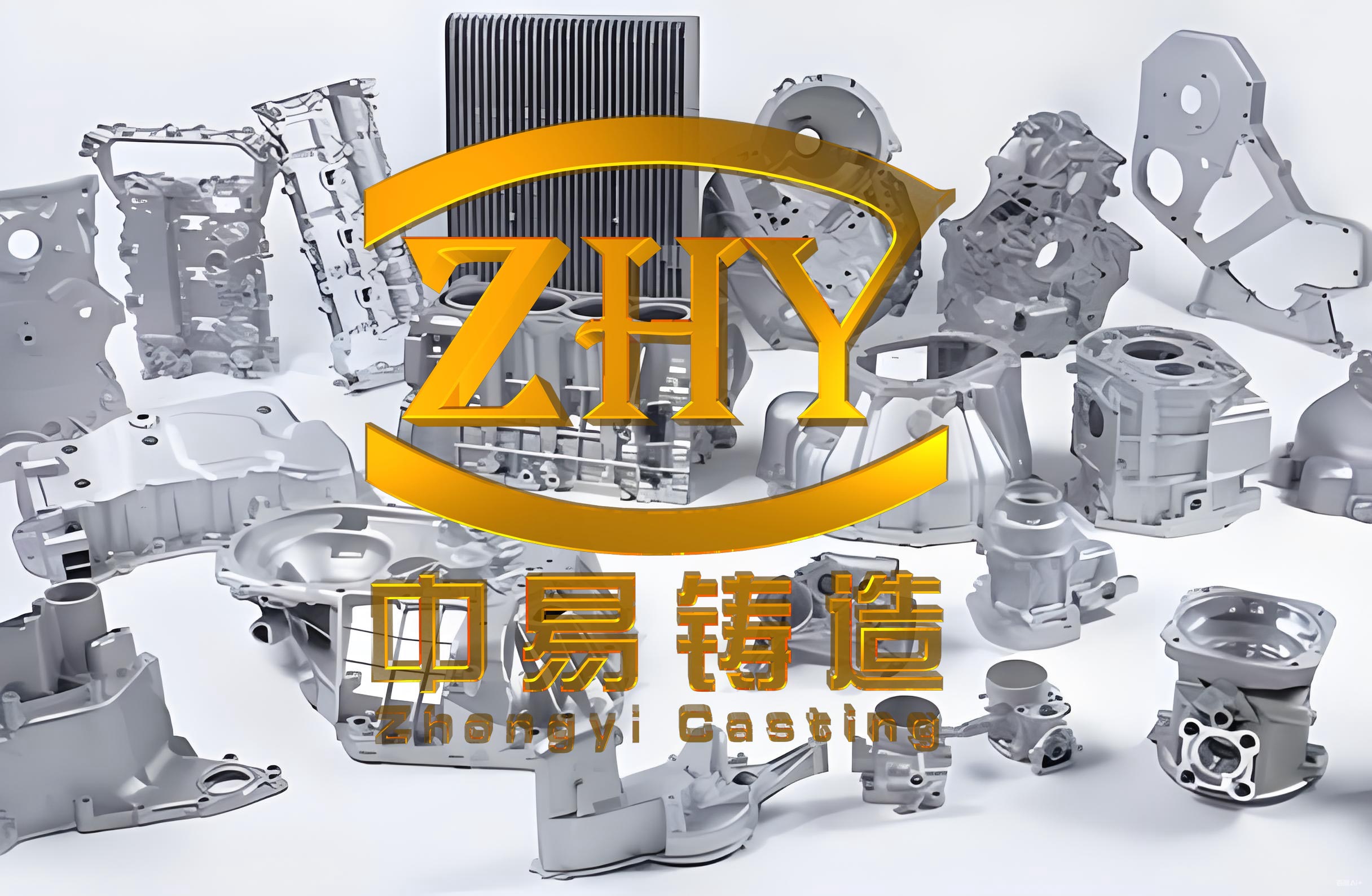
This image highlights the complex geometries and smooth surfaces that are characteristic of high-quality aerospace castings. Such components are integral to airframes, engines, and landing gear, where precision is non-negotiable. The adoption of robotics in finishing processes, for example, ensures consistent quality across batches, reducing human error. Additionally, automated pouring systems control the flow of molten metal to minimize turbulence and porosity, further enhancing the integrity of aerospace castings.
Economically, the production of aerospace castings involves significant capital investment, but the long-term benefits are substantial. The cost structure can be analyzed using a simplified model. Let $C_{total}$ represent the total cost per unit of aerospace castings, which can be broken down as:
$$ C_{total} = C_{material} + C_{labor} + C_{energy} + C_{capital} $$
where $C_{material}$ is the cost of raw materials (e.g., magnesium or aluminum ingots), $C_{labor}$ is the labor cost, $C_{energy}$ is the energy consumption during melting and processing, and $C_{capital}$ is the amortized cost of equipment like 3D printers and robots. Modern innovations reduce $C_{labor}$ and $C_{energy}$ through automation and efficient heating methods. For instance, inductive melting can cut energy use by up to 25% compared to traditional furnaces. Moreover, the scalability of 3D sand printing lowers $C_{capital}$ for small batches, making it feasible to produce customized aerospace castings without high tooling costs.
To illustrate the cost dynamics, consider the following table comparing cost drivers for aerospace castings in conventional versus advanced setups:
| Cost Driver | Conventional Casting (%) | Advanced Casting with Automation (%) |
|---|---|---|
| Material | 40 | 45 (due to better utilization) |
| Labor | 30 | 15 |
| Energy | 20 | 15 |
| Capital Depreciation | 10 | 25 (higher upfront investment) |
Despite the higher capital share, the overall $C_{total}$ decreases by approximately 15-20% in advanced setups, thanks to efficiency gains. This cost competitiveness is vital for sustaining growth in the aerospace castings market, especially as demand rises for newer aircraft models and electric vehicles. The long-term supply agreements mentioned earlier are often predicated on such economic advantages, ensuring stable partnerships between manufacturers and suppliers.
Technological convergence is another key trend. The same principles used in aerospace castings are being applied to automotive EDMs, where lightweight castings help achieve ranges of up to 800 kilometers per charge. The optimization of these components involves computational fluid dynamics (CFD) simulations to model metal flow during casting. The Navier-Stokes equations, simplified for incompressible flow, are often employed:
$$ \rho \left( \frac{\partial \mathbf{v}}{\partial t} + \mathbf{v} \cdot \nabla \mathbf{v} \right) = -\nabla p + \mu \nabla^2 \mathbf{v} + \mathbf{f} $$
where $\rho$ is density, $\mathbf{v}$ is velocity, $p$ is pressure, $\mu$ is dynamic viscosity, and $\mathbf{f}$ represents body forces. By solving these equations numerically, engineers can predict and mitigate defects like cold shuts or misruns in aerospace castings. This simulation-driven design reduces physical prototyping costs and accelerates time-to-market.
Furthermore, the integration of digital twins—virtual replicas of physical casting processes—enables real-time monitoring and optimization. Sensors collect data on temperature, pressure, and cooling rates, which are fed into predictive models to adjust parameters dynamically. This approach enhances the consistency of aerospace castings, particularly for large-scale production runs. The mathematical foundation for digital twins often involves machine learning algorithms, such as neural networks trained on historical data to forecast quality outcomes.
Looking ahead, the future of aerospace castings will be shaped by sustainability considerations. The industry is increasingly focused on reducing carbon footprints through recycled materials and energy-efficient processes. For example, using recycled aluminum in castings can cut embodied energy by up to 95% compared to primary production. The environmental impact can be quantified using life cycle assessment (LCA) models, where the total emissions $E$ per unit of aerospace castings is given by:
$$ E = \sum_{i=1}^{n} (m_i \cdot e_i) + e_{process} $$
where $m_i$ is the mass of material $i$, $e_i$ is its emission factor, and $e_{process}$ accounts for emissions from manufacturing steps. Innovations like solar-powered melting furnaces and closed-loop water systems are reducing $e_{process}$, making aerospace castings greener without compromising performance.
In conclusion, the advancements in aerospace castings are driving a new era of manufacturing excellence. From 3D sand printing to automated finishing, these technologies enhance quality, reduce costs, and enable complex designs. The crossover into automotive EDMs demonstrates the versatility of casting solutions. As demand grows for lighter, stronger, and more efficient components, the role of aerospace castings will only expand. By embracing innovation and collaboration, the industry can meet future challenges while maintaining competitiveness on a global scale. This continuous evolution underscores why aerospace castings remain at the forefront of engineering and industrial progress.