
In my decades of experience as a casting engineer and researcher, I have witnessed firsthand the transformative journey of machine tool castings, which form the backbone of industrial manufacturing. Machine tool castings are not merely metal components; they are the foundational elements that determine the performance, precision, and longevity of machine tools. From the rudimentary beginnings to today’s high-precision数控 era, the quality requirements for machine tool castings have evolved dramatically, driven by technological advancements and global market demands. This article delves into the historical context, current trends, gaps, and strategies for enhancing the quality of machine tool castings, emphasizing the critical role they play in modern industry. I will share insights from my work, incorporating technical details, formulas, and tables to provide a comprehensive overview.
The early stages of machine tool casting production, particularly in the mid-20th century, were characterized by simplistic requirements. During that period, machine tool castings such as beds, columns, crossrails, and saddles were produced with basic materials, often equivalent to modern HT200 grades. The focus was on functionality rather than precision, with minimal standards for chemical composition, dimensional accuracy, or mechanical properties. For instance, hardness specifications were loosely defined, and non-destructive testing like ultrasonic inspection was virtually non-existent. The melting equipment predominantly consisted of cupolas, and process control relied heavily on Soviet-derived guidelines. As I recall from historical records, the lack of trained personnel and advanced technologies limited the quality of machine tool castings, resulting in components suitable only for small, simple machine tools like milling machines, planers, and grinders.
From the 1970s to the 1990s, significant progress was made in the casting industry, paralleling the growth of China’s machine tool sector. The demand for higher-performance machine tools led to stricter requirements for machine tool castings. Materials advanced to grades like HT250 and HT300, with hardness values exceeding 200 HB and mandatory ultrasonic testing for critical parts. National standards were established, and casting processes improved through the adoption of resin sand molding, dual melting systems (combining electric furnaces with cupolas), and the use of inoculants and alloying techniques. During my research, I have applied these methods to enhance the properties of machine tool castings, such as using rare-earth孕育剂 to refine graphite structures. The introduction of ductile iron for certain applications marked a leap forward, yet overall casting technology still lagged behind international先进水平, with production largely geared toward planned economy models rather than global competition.
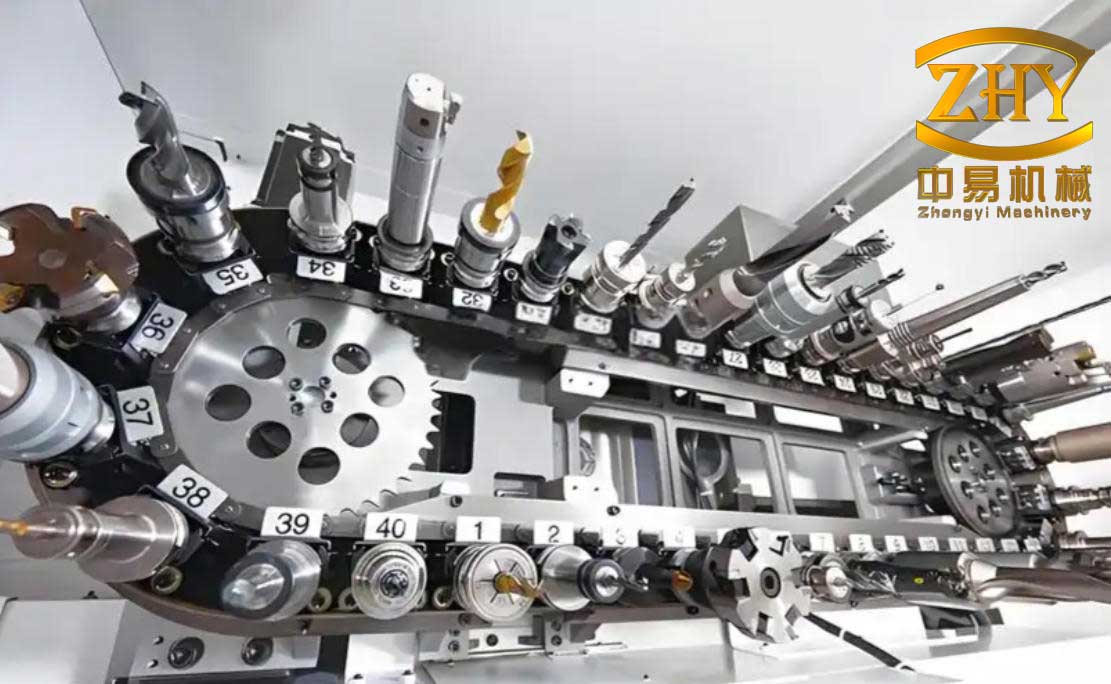
In recent years, the rapid development of the machine tool industry has broken foreign monopolies on high-end数控机床, propelling machine tool castings into a new era of quality demands. China has become the world’s largest producer of machine tools, with annual outputs exceeding millions of units, yet there remains a gap in comprehensive performance compared to advanced nations. The shift toward large,精密, high-speed数控 systems has intensified the need for superior machine tool castings, which constitute 70–80% of the weight in many machine tools. These castings directly impact the machine’s quality,寿命, and accuracy retention, making their optimization a top priority. In my projects, I have focused on achieving high stiffness, low stress, and excellent machinability in machine tool castings, often through precise control of microstructure and cooling rates. The following table summarizes the evolution of material requirements for machine tool castings over time, highlighting key transitions.
| Time Period | Typical Material Grades | Key Quality Parameters | Technological Advances |
|---|---|---|---|
| 1950s-1960s | Equivalent to HT200 | Low hardness (~150 HB), loose dimensional tolerances | Cupola melting, clay sand molding |
| 1970s-1990s | HT250, HT300, some ductile iron | Hardness >200 HB, ultrasonic testing, defined standards | Resin sand, dual melting, inoculation |
| 2000s-Present | High-grade铸铁 (e.g., HT350), alloyed铸铁 | High stiffness, low wall-thickness sensitivity, precision stability | Advanced melting (electric furnaces), CAD/CAE, automated processes |
The current trends in machine tool manufacturing impose rigorous quality demands on machine tool castings. Market growth, driven by globalization and the转移 of manufacturing to China, has spurred product structure optimization, with中高档数控机床 becoming mainstream. These machines require machine tool castings that exhibit exceptional dimensional accuracy, surface finish, and internal integrity. For example, in high-precision数控加工 centers, the bed and column castings must maintain stability over long-term use, with tolerances within microns. From my work, I have derived formulas to relate casting properties to processing parameters. One key formula for hardness in machine tool castings, considering carbon equivalent and cooling rate, is: $$H = C_e \cdot k_1 + \frac{k_2}{\sqrt{t_c}}$$ where \(H\) is hardness (HB), \(C_e\) is carbon equivalent, \(t_c\) is cooling time (s), and \(k_1\), \(k_2\) are material constants. This emphasizes the need for controlled solidification in machine tool castings.
Moreover, the emphasis on外观 and内在质量 has become苛刻. Dimensional精度 must be consistently high, with surface roughness requirements often below Ra 3.2 μm for非加工 surfaces. Machine tool castings intended for guideways frequently undergo high-frequency surface hardening, necessitating specific基体组织 and石墨形态. In my experiments, I have observed that achieving a pearlitic matrix with type A graphite, distributed evenly with lengths under 100 μm, is crucial for wear resistance and minimal distortion during machining. The allowable defect levels in machine tool castings are now extremely low, requiring advanced模具精度 and rigorous inspection techniques. The following table outlines typical quality specifications for modern machine tool castings, based on industry benchmarks.
| Aspect | Requirement | Measurement Method |
|---|---|---|
| Dimensional Accuracy | Within ±0.1 mm per meter, long-term stability | CMM, laser scanning |
| Surface Roughness | Ra ≤ 3.2 μm (non-machined areas) | Profilometer |
| Hardness (Guideways) | 200–250 HB, uniformity ±10 HB | Brinell hardness tester |
| Microstructure | >90% pearlite, type A graphite, length 50–100 μm | Metallographic analysis |
| Defect Allowance | No cracks, shrinkage; minimal porosity (per ASTM) | Ultrasonic, X-ray inspection |
Despite advancements, significant gaps exist between domestic machine tool castings and those from发达国家. In外观质量, dimensional精度 and machining allowances are inferior, with accuracy levels typically 1–2 grades lower and surface roughness 1–2 grades higher. For内在质量, inconsistencies in material defects, such as variations in切削性能, hardness uniformity, and graphite distribution, persist. From my comparative studies, the共晶团 count in domestic machine tool castings often falls short, affecting mechanical properties. The overall production technology and equipment also lag; for instance, while发达国家 use铸造焦 extensively in cupolas for consistent铁液 quality, domestic adoption remains low. Melting temperatures abroad average around 1500°C, ensuring fluidity and reduced inclusions, whereas domestic practices often hover near 1400°C, except in large enterprises. In造型 and制芯, advanced methods like high-pressure molding and resin sand cores are standard overseas, but domestically, many中小企业 rely on manual or simple mechanical processes. These gaps contribute to higher energy and material consumption, with domestic machine tool castings being 10–20% heavier and having lower yield rates (50% for steel castings vs. 60% abroad). The formula for yield rate highlights this: $$Y = \frac{W_c}{W_m} \times 100\%$$ where \(Y\) is yield rate, \(W_c\) is casting weight, and \(W_m\) is molten metal weight. Optimizing this for machine tool castings is essential for efficiency.
To bridge these gaps and enhance the quality of machine tool castings, several measures are imperative. First, establishing high-level enterprise quality standards, aligned with国际标准 like ISO or ASTM, is critical. In my role, I have advocated for内控标准 that exceed national benchmarks, ensuring machine tool castings are competitive globally. Second, implementing robust quality assurance systems, such as ISO 9001, with continuous improvement cycles, fosters a culture of quality. Third, developing new standards tailored to high-end数控机床 needs, covering aspects like flatness of guideways, microstructural parameters, and non-destructive testing limits, is vital. For example, a standard for石墨形态 could specify: $$G_i = \frac{N_a}{A}$$ where \(G_i\) is graphite index, \(N_a\) is number of graphite particles per unit area, and \(A\) is area (mm²), with targets for machine tool castings set above 200 particles/mm². Fourth,加强专业培训 through industry-academia collaborations can cultivate skilled personnel, as I have seen in joint programs that enhance expertise in machine tool castings. Fifth, improving劳动保护和环境保护 is essential for sustainable development; adopting green foundry practices reduces waste and enhances worker safety, ultimately boosting the quality of machine tool castings. The table below summarizes these improvement strategies.
| Strategy | Key Actions | Expected Impact on Machine Tool Castings |
|---|---|---|
| Standards Development | Adopt ISO/ASTM, create内控标准 for precision | Enhanced consistency, global competitiveness |
| Quality Systems | Implement ISO 9001, regular audits,全员质量意识 | Reduced defects, improved process control |
| Technological Upgrade | Invest in advanced melting, CAD/CAE, automation | Higher accuracy, better microstructure |
| Personnel Training | Workshops, university partnerships, skill certification | Innovation in design and production of machine tool castings |
| Sustainability Focus | Use eco-friendly materials, waste reduction, safety protocols | Lower environmental impact, higher worker morale |
Looking ahead, the future of machine tool castings lies in integrating digital technologies like IoT and AI for real-time monitoring and predictive maintenance. In my research, I am exploring smart casting methods where sensors embedded during production track parameters like temperature and stress, optimizing quality. The demand for lightweight yet strong machine tool castings may drive the adoption of advanced materials, such as compacted graphite iron or metal matrix composites. Formulaically, the pursuit of high performance can be expressed through a comprehensive model: $$Q = \alpha \cdot M + \beta \cdot P + \gamma \cdot E$$ where \(Q\) is overall quality of machine tool castings, \(M\) represents material properties, \(P\) denotes process parameters, \(E\) is environmental factors, and \(\alpha, \beta, \gamma\) are weighting coefficients. By minimizing variability in these factors, we can achieve machine tool castings that meet the stringent needs of next-generation machine tools.
In conclusion, the journey of machine tool castings from simple components to precision-engineered elements mirrors the evolution of industrial capabilities. Through my experiences, I have learned that continuous innovation, strict quality control, and a focus on sustainability are key to advancing machine tool castings. As the machine tool industry progresses toward greater automation and精度, the role of high-quality machine tool castings will only grow in importance. By addressing existing gaps and embracing best practices, we can ensure that machine tool castings not only support but also drive the future of manufacturing, contributing to a robust and competitive global industry. The repeated emphasis on machine tool castings in this discussion underscores their centrality; indeed, every advancement in casting technology directly translates to improved machine tool performance, making this field a cornerstone of modern engineering.