
As a seasoned observer and participant in the global foundry sector, I have witnessed firsthand the dynamic shifts shaping our industry. Today, I want to delve into the current landscape, where cautious optimism intertwines with ambitious technological leaps. The role of the modern steel castings manufacturer is more critical than ever, serving as the backbone for sectors ranging from defense to automotive. Recent surveys and technological announcements underscore a period of significant transition, marked by substantial capital investment and a relentless drive toward efficiency through automation and gigacasting technologies. This article will explore these trends in detail, utilizing data summaries and analytical models to paint a comprehensive picture of where we are headed.
The prevailing sentiment among North American metal casters, including numerous dedicated steel castings manufacturer operations, is one of measured confidence. A significant industry survey reveals that over 55% of respondents express optimism about their business prospects for the coming year. This optimism is not unfounded; it is fueled by anticipated growth in key end markets. However, this positive outlook exists alongside persistent challenges, primarily a crippling workforce shortage that threatens to constrain this very growth. The modern steel castings manufacturer must therefore navigate a dual path: investing heavily in next-generation equipment while solving profound human resource and training dilemmas.
Capital expenditure plans for the near future are nothing short of aggressive. The data indicates a strong commitment to modernization across the board. To summarize the primary areas of focus for foundries, including those specializing in steel, the following table breaks down the percentage of companies planning investments in specific equipment categories.
| Equipment Category | Percentage of Foundries Planning Investment |
|---|---|
| Grinding/Finishing Equipment | 41% |
| Robotics | 35% |
| Machine Tools | 35% |
| Molding Equipment | 30% |
| Lifting Equipment | 28% |
| Conveyor Systems | 26% |
| Environmental Controls | 26% |
| Laboratory Equipment | 26% |
| Shot Blasting Technology | 22% |
| Inspection/Testing Equipment | 22% |
| Melting Equipment | 22% |
| Core Making Machines | 20% |
| Air Compressors | 19% |
This investment profile reveals a holistic approach to upgrading the production floor. For a steel castings manufacturer, advancements in melting, molding, and finishing are directly tied to quality and throughput. The high interest in robotics and automation (35%) is a direct response to the labor shortage, aiming to augment human capability and ensure consistent quality in repetitive or hazardous tasks. Furthermore, the focus on environmental controls (26%) highlights the industry’s ongoing commitment to sustainable operations, a non-negotiable aspect for any forward-thinking steel castings manufacturer in today’s regulatory climate.
The financial commitment behind these plans is substantial. The survey indicates that 39% of companies are preparing to allocate $1 million or more to capital projects, with another 25% budgeting between $500,000 and $1 million. This level of investment signifies a robust belief in future demand. We can model the potential return on investment (ROI) for such capital projects using a simplified framework. The net benefit for a steel castings manufacturer can be expressed as the sum of cost savings and revenue enhancements minus the investment cost. A fundamental ROI formula considering annual savings is:
$$ ROI = \frac{\text{Annual Net Savings}}{\text{Total Capital Investment}} \times 100\% $$
Where Annual Net Savings ($S_{net}$) accounts for labor efficiency gains, reduced scrap rates, lower energy consumption, and increased production capacity. For instance, if a steel castings manufacturer invests $1.5 million in robotic finishing cells and automated molding lines, the annual savings from reduced direct labor, lower rework, and higher yield might be estimated. Let’s denote labor cost savings as $L$, material waste reduction as $W$, and energy savings as $E$. The total annual savings $S$ would be:
$$ S = L + W + E $$
If annual maintenance and operational costs for the new equipment are $M$, then $S_{net} = S – M$. Assuming $S_{net} = \$300,000$ annually, the ROI after the first year would be:
$$ ROI = \frac{300,000}{1,500,000} \times 100\% = 20\% $$
This simplified calculation demonstrates the compelling financial logic driving these investments. For a high-volume steel castings manufacturer, even marginal improvements in efficiency compound into significant annual savings, justifying the upfront capital outlay.
While traditional equipment upgrades are vital, the most disruptive trend is the rise of mega-scale or gigacasting. The recent announcement regarding the development of a 20,000-ton clamping force die casting machine marks a new frontier. This technology transcends traditional boundaries, allowing for the production of enormous, structurally critical components in a single shot. For automotive and heavy equipment sectors, this means radically rethinking vehicle architecture. The shift is from assembling hundreds of individual steel or aluminum stampings and castings to producing monolithic underbody structures. This evolution presents both a challenge and an opportunity for the traditional steel castings manufacturer. While some components may be integrated away, the demand for high-integrity, complex castings in other areas will intensify, requiring parallel advancements in ferrous casting technology.
The performance benefits of integrated gigacasting are quantifiable. The primary advantages are mass reduction, part count consolidation, and drastic cycle time reduction. We can express the part count reduction ratio $R_{pc}$ as:
$$ R_{pc} = 1 – \frac{N_{integrated}}{N_{traditional}} $$
Where $N_{traditional}$ is the number of parts in a traditionally assembled chassis, and $N_{integrated}$ is the number after gigacasting (often 1). If a traditional assembly uses 150 individual parts and a gigacast module uses 1, then $R_{pc} = 1 – 1/150 \approx 0.993$, or a 99.3% reduction. This consolidation has a cascading effect on manufacturing logistics, assembly time, and inventory cost for the OEM. Similarly, the time compression is staggering. The cycle time for a chassis can drop from hours ($T_t \approx 120 \text{ min}$) to minutes ($T_i \approx 2 \text{ min}$). The percentage reduction in cycle time $\Delta T\%$ is:
$$ \Delta T\% = \left( \frac{T_t – T_i}{T_t} \right) \times 100\% = \left( \frac{120 – 2}{120} \right) \times 100\% \approx 98.3\% $$
This efficiency leap is what compels automotive players to invest in this technology. It redefines the economics of vehicle manufacturing. A progressive steel castings manufacturer must understand these dynamics, as they influence the design and volume requirements of the remaining cast components in the vehicle, such as engine blocks, suspension knuckles, or structural brackets that may not be suitable for aluminum gigacasting.
The competitive landscape in large-scale die casting is heating up rapidly. The following table compares the known clamping forces of gigacasting machines in use or under development, highlighting the ongoing “arms race” in this space. This context is crucial for any steel castings manufacturer supplying into the automotive sector, as it signals the pace of change in their customers’ production methodologies.
| Entity / Brand | Clamping Force (Tonnes) | Status (Representative) |
|---|---|---|
| Announced Development (Strategic Partnership) | 20,000 | Under Development |
| Automaker A | 12,000 | In Use |
| Automaker B & C | 9,000 | In Use |
| Automaker D | 7,200 | In Use |
This technological upheaval does not render the traditional steel castings manufacturer obsolete. Far from it. The foundational expertise in metallurgy, solidification modeling, and quality control is more valuable than ever. The alloys used in these massive die castings require precise chemistry and melt quality. Furthermore, the tooling for such machines—the dies themselves—are monumental steel castings or forgings, requiring unparalleled precision and durability. Thus, a high-end steel castings manufacturer with capabilities in large, complex tooling stands to gain directly from this trend. The supply chain is evolving, creating new niches and demanding higher performance from all participants.
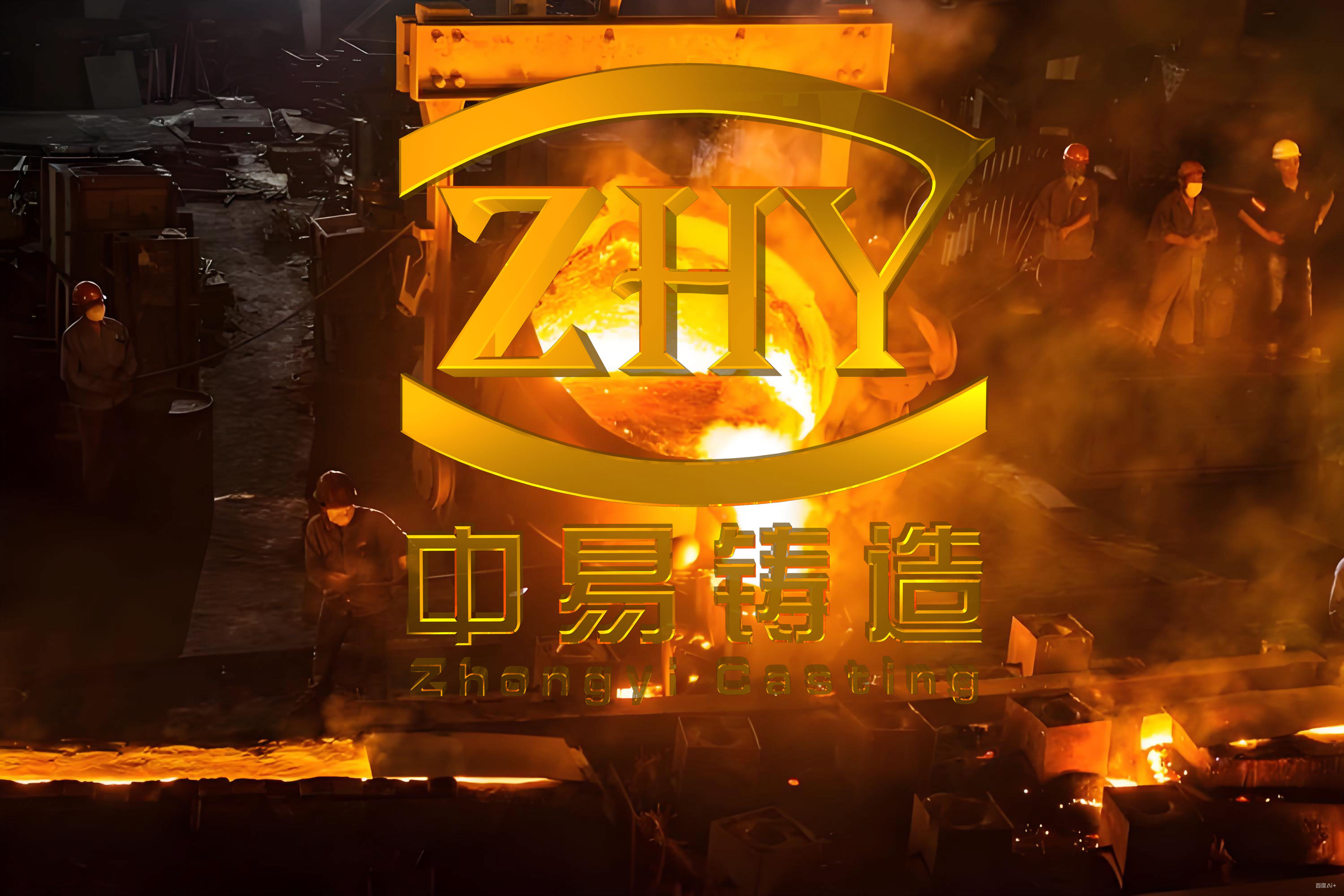
The visual representation of a modern foundry floor, as hinted above, encapsulates this blend of tradition and innovation. It is within such facilities that the future of manufacturing is being forged. For a steel castings manufacturer, the path forward involves a strategic duality: excelling in the core competencies of ferrous metal casting while embracing digital and automation technologies that enhance those very competencies. The investment data shows this dual focus: upgrading foundational equipment like melting furnaces and mold lines while simultaneously layering on robotics and advanced inspection.
Let’s delve deeper into the mathematical modeling of production optimization, a key concern for any steel castings manufacturer. Overall Equipment Effectiveness (OEE) is a crucial metric, combining availability, performance, and quality. It is given by:
$$ OEE = \text{Availability} \times \text{Performance} \times \text{Quality} $$
Each component is a ratio between 0 and 1. For a melting department, Availability ($A$) might be planned uptime versus total time. Performance ($P$) could be the actual melt rate versus the theoretical maximum rate. Quality ($Q$) is the yield of good metal from the charge. An investment in modern, reliable melting equipment directly improves $A$ and $P$, while advanced charge control and metallurgical analysis improve $Q$. If a steel castings manufacturer improves its melting OEE from 70% to 80%, the impact on annual output is multiplicative. Assuming a baseline annual output $O_{base}$, the new output $O_{new}$ is:
$$ O_{new} = O_{base} \times \frac{OEE_{new}}{OEE_{old}} = O_{base} \times \frac{0.80}{0.70} \approx 1.143 \times O_{base} $$
This represents a 14.3% increase in effective capacity without physically adding another furnace—a powerful justification for capital investment in core process equipment.
The human capital challenge remains the most intractable. The skills gap in foundries is severe. The required knowledge spans manual artisan skills, advanced machine operation, robotics programming, and metallurgical science. Training a new generation of foundry engineers and technicians is a long-cycle investment. We can model the workforce gap. Let $D(t)$ be the demand for skilled foundry personnel at time $t$, and $S(t)$ be the supply. The gap $G(t)$ is:
$$ G(t) = D(t) – S(t) $$
If demand grows at a rate $r_d$ due to industry expansion and retirements, and supply grows at a rate $r_s$ from educational pipelines, the gap widens if $r_d > r_s$. For a steel castings manufacturer, bridging this gap requires investment in internal training programs (increasing $r_s$ locally) and automation (reducing the slope of $D(t)$ for certain manual tasks). The investment in robotics (35% of companies) is a direct strategic response to this equation, aiming to make $D(t)$ less sensitive to labor availability for repetitive tasks.
Looking at the broader ecosystem, events that bring together industry professionals are vital for knowledge exchange and showcasing innovation. These gatherings are where a steel castings manufacturer can discover new suppliers, learn about emerging best practices, and network to address common challenges like workforce development and regulatory compliance. The exhibition floors at such events become a microcosm of the industry’s investment priorities, displaying the latest in molding systems, environmental controls, and testing equipment.
The regulatory environment adds another layer of complexity. Emissions controls, material safety data, and energy consumption standards are constantly evolving. Compliance is not optional; it’s a cost of doing business. A proactive steel castings manufacturer views environmental control investments not just as a compliance cost but as an efficiency driver. Modern baghouse filters and thermal reclamation systems reduce material loss and energy use. The cost-benefit analysis here is multifaceted. The total cost of ownership (TCO) for environmental equipment must include regulatory fines avoided, raw material saved, and potential energy recovery. A simple TCO model over $n$ years is:
$$ TCO = C_0 + \sum_{t=1}^{n} \frac{M_t – B_t}{(1 + i)^t} $$
Where $C_0$ is the initial capital cost, $M_t$ is the annual maintenance cost in year $t$, $B_t$ is the annual benefit (savings + avoided costs) in year $t$, and $i$ is the discount rate. For a forward-looking steel castings manufacturer, a positive net present value (NPV) for such an investment, where the sum of discounted benefits exceeds costs, is essential for justifying the expenditure while ensuring social license to operate.
In conclusion, the metal casting industry stands at an inflection point. The convergence of optimistic market demand, aggressive capital investment, and breakthrough gigacasting technology creates a landscape rich with opportunity and fraught with challenge. For the dedicated steel castings manufacturer, success will hinge on the ability to strategically invest—not just in hardware, but in people and processes. The equations of efficiency, return on investment, and workforce dynamics must be solved simultaneously. The companies that thrive will be those that master this calculus, leveraging their deep metallurgical expertise while adopting automation and digital tools to enhance quality, productivity, and sustainability. The future of manufacturing is being cast today, and the steel castings manufacturer remains an indispensable architect of that future, evolving to meet the demands of a world that still runs on durable, high-performance metal components. The journey requires balancing the timeless principles of metallurgy with the transformative power of innovation, a challenge that defines our industry’s path forward in the 21st century.