
As an observer deeply involved in the casting industry, I have witnessed firsthand the pivotal role that machine tool castings play in the manufacturing sector. Machine tools are the backbone of equipment manufacturing, serving as essential processing devices across various industries. The acceleration of numerically controlled machine tools, as highlighted in national development strategies, underscores their strategic importance. The structural components and key parts of machine tools are predominantly based on castings as坯料, making the quality of machine tool castings a critical determinant of the overall machine’s performance, longevity, and precision retention. For数控机床, the requirements for machine tool castings are even more stringent, demanding exceptional dimensional stability, wear resistance, and rigidity.
Over the past decade, the landscape of machine tool casting production has undergone significant transformations. Many major machine tool manufacturers have restructured, leading to the independence, relocation, reorganization, or closure of their in-house foundry departments. Consequently, machine tool castings have increasingly become commercialized and market-oriented. It is estimated that approximately 50 foundries now supply castings to key machine tool enterprises, while about one-third of major manufacturers still maintain their own casting facilities. However, many independent foundries remain under the influence of machine tool conglomerates, facing numerous constraints. Due to longstanding biases favoring cold working over hot working (foundry processes), a robust market mechanism for casting commodification has not fully developed. Compounded by inherent shortcomings within foundries themselves, the quality of machine tool castings and the technical management levels have not kept pace with the rapid growth of China’s machine tool industry. In fact, there has been a noticeable decline, a regression that contrasts sharply with advancements in machining and assembly processes. This gap is even more pronounced when compared to foreign-owned casting enterprises, posing a substantial threat to the future development of the domestic machine tool industry.
The rapid expansion of manufacturing has driven an ever-increasing demand for machine tools, resulting in substantial annual production growth. For instance, recent years have seen production volumes surge, with China becoming the world’s largest producer of machine tools. However, this quantitative success is marred by a declining self-sufficiency rate, as imports of high-end machine tools continue to rise, with annual import values rivaling domestic production output. The self-sufficiency rate in terms of value hovers around only 50%, indicating a reliance on foreign sources for advanced machine tools. While exhibitions showcase impressive industry progress, a deeper reflection reveals underlying concerns, particularly regarding the foundational quality of machine tool castings.
From the perspective of casting industry associations, the emphasis on output growth at the expense of casting quality is a primary reason for issues such as unsatisfactory appearance and poor precision retention in domestically produced machine tools. To investigate further, visits to several major machine tool casting enterprises were conducted, revealing superficial yet alarming observations. The following sections elaborate on the existing problems in machine tool casting production and propose corresponding improvement measures, all from a first-person viewpoint of industry engagement.
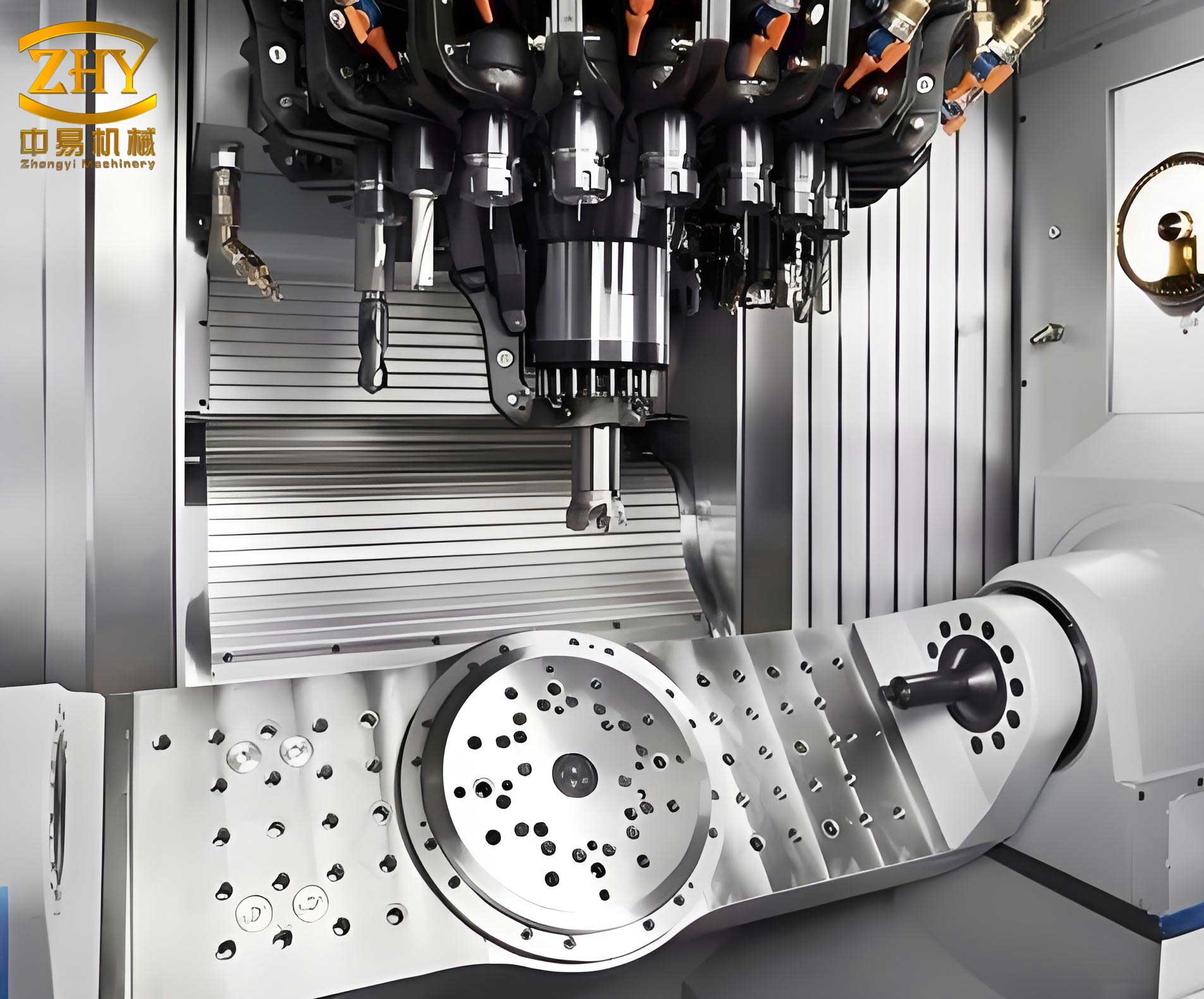
The quality of machine tool castings encompasses both external and internal attributes, each critical for the final machine’s performance. External quality refers to dimensional accuracy, surface roughness, and macro-straightness (linearity), while internal quality involves metallurgical structure, mechanical properties, and material consistency. The shift from traditional clay sand dry mold processes to resin-bonded sand self-hardening molds since the late 20th century has theoretically improved external quality. However, in practice, the absence of rigorous process control has limited these gains. Many foundries possess ISO certifications but lack substantive implementation of quality management systems, leading to widespread defects such as mold cracking, sand burning, and冲砂 during pouring. These issues not only increase finishing labor but also make domestic machine tool castings visibly inferior to international counterparts.
Dimensional accuracy should align with international standards, typically requiring tolerance grades between CT8 and CT12 per ISO 8062. However, without systematic measurement and statistical analysis, actual conformance remains uncertain. Macro-straightness, particularly for guideways, is often neglected; few enterprises can guarantee a straightness deviation within 1 mm per meter length. Surface roughness, though not always a mandatory inspection item, is crucial for reducing friction and wear. The arithmetic mean deviation (Ra) should be controlled, with critical surfaces like guideways requiring Ra ≤ 3.2 µm and general surfaces Ra ≤ 12.5 µm. Unfortunately, most foundries do not use standard comparators for assessment, leaving this aspect of machine tool casting quality unmonitored.
The internal quality of machine tool castings is even more concerning, primarily due to失控的 metallographic structure. For gray iron—the predominant material for machine tool castings—metallurgical integrity dictates strength, dimensional stability, rigidity, wear resistance, and machinability. According to Chinese standards, metallographic structure is not a mandatory acceptance criterion, but for producers of machine tool castings, it must be a core self-control parameter. A sound structure requires stringent process controls: meticulous charge management, optimized charge ratios, precise melting operations, effective inoculation, and appropriate pouring temperatures. The relationship between graphite morphology and mechanical properties can be expressed through empirical formulas. For example, the tensile strength (σ_b) of gray iron is influenced by graphite shape and matrix structure:
$$ \sigma_b = k_1 \cdot V_p + k_2 \cdot (1 – V_g) + k_3 \cdot f(G) $$
where \( V_p \) is the pearlite volume fraction, \( V_g \) is the graphite volume fraction, \( f(G) \) is a function of graphite morphology (e.g., Type A being optimal), and \( k_1, k_2, k_3 \) are material constants. Proper inoculation promotes Type A graphite, which enhances properties. However, most visited foundries either perform perfunctory metallographic inspections or omit them entirely. In one case, a report stated “Graphite Type A” while microscopy revealed only 30% Type A, with the rest being undesirable forms. This negligence indicates a broader issue of随意性 in process control, undermining the consistency of machine tool casting quality.
Another critical yet overlooked aspect is the control of elastic modulus (E) in gray iron. Elastic modulus directly affects the stiffness and dimensional stability of machine tool castings, making it vital for precision applications. The elastic modulus depends primarily on graphite morphology, length grade, and volume fraction. Strengthening inoculation to refine graphite improves E. Historically, domestic gray iron has had lower elastic modulus values compared to international benchmarks for the same grade. The following table summarizes typical elastic modulus values for machine tool casting materials:
| Gray Iron Grade | Elastic Modulus (GPa) – International Benchmark (e.g., Mechanite) | Elastic Modulus (GPa) – Historical Domestic Reference (Premium) | Elastic Modulus (GPa) – Historical Domestic Reference (Standard) |
|---|---|---|---|
| HT250 | 140 | 115 | 105 |
| HT300 | 145 | 125 | 115 |
| HT350 | 150 | 135 | 125 |
Currently, no domestic foundry producing machine tool castings monitors elastic modulus, representing a significant technological gap. The elastic modulus can be approximated using a rule of mixtures for composite materials, considering graphite as inclusions:
$$ E_{composite} = E_m \cdot V_m + E_g \cdot V_g $$
where \( E_m \) is the modulus of the metal matrix (approximately 210 GPa for iron), \( V_m \) is the matrix volume fraction, \( E_g \) is the modulus of graphite (negligible or low, around 10-20 GPa), and \( V_g \) is the graphite volume fraction. Since graphite reduces effective load-bearing area, a more accurate model for gray iron incorporates graphite shape factor (S):
$$ E = E_m \cdot (1 – k \cdot V_g^S) $$
where \( k \) is a constant and \( S \) depends on graphite morphology (e.g., S=0.5 for spherical, S=1 for flake). For machine tool castings, targeting high E values requires minimizing \( V_g \) and optimizing graphite shape through inoculation. The decline in attention to such fundamental properties contrasts with the industry’s expansion, suggesting that the quality of machine tool castings has regressed to levels below those of the mid-1990s. This trend jeopardizes the competitiveness of domestic machine tools, especially as global markets demand higher precision and durability.
To address these challenges, a multi-faceted approach is necessary, focusing on standardization, talent development, and sustainable practices. First, the establishment of stringent industry standards for machine tool castings is imperative. Building upon existing national and行业 standards, new guidelines should specifically cater to数控机床 requirements. Key provisions should include:
- External Quality: Dimensional accuracy per ISO 8062 CT8-CT12; macro-straightness ≤1 mm/m for critical surfaces like guideways; surface roughness Ra ≤3.2 µm for重要铸件 and Ra ≤12.5 µm for general castings, assessed using ISO 1302 comparators.
- Mechanical Properties: Compliance with tensile strength grades (e.g., HT250, HT300, HT350) but with added hardness uniformity requirements. For guideways, hardness should be strictly controlled, with variations ≤30 HB within a single machine tool casting. Elastic modulus must be a mandatory self-inspection item, with target values as updated in the table below:
| Gray Iron Grade for Machine Tool Castings | Target Elastic Modulus (GPa) | Recommended Graphite Volume Fraction (%) |
|---|---|---|
| HT250 | ≥120 | 8-10 |
| HT300 | ≥130 | 7-9 |
| HT350 | ≥140 | 6-8 |
These targets align with international benchmarks for high-quality machine tool castings. The relationship between elastic modulus and graphite parameters can be further detailed using empirical correlations. For instance, a simplified formula for E in GPa might be:
$$ E = 180 – 15 \cdot L_g – 20 \cdot V_g $$
where \( L_g \) is the graphite length grade (1-8 scale, with 1 being shortest) and \( V_g \) is the volume fraction in percent. Achieving these requires tight process control.
Metallographic Structure: Adherence to standards like ISO 945, specifying Type A graphite with length grades 3-5 (e.g., 50-200 µm). Pearlite content should exceed 90% in the matrix, with pearlite片 spacing ≤1 µm at 500x magnification. Carbide content should be limited to ≤3% to ensure machinability and toughness. The pearlite spacing (λ) influences hardness and wear resistance, related by:
$$ H_v = H_0 + \frac{k}{\sqrt{\lambda}} $$
where \( H_v \) is Vickers hardness, \( H_0 \) is a base hardness, and \( k \) is a constant. For machine tool castings, fine pearlite enhances performance. Implementation of these standards should be mandatory; foundries failing to comply must be barred from supplying machine tool castings, and non-conforming castings rejected in final assembly.
Second, strengthening the cultivation of specialized foundry talent is crucial. The misconception that casting is merely labor-intensive has long hindered progress. In reality, foundry science integrates multiple disciplines: metallurgy, materials science, fluid dynamics, heat transfer, and mechanical engineering. Without skilled professionals, foundries cannot solve production issues or innovate. Countries like Germany and Japan have robust systems for training casting experts, ensuring technical leadership. Japan’s 2003 initiative, involving industry, academia, and government, exemplifies commitment to talent development. Domestic machine tool casting enterprises face an aging workforce and brain drain, exacerbated by relocations that disrupt teams. As foundries expand, the shortage of qualified personnel leads to技术下滑, perpetuating quality issues. Therefore, a comprehensive plan is needed to train leaders, managers, technicians, and core workers at all levels. This includes:
- Establishing dedicated foundry engineering programs in technical institutes and universities, with curricula focused on machine tool casting applications.
- Implementing apprenticeship schemes within foundries, pairing novices with experienced mentors to hands-on learn process controls for machine tool castings.
- Encouraging continuous professional development through workshops on advanced topics like inoculation efficiency, which can be quantified by the inoculation effect (IE):
$$ IE = \frac{N_{graphite}^{after} – N_{graphite}^{before}}{N_{graphite}^{before}} \times 100\% $$
where \( N_{graphite} \) is the graphite nodule count per unit area. Higher IE values indicate better graphite refinement, crucial for machine tool casting quality.
Only with a skilled workforce can foundries implement process controls effectively, pursue genuine R&D, and achieve sustainable improvements in machine tool casting quality.
Third, advancing technical capabilities must go hand-in-hand with environmental stewardship and improved working conditions. Historically, foundries have been associated with pollution—smoke, dust, waste sand, and slag—posing health risks and ecological harm. As influential entities in the casting sector, machine tool casting enterprises should lead by example. During relocation, expansion, or technological upgrades, investments in green technologies are essential. This includes adopting energy-efficient melting furnaces, implementing dust collection systems, and treating emissions to meet standards like ISO 14001 and OHSAS 18001 (now ISO 45001). The economic viability can be assessed through life-cycle cost analysis, where total cost \( C_{total} \) includes operational and environmental costs:
$$ C_{total} = C_{production} + C_{environment} = \sum (E_{input} \cdot p_e) + \sum (W_{waste} \cdot t_w) $$
where \( E_{input} \) is energy consumption, \( p_e \) is energy price, \( W_{waste} \) is waste generated, and \( t_w \) is waste treatment cost per unit. Reducing waste through recycling lowers \( C_{total} \). For instance, waste sand and slag from machine tool casting production can be repurposed in construction or reconditioned for reuse, aligning with circular economy principles. Additionally, improving workplace ergonomics and safety reduces absenteeism and enhances productivity, indirectly boosting the consistency of machine tool casting output.
In conclusion, the enhancement of machine tool casting quality is not merely a technical issue but a strategic imperative for the entire machine tool industry. The current滑坡 in quality, evidenced by poor external finish, uncontrolled metallurgy, and neglected elastic modulus, undermines domestic competitiveness. By instituting rigorous standards, investing in human capital, and embracing sustainable practices, the foundation of machine tools—the castings—can be strengthened. This requires a paradigm shift: moving from quantity-driven growth to quality-centric excellence. As the industry evolves, every stakeholder, from foundry managers to policymakers, must prioritize the integrity of machine tool castings. The journey toward world-class machine tools begins at the foundry floor, where meticulous control over every pour determines the precision of tomorrow’s manufacturing. Let this be a call to action: to elevate machine tool casting quality through relentless innovation, education, and responsibility, ensuring that domestic machines not only match but surpass global benchmarks in performance and reliability.
Throughout this discourse, the term machine tool casting has been emphasized to reinforce its centrality. The path forward involves continuous monitoring and improvement, leveraging data analytics to optimize processes. For example, statistical process control (SPC) charts can track key variables like pouring temperature (T_p) and inoculation delay time (t_d), ensuring they remain within control limits for consistent machine tool casting quality. The ultimate goal is to produce machine tool castings that embody excellence, driving the entire manufacturing sector toward a future of precision and prosperity.