
For over a decade, the application of Argon-Oxygen Decarburization (AOD) refining has transformed the production landscape for high-integrity steel castings. This process is no longer a niche technology but a fundamental pillar in foundries specializing in demanding applications, from nuclear power components to advanced engineering machinery. My extensive practical experience confirms that AOD is critical for achieving the stringent chemical, mechanical, and defect-free quality standards required for these premium steel castings. The core advantage lies in its precise thermodynamic control over refining reactions, enabling capabilities unattainable with conventional melting furnaces alone.
The fundamental principle of AOD refining is the selective oxidation of impurities by injecting a controlled mixture of oxygen and argon (or nitrogen) into the molten bath. The key reaction for stainless steel production is decarburization:
$$ [C] + [O] = CO_{(g)} $$
By introducing argon, the partial pressure of CO ($p_{CO}$) in the gas bubbles is drastically lowered. According to the law of mass action, this shifts the equilibrium of the reaction to the right, promoting carbon removal even at very low concentrations. Simultaneously, the lowered oxygen potential helps prevent excessive oxidation of valuable alloying elements like chromium. The equilibrium relationship can be expressed as:
$$ K_{C} = \frac{p_{CO}}{a_{[C]} \cdot a_{[O]}} $$
where $K_{C}$ is the equilibrium constant, and $a$ denotes activity. Lowering $p_{CO}$ allows for a lower carbon activity ($a_{[C]}$) at a given oxygen activity ($a_{[O]}$), enabling the production of ultra-low-carbon grades. This precise control is paramount for the corrosion resistance and mechanical stability of advanced steel castings.
Material Spectrum Enhanced by AOD Refining
The versatility of AOD extends across a wide range of alloys crucial for high-end steel castings.
Stainless Steel Castings
AOD is exceptionally advantageous for stainless steels, particularly ultra-low-carbon (ULC) and super-austenitic grades. It allows reliable and reproducible reduction of carbon to levels below 0.02%, which is essential for preventing sensitization and intergranular corrosion.
| Category | Typical Standard & Grade Examples | Key Characteristic Enabled by AOD |
|---|---|---|
| Austenitic Stainless Steel | ASTM A351 CF3, CF3M; RCC-M Z3CND19-10M | Stable ultra-low carbon (<0.03%), controlled ferrite content. |
| Super Austenitic Stainless Steel | ASTM A351 CK3MCuN, CN7M | Precise control of high Mo, N, and Cu additions for chloride resistance. |
| Duplex (Austenitic-Ferritic) Stainless Steel | ASTM A995 4A, 5A, 6A | Accurate balancing of Ni and N to achieve the optimal ~50/50 phase ratio. |
Alloy and Carbon Steel Castings
For high-strength low-alloy (HSLA) and carbon steels destined for critical applications, AOD’s primary role shifts from decarburization to purification. The intense argon stirring and slag/metal interaction significantly reduce harmful inclusions and dissolved gases, leading to superior toughness and fatigue resistance in the final steel castings. Representative grades include nuclear specifications like RCC-M 12MDV6 and RCC-M 20Mn5M.
Nickel-Base Alloy Castings
Nickel alloys, such as ASTM A494 CW6MC or N7M, present a unique challenge: raw nickel often contains substantial hydrogen. Molten nickel has a high solubility for hydrogen, which can precipitate during solidification, causing severe micro-porosity in castings. The AOD process, with its powerful argon flushing, is highly effective at degassing, drastically reducing hydrogen content and eliminating associated gas defects in these expensive alloy castings.
Nitrogen-Alloyed Steel Castings (e.g., C12A)
Certain martensitic stainless steels require precise nitrogen addition for strength and stability. In conventional melting, nitrogen introduction is unreliable. AOD allows for controlled nitrogen alloying via direct blowing, enabling accurate and homogeneous nitrogen levels within the specified range, which is vital for the performance consistency of such steel castings.
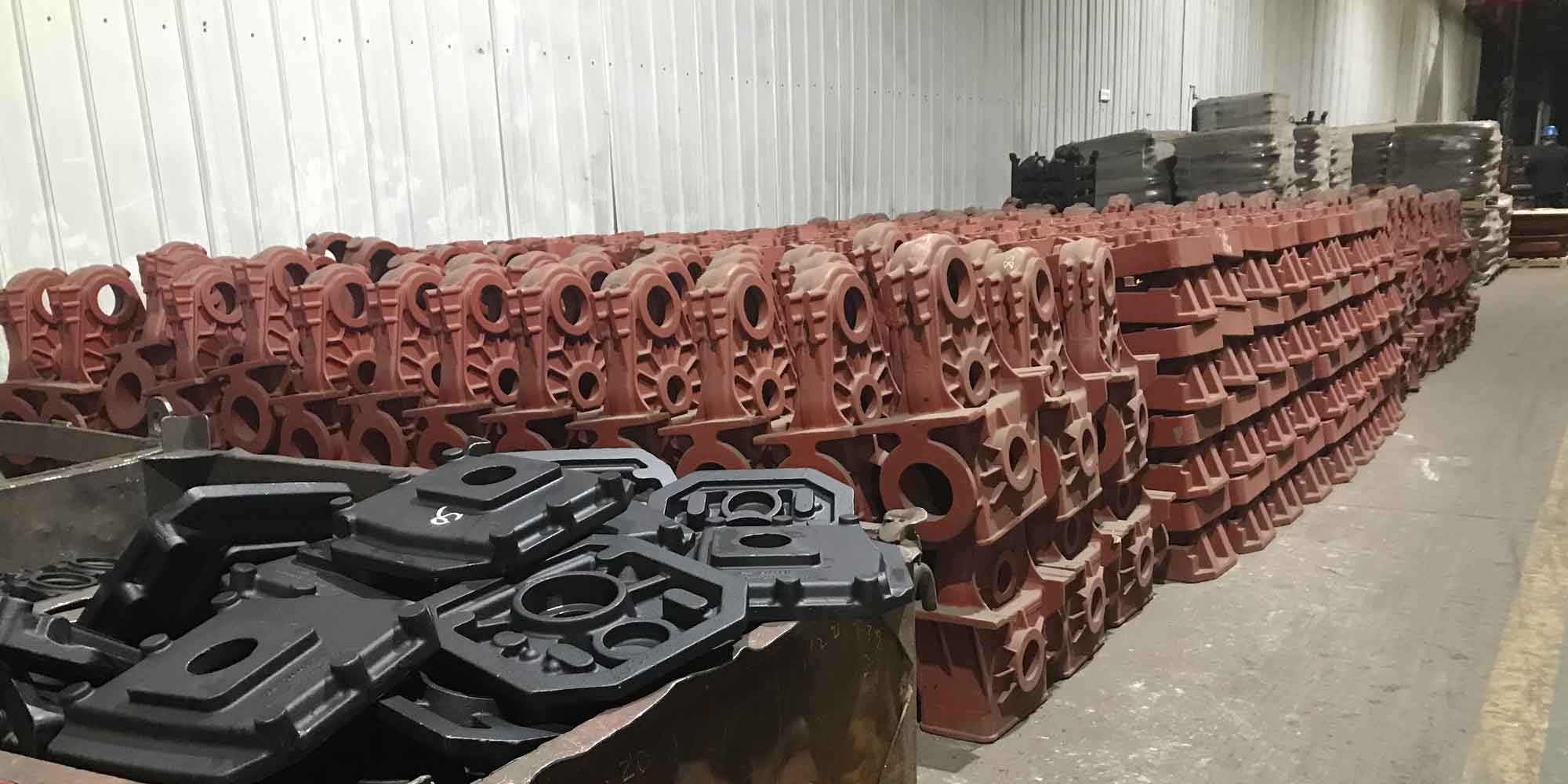
Quantifiable Quality Enhancements in Steel Castings
Chemical Composition Stability
The most direct impact of AOD is the exceptional consistency of chemical composition. For ULC stainless grades, carbon is not just barely within specification but is stably maintained at very low levels. The table below illustrates the reproducibility achievable for various high-end steel castings.
| Material | C (%) | Cr (%) | Ni (%) | Mo (%) | N (%) | Key Takeaway |
|---|---|---|---|---|---|---|
| Z3CND19-10M | 0.017 | 18.85 | 9.28 | 2.29 | 0.035 | Ultra-low C with precise Cr/Ni balance. |
| CK3MCuN | 0.005 | 20.11 | 19.29 | 6.13 | 0.192 | Extremely low C with high, controlled N. |
| C12A | 0.095 | 9.34 | 0.039 | 0.94 | 0.054 | Accurate N addition in a martensitic grade. |
| 5A (Duplex) | 0.018 | 25.40 | 7.49 | 4.23 | 0.219 | Low C with high N for phase balance. |
| N7M (Ni-Alloy) | 0.007 | 0.00 | 69.16 | 32.08 | – | Extremely low interstitials in a Ni-base matrix. |
Reduced Gas Content and Improved Surface Quality
The cleansing effect of AOD profoundly reduces dissolved oxygen, hydrogen, and, where not intentionally added, nitrogen. This directly translates to fewer subsurface defects and excellent surface finish on steel castings. Lower gas content minimizes pinholes and blowholes. Furthermore, the improved fluidity of cleaner molten steel allows a reduction in pouring temperature by approximately 20°C, which significantly reduces mold-metal reaction and minimizes veining and burn-on defects. Typical post-AOD gas levels are remarkably low:
| Material | [O] (ppm) | [N] (ppm or %) | [H] (ppm) |
|---|---|---|---|
| C12A | ~43 | ~550 ppm | ~2.8 |
| 5A Duplex | ~80 | ~0.214%* | ~2.2 |
| F20 Carbon Steel | ~36 | ~120 ppm | ~3.2 |
| 12MDV6 Alloy Steel | ~35 | ~51 ppm | ~2.1 |
| CW6MC Ni-Alloy | ~31 | ~120 ppm | ~5.0 |
*Nitrogen intentionally added.
Enhanced Mechanical Properties
The synergy of precise chemistry, low gas, and reduced non-metallic inclusions culminates in superior and consistent mechanical properties, especially toughness. This is critical for steel castings subjected to dynamic loads or low-temperature service. The impact energy of alloy and carbon steels, in particular, shows dramatic improvement.
| Material | Yield Strength (MPa) | Tensile Strength (MPa) | Elongation (%) | Impact Test Temp. (°C) | Avg. Impact Energy (J) |
|---|---|---|---|---|---|
| 20Mn5M | 390 – 475 | 560 – 645 | 26 – 27 | 0 | >145 |
| F20 | 690 – 710 | 840 – 850 | 18 – 20 | -40 | >100 |
| 12MDV6 | 455 – 555 | 660 – 725 | 21 – 24 | 0 | >130 |
Critical Operational Practices for AOD in a Foundry Context
Lining Selection and Management
Choosing the correct refractory is vital for cost-effectiveness and safety in the discontinuous production typical of steel casting foundries. Magnesia-chrome bricks, though more expensive, offer superior resistance to hydration during idle periods (e.g., overnight shutdowns) compared to magnesia-calcia bricks. This makes them more suitable for foundry operation cycles. A crucial rule is to avoid refining plain alloy steels in a lining previously used for stainless steels to prevent chromium contamination from the worn lining. Cross-contamination can lead to off-spec chemistry and scrapped heats of steel castings.
The Paramount Importance of Temperature Control
Temperature is the most critical process parameter. The decarburization kinetics and final carbon content are highly temperature-dependent. From a thermodynamic perspective, raising temperature favors the oxidation of carbon over chromium. The relative oxidation tendency can be assessed by the free energy of formation ($\Delta G^\circ$) of oxides. To achieve “decarburization before chromium oxidation,” a sufficiently high oxidation temperature is required. The practical control window is:
- Tap-in Temperature: > 1500°C
- Oxidation Temperature: 1700°C – 1800°C
Operating within this range ensures rapid decarburization to target levels (e.g., <0.02% C) while maintaining chromium yield and achieving a lining life of around 30 heats. An oxidation temperature below 1700°C can lead to prolonged blowing times, excessive chromium loss, and overall inefficient refining for steel castings.
Safety: Vigilance Against Breakouts
The reduction period, following oxygen blowing, is a vulnerable stage for the refractory lining due to thermal and chemical shock. Maintaining a controlled temperature and conducting frequent visual checks of the vessel exterior are essential to detect potential hotspots or leakage early and prevent a breakout, which poses a severe safety hazard.
Cost-Benefit Analysis for Steel Castings Production
The economic justification for AOD has evolved. When premium scrap like 304 was expensive, AOD’s ability to use lower-cost high-carbon charge materials (like 304 scrap to produce 316L) offered a clear cost advantage. In current markets with lower scrap costs, the pure raw material cost for producing a standard stainless grade like CF3M may be comparable between AOD and induction melting. However, this narrow view overlooks the value-added component. The cost of AOD refining is offset by:
- Reduced Rejection Rates: Superior quality leads to fewer scrapped steel castings.
- Premium Pricing: The ability to reliably produce high-specification steel castings for nuclear, aerospace, and chemical processing commands higher prices.
- Material Flexibility: One system can optimally process a vast range of alloys.
A simplified comparative analysis for CF3M steel castings might show near-parity in direct melt cost, but the total life-cycle cost and commercial capability strongly favor the AOD route for high-end applications.
Conclusion
The integration of AOD refining is a definitive step for foundries aspiring to manufacture premium steel castings. Its application is broad and adaptable, covering stainless, alloy, carbon, and nickel-base grades essential for advanced industries. The benefits are unequivocal: unprecedented control over ultra-low carbon and nitrogen levels, drastic reduction in dissolved gases and inclusions, significant improvement in mechanical properties—particularly impact toughness—and superior surface quality of the final steel castings. While operational mastery, especially in temperature control, is key, the technological and quality advantages it confers make AOD not merely an option but an indispensable tool in the modern manufacture of high-integrity, high-value steel castings. The process ensures that the material foundation of these critical components meets the extreme demands of their service environment.