
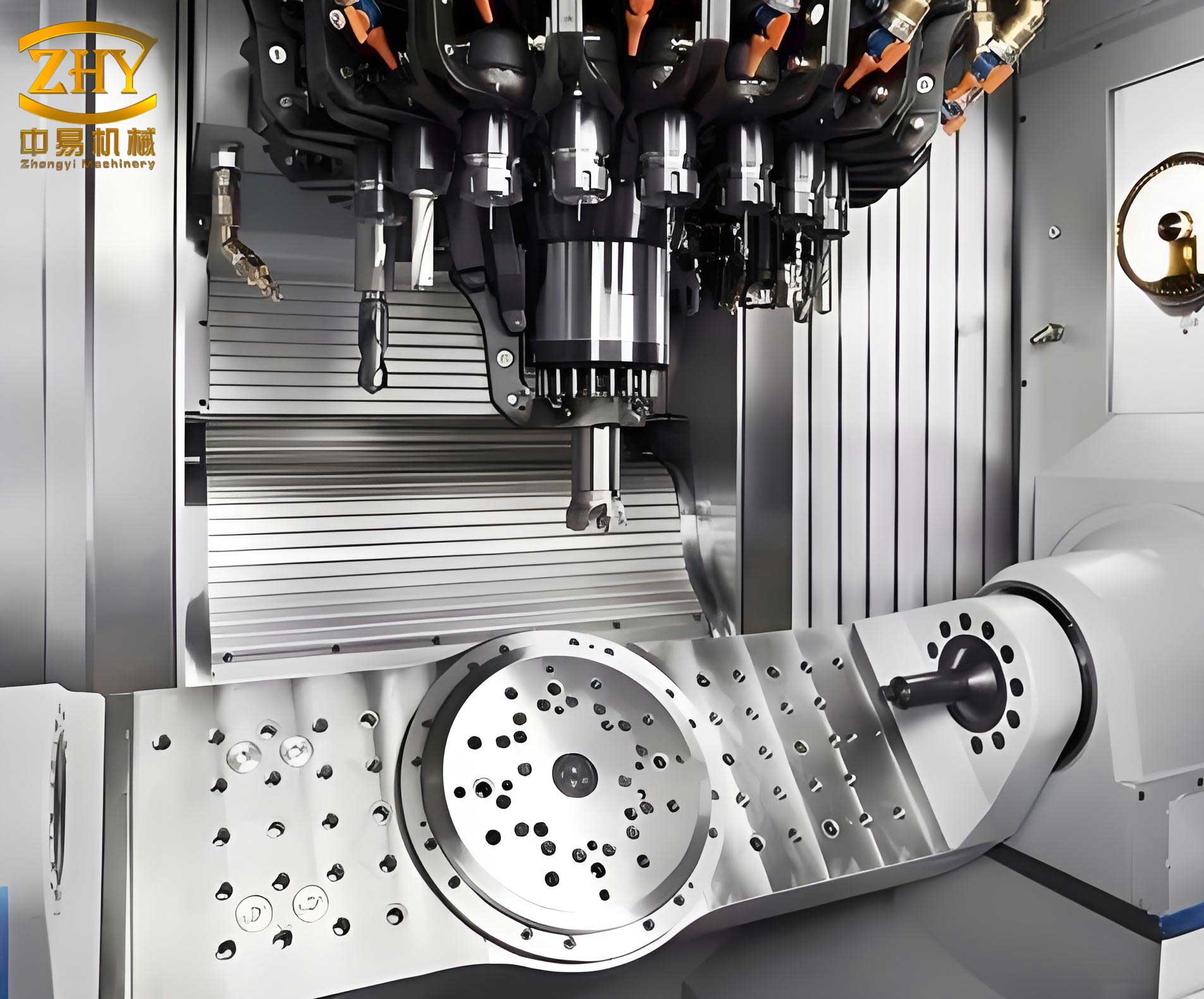
In my experience within the foundry industry, the relentless advancement of CNC technology has placed unprecedented demands on the quality of machine tool castings. The requirements now extend far beyond basic mechanical strength, encompassing dimensional stability under thermal and load cycles, superior vibration damping, excellent wear resistance, and impeccable machinability. A persistent challenge in domestic production has been achieving these multifaceted properties simultaneously. Often, a fundamental trade-off is made: to guarantee tensile strength, a low carbon equivalent (CE) is employed. This approach, while meeting the strength specification on paper, inherently undermines other critical aspects of performance. Low-carbon iron has a pronounced tendency to shrink, leading to internal porosity and shrinkage defects. Furthermore, it results in a reduced graphite count, which is detrimental to the damping capacity and machinability that are hallmarks of high-quality machine tool castings. The core issue, therefore, lies not in the strength requirement itself, but in the metallurgical quality of the molten iron from which these castings are poured. Superior metallurgical quality enables the production of castings with higher carbon equivalents without sacrificing strength, thereby unlocking the full suite of desired properties.
The metallurgical quality of gray iron is a holistic measure influenced by a constellation of factors: charge materials, melting equipment, furnace atmosphere, refractory conditions, melting and superheating practices, and liquid metal treatment. It culminates in the final microstructure—the arrangement of graphite within a metallic matrix—which dictates all mechanical and physical properties. While tensile strength is the standard acceptance criterion, it is a result of this underlying microstructure. For a grade like HT250, the microstructure can vary widely while still meeting the strength requirement. The key is to achieve a favorable microstructure with a high count of finely distributed, type A graphite flakes in a predominantly pearlitic matrix. This is where metallurgical quality indices become invaluable diagnostic tools. They move beyond a single tensile test to provide a more complete picture of the iron’s inherent quality.
The most critical indices I utilize are Relative Hardness (RH), Maturity Degree (RG), and Quality Coefficient (Qi). Relative Hardness compares the actual measured Brinell hardness to an idealized hardness for a given carbon equivalent. The classic formula for the ideal hardness is often expressed as a function of carbon equivalent (CE, expressed as a percentage, e.g., 3.7 for 3.7%):
$$ H_{ideal} = 1000 – 800 \times CE $$
Thus, Relative Hardness is calculated as:
$$ RH = \frac{H_{measured}}{H_{ideal}} = \frac{H_{measured}}{1000 – 800 \times CE} $$
A lower RH value (closer to 0.8-0.9) is desirable, indicating that the iron achieves its strength with less hardness, which typically correlates with better machinability and a more favorable graphite structure.
Maturity Degree (RG) assesses how efficiently the iron utilizes its carbon equivalent to develop strength. It is the ratio of the actual tensile strength to a base strength calculated from the carbon equivalent. A common reference formula is:
$$ RG = \frac{\sigma_b (actual)}{[1000 – 800 \times CE]} $$
Here, $ \sigma_b $ is the actual tensile strength in MPa. An RG value greater than 1 indicates excellent metallurgical quality, meaning the iron is achieving higher strength than its baseline chemistry would predict. This is the hallmark of well-processed iron with a refined, strengthening microstructure.
Finally, the Quality Coefficient (Qi) combines these two ideas, representing the balance between strength development and hardness:
$$ Q_i = \frac{RG}{RH} $$
A Qi value greater than 1 signifies high-quality iron—it is strong without being excessively hard. In the production of premium machine tool castings, targeting RG > 1 and Qi > 1 is a primary objective. Achieving this requires precise control over the melting process, with a particular focus on temperature and carbon pickup when using substantial amounts of steel scrap in the charge.
| Process Phase | Key Objective | Primary Influence on Castings |
|---|---|---|
| Charge Design & Melting | High-Temperature, High-Carbon Pickup | Determines base CE, eliminates genetic coarse graphite, reduces shrinkage tendency. |
| Inoculation | Graphite Nucleation & Under-cooling Control | Promotes Type A graphite, increases graphite count, improves machinability and damping. |
| Solidification & Cooling | Controlled Graphite Expansion | Utilizes internal pressure for self-feeding, minimizes shrinkage porosity in critical sections. |
Initial Production Process: Limitations and Consequences
Previously, the production of critical components like an X5032 worktable and its base (both HT250) was plagued by consistency issues. The melting setup relied on two small, 5-ton-per-hour cupolas operating with locally sourced, low-quality coke (“native coke”). The process was inherently constrained. To meet the HT250 strength requirement with this setup, a low-carbon-equivalent chemistry was forced. The charge makeup was heavily reliant on pig iron to provide carbon, with limited scrap steel. The poor coke quality necessitated a high coke charge ratio (16-21%) yet still yielded limited superheat temperatures (1400-1480°C) and poor, inconsistent carbon pickup from the charge. The iron was oxidized, as evidenced by high FeO levels (6-12%) in the slag.
| Material | Charge Weight (kg) | Charge Carbon (wt%) | Final Carbon (wt%) | Carbon Pickup Rate |
|---|---|---|---|---|
| Pig Iron | 160-180 | 4.0 (approx.) | 3.04 (avg) | ~45% |
| Steel Scrap | 240-310 | 0.2 (approx.) | ||
| Returns | 140-180 | 3.2 (approx.) | ||
| Total/AVG | ~600 | ~2.25 | 3.04 | 45% |
The resulting iron had a low average Carbon Equivalent of approximately 3.6%. The white iron chill width on a wedge test was high (4-9mm after inoculation), indicating a strong under-cooling tendency and poor graphite nucleation. The calculated metallurgical indices told a clear story of suboptimal quality:
| Carbon Equivalent (CE, %) | Tensile Strength (MPa) | Hardness (HB) | Maturity (RG) | Relative Hardness (RH) | Quality Coeff. (Qi) |
|---|---|---|---|---|---|
| 3.59 | 291 | 218 | 0.86 | 0.95 | 0.90 |
With RG and Qi both significantly below 1, the iron was under-performing. The low CE and poor graphite structure led to high shrinkage propensity. This manifested directly in the machine tool castings as severe shrinkage porosity in the thermally isolated, hot-spot regions such as the roots of T-slots and guide rails on the worktable, and at the junctions of large feeder heads on the base. These defects were not merely cosmetic; they compromised the structural integrity and sealing surfaces of the castings. The scrap rate was unacceptably high, and even sound castings often exhibited poor machinability due to carbide formation at edges and a generally harder, less compliant structure. It was evident that the fundamental metallurgy needed to change.
The Improved Production Process: A Systemic Overhaul
The solution required a systemic change focused on dramatically improving the metallurgical quality of the iron. The strategy was two-fold: first, upgrade the melting infrastructure to enable higher, more consistent superheat; second, change the carbon source to one that would facilitate efficient carbon transfer into the iron. We replaced the small cupolas with larger, more efficient units (one 10t/h and one 7t/h). Crucially, we switched from native coke to high-quality, cold-pressed formed coke. This engineered coke has higher fixed carbon, better strength, and more consistent size, leading to a more stable coke bed and superior combustion efficiency.
This upgrade allowed a radical shift in charge design. We could now dramatically increase the proportion of steel scrap—a source of pure, low-genetic iron—while drastically reducing the reliance on pig iron. The carbon required to reach the target chemistry would now come primarily through efficient dissolution and diffusion into the iron droplets as they percolated through the hot coke bed (carburization), rather than being pre-packed in the form of pig iron. This “carbon from coke” has a much more potent graphitizing effect, promoting a finer, more desirable graphite morphology. The coke charge ratio was actually reduced to 12-14%, yet the tap temperatures increased to a consistent 1450-1500°C.
| Material | Typical Charge Weight (kg) | Charge Carbon (wt%) | Final Carbon (wt%) | Carbon Pickup Rate |
|---|---|---|---|---|
| Pig Iron | 100-250 | 4.0 | ~3.18 | ~69% |
| Steel Scrap | 400-560 | 0.2 | ||
| Returns | 250-400 | 3.2 | ||
| Total/AVG | ~800 | ~1.87 | ~3.18 | 69% |
The data is stark. The carbon pickup rate soared from 45% to nearly 70%. This meant that for every unit of carbon charged, significantly more was efficiently transferred into the molten iron. The iron was less oxidized (slag FeO dropped to 2-5%), cleaner, and possessed a much stronger graphitization potential. The target Carbon Equivalent was raised to approximately 3.7%. The dramatic improvement in intrinsic quality was immediately apparent in the wedge test, where the chill width after inoculation dropped to 0-3mm, signaling a robust, readily-nucleated iron.
Results and Analysis: Transformation in Casting Quality
The impact of superior metallurgical quality on the final machine tool castings was profound and measurable. First, the mechanical performance exceeded requirements while maintaining a favorable hardness. The metallurgical indices underwent a complete transformation, crossing the critical threshold into the high-quality domain.
| Carbon Equivalent (CE, %) | Tensile Strength (MPa) | Hardness (HB) | Maturity (RG) | Relative Hardness (RH) | Quality Coeff. (Qi) |
|---|---|---|---|---|---|
| 3.70 | 329 | 220 | 1.04 | 0.90 | 1.16 |
The increase in RG to 1.04 is particularly significant. It confirms that the iron is now achieving greater strength than its chemical composition alone would predict, a direct result of the refined microstructure enabled by high-temperature melting and effective carburization. The Qi value of 1.16 indicates an excellent balance—higher strength without a corresponding increase in hardness, which is ideal for machinability.
The most dramatic practical outcome was the near-complete elimination of shrinkage-related defects. The higher carbon content, particularly the higher dissolved carbon from efficient carburization, greatly enhanced the graphite precipitation during eutectic solidification. The expansion associated with this graphite formation created internal pressure that effectively compensated for the liquid and solidification shrinkage—a phenomenon known as self-feeding. This fundamental change in solidification behavior allowed for a revolutionary simplification of the feeding system. On the problematic worktable base casting, the large, cumbersome cylindrical feeder heads (e.g., φ100mm x 350mm) were entirely eliminated and replaced with simple, small venting ribs. No shrinkage porosity occurred. This yielded immense benefits: reduced cleaning labor, lower yield loss (more cast weight converted to product), and guaranteed soundness in critical sections.
| Casting Name | Process | Shrinkage/Internal Porosity Scrap Rate | Overall Scrap Rate (approx.) |
|---|---|---|---|
| X5032 Worktable Base | Initial | 40% | >48% |
| Improved | 0% | ~3% | |
| X6132 Worktable | Initial | 25% | >30% |
| Improved | 0% | ~3% |
Furthermore, the enhanced graphite structure—characterized by a higher count of fine, well-distributed type A flakes—directly improved the functional properties vital for machine tool castings. Vibration damping capacity increased due to the greater energy absorption at the graphite-matrix interfaces. Machinability improved as the chips broke more cleanly and tool wear decreased, a consequence of the lower hardness-to-strength ratio (reflected in the low RH) and the absence of interstitial carbides. The overall dimensional stability of the castings during machining and in service was enhanced by the more uniform and compliant microstructure, reducing internal stresses.
Conclusion and Foundry Principles
This comprehensive investigation underscores a fundamental principle in the production of high-duty gray iron castings, particularly machine tool castings: ultimate quality is forged in the melt. The pursuit of high tensile strength via low carbon equivalent is a path fraught with compromise, leading to poor castability, defective castings, and inferior in-service performance. The alternative path is to pursue excellence in metallurgical quality. This is achieved by creating molten iron that is hot, clean, and rich in carbon that has been efficiently dissolved rather than inherited.
The transition from small, inefficient cupolas with poor coke to larger, well-designed furnaces with high-quality formed coke was transformative. It enabled a shift from a pig-iron-dependent charge to a steel-scrap-dominant one. The carbon necessary to achieve the desired higher Carbon Equivalent (from ~3.6 to ~3.7) came from vastly more efficient carburization (pickup rate from 45% to 69%). This carburized carbon is metabolically active; it promotes graphite nucleation and growth more effectively than the carbon carried in pig iron, which can harbor genetic coarse graphite. The quantitative proof of this improvement was captured in the metallurgical indices: the Maturity (RG) rose from 0.86 to 1.04, and the Quality Coefficient (Qi) from 0.90 to 1.16.
The practical consequences for producing machine tool castings were nothing short of revolutionary. The iron’s casting performance improved dramatically, utilizing its own graphite expansion to eliminate shrinkage defects, allowing radical simplification of risering systems. The scrap rate from internal defects fell to zero. Simultaneously, the functional properties—damping, machinability, and stability—were enhanced due to the optimized microstructure. In conclusion, investing in the means to achieve high molten iron metallurgical quality is not merely a technical adjustment; it is a strategic imperative for any foundry committed to producing reliable, high-performance machine tool castings that can compete on a global stage. The focus must shift from simply meeting a tensile strength to mastering the indices that define truly superior iron.