
Squeeze casting, as a hybrid manufacturing process integrating the advantages of both casting and forging, represents a significant advancement in near-net-shape forming technology. Its application for producing high-integrity shell castings from lightweight alloys like magnesium is of considerable industrial interest. This article presents a detailed investigation into the effects of a key process parameter—squeeze casting pressure—on the resultant microstructure, mechanical properties, and wear resistance of AZ80 magnesium alloy shell castings. The study systematically varies the applied pressure while holding other parameters constant to isolate its influence and identify an optimal processing window.
The fundamental principle of squeeze casting involves introducing molten metal into a preheated die cavity and subsequently applying a high, sustained pressure until solidification is complete. This process yields shell castings with several superior attributes compared to conventional gravity or high-pressure die casting:
- Enhanced Mechanical Properties: The applied pressure suppresses gas porosity and shrinkage defects, promotes intimate metal-die contact for rapid heat extraction, and can induce some plastic deformation in the semi-solid state, leading to a denser, more refined microstructure.
- Excellent Dimensional Accuracy and Surface Finish: The high pressure ensures precise replication of the die geometry, which is crucial for complex shell castings requiring minimal post-machining.
- Ability to Process Wrought Alloys: Unlike traditional die casting, squeeze casting’s slower, more controlled filling and pressurized solidification make it suitable for alloys with wider freezing ranges, such as the AZ80 magnesium alloy, opening doors to stronger shell castings.
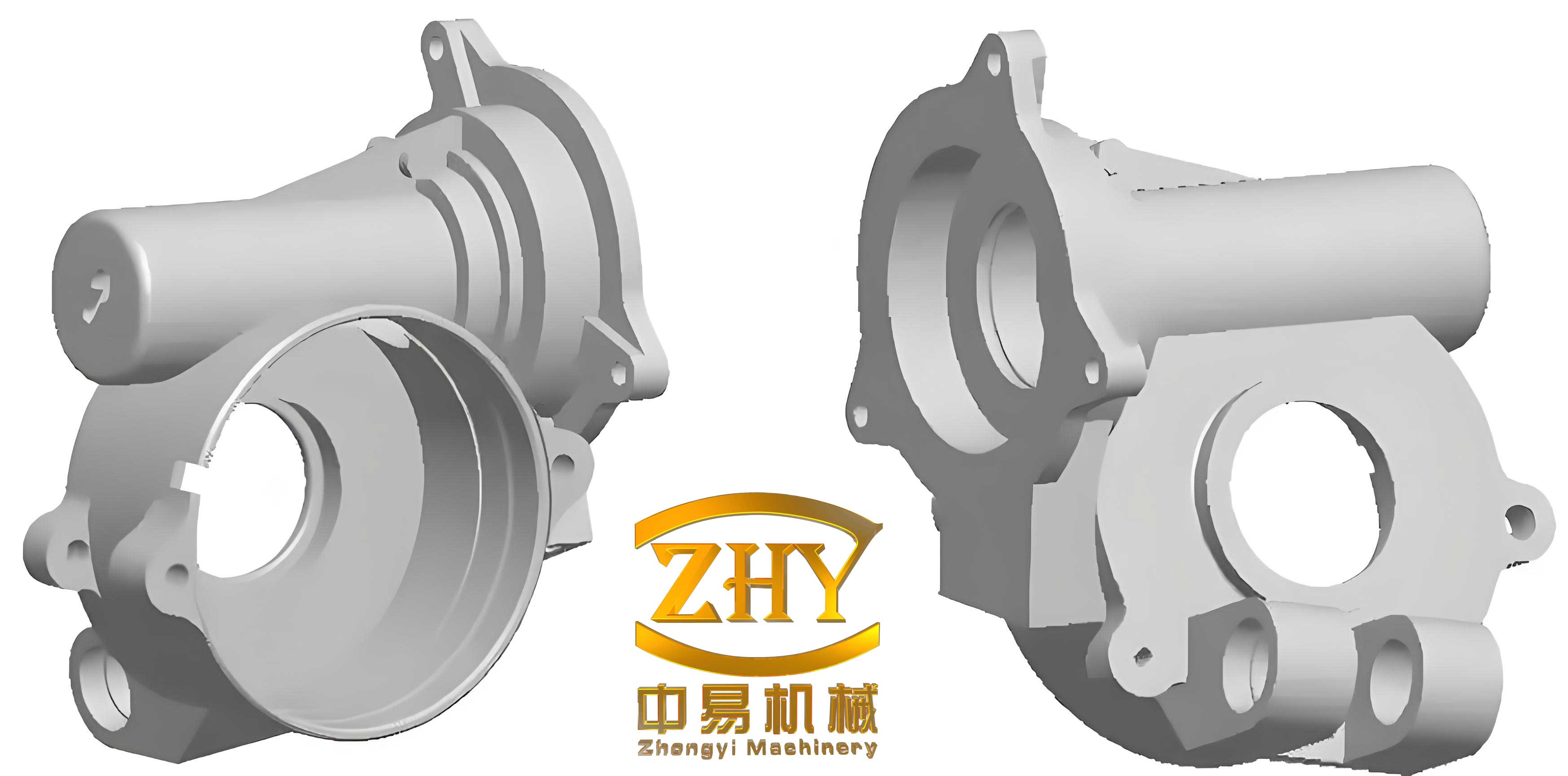
The quality of squeeze cast shell castings is governed by a matrix of interdependent process parameters, including pouring temperature, die temperature, intensification pressure, and pressure duration. Among these, the intensification pressure is arguably the most critical, as it directly governs the metallurgical phenomena during solidification. This research focuses on AZ80 magnesium alloy, a common Mg-Al-Zn series alloy offering a good balance of strength, castability, and corrosion resistance, making it a candidate for structural shell castings in aerospace and automotive applications.
Experimental Methodology
The experimental work focused on producing rectangular, hollow shell castings from commercial AZ80 magnesium alloy. The nominal composition of the alloy is provided in Table 1. A medium-frequency induction furnace was used for melting under a protective atmosphere to prevent oxidation. The squeeze casting trials were conducted on a 800-ton hydraulic press.
| Element | Al | Zn | Mn | Fe | Si | Cu | Ni | Mg |
|---|---|---|---|---|---|---|---|---|
| Content | 8.0 – 9.0 | 0.4 – 0.8 | 0.15 – 0.35 | <0.01 | <0.10 | <0.05 | <0.01 | Bal. |
To isolate the effect of squeeze casting pressure, all other process parameters were maintained constant based on preliminary trials: a pouring temperature of 690°C, a die preheating temperature of 300°C, a pressing speed of 210 mm/min, and a pressure holding time of 250 s. The variable parameter, the final squeeze casting pressure, was set at six distinct levels: 8, 12, 16, 20, 24, and 28 MPa. For each pressure condition, multiple shell castings were produced to ensure statistical reliability.
Specimens for microstructural analysis were sectioned from the central region of the shell casting wall. Standard metallographic preparation was followed, culminating in etching using a solution of acetic picral. Microstructural observation was performed using optical microscopy (OM).
Tensile test specimens were machined from the castings according to the geometry shown in Figure 2 of the source material. Room-temperature tensile tests were conducted on a universal testing machine at a constant crosshead speed of 1 mm/min. The yield strength (YS at 0.2% offset), ultimate tensile strength (UTS), and elongation to failure were recorded.
Wear resistance was evaluated using a pin-on-disc configuration under dry sliding conditions at room temperature. Cylindrical wear pins were machined from the shell castings. The tests were performed against a hardened steel counterface at a constant load, speed (450 rpm), and duration (15 min). The volume loss of the pin was measured and used as the metric for wear resistance, with a lower volume loss indicating superior performance.
Theoretical Framework: Pressure-Driven Microstructure Evolution
The application of pressure during solidification fundamentally alters the thermodynamics and kinetics of the process. The primary effects can be described through several key principles and equations relevant to the production of high-quality shell castings.
1. Suppression of Gas Porosity and Shrinkage: The high pressure increases the solubility of gases like hydrogen in the liquid metal according to Sieverts’ law, preventing their precipitation as pores. More importantly, it provides a continuous feeding force to compensate for solidification shrinkage. The critical pressure needed to suppress shrinkage porosity in a shell casting can be related to the geometry and the pressure drop in the mushy zone. A simplified force balance suggests that the applied pressure $P_{app}$ must overcome the capillary pressure at the liquid meniscus within the dendrite network:
$$P_{app} > \frac{2\gamma_{lv} \cos\theta}{r_{eff}}$$
where $\gamma_{lv}$ is the liquid-vapor surface tension, $\theta$ is the contact angle, and $r_{eff}$ is the effective pore radius in the interdendritic region. Higher pressures ensure $P_{app}$ remains above this threshold, leading to sound shell castings.
2. Enhancement of Heat Transfer and Grain Refinement: The pressure forces the liquid metal against the die wall, eliminating air gaps and drastically improving the interfacial heat transfer coefficient (HTC). This results in a higher effective cooling rate ($\dot{T}_{eff}$). The relationship between cooling rate and secondary dendrite arm spacing (SDAS), $\lambda_2$, a key microstructural scale parameter, is often expressed as:
$$\lambda_2 = A (\dot{T}_{eff})^{-n}$$
where $A$ and $n$ are material constants. A higher $\dot{T}_{eff}$ from improved HTC leads to a finer $\lambda_2$. Furthermore, the increased undercooling ($\Delta T$) due to rapid cooling raises the nucleation rate ($I$), described approximately by classical nucleation theory:
$$I \propto \exp\left(-\frac{\Delta G^*}{k_B T}\right) \propto \exp\left(-\frac{B}{\Delta T^2}\right)$$
where $\Delta G^*$ is the critical nucleation energy barrier, $k_B$ is Boltzmann’s constant, $T$ is temperature, and $B$ is a constant. Higher undercooling exponentially increases nucleation, yielding a finer equiaxed grain structure in the shell castings.
3. Plastic Deformation and Work Hardening: In the later stages of solidification, when a coherent solid network exists, the applied pressure can induce plastic deformation. This deformation can break up dendritic structures, create more uniform strain distribution, and increase dislocation density ($\rho$), contributing to strength via strain hardening. The flow stress ($\sigma$) is related to dislocation density by the Taylor equation:
$$\sigma = \sigma_0 + \alpha M G b \sqrt{\rho}$$
where $\sigma_0$ is the lattice friction stress, $\alpha$ is a constant, $M$ is the Taylor factor, $G$ is the shear modulus, and $b$ is the Burgers vector.
The combined effect of these mechanisms—defect suppression, refined microstructure, and strain hardening—is a shell casting with enhanced mechanical and tribological properties. However, these benefits are contingent upon applying an optimal pressure, as excessively high pressure can lead to negative effects such as excessive heat generation from deformation or premature die wear.
Results and Analysis
Microstructural Evolution
The microstructures of the AZ80 shell castings produced under different squeeze casting pressures revealed a clear and significant trend. The evolution is summarized qualitatively in Table 2 and described below.
| Pressure (MPa) | Grain Size | Microstructural Homogeneity | Likely Defect Population |
|---|---|---|---|
| 8 (Low) | Coarse, dendritic | Poor, non-uniform | High (shrinkage, porosity) |
| 12 – 20 (Medium) | Progressively refined | Improving uniformity | Decreasing |
| 24 (Optimal) | Finest, equiaxed | Most uniform | Negligible |
| 28 (High) | Coarsened compared to 24 MPa | Less uniform | Potential for shear bands/cracks |
At the lowest pressure of 8 MPa, the microstructure was characterized by coarse, well-developed dendrites with significant segregation in the interdendritic regions. The low pressure was insufficient to ensure adequate feeding against solidification shrinkage, leading to microporosity and a non-uniform structure. This is detrimental for the integrity of shell castings.
As the pressure increased to 12, 16, and 20 MPa, a progressive refinement of the grain structure was observed. The dendrites became less distinct, transitioning towards a more equiaxed morphology. The distribution of secondary phases (primarily the Mg17Al12 β-phase) became more homogeneous. This refinement is directly attributable to the mechanisms described earlier: enhanced heat transfer increasing the cooling rate and nucleation rate, and the pressurized feeding eliminating shrinkage porosity.
The optimum microstructure was achieved at a squeeze casting pressure of 24 MPa. At this pressure, the shell castings exhibited the finest and most uniform equiaxed grain structure. The secondary phases were finely dispersed. This represents the point where the benefits of pressure—rapid heat extraction, extensive nucleation, and perfect feeding—are fully realized without introducing detrimental side effects.
Interestingly, a further increase in pressure to 28 MPa resulted in a slight coarsening of the grains and a reduction in homogeneity compared to the 24 MPa condition. This can be explained by excessive deformation energy being converted into heat (adiabatic heating), locally raising the temperature in the semi-solid casting and reducing the effective cooling rate, thereby allowing for some grain growth. Additionally, very high pressures might induce localized shear bands or micro-cracks in the fragile semi-solid skeleton.
Mechanical Properties
The room-temperature tensile properties of the squeeze-cast AZ80 shell castings showed a strong correlation with the applied pressure, mirroring the microstructural trends. The data is consolidated in Table 3.
| Squeeze Casting Pressure (MPa) | Ultimate Tensile Strength, UTS (MPa) | Yield Strength, YS (MPa) | Elongation (%) | Wear Volume Loss (×10-3 mm3) |
|---|---|---|---|---|
| 8 | 325 | 257 | ~18.8 | 45.6 |
| 12 | 342 | 268 | ~18.5 | 41.2 |
| 16 | 361 | 281 | ~18.0 | 37.8 |
| 20 | 376 | 292 | ~17.6 | 34.1 |
| 24 | 386 | 299 | ~17.3 | 31.7 |
| 28 | 372 | 288 | ~17.1 | 33.5 |
The strength properties (UTS and YS) increased monotonically with pressure from 8 MPa to 24 MPa, reaching peak values of 386 MPa and 299 MPa, respectively. This enhancement can be quantitatively linked to microstructural refinement via the Hall-Petch relationship:
$$\sigma_y = \sigma_0 + k_y d^{-1/2}$$
where $\sigma_y$ is the yield strength, $\sigma_0$ and $k_y$ are material constants, and $d$ is the average grain diameter. The progressive grain refinement with increasing pressure (up to 24 MPa) directly contributes to higher strength. Simultaneously, the elimination of porosity (stress concentrators) and the potential for increased dislocation density from plastic deformation further bolster the strength of the shell castings.
The elongation showed a slight decreasing trend from approximately 18.8% to 17.1% over the pressure range. This is a common trade-off; while refinement and strain hardening increase strength, they can slightly reduce ductility. However, the ductility remains at a good level for a cast magnesium alloy, indicating that the shell castings are not embrittled.
The decline in both UTS and YS at 28 MPa, following the microstructural coarsening, confirms the existence of an optimal pressure. The properties, while still superior to those at low pressures, fall below the potential maximum achievable for these shell castings.
Wear Resistance
The wear resistance of the AZ80 shell castings, as inversely indicated by the volume loss data in Table 3, followed an identical trend to the tensile strength. Wear volume loss decreased from a maximum of 45.6 × 10⁻³ mm3 at 8 MPa to a minimum of 31.7 × 10⁻³ mm3 at 24 MPa, before increasing slightly at 28 MPa.
The wear mechanism in these alloys is typically abrasive and adhesive. The improvement in wear resistance with optimal pressure is attributed to:
1. Increased Surface Hardness: The finer microstructure and higher strength directly translate to greater macro- and micro-hardness, improving resistance to abrasion.
2. Improved Toughness: A refined, uniform structure with fewer defects like porosity can better resist crack initiation and propagation under cyclic loading during wear.
3. Homogeneous Phase Distribution: The fine, uniform dispersion of hard intermetallic phases provides consistent wear resistance across the surface of the shell casting.
The inferior wear performance at low pressure is a direct consequence of the coarse microstructure and the presence of defects, which act as sites for easy crack initiation and material removal. The slight degradation at excessively high pressure (28 MPa) aligns with the slight coarsening and potential for micro-inhomogeneities.
Comprehensive Discussion: The Optimal Pressure Window for Shell Castings
The experimental results unequivocally demonstrate that squeeze casting pressure is a paramount factor determining the final quality of AZ80 magnesium alloy shell castings. Its influence is non-linear, exhibiting a clear optimum at 24 MPa under the specific conditions of this study.
The underlying physical phenomena can be synthesized into a pressure-dependent performance model for shell castings, as illustrated conceptually by the following composite relationship governing a key property, $P$ (e.g., yield strength):
$$P(P_{app}) = P_{baseline} + \Delta P_{refine}(P_{app}) + \Delta P_{dense}(P_{app}) + \Delta P_{harden}(P_{app}) – \Delta P_{detriment}(P_{app})$$
where:
- $P_{baseline}$ is the property from gravity casting.
- $\Delta P_{refine}$ is the positive contribution from grain refinement, increasing with $P_{app}$ but saturating.
- $\Delta P_{dense}$ is the contribution from densification (porosity elimination), which increases sharply at low $P_{app}$ and plateaus once feeding is perfect.
- $\Delta P_{harden}$ is the contribution from strain hardening, increasing moderately with $P_{app}$.
- $\Delta P_{detriment}$ represents negative effects like adiabatic heating-induced coarsening or defect generation, negligible at low/medium $P_{app}$ but increasing at very high $P_{app}$.
The sum of these terms produces a property peak at an optimal $P_{app}$.
For shell castings, the transition from low (8-12 MPa) to optimal (20-24 MPa) pressure marks the shift from an inadequately processed part to a high-performance component. At low pressure, the process fails to capitalize on its advantages; the shell casting is essentially a poorly fed, slowly cooled casting with inherent weaknesses. At optimal pressure, every advantage of squeeze casting is fully leveraged: rapid, directional solidification under perfect feeding pressure yields a sound, fine-grained, and strong shell casting.
It is critical to note that the absolute value of the optimal pressure (24 MPa) is specific to this alloy geometry (wall thickness of the shell casting), and the other fixed parameters (especially die temperature). For thicker-section shell castings, a higher pressure or longer holding time might be required to ensure adequate feeding through the larger mushy zone. The optimal pressure, $P_{opt}$, can be conceptually related to casting geometry and material properties:
$$P_{opt} \propto f\left(\frac{V_{casting}}{A_{chill}}, \Delta T_{freezing}, \eta_{liquid}\right)$$
where $V_{casting}/A_{chill}$ is the volume-to-chilling-area ratio (modulus), $\Delta T_{freezing}$ is the alloy’s freezing range, and $\eta_{liquid}$ is the viscosity of the liquid metal. Therefore, process optimization for different shell casting designs requires systematic investigation or numerical simulation.
Conclusion
This investigation systematically delineates the profound influence of squeeze casting pressure on the microstructure and properties of AZ80 magnesium alloy shell castings. The key findings are:
- The microstructure evolves from coarse and non-uniform at low pressure (8 MPa) to extremely fine and homogeneous at an optimal pressure (24 MPa), with a slight coarsening occurring at excessively high pressure (28 MPa).
- The mechanical strength (UTS and YS) and wear resistance directly correlate with microstructural refinement and integrity, both peaking at the optimal pressure of 24 MPa. For the tested conditions, peak values of 386 MPa UTS, 299 MPa YS, and a minimum wear volume loss of 31.7 × 10⁻³ mm3 were achieved.
- The improvement is attributed to the synergistic effects of pressure-enhanced heat transfer (refining grains), perfect feeding (eliminating shrinkage defects), and possible strain hardening in the semi-solid state.
- The existence of an optimal pressure window is confirmed, beyond which diminishing returns or slight property degradation occurs, likely due to adiabatic heating effects.
Therefore, for the production of high-integrity AZ80 magnesium alloy shell castings under the described processing conditions, a squeeze casting pressure of 24 MPa is identified as optimal. This parameter sets the foundation for manufacturing lightweight, strong, and wear-resistant components suitable for demanding structural applications. This study underscores the critical importance of precise pressure control in squeeze casting as a deterministic factor in achieving the superior performance potential of magnesium alloy shell castings.