
The rhythmic, dangerous dance of moving molten metal has long been the heartbeat—and a significant pain point—of foundries worldwide. For decades, the standard practice relied on the skilled, yet hazardous, operation of overhead cranes or forklifts. As someone deeply involved in the evolution of foundry technology, I have witnessed firsthand the limitations of these methods: the inherent safety risks, the inconsistency in cycle times, the substantial heat loss, and the pervasive issue of uncontrolled fume emission. The link between the melting furnace and the pouring station represented a critical bottleneck, one that manual intervention could never truly optimize. Today, the landscape is fundamentally changing. The advent and integration of the Intelligent Metal Liquid Transfer System (IMLTS) represents not merely an incremental improvement, but a complete paradigm shift towards a safe, efficient, and truly digital foundry. This system is the vital artery connecting the heart (melting) to the hands (pouring) of a modern casting facility, and its implementation is non-negotiable for any forward-thinking steel castings manufacturer.
From my observation, the traditional model is plagued by variability. The transfer time depends on the operator; the temperature drop is significant as the open ladle is shuttled across the shop floor; and precise weight management for subsequent treatment processes is challenging. The IMLTS eradicates this variability by replacing human-driven vehicles with a network of automated, rail-guided transfer cars. These cars operate on fixed paths, communicating wirelessly with each other and with central plant systems like Manufacturing Execution Systems (MES) or Integrated Foundry Management Systems (IFMS). This creates a seamless, synchronized flow of data and material. For a high-volume steel castings manufacturer, this synchronization is the key to unlocking predictable, high-quality production. The system’s core innovation lies in its distributed intelligence—each car handles a specific zone, preventing traffic deadlocks and enabling parallel processing, which drastically increases overall throughput.
The advantages of this system can be methodically broken down into several pillars, each contributing to a transformative operational model. The following table contrasts the traditional approach with the intelligent system across key metrics.
| Operational Aspect | Traditional (Crane/Forklift) | Intelligent Transfer System |
|---|---|---|
| Safety | High risk of spills, collisions, and human error. Dependent on operator vigilance. | Engineered with multi-layer safety (laser positioning, mechanical limits, interlocked safety zones). Eliminates personnel from the hot metal path. |
| Efficiency & Precision | Variable cycle times. Inconsistent positioning. Manual weight estimation. | Predictable, optimized cycles. Servo-driven positioning accuracy within ±1 mm. Integrated, real-time weighing. |
| Process Integration | Isolated operations. Manual data recording for treatment. | Fully automated tie-in to spheroidization, inoculation, slag removal, and pouring. Data flows automatically to process controllers. |
| Environmental Control | Fugitive emissions at multiple points. Difficult and costly to capture. | Fumes captured at source (ladle cover, treatment stations). Centralized, efficient dust collection along fixed route. |
| Energy & Yield | High thermal loss. Inconsistent tap temperatures required. | Insulated ladle covers minimize temperature drop, allowing lower tap temperatures and saving energy. |
| Data & Traceability | Manual logs. Limited traceability and process control. | Full digital traceability of heat ID, weight, treatment parameters, and transfer timestamps. Enables SPC and advanced analytics. |
Delving into the technical specifics, the efficiency gain is not anecdotal; it is quantifiable. The system’s impact on overall equipment effectiveness (OEE) for a steel castings manufacturer can be modeled. Consider the following conceptual formula for the reduction in non-value-added transfer time:
$$
\Delta T_{transfer} = (t_{manual, avg} – t_{auto, fixed}) \times N_{heats/day}
$$
Where $t_{manual, avg}$ is the average variable time for a manual transfer, $t_{auto, fixed}$ is the consistent cycle time of the IMLTS, and $N_{heats/day}$ is the daily production volume. The reduction $\Delta T_{transfer}$ directly translates into increased available melting and pouring time.
Furthermore, the precision in weight measurement is critical for process control, especially for grade-critical operations like ductile iron production. The integrated weighing system on the furnace transfer car provides real-time feedback. This weight data, $W_{tap}$, is a primary input for the subsequent spheroidization station. The wire feeding system can calculate the exact treatment length, $L_{wire}$, based on a precise algorithm:
$$
L_{wire} = \frac{W_{tap} \cdot [\%Mg_{target}]}{C_{wire}}
$$
Here, $[\%Mg_{target}]$ is the target magnesium addition percentage from spectral analysis, and $C_{wire}$ is the magnesium yield coefficient of the cored wire. This eliminates guesswork and material waste, ensuring consistent metallurgy—a paramount concern for every steel castings manufacturer and foundry producing high-integrity castings.
The system’s layout is highly adaptable. Based on the foundry’s footprint and production flow, three primary configurations have proven effective: the In-Line layout, the T-Type layout, and the Parallel layout. Each is designed to minimize travel distance and maximize coordination between transfer cars. The choice depends on the relative positions of the melting furnaces, treatment bays, and molding lines. For instance, a steel castings manufacturer with multiple melting points feeding a single, high-speed molding line might opt for a T-Type layout to consolidate flow.
The specifications of the system are scalable, as shown in the table below, catering to foundries of various capacities. This scalability makes the technology accessible not only to large automotive foundries but also to medium-sized operations specializing in engineered components.
| System Model | Ladle Capacity (Metric Tons) | Typical Application Scope |
|---|---|---|
| IMLTS-05 | 0.5 | Precision casting, pilot lines, non-ferrous |
| IMLTS-10 | 1.0 | Medium-duty iron/steel, jobbing foundries |
| IMLTS-20 | 2.0 | Standard automotive castings, high-volume iron |
| IMLTS-30 | 3.0 | Heavy-section castings, large steel components |
| IMLTS-50 | 5.0 | Major heavy industrial castings (wind, marine) |
The environmental and economic benefits are deeply intertwined. The fixed route of the transfer cars allows for strategically placed fume capture hoods, turning a scattered emission problem into a centralized, manageable one. The thermal insulation provided by the automated ladle covers is another critical factor. The reduction in temperature loss, $\Delta T_{loss}$, can be significant. This allows for a lower initial tap temperature, $T_{tap}$, from the furnace for the same required pouring temperature, $T_{pour}$. The energy savings in melting, predominantly in electric induction furnaces, can be approximated by:
$$
E_{saved} = m \cdot c_p \cdot \Delta T_{loss} \cdot \eta_{furnace}^{-1}
$$
Where $m$ is the mass of metal, $c_p$ is the specific heat capacity, and $\eta_{furnace}$ is the furnace efficiency. For a steel castings manufacturer operating around the clock, these savings compound into a substantial reduction in the cost of production.
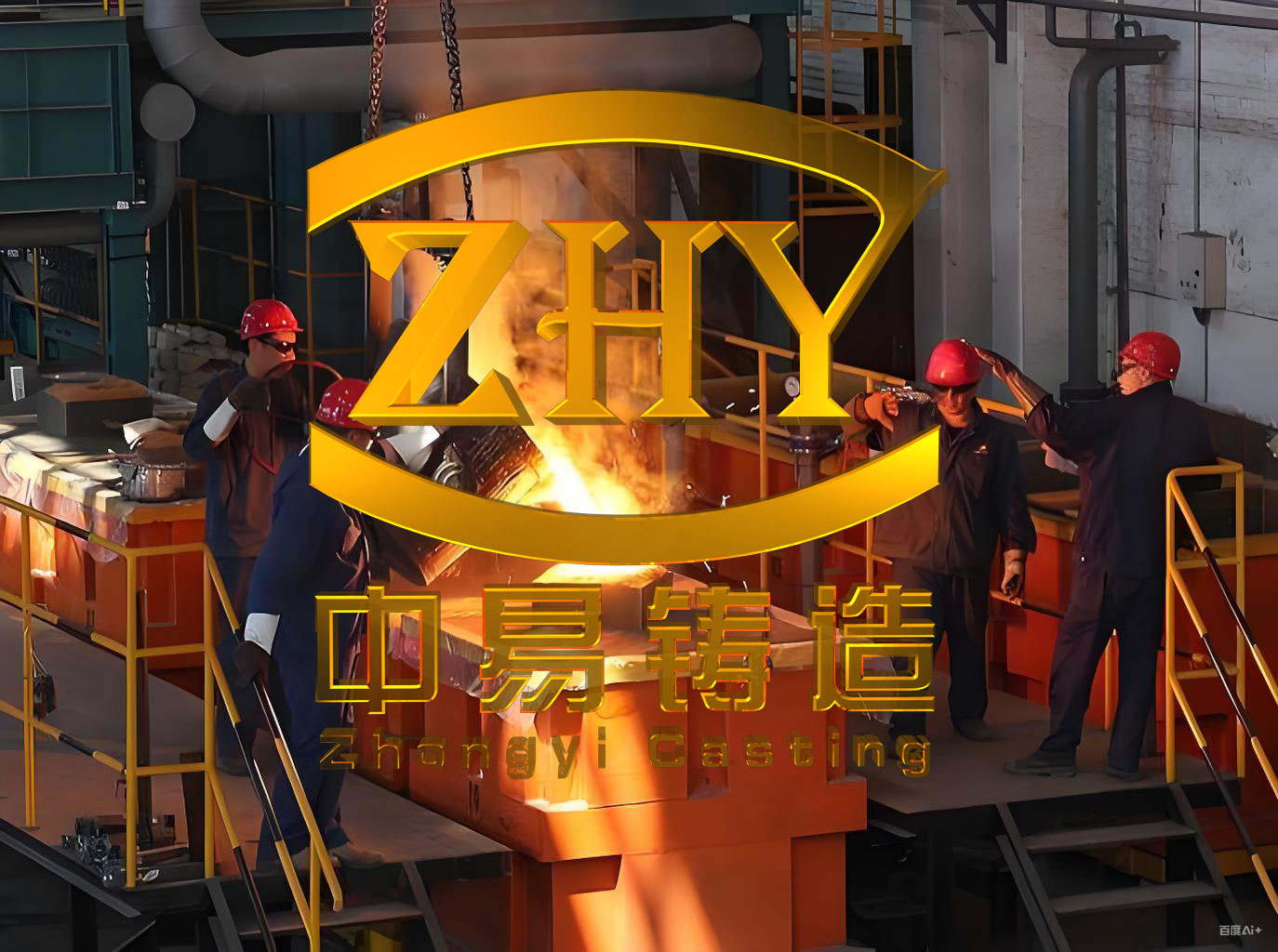
The practical application of these systems in modern foundries validates all theoretical benefits. They are no longer prototypes but proven, reliable production assets. The tangible outcomes include a drastic reduction in lost-time incidents related to metal transfer, a typical increase in overall metal throughput ranging from 15% to 25% due to optimized logistics, and a marked improvement in workplace air quality. The full data integration empowers quality engineers. If a casting defect is detected, the production record for that specific mold can be recalled instantly, showing the exact heat chemistry, treatment parameters, transfer timestamps, and even the ID of the transfer car and pouring unit used. This level of traceability is a game-changer for defect analysis and continuous improvement programs, making it an indispensable tool for a quality-focused steel castings manufacturer.
The development and proliferation of the IMLTS signify more than just a new product category; they represent a cornerstone in the foundation of the smart foundry. It is a key enabler for lights-out production in critical segments of the foundry floor. The technology has matured to a point where it offers reliability and a compelling return on investment. The initial capital outlay is offset by lower operational costs (labor, energy, rework), reduced insurance premiums due to improved safety, and the ability to win contracts that demand full process traceability.
Looking ahead, the trajectory is clear. As Industry 4.0 principles and the Internet of Things (IoT) become more deeply embedded in manufacturing, the IMLTS will evolve from an automated material handler to a cognitive node in the plant network. Predictive maintenance algorithms will analyze motor currents and bearing temperatures from the transfer cars. Artificial intelligence could optimize routing in real-time based on dynamic scheduling changes from the MES. The system will not just execute commands but will provide prescriptive insights to further enhance flow and preempt bottlenecks.
In conclusion, from my standpoint, the intelligent metal liquid transfer system is far more than a piece of equipment; it is the critical infrastructure for the next generation of casting production. It seamlessly merges the physical movement of molten metal with the digital thread of production data, addressing the core challenges of safety, quality, efficiency, and sustainability in one integrated solution. For any foundry—whether a global steel castings manufacturer or a specialized alloy producer—embracing this technology is not merely an upgrade. It is a strategic imperative to remain competitive, resilient, and responsible in an increasingly demanding industrial landscape. The future foundry is automated, connected, and intelligent, and it begins with reimagining the flow of its most vital lifeblood: molten metal.