
As the founder and leader of a growing steel castings manufacturer, I have navigated the complexities of the foundry industry, learning that success hinges not just on technical prowess but on a holistic approach encompassing management, quality, integrity, and innovation. In this personal account, I share insights and strategies that have propelled our operations, aiming to provide a roadmap for other steel castings manufacturers seeking to strengthen their enterprises. The path to becoming a formidable steel castings manufacturer is multifaceted, requiring continuous improvement in equipment, leadership, and processes.
Our initial breakthrough came from rethinking our production line. We faced persistent issues with mold sticking and inefficient handling, which hampered output. By redesigning the hammer and mold synchronization system, we achieved a breakthrough. The core principle involves ensuring simultaneous movement, which minimizes adhesion and reduces downtime. This can be modeled mathematically: let the original failure rate due to sticking be \( F_0 \), and after modification, it reduces to \( F_1 \). The improvement in reliability \( R \) is given by:
$$ R = 1 – \frac{F_1}{F_0} $$
For instance, if \( F_0 = 0.15 \) (15% failure) and \( F_1 = 0.05 \) (5% failure), then \( R = 1 – \frac{0.05}{0.15} = 0.667 \), indicating a 66.7% enhancement. Additionally, the cost savings from reduced maintenance and space optimization can be expressed as:
$$ \text{Savings} = C_{\text{initial}} – C_{\text{modified}} + \Delta P \times V $$
where \( C_{\text{initial}} \) is the initial cost, \( C_{\text{modified}} \) is the modified cost, \( \Delta P \) is the productivity increase per unit time, and \( V \) is the value per unit output. For a steel castings manufacturer, such efficiencies directly boost competitiveness. The table below summarizes key metrics before and after the retrofit:
| Metric | Before Retrofit | After Retrofit | Improvement |
|---|---|---|---|
| Production Efficiency (units/hour) | 50 | 75 | 50% |
| Downtime Due to Sticking (hours/month) | 20 | 5 | 75% reduction |
| Space Utilization (sq meters) | 200 | 150 | 25% savings |
| Maintenance Cost ($/month) | 5000 | 2000 | 60% reduction |
This transformation underscores how a steel castings manufacturer can leverage engineering innovations to achieve significant gains. To visualize our facility’s scale, consider the following representation of our casting floor:
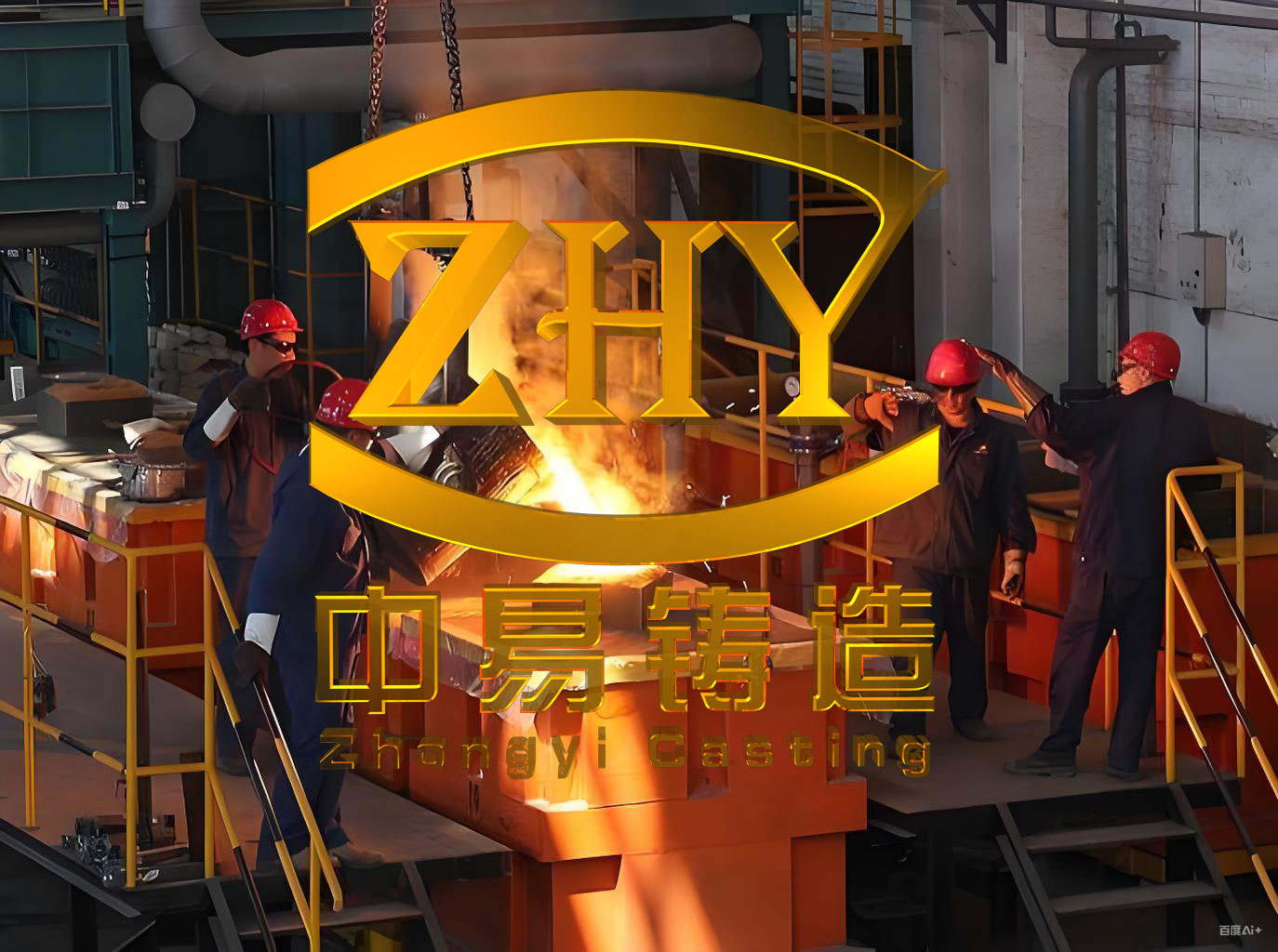
Such advancements are foundational for any steel castings manufacturer aiming to excel in a competitive market.
Beyond machinery, the human element is paramount. Leading a steel castings manufacturer demands a leader with exceptional qualities. I have cultivated a framework based on three core pillars: ideological consciousness, knowledge, and abilities. For a steel castings manufacturer, these translate into practical leadership traits that drive organizational success. The table below delineates these essential attributes:
| Pillar | Key Components | Impact on Steel Castings Manufacturer |
|---|---|---|
| Ideological Consciousness |
|
Fosters a culture of innovation and resilience, essential for adapting to market shifts in casting production. |
| Knowledge Base |
|
Enables informed decision-making, improving process optimization and risk management. |
| Managerial Abilities |
|
Enhances operational efficiency and employee motivation, directly boosting productivity. |
For a steel castings manufacturer, these qualities ensure that the leader can navigate complexities, from supply chain issues to technological disruptions. Moreover, effective delegation is critical; I adhere to hierarchical management, empowering department heads to handle daily operations while I focus on strategic vision. This approach can be modeled using an efficiency function:
$$ \text{Leadership Efficiency} = \alpha \cdot \text{Decision Quality} + \beta \cdot \text{Team Empowerment} $$
where \( \alpha \) and \( \beta \) are weighting factors specific to the steel castings manufacturer’s context. Regular factory inspections and open communication channels keep me informed, allowing proactive adjustments. Treating employees with fairness—offering competitive wages, celebrating milestones, and providing support during hardships—builds loyalty. As a steel castings manufacturer, our workforce is our greatest asset, and their dedication translates into superior output.
Quality is the lifeblood of any steel castings manufacturer. We operate on the principle that every casting must meet exacting standards, as defects erode trust and profitability. The cost of poor quality can be devastating, quantified by:
$$ \text{Cost of Poor Quality} = C_{\text{internal}} + C_{\text{external}} $$
Here, \( C_{\text{internal}} \) includes rework and scrap costs, while \( C_{\text{external}} \) encompasses warranty claims and lost reputation. For a steel castings manufacturer, minimizing this cost is paramount. We implement a multi-faceted quality system:
- High Standardization: Every process, from melting to finishing, follows strict protocols. For example, the pouring temperature \( T_p \) is controlled within a narrow range:
$$ T_p = T_{\text{optimal}} \pm \Delta T $$
where \( \Delta T \) is a tolerance based on alloy composition, typically 10°C for steel castings. - Rigorous Inspection: We employ non-destructive testing and dimensional checks. The defect rate \( D \) is monitored:
$$ D = \frac{N_{\text{defective}}}{N_{\text{total}}} \times 100\% $$
Our target is \( D < 0.5\% \), achieved through continuous monitoring. - Root Cause Analysis: Any defect triggers a thorough investigation. We use Pareto analysis to identify major issues, with corrective actions documented.
The table below outlines our quality control stages for a typical steel casting order:
| Stage | Key Checks | Acceptance Criteria | Tools Used |
|---|---|---|---|
| Raw Material Input | Chemical composition, cleanliness | Meets ASTM standards for steel | Spectrometer, visual inspection |
| Melting and Pouring | Temperature, slag removal | \( T_p = 1550 \pm 10^\circ \text{C} \) | Thermocouples, ladle sensors |
| Solidification and Cooling | Mold integrity, cooling rate | No hot tears or shrinkage | Thermal cameras, simulation software |
| Finishing and Machining | Dimensional accuracy, surface finish | Within ±0.5 mm tolerance | CMM, roughness testers |
| Final Inspection | NDT (ultrasonic, radiographic) | Zero critical defects | UT/RT equipment |
For a steel castings manufacturer, this disciplined approach not only ensures product excellence but also builds a reputation for reliability. We aspire to create branded castings that become synonymous with quality, driving market demand. The equation for brand value \( B \) over time \( t \) reflects this:
$$ B(t) = B_0 + \int_0^t Q(\tau) \cdot M(\tau) \, d\tau $$
where \( B_0 \) is initial brand equity, \( Q \) is quality level, and \( M \) is marketing effort. As a steel castings manufacturer, we invest in both to achieve long-term dominance.
Integrity is non-negotiable for a steel castings manufacturer. In a competitive landscape, trust differentiates us. We pledge to deliver on promises: optimal quality, timely delivery, and responsive service. The relationship between integrity \( I \) and customer retention \( R_c \) can be expressed as:
$$ R_c = k \cdot I \cdot S $$
where \( k \) is a constant and \( S \) represents service quality. We prioritize honesty over short-term profits, understanding that a sterling reputation attracts repeat business and referrals. For instance, if a shipment is delayed, we communicate transparently and compensate fairly, reinforcing trust. This ethos is embedded in our corporate culture, ensuring that every interaction—with suppliers, employees, or clients—upholds ethical standards. A steel castings manufacturer that masters integrity secures a loyal customer base, which is invaluable for sustainable growth.
Innovation is the engine of progress for a steel castings manufacturer. We encourage thinking outside conventional boundaries, often employing reverse engineering and cross-industry learning. The innovation payoff \( \Pi \) can be modeled as:
$$ \Pi = \sum_{i=1}^n (R_i – C_i) \cdot e^{-r t_i} $$
where \( R_i \) is revenue from innovation \( i \), \( C_i \) is its cost, \( r \) is the discount rate, and \( t_i \) is time. We allocate resources to R&D, exploring new alloys, processes, and digital tools like IoT for predictive maintenance. For example, we developed a proprietary sand mixture that reduces binder usage by 20%, lowering costs and environmental impact. The table below highlights our innovation initiatives:
| Innovation Area | Description | Expected Benefit for Steel Castings Manufacturer |
|---|---|---|
| Advanced Simulation | Using FEM software to predict casting defects | Reduces trial runs by 30%, saving time and material |
| Automated Pouring Systems | Robotic arms for precise pour control | Improves consistency and safety, boosting output by 15% |
| Recycled Material Integration | Incorporating scrap steel with optimized chemistry | Cuts raw material costs by 10% while maintaining quality |
| Energy-Efficient Furnaces | Induction melting with heat recovery | Lowers energy consumption by 25%, enhancing sustainability |
As a steel castings manufacturer, we stay vigilant, anticipating market shifts and investing in next-generation technologies. This proactive stance ensures we remain ahead of competitors.
Effective self-promotion is crucial for a steel castings manufacturer to capture market share. We employ a multi-channel strategy to showcase our capabilities. First, our products themselves are ambassadors; superior castings generate word-of-mouth endorsements. The diffusion of reputation can be described by the Bass model:
$$ \frac{dN(t)}{dt} = p \cdot (M – N(t)) + q \cdot N(t) \cdot (M – N(t)) $$
where \( N(t) \) is the number of adopters (clients), \( M \) is the market potential, \( p \) is the coefficient of innovation, and \( q \) is the coefficient of imitation. For a steel castings manufacturer, high \( q \) indicates strong peer recommendations. Second, we participate in industry expos and trade shows, offering live demonstrations to engage potential buyers. Third, we collaborate with academic institutions on joint research, lending credibility. Fourth, we leverage media—technical journals, online platforms, and targeted ads—to highlight our expertise. Each article or case study we publish subtly reinforces our authority. The key is consistency: a steel castings manufacturer must continuously communicate its value proposition to stay top-of-mind.
To quantify marketing impact, consider the return on investment (ROI) for promotional activities:
$$ \text{ROI} = \frac{\text{Net Profit from Marketing}}{\text{Cost of Marketing}} \times 100\% $$
We track this metric to optimize our efforts, ensuring that every dollar spent enhances visibility and sales. As a steel castings manufacturer, building a strong brand opens doors to lucrative contracts and partnerships.
In conclusion, strengthening a steel castings manufacturer is a comprehensive endeavor that blends technical innovation, astute leadership, unwavering quality, ethical conduct, and strategic marketing. From optimizing equipment with mathematical precision to fostering a culture of excellence, each element interlinks to drive growth. The journey requires persistence, but the rewards—market leadership, profitability, and industry respect—are immense. I encourage fellow steel castings manufacturers to embrace these principles, adapting them to their unique contexts. By doing so, we can collectively elevate the foundry sector, delivering superior steel castings that power global infrastructure and innovation. The future belongs to those who dare to improve relentlessly, and as a steel castings manufacturer, I am committed to this perpetual ascent.