
The pursuit of impeccable surface quality represents one of the most persistent and technically demanding objectives in the realm of lost wax casting. This quality is fundamentally bifurcated into two distinct yet interconnected domains: surface roughness, a measure of microscopic texture, and surface defects, which are macroscopic imperfections. Among these defects, the formation of metallic protrusions, often termed “metal thorns” or “finning,” is a particularly troublesome issue that can severely compromise the functional and aesthetic value of a casting. Through my extensive experience in foundry operations, I have come to understand that achieving superior surface finish is not the result of a single magic bullet but a symphony of controlled processes, from pattern to post-casting treatment. This article delves into the intricacies of surface roughness and the defect of metal thorns, analyzing their root causes and synthesizing a comprehensive strategy for their prevention, all within the precise and delicate framework of lost wax casting.
Surface roughness in lost wax casting is quantified as the micro-scale unevenness of the cast metal surface. It is the direct replication, and often degradation, of the texture present on the investment shell’s inner cavity. For investment shells bonded with sodium silicate, a typical achievable surface roughness ranges between Ra 12.5 and 6.3 μm, while shells utilizing colloidal silica binder can achieve a superior finish of Ra 6.3 to 3.2 μm. Failure to meet these benchmarks is categorized as an unacceptably rough surface. This defect is generally distributed across the entire casting surface and is assessed using visual comparison with standardized roughness samples or, for precise measurement, instruments like profilometers.
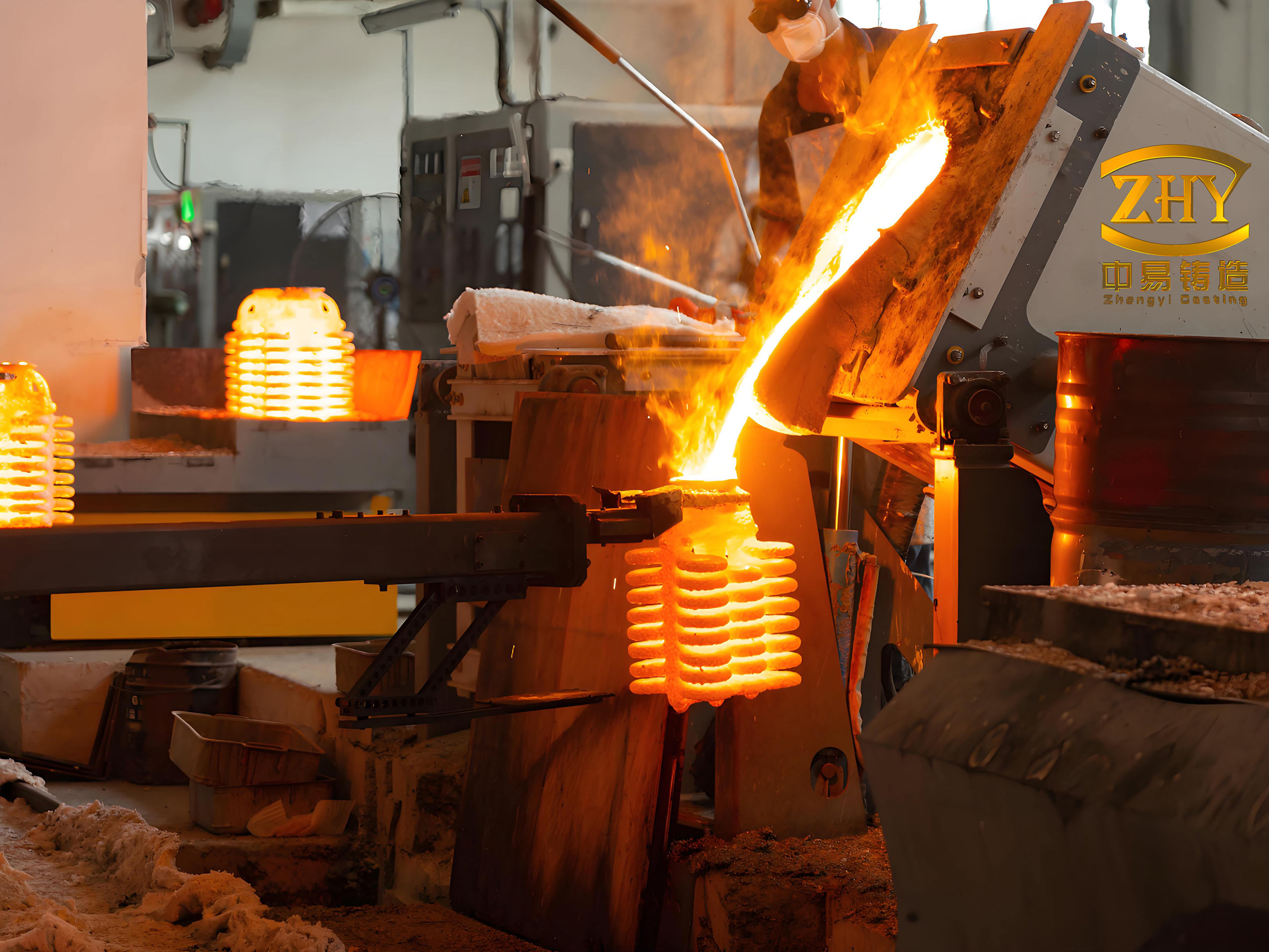
The genesis of surface roughness in lost wax casting is a cascade of influences across the production chain:
1. The Master Pattern and Wax Replica: The surface finish of the initial tooling (the die or master pattern) sets the absolute upper limit for quality. A wax pattern’s surface roughness is typically 1-2 grades worse than that of the die. Inconsistent wax temperature, inadequate injection pressure or hold time, and poor homogenization of the pattern material can all degrade the wax surface, a flaw that will be faithfully transmitted through the subsequent lost wax casting process.
2. The Investment Shell: This is the critical interface. The shell’s interior texture is the negative that forms the casting’s skin. Key factors here include:
- Wax Pattern Preparation: Thorough dewaxing and degreasing are essential for uniform coating adhesion.
- Coating Formulation: For aqueous binders (sodium silicate, colloidal silica), the addition of wetting agents (surfactants) ensures complete coverage of the wax. Defoamers are crucial to eliminate air entrapment in the slurry.
- Coating Rheology and Treatment: The primary slurry must be adequately stirred and matured (“aged”) to optimize its wetting and replicative properties. The refractory powder-to-binder (P:L) ratio is paramount. A higher P:L ratio promotes a denser, less porous first coat. Colloidal silica slurries naturally allow for a higher P:L ratio and exhibit better inter-layer penetration, resulting in a denser face coat compared to sodium silicate systems. This fundamental difference explains the typically superior surface finish from colloidal silica-based lost wax casting.
3. Metal Replication and Filling: The molten metal’s ability to copy the shell’s detail, its “replication capability,” is vital. This is governed by the fluidity of the metal and the thermal interaction with the shell. While higher metal temperature aids fluidity, it can increase gas absorption. Therefore, elevating the shell preheat temperature is often the preferred method to enhance replication without degrading metal quality. Shell preheat temperatures range from 850–950°C for sodium silicate shells to 950–1100°C for colloidal silica shells in lost wax casting.
4. Post-Casting Operations: The surface can be further roughened after solidification. Oxidation during cooling, especially if uneven, and aggressive cleaning methods play a role. Shot blasting with large media severely degrades finish, whereas finer grit blasting or alumina sandblasting preserves much more of the inherent lost wax casting surface quality.
The second major adversary in lost wax casting surface quality is the Metal Thorn defect. This manifests as scattered or dense, short, macroscopic projections on the casting surface. They can appear as sharp, pointed “cucumber spines” or as longer, continuous “worm-like” ridges. The root cause is unequivocal: the penetration of molten metal into microscopic voids or channels present in the first one or two layers of the investment shell under the dynamic and static pressure of pouring.
The central question is: how do these voids form in the shell? The answer lies in a complex interplay of materials and processes inherent to lost wax casting.
1. The Stuccoing Strategy: The granular stucco material has an irregular shape. When applied to the wet slurry, the particles create inter-particle cavities. The size and population of these cavities depend on the stucco grain size and the slurry’s ability to flow into and fill them. A strategic choice of stucco gradation for the primary and secondary coats is critical. The table below summarizes an experiment demonstrating this, where all other lost wax casting parameters were held constant.
| Shell Build Strategy | 1st Coat Stucco | 2nd Coat Stucco | Casting Result (Incidence of Metal Thorns) |
|---|---|---|---|
| A | Fine (40/70 mesh) | Fine (40/70 mesh) | 0% – Smooth surface |
| B | Fine (40/70 mesh) | Medium (20/40 mesh) | 0% – Smooth surface |
| C | Fine (40/70 mesh) | Coarse (10/20 mesh) | 21.4% – Scattered thorns |
| D | Medium (20/40 mesh) | Coarse (10/20 mesh) | 56% – Dense thorns |
This clearly shows that using an excessively coarse stucco, especially on the critical first coat, drastically increases cavity size and the propensity for metal thorn formation in lost wax casting. Strategy B, which employs a transition to a medium stucco in the second coat, is often optimal.
2. Primary Slurry Parameters – The Core of the Issue: Controlling the primary slurry is the most decisive factor in preventing metal thorns in lost wax casting. The key parameters are the Powder-to-Liquid (P:L) ratio, temperature (T), and viscosity (η). A common mistake is controlling only viscosity. In reality, the P:L ratio is the foundational variable, temperature has a profound effect, and viscosity is a dependent outcome. The relationship can be conceptually represented as:
$$ \eta = f(P:L, T, \text{Particle Size Distribution, Binder Properties}) $$
Experimental data using a sodium silicate binder and 270-mesh quartz powder illustrates the point. Slurries with different P:L ratios were prepared and used to make shells and castings.
| Slurry P:L Ratio (Binder:Powder) | Approx. Viscosity @ 14°C (s) | Shell Surface Character (Microscope) | Casting Result |
|---|---|---|---|
| 1 : 0.6 | 10 | Large “worm-like” channels & pores | 100% defect, “worm-like” thorns |
| 1 : 0.8 | 14 | Dense “ant-hole” pores | 100% defect, “cucumber-spine” thorns |
| 1 : 1.0 | 22 | Few, small pores | Minor defects in deep sections |
| 1 : 1.1 | 30 | Very few, negligible pores | 0% defects, smooth surface |
The conclusion is stark: a low P:L ratio slurry cannot fill the inter-stucco cavities, leaving a porous face coat prone to metal penetration in lost wax casting. Only when the P:L ratio is sufficiently high (>1:1 in this case) does the slurry form a dense, continuous matrix that bridges the stucco particles, eliminating the pathways for metal thorns.
3. The Critical Role of Temperature: Viscosity is highly temperature-dependent. A slurry might have the correct viscosity specification at 30°C (summer) but become overly viscous at 10°C (winter). If an operator simply adds water or binder to adjust viscosity back to spec without considering the P:L ratio, they may inadvertently create a porous slurry. The correct practice in lost wax casting is to maintain the slurry within a specified temperature range (e.g., 15-30°C) and adjust viscosity for that temperature by adding solvent (water), not binder, to preserve the crucial P:L ratio.
4. Wax Pattern and Operational Factors:
- Wettability: A clean, degreased wax pattern is essential. Surfactants in the slurry improve its spreading and adhesion on the wax.
- Pattern Design: Deep, narrow recesses or long thin channels can be difficult to coat and stucco effectively, leading to local weakness and potential thorn formation.
- Coating Application: Dipping and draining must be controlled to avoid thin, weak areas in the coating where stucco embedment is poor.
5. Pouring Parameters: Higher metal temperature, higher shell preheat, faster pouring speed, and greater metallostatic pressure head all increase the driving force for metal penetration into any shell imperfections. Therefore, the pouring process must be optimized to fill the mold cleanly without resorting to excessive parameters that exacerbate defect formation in lost wax casting.
Synthesizing the analysis, the prevention strategy for surface imperfections in lost wax casting is holistic and demands rigorous control at every stage:
For Superior Surface Finish & Prevention of Metal Thorns:
- Control the Slurry Triad: Establish and strictly control the primary slurry’s (a) P:L ratio (or density), (b) operating temperature range, and (c) corresponding viscosity range for that temperature. The P:L ratio is non-negotiable.
- Match Stucco to Slurry: Design the stuccoing schedule, especially for the first two coats, to complement the slurry’s properties. Finer stucco (e.g., 50/100 or 40/70 mesh) is typically required for a dense face coat.
- Ensure Perfect Pattern Interface: Maintain impeccable wax pattern quality, cleanliness, and wettability. Use multiple dips for the primary coat on complex patterns to ensure complete coverage.
- Design for Manufacturability: Where possible, advocate for part designs that facilitate good coating application and stucco impact during the lost wax casting process.
- Optimize Thermal and Pouring Dynamics: Use the minimum shell preheat and metal temperature necessary for complete filling to minimize interaction time and penetration force.
- Implement Gentle Cleaning: Prefer fine abrasives or chemical cleaning methods to preserve the as-cast surface.
- Control Raw Materials: Incoming refractory powders must have consistent and specified particle size distribution. “270-mesh” from different suppliers can vary drastically, directly affecting slurry rheology and performance.
In conclusion, the battle for perfect surface quality in lost wax casting is won through meticulous attention to a chain of interdependent variables. Surface roughness and metal thorn defects are not acts of randomness but direct consequences of specific process deviations. By understanding that the shell’s face coat density—governed by slurry P:L ratio, stucco gradation, and application—is the primary defense, and by systematically controlling every step from pattern to pour, foundries can consistently produce lost wax castings with the exquisite surface finish for which the process is renowned. The implementation of rigorous process controls, coupled with ongoing operator training focused on the “why” behind each specification, is the ultimate key to eliminating these costly and persistent surface defects in lost wax casting.