
In the realm of metalworking, the term “machine tool” broadly encompasses equipment used for cold metalworking processes such as turning, milling, planing, grinding, and sawing. Consequently, machine tool castings are typically characterized by their large dimensions, structural complexity, uneven wall thickness, and intricate internal ribbing and webbing. The continuous advancement of domestic machine tool manufacturing technology has led to an industry marked by rapid research and development, frequent updates, a wide variety of products, and stringent quality requirements. This evolution places higher demands on the update speed and quality of machine tool castings, making high-quality, single-piece, or small-batch production a defining feature of the current market. Producing these complex castings using traditional core assembly molding methods presents significant challenges: high process difficulty, numerous core box molds, difficulties in controlling dimensional accuracy, inconsistent product quality, complex operations, low production efficiency, and high costs. To address these issues, modern production has increasingly turned to innovations like full mold casting (FMC).
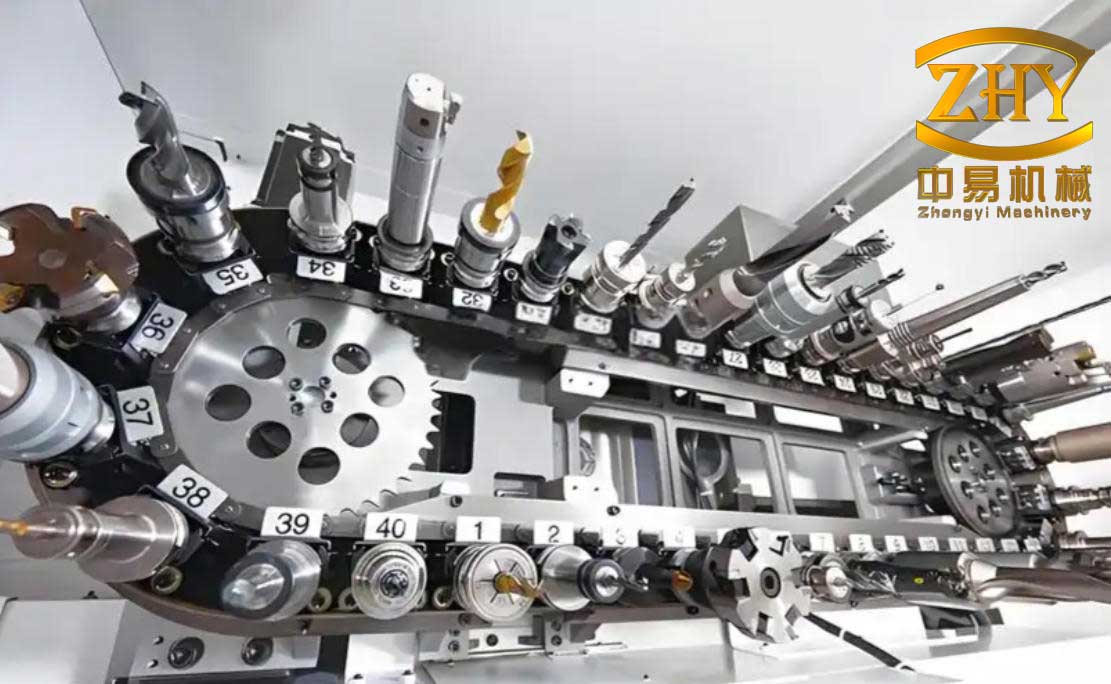
Full Mold Casting (FMC), also known as the evaporative pattern casting process, is a method that utilizes expandable polystyrene (EPS) patterns in combination with unbonded sand for molding and pouring. Since its industrial application began in the 1970s and 1980s, FMC has garnered widespread attention within the foundry industry. After decades of development, this process has achieved significant progress and maturity. The advantages of FMC—including high casting precision, excellent surface finish, a cleaner and greener production process, simple and flexible operations, and short development and validation cycles—are unparalleled by traditional core-making processes. Consequently, the FMC process has found extensive application in the production of machine tool castings.
However, the widespread adoption of FMC for machine tool castings necessitates careful consideration of the gating system design, particularly the shape and dimensions of the ingate. The ingate is the final channel through which molten metal enters the mold cavity, and its design critically influences filling behavior, temperature distribution, and ultimately, the soundness and quality of the final casting. An improper ingate design can lead to defects such as shrinkage porosity, sand inclusion, slag entrapment, and mist runs. Therefore, selecting the optimal ingate configuration is paramount.
The Principle and Preference for Circular Ingates
From a fundamental fluid dynamics perspective, a conduit with a circular cross-section offers optimal flow characteristics. Analyzing the Navier-Stokes equations governing fluid motion reveals that a circular geometry minimizes frictional losses and pressure drop for a given flow rate and cross-sectional area. The symmetry of a circle provides uniform flow properties, where fluid velocity and pressure distribution are identical in all radial directions. Furthermore, the circular shape helps minimize adverse boundary layer effects that can lead to flow separation and turbulence. For these reasons, whenever the structural design and quality requirements of a machine tool casting permit, employing a circular cross-section for the ingate is often the preferred and most efficient choice. The smooth, predictable flow promotes laminar filling, reducing the risk of entrapping gases or slag.
Despite these advantages, the complex geometries inherent in many machine tool castings often restrict the use of circular ingates. Spatial constraints, such as narrow gaps between ribs or walls, may physically prevent the placement of a circular sprue of sufficient diameter. In other cases, positioning a circular ingate might create undesirable thermal concentrations or lead to direct metal impingement on fragile sand walls or pattern sections. When a circular ingate is unsuitable or suboptimal, alternative shapes must be considered, leading to the adoption of specialized designs like the “duckbilled” pouring pipe.
Introduction and Application of the Duckbilled Pouring Pipe
The “duckbilled” pouring pipe is characterized by a transition from a circular inlet to a rectangular (or broadly flat) outlet, resembling the shape of a duck’s bill. Its primary application arises from structural limitations in machine tool castings. A typical example is when a location cannot accommodate a standard circular pipe of, for example, Φ50 mm diameter, or where its placement would negatively impact product quality. Given that the rib thickness in many machine tool castings ranges from 15 mm to 20 mm, the flat profile of the duckbilled outlet offers a significant advantage in fitting into such confined spaces.
Initially, the use of a flat ingate in FMC required adding a foam “padding” or “feeder pad” at the connection point to the pattern. This pad was necessary to prevent a recess or “sink” at the ingate location on the final casting. However, this method introduced several problems. The foam pad created an additional thermal mass (hot spot), increasing the risk of shrinkage porosity or cavities due to improper solidification sequencing. Practically, it also complicated the molding process, added labor for attachment, and created more cleanup work after casting. To streamline the process, the ingate and pad were integrated into a single foam block with a built-in circular-to-rectangular transition.
This integrated foam solution, while an improvement, presented its own challenges. It was prone to detachment during handling, coating (refractory paint application), or molding. It also effectively increased the height of the gating system. Collaborations with material suppliers led to the development of dedicated duckbilled pouring tubes, first in ceramic and later in engineered paper fiber. These pre-formed tubes offer rigidity for easy handling and placement, lightweight construction, and eliminate the need for separate foam padding.
Advantages of Duckbilled Pouring Pipes in Machine Tool Castings
The application of duckbilled pouring pipes in the full mold casting of machine tool castings offers several distinct advantages, particularly in constrained scenarios:
- Enhanced Adaptability in Confined Spaces: The flat, rectangular outlet allows the ingate to be positioned in narrow sections between ribs or walls where a circular ingate of equivalent cross-sectional area would not fit. This provides greater design flexibility for the foundry engineer.
- Controlled Metal Entry and Reduced Impingement: The flattened outlet can help spread the incoming metal stream over a wider area, reducing the velocity and erosive force of the molten metal as it enters the cavity. This can minimize the risk of sand erosion (in traditional bonded sand molds adjacent to the pattern) or pattern degradation in FMC, thereby reducing defects like sand inclusions or surface imperfections.
- Optimized Solidification Control (Feeding): A critical advantage lies in solidification control. The rectangular cross-section, with its higher surface-area-to-volume ratio compared to a circle of equal area, cools and solidifies more rapidly. In gray iron machine tool castings, which solidify with a graphite expansion phase, this is crucial. The early freezing of the ingate isolates the casting from the gating system sooner. This allows the internal graphite expansion pressure to be effectively utilized to compensate for volumetric shrinkage (micro-shrinkage) within the casting itself, rather than being lost by feeding liquid metal back through a still-open ingate. This mechanism significantly reduces the tendency for shrinkage porosity and enhances the dimensional stability of the final machine tool casting.
- Improved Cleanup Efficiency: From a post-casting operations perspective, a long, flat ingate is generally easier to remove via knocking off or cutting compared to a thick, rounded section. This simplifies the fettling and finishing process for machine tool castings.
Fluid Dynamics Analysis and Inherent Challenges
While practical benefits are clear, the duckbilled design introduces complexities in fluid flow that must be understood and managed. The fundamental principle is governed by the conservation of mass for an incompressible fluid (the continuity equation). For steady flow between two cross-sections in a conduit:
$$
\dot{m} = \rho v_1 A_1 = \rho v_2 A_2
$$
Where \(\dot{m}\) is the mass flow rate, \(\rho\) is density, \(v\) is average velocity, and \(A\) is cross-sectional area. This equation states that for a constant flow rate (\(\dot{m}\)), the product of velocity and area at any section is constant. Therefore, if the cross-sectional area decreases, the velocity must increase proportionally.
In an ideal, perfectly formed duckbilled tube where the circular inlet area \(A_{circular}\) equals the rectangular outlet area \(A_{rectangular}\), the average velocity would, in theory, remain constant (\(v_{in} = v_{out}\)). However, the practical reality of the transition geometry often leads to a phenomenon known as vena contracta or flow contraction. The abrupt change in flow direction and cross-sectional shape creates inertial effects that prevent the fluid stream from fully occupying the new rectangular shape immediately. The effective flow area at the exit can be significantly smaller than the geometric area, causing a localized increase in velocity.
$$
A_{effective} = C_c \cdot A_{rectangular}, \quad \text{where } C_c < 1
$$
$$
v_{effective} = \frac{v_{in} \cdot A_{circular}}{A_{effective}} > v_{in}
$$
This acceleration, combined with the sharp corners and sudden expansion after the throat, disrupts smooth, laminar flow lines and promotes turbulence. While some turbulence can be beneficial in Full Mold Casting to help break up and evacuate pyrolysis products (gases and residues) from the decomposing foam pattern, excessive or uncontrolled turbulence is detrimental. It increases the entrainment of air and oxides, raises the risk of slag formation and inclusion within the machine tool casting, and can lead to uneven temperature distribution.
The pressure changes can be approximated by an extended Bernoulli equation with a head loss term:
$$
P_1 + \frac{1}{2}\rho v_1^2 + \rho g h_1 = P_2 + \frac{1}{2}\rho v_2^2 + \rho g h_2 + \Delta P_{loss}
$$
Where \(P\) is pressure, \(g\) is gravity, \(h\) is height, and \(\Delta P_{loss}\) represents energy loss due to friction and the form loss from the dramatic shape change. The high \(\Delta P_{loss}\) in a poorly designed transition can lead to pressure drops that may aspirate air or cause flow instability.
The following table summarizes the key comparative aspects of circular and duckbilled ingates:
| Feature | Circular Ingate | Duckbilled Ingate |
|---|---|---|
| Flow Characteristic | Promotes laminar, low-turbulence flow. Minimizes friction loss. | Inherently induces turbulence and flow contraction due to shape transition. Higher form loss. |
| Geometric Adaptability | Requires sufficient spatial clearance for diameter. Less flexible. | Excellent for narrow, confined spaces (e.g., between thin ribs). Highly adaptable. |
| Thermal/Solidification Control | Larger thermal mass, stays open longer. Risk of “feeding back” from casting. | Freezes off quicker due to higher surface area. Helps harness graphite expansion in iron castings. |
| Ease of Cleanup | Can be more difficult to remove if thick. | Typically easier to knock off due to flat, thin section. |
| Primary Application Context | Preferred where geometry allows; optimal for clean filling. | Essential for space-constrained areas in complex machine tool castings; requires careful system design. |
Design Considerations and Optimization Strategies
Successfully implementing duckbilled pouring pipes requires a holistic design approach that mitigates its potential drawbacks while leveraging its strengths. The following parameters are critical for optimization:
- Transition Geometry: The design of the circular-to-rectangular transition zone is paramount. A gradual, streamlined taper is vastly superior to an abrupt, sharp-edged change. The length of the transition (\(L_t\)) relative to the hydraulic diameter change should be maximized to allow the flow to adjust smoothly, reducing the severity of the vena contracta and associated turbulence. The optimal ratio can be explored through simulation or empirical testing for specific gating systems.
- Aspect Ratio of the Rectangular Outlet: The rectangle is defined by its width (\(w\)) and thickness (\(t\)). The aspect ratio (\(AR = w/t\)) significantly impacts behavior. A very high AR (extremely wide and thin) may freeze almost instantaneously, providing excellent feeding isolation but potentially restricting flow too severely during filling. A lower AR (more square-like rectangle) offers less freezing advantage but causes less flow disturbance. The choice must balance rapid freezing needs with filling requirements. For typical machine tool casting ribs of 15-20mm, the thickness \(t\) is often designed to be slightly less than the rib thickness to ensure proper fusion and easy knockout.
- Cross-Sectional Area Matching: Meticulous calculation is needed to ensure the effective flowing area through the transition is appropriate for the desired pouring time and metal velocity. The designed rectangular area should account for the expected contraction coefficient (\(C_c\)). A common practice is to slightly oversize the rectangular outlet area relative to the circular runner area to compensate for flow contraction and ensure the ingate does not become the choke point in the system, which could lead to misruns. The relationship can be expressed as:
$$
A_{rectangular\_design} \approx \frac{A_{circular}}{C_c}
$$
where \(C_c\) is empirically determined (often in the range of 0.6 to 0.9 for such shapes). - Integration with Overall Gating System: The duckbilled ingate cannot be designed in isolation. Its size and placement must be coordinated with the sprue, runner, and other ingates to ensure balanced filling. Computational Fluid Dynamics (CFD) simulation is an invaluable tool for modeling the complete filling process, visualizing turbulence, predicting temperature gradients, and optimizing the entire system for the specific machine tool casting geometry before any metal is poured.
- Material and Coating: The choice between ceramic and paper fiber tubes depends on requirements. Ceramic offers higher refractoriness and rigidity, while paper fiber tubes are lighter, easier to cut, and may provide some beneficial permeability for gas evacuation. A proper refractory coating must be applied to the tube’s interior to prevent erosion and reaction with the molten metal.
The table below outlines key design parameters and their influence:
| Design Parameter | Physical Meaning | Influence on Casting Process | Typical Consideration for Machine Tool Castings |
|---|---|---|---|
| Transition Length (\(L_t\)) | Length over which the cross-section changes from circular to rectangular. | Longer \(L_t\) reduces turbulence, pressure drop, and flow contraction. Smoother flow. | Maximize within spatial limits of the gating assembly. Aim for a tapered, gradual change. |
| Outlet Aspect Ratio (\(AR = w/t\)) | Ratio of outlet width to thickness. | High AR → faster freezing (good for feeding), but higher flow resistance. Low AR → less disturbance, slower freeze. | Balanced based on rib thickness (t ~ 15-20mm) and needed freezing time. Often AR between 3:1 and 6:1. |
| Contraction Coefficient (\(C_c\)) | Ratio of effective flow area to geometric area at outlet. | Determines actual flow velocity and pressure. Lower \(C_c\) means higher effective velocity and turbulence. | Must be estimated (0.7-0.85) or determined via simulation. Used to size the geometric outlet area correctly. |
| Ingate Orientation & Placement | Location and angle at which metal enters the cavity. | Dictates flow direction, minimizes impingement, ensures sequential filling from bottom-up. | Place in non-critical, thick sections if possible. Angle to promote directional solidification towards risers or heavy sections. |
Conclusion and Future Perspectives
The duckbilled pouring pipe represents a pragmatic and effective solution for specific challenges encountered in the full mold casting of complex machine tool castings. Its primary value lies in its geometric adaptability, allowing for effective gating in spatially restricted areas where traditional circular ingates are not feasible. Furthermore, its design promotes early solidification at the ingate, a characteristic that can be strategically exploited in gray iron castings to leverage graphite expansion for internal feeding, thereby reducing shrinkage defects and enhancing the overall integrity of the machine tool casting.
However, this advantage comes with an inherent fluid dynamic trade-off. The shape transition from circular to rectangular inevitably disrupts laminar flow, introducing turbulence, flow contraction, and increased energy loss. Unmitigated, this can elevate the risks of oxide and slag entrapment, gas porosity, and unstable filling patterns. Therefore, the application of duckbilled pouring pipes is not a universal remedy but a specialized tool that requires informed and careful implementation. Its use must be preceded by a thorough evaluation of the specific machine tool casting geometry and integrated into a holistically designed gating system.
Future research and development should focus on quantitative optimization. Key areas include:
- Establishing empirical or simulation-based databases for the contraction coefficient (\(C_c\)) and head loss factors (\(\Delta P_{loss}\)) for various standardized duckbilled transition geometries.
- Developing parametric studies to determine optimal aspect ratios and transition lengths for different alloy types (e.g., gray iron vs. ductile iron) and casting sections.
- Advancing the use of real-time simulation tools that can quickly model the coupled effects of fluid flow, heat transfer, and pattern degradation in FMC systems employing such non-circular ingates.
- Exploring advanced manufacturing techniques for producing more aerodynamically efficient, graded-transition pouring pipes from refractory composites.
In summary, when applied judiciously and with a deep understanding of its principles, the duckbilled pouring pipe is a powerful component in the foundry engineer’s toolkit, enabling the production of high-quality, intricate machine tool castings via the full mold process. Its successful use epitomizes the balance between practical necessity and scientific principle in modern metalcasting.