
As a dedicated analyst in the manufacturing sector, I have closely monitored the evolving landscape of the steel castings industry. The role of a steel castings manufacturer is increasingly critical, serving as the backbone for numerous applications from automotive to renewable energy. In this article, I will explore the current dynamics, challenges, and future prospects from a first-person perspective, emphasizing how a steel castings manufacturer can navigate these complex times. The insights drawn from recent industry developments and surveys reveal a sector at a crossroads, balancing growth opportunities with persistent financial pressures. Throughout this discussion, I will frequently reference the pivotal role of a steel castings manufacturer, underscoring its importance in the global supply chain.
The demand for steel castings has surged in recent years, propelled by technological advancements and the global shift toward sustainable practices. A steel castings manufacturer must continuously adapt to these trends to remain competitive. For instance, the automotive industry’s rapid electrification has opened new avenues for a steel castings manufacturer, particularly in producing heavy-duty components for electric trucks and vehicles. Similarly, the wind energy sector offers significant growth potential, requiring durable castings for turbines and infrastructure. These emerging markets highlight the need for a steel castings manufacturer to innovate and expand capacity. However, this growth is juxtaposed with challenges such as rising production costs and margin pressures, which I will delve into later.
To quantify the industry’s performance, let’s examine profitability trends among steel castings manufacturers. Recent surveys indicate that a substantial portion operates with low margins, threatening long-term sustainability. The table below summarizes the percentage of suppliers reporting profitability below 5% over recent years, reflecting the financial health of a typical steel castings manufacturer.
| Year | Percentage of Suppliers with Profitability Below 5% | Industry Outlook |
|---|---|---|
| 2022 | 76% | Highly Challenging |
| 2023 | 56% | Moderately Improving |
| 2024 (Projected) | 48% | Gradual Recovery |
This data shows that while conditions are improving, nearly half of all steel castings manufacturers still face low profitability. This underscores the urgency for strategic actions to enhance financial resilience. A steel castings manufacturer must often evaluate investments using metrics like Return on Investment (ROI), which can be expressed as:
$$ ROI = \frac{\text{Net Profit from Investment}}{\text{Cost of Investment}} \times 100\% $$
For example, consider a new production line with an investment cost of £17 million. A steel castings manufacturer would calculate ROI to ensure viability, factoring in expected demand increases. If the net profit from this line is projected at £3 million annually, the ROI would be:
$$ ROI = \frac{3,000,000}{17,000,000} \times 100\% \approx 17.65\% $$
This calculation helps a steel castings manufacturer make informed decisions amid uncertainty. Beyond financial metrics, the industry is shaped by broader market forces. The push toward green and digital transformation requires substantial capital, yet many steel castings manufacturers struggle to fund these initiatives. Surveys reveal that over 40% of suppliers cite high production costs as a key strategic challenge, up from 35% just six months ago. This cost pressure is often compounded by the inability to pass increases onto original equipment manufacturer (OEM) customers, squeezing margins further.
The global competitive landscape adds another layer of complexity. A steel castings manufacturer in Europe, for instance, may face stiff competition from regions with lower costs or faster innovation adoption. In this context, diversification into high-growth sectors becomes essential. The following table outlines projected annual growth rates for key application areas, guiding a steel castings manufacturer in strategic planning.
| Application Sector | Annual Growth Rate (Projected) | Primary Drivers |
|---|---|---|
| Heavy Truck Components | 8% | Electrification, Infrastructure Development |
| Wind Energy Components | 12% | Renewable Energy Policies and Investments |
| General Automotive Parts | 5% | Lightweighting and Safety Regulations |
| Industrial Machinery Castings | 6% | Automation and Industry 4.0 Integration |
| Aerospace Components | 10% | Advanced Material Demands and Global Travel Recovery |
As a steel castings manufacturer, targeting sectors like wind energy can offset risks in traditional markets. However, this requires capacity expansion and technological upgrades. The demand for castings can be modeled mathematically to aid planning. If $D_t$ represents demand at time $t$, with an initial demand $D_0$ and a constant annual growth rate $g$, the formula is:
$$ D_t = D_0 (1 + g)^t $$
For a steel castings manufacturer anticipating a 10% growth in wind energy components, if current demand $D_0$ is 5,000 tons, the demand after 5 years would be:
$$ D_5 = 5000 \times (1 + 0.10)^5 \approx 5000 \times 1.61051 = 8052.55 \text{ tons} $$
This exponential growth underscores the need for scalable operations. Yet, expansion is costly, and a steel castings manufacturer must balance capital expenditure with cash flow constraints. The cost structure for a typical steel castings manufacturer includes multiple variables. Let $C_{\text{total}}$ denote total production cost, which can be broken down as:
$$ C_{\text{total}} = C_{\text{materials}} + C_{\text{energy}} + C_{\text{labor}} + C_{\text{overhead}} $$
In recent years, $C_{\text{materials}}$ and $C_{\text{energy}}$ have risen sharply due to inflation and geopolitical factors. For a steel castings manufacturer, optimizing these costs is critical. For example, material costs might account for 40% of total costs, energy for 25%, labor for 20%, and overhead for 15%. If material costs increase by 15%, the impact on total cost can be calculated. Assuming initial $C_{\text{total}} = 100$ units, with $C_{\text{materials}} = 40$, a 15% rise leads to new $C_{\text{materials}} = 46$, increasing $C_{\text{total}}$ to 106 units, a 6% overall increase. This squeeze often forces a steel castings manufacturer to seek efficiencies or risk eroding profits.
Moreover, the industry’s shift toward sustainability involves additional investments in green technologies. A steel castings manufacturer may need to adopt electric arc furnaces or recycling systems to reduce carbon footprint. The cost-benefit analysis of such investments can be complex. Let $I_{\text{green}}$ be the investment in green technology, and $S_{\text{savings}}$ be the annual savings from reduced energy consumption or regulatory incentives. The payback period $P$ is given by:
$$ P = \frac{I_{\text{green}}}{S_{\text{savings}}} $$
If a steel castings manufacturer invests $2 million in energy-efficient equipment and saves $500,000 annually, the payback period is 4 years. This long horizon can deter smaller players, highlighting the disparity in resources. Digital transformation also presents both opportunities and hurdles. Implementing IoT sensors and AI-driven quality control can enhance a steel castings manufacturer’s productivity, but the upfront costs are substantial. Surveys indicate that over 50% of suppliers plan to increase digital investment, yet funding remains a concern.
The global supply chain dynamics further influence a steel castings manufacturer’s strategy. Regions like Asia have become manufacturing hubs due to cost advantages and scale. For instance, a steel castings manufacturer in China often benefits from integrated supply chains and government support, enabling competitive pricing.
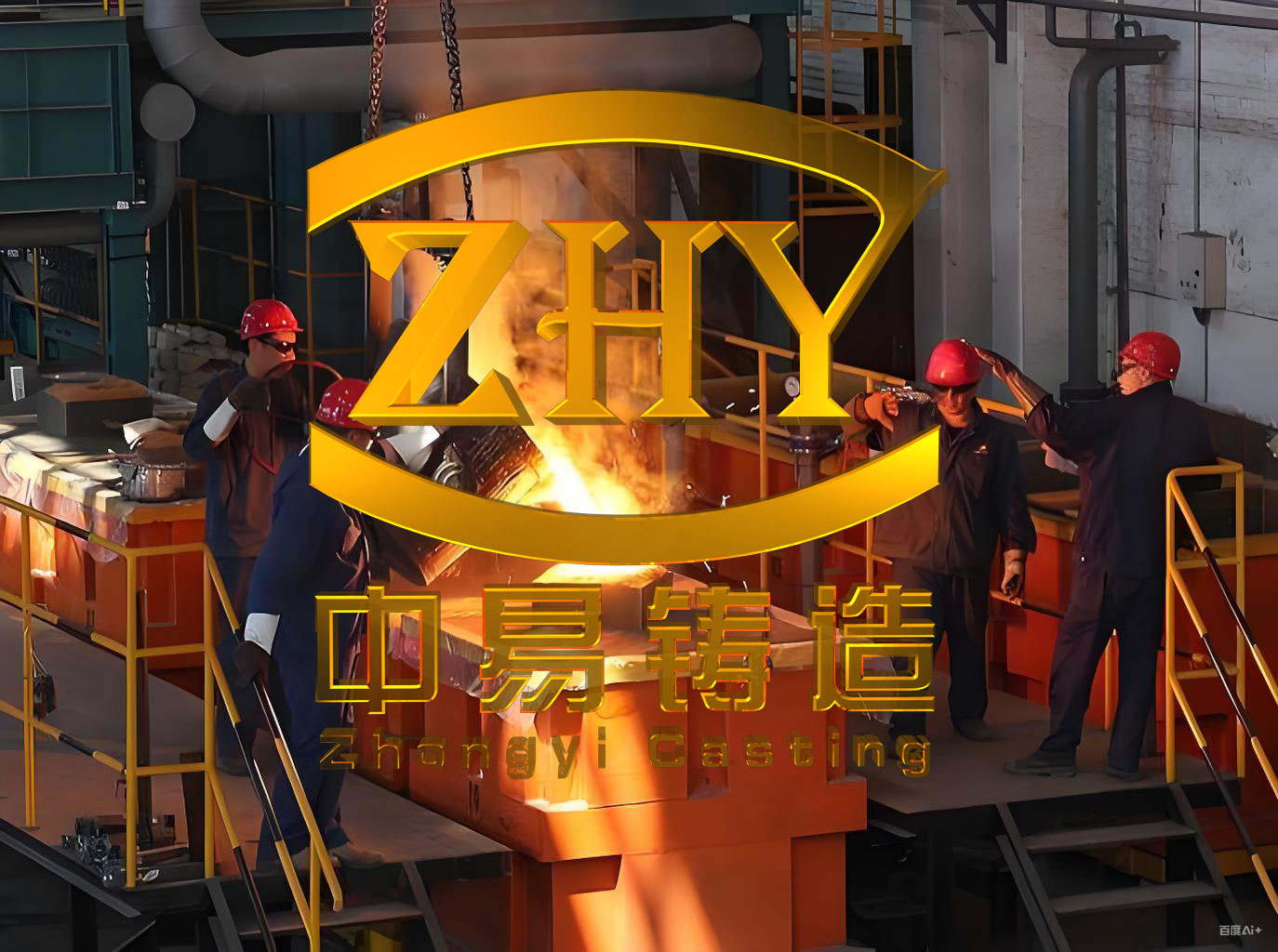
This image illustrates the advanced capabilities of a modern steel castings manufacturer, showcasing the technological prowess that drives global competitiveness. However, geopolitical tensions and trade policies can disrupt this landscape, urging a steel castings manufacturer to diversify geographically.
In Europe, the automotive supplier sector reflects broader industry sentiments. While optimism has improved post-pandemic, uncertainty persists due to volatile sales forecasts and inflationary pressures. A steel castings manufacturer serving this market must navigate these headwinds. The table below summarizes key challenges reported by suppliers, emphasizing the operational hurdles for a steel castings manufacturer.
| Challenge Category | Percentage of Suppliers Citing It as Major | Impact on Steel Castings Manufacturer |
|---|---|---|
| High Production Costs | 43% | Reduces margin flexibility and investment capacity |
| Inability to Pass Costs to OEMs | 38% | Compresses profitability and limits pricing power |
| Regulatory Compliance Burdens | 35% | Increases administrative and operational costs |
| Technological Disruption Risks | 32% | Requires continuous R&D expenditure to stay relevant |
| Supply Chain Volatility | 40% | Leads to raw material shortages and delayed deliveries |
These challenges necessitate robust risk management strategies for a steel castings manufacturer. For example, hedging against material price fluctuations or diversifying supplier bases can mitigate some risks. Additionally, collaboration within ecosystems—such as partnerships with research institutions—can foster innovation without bearing full costs. A steel castings manufacturer that leverages such synergies is better positioned to thrive.
Looking ahead, the industry’s trajectory will be shaped by several megatrends. Electrification, circular economy principles, and digitalization are not just buzzwords but imperative shifts. A steel castings manufacturer must integrate these into core operations. To quantify the potential, consider the market size for steel castings in electric vehicles (EVs). If EV production grows at 20% annually, and each EV requires an average of 100 kg of steel castings, the total demand can be modeled. Let $N_{\text{EV}}$ be the number of EVs produced annually, starting at 10 million units in 2024. The castings demand $D_{\text{EV}}$ in tons is:
$$ D_{\text{EV}} = N_{\text{EV}} \times 0.1 \text{ tons} $$
With a growth rate $r = 0.20$, after $t$ years, $N_{\text{EV}}(t) = 10,000,000 \times (1.20)^t$. Thus, demand after 5 years would be:
$$ D_{\text{EV}}(5) = 10,000,000 \times (1.20)^5 \times 0.1 \approx 10,000,000 \times 2.48832 \times 0.1 = 2,488,320 \text{ tons} $$
This represents a significant opportunity for a steel castings manufacturer aligned with EV trends. Similarly, in wind energy, turbine tower and gearbox components drive demand. A single large turbine may use over 200 tons of castings, and with global wind capacity expanding at 8% yearly, the addressable market grows accordingly.
However, capitalizing on these opportunities requires funding. Many steel castings manufacturers operate with thin margins, making it hard to secure loans or attract investors. The profitability equation for a steel castings manufacturer can be expressed as:
$$ \text{Net Profit} = \text{Revenue} – (C_{\text{total}} + \text{Taxes} + \text{Interest}) $$
If revenue is constrained by market competition, and costs are rising, net profit dwindles. This vicious cycle can stifle innovation. Policy support, such as tax incentives for green investments, could alleviate this, but implementation varies by region. A steel castings manufacturer in the EU, for instance, may benefit from initiatives like the Green Deal, yet regulatory complexity often offsets advantages.
Technological advancements also play a crucial role. Additive manufacturing, or 3D printing, is revolutionizing prototype development for a steel castings manufacturer. While not yet mainstream for mass production, it reduces lead times and material waste. The cost comparison between traditional casting and additive methods can be analyzed. Let $C_{\text{trad}}$ be the cost per unit for traditional casting, and $C_{\text{add}}$ for additive manufacturing. For low volumes, $C_{\text{add}}$ may be lower due to minimal tooling, but for high volumes, economies of scale favor traditional methods. A steel castings manufacturer must evaluate this based on order size and complexity.
Workforce development is another critical aspect. As automation increases, a steel castings manufacturer needs skilled technicians to operate advanced machinery. Training costs, denoted as $C_{\text{training}}$, add to operational expenses. If a manufacturer employs 500 workers and invests $2,000 per employee annually in training, total $C_{\text{training}} = 1,000,000$. This investment, while substantial, enhances productivity and reduces error rates, yielding long-term gains.
The interplay between these factors determines the resilience of a steel castings manufacturer. To synthesize, I propose a holistic performance index $P_{\text{index}}$ for a steel castings manufacturer, incorporating key metrics:
$$ P_{\text{index}} = w_1 \cdot \frac{\text{Revenue Growth Rate}}{\text{Industry Average}} + w_2 \cdot \frac{\text{Profit Margin}}{\text{Target Margin}} + w_3 \cdot \frac{\text{Innovation Investment}}{\text{Revenue}} + w_4 \cdot \frac{\text{Market Diversification Score}}{\text{Max Score}} $$
Here, $w_1, w_2, w_3, w_4$ are weights summing to 1, reflecting strategic priorities. For instance, if a steel castings manufacturer has a revenue growth rate of 10% against an industry average of 6%, profit margin of 4% against a target of 8%, innovation investment at 3% of revenue, and a diversification score of 0.7 out of 1, with equal weights, $P_{\text{index}}$ would be:
$$ P_{\text{index}} = 0.25 \cdot \frac{10}{6} + 0.25 \cdot \frac{4}{8} + 0.25 \cdot \frac{3}{100} + 0.25 \cdot \frac{0.7}{1} \approx 0.25 \times 1.667 + 0.25 \times 0.5 + 0.25 \times 0.03 + 0.25 \times 0.7 = 0.41675 + 0.125 + 0.0075 + 0.175 = 0.72425 $$
This index below 1 indicates areas for improvement, guiding a steel castings manufacturer in resource allocation. Regularly assessing such metrics can drive strategic decisions.
In conclusion, the steel castings manufacturing industry stands at a pivotal juncture. A steel castings manufacturer must navigate a landscape filled with both promise and peril. Demand from sectors like electric vehicles and renewable energy offers growth, but cost pressures and funding gaps pose significant risks. Through strategic investments in technology and diversification, a steel castings manufacturer can enhance competitiveness. Moreover, embracing digital tools and sustainable practices is no longer optional but essential for survival. As I reflect on these insights, it is clear that collaboration, innovation, and adaptive strategies will define the future for every steel castings manufacturer. The journey ahead requires resilience, but the opportunities for a forward-thinking steel castings manufacturer are substantial and worthy of pursuit.
To further illustrate the global context, consider the competitive positioning of a steel castings manufacturer across regions. The following table compares key operational metrics, highlighting how a steel castings manufacturer in different geographies might perform.
| Region | Average Production Cost Index (Base = 100) | Typical Profit Margin Range | Growth Rate in Castings Demand | Regulatory Support Level (Scale 1-10) |
|---|---|---|---|---|
| North America | 105 | 5-10% | 7% | 7 |
| Europe | 110 | 3-8% | 6% | 8 |
| Asia-Pacific | 95 | 8-15% | 12% | 6 |
| Latin America | 100 | 4-9% | 5% | 5 |
This table underscores that a steel castings manufacturer in Asia-Pacific often enjoys lower costs and higher growth, albeit with varying regulatory environments. Such disparities influence global investment flows and partnership strategies for a steel castings manufacturer.
Finally, the mathematical modeling of industry trends can empower a steel castings manufacturer to anticipate changes. For instance, using linear regression to forecast material costs based on historical data can inform budgeting. If material cost $C_m$ over time $t$ follows a trend $C_m = \alpha + \beta t + \epsilon$, where $\alpha$ and $\beta$ are coefficients and $\epsilon$ is error, a steel castings manufacturer can estimate future expenses. Suppose $\alpha = 50$ and $\beta = 2$, indicating a yearly increase of 2 units. After 10 years, $C_m = 50 + 2 \times 10 = 70$ units. This proactive approach enables a steel castings manufacturer to plan mitigations, such as sourcing alternatives or efficiency drives.
In essence, the steel castings manufacturing industry is a dynamic field where a steel castings manufacturer must constantly evolve. By leveraging data-driven insights, fostering innovation, and building resilient supply chains, a steel castings manufacturer can not only survive but thrive in the coming decades. The repeated emphasis on a steel castings manufacturer throughout this analysis highlights its central role in the industrial ecosystem, and I remain optimistic about its future despite the challenges outlined.