
The development of offshore hydrocarbon resources, particularly in deep and ultra-deep waters, necessitates advanced marine engineering structures. These structures, such as tension leg platforms (TLPs), spars, and semi-submersibles (SEMIs), increasingly utilize high-strength and ultra-high-strength steels to reduce overall weight while maintaining structural integrity and safety. Within these complex assemblies, steel casting components offer unparalleled advantages, including significant design flexibility for complex geometries and the potential for enhanced local structural strength. A critical aspect of fabricating such hybrid structures is joining these cast steel elements to rolled high-strength steel plates. This article details the first-person development and qualification of a welding procedure for joining ASTM A148 Gr90-60 cast steel to API 2Y Gr60 quenched and tempered high-strength steel, a combination pertinent to demanding offshore applications.
Material Characteristics and Weldability Analysis
The base metals in question are both low-alloy steels but possess distinct metallurgical histories. API 2Y Gr60 is a thermomechanically controlled processed (TMCP) or quenched and tempered plate steel with a fine-grained microstructure, offering an excellent combination of strength and toughness. The ASTM A148 Gr90-60 is a cast low-alloy steel. While it meets specified strength levels, the inherent nature of the steel casting process results in a coarser grain structure, potential for chemical segregation (especially under feeder heads), and the presence of micro-shrinkage or non-metallic inclusions. These factors directly influence weldability.
The typical chemical compositions of the two base metals are compared in Table 1.
| Base Metal | C | Si | Mn | Ni | Mo | P | S | Cu |
|---|---|---|---|---|---|---|---|---|
| ASTM A148 Gr90-60 | 0.15 | 0.37 | 1.45 | 1.10 | 0.015 | 0.015 | 0.003 | 0.021 |
| API 2Y Gr60 | 0.11 | 0.37 | 1.56 | 0.02 | – | 0.011 | 0.001 | 0.03 |
| Base Metal | Cr | Ti | V | Nb | N | Al | B |
|---|---|---|---|---|---|---|---|
| ASTM A148 Gr90-60 | 0.047 | 0.002 | 0.017 | 0.025 | 0.001 | 0.025 | – |
| API 2Y Gr60 | 0.03 | 0.014 | 0.003 | 0.026 | 0.001 | 0.042 | 0.0005 |
The mechanical properties as per specification and typical actual values are shown in Table 2.
| Base Metal | Yield Strength (MPa) | Tensile Strength (MPa) | Elongation (%) |
|---|---|---|---|
| ASTM A148 Gr90-60 (Spec.) | ≥ 415 | ≥ 550 | ≥ 20 |
| ASTM A148 Gr90-60 (Actual) | 432 | 578 | 27 |
| API 2Y Gr60 (Spec. Range) | 414 – 621 | ≥ 517 | ≥ 22 |
| API 2Y Gr60 (Actual) | 500 | 610 | 31 |
The primary weldability challenge is the susceptibility to hydrogen-induced cold cracking (HICC). This risk is assessed through the carbon equivalent (Ceq) formula, commonly used for low-alloy steels:
$$ C_{eq} = C + \frac{(Si+Mn)}{6} + \frac{(Cr+Mo+V)}{5} + \frac{(Cu+Ni)}{15} $$
Calculating for each material:
For API 2Y Gr60:
$$ C_{eq(API 2Y)} = 0.11 + \frac{0.37+1.56}{6} + \frac{0.03+0+0.003}{5} + \frac{0.03+0.02}{15} \approx 0.39\% $$
For ASTM A148 Gr90-60:
$$ C_{eq(CAST)} = 0.15 + \frac{0.37+1.45}{6} + \frac{0.047+0.015+0.017}{5} + \frac{0.021+1.10}{15} \approx 0.48\% $$
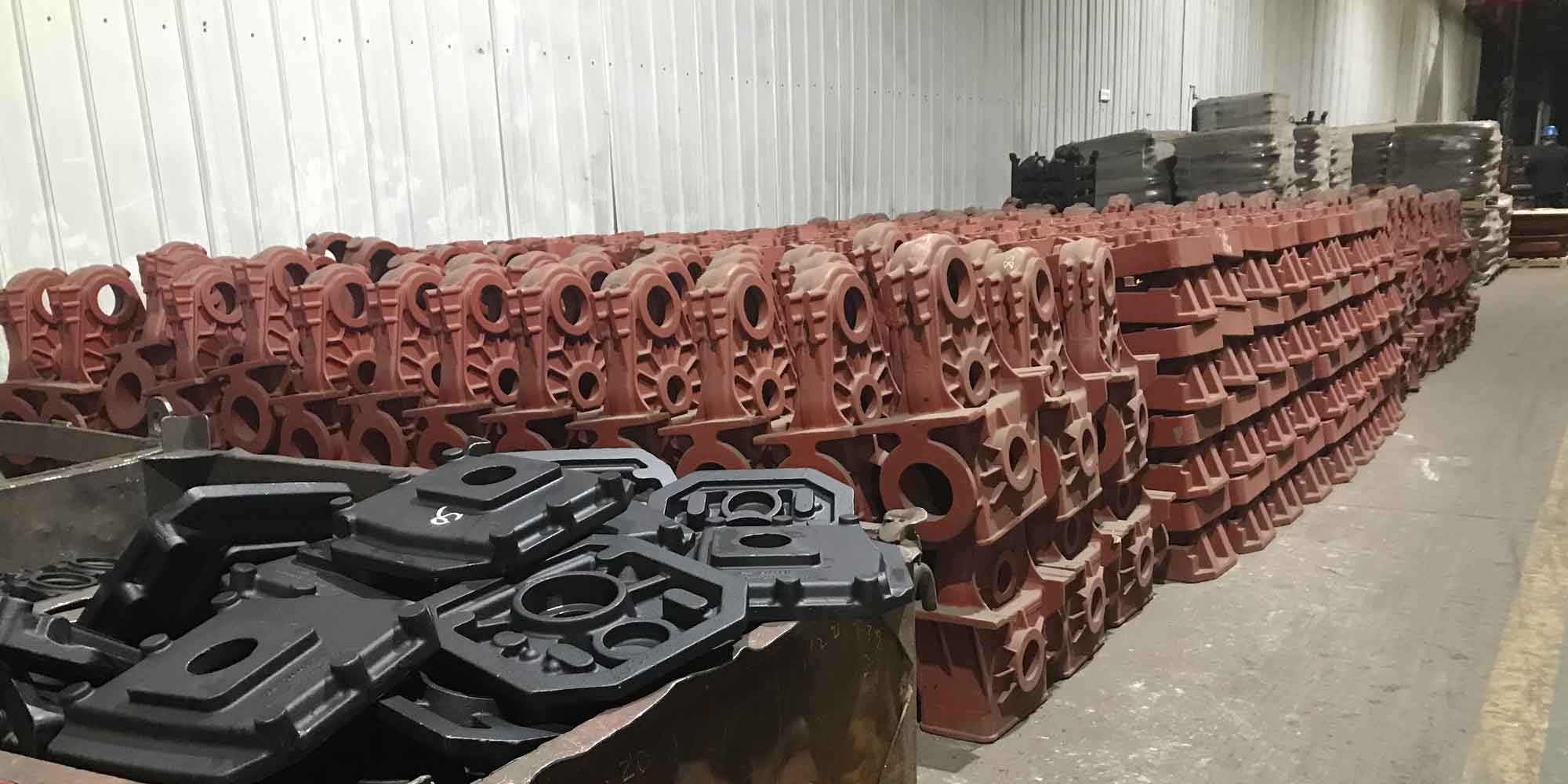
A higher Ceq value indicates greater hardenability and a higher risk of forming brittle microstructures like martensite in the heat-affected zone (HAZ), especially under rapid cooling. The steel casting component, with a Ceq of 0.48%, presents a significantly higher cold cracking risk compared to the plate steel. Furthermore, the inherent residual stresses from the casting process and the typically higher joint restraint in thick steel casting assemblies exacerbate this risk. Additional challenges specific to welding steel casting include potential porosity due to inherent micro-shrinkage, poorer fluidity leading to potential lack of fusion, and higher melting point/contraction contributing to hot cracking susceptibility.
Welding Procedure Development
To mitigate the identified risks and achieve a sound weld joint with adequate mechanical properties, a multi-pronged approach was adopted focusing on process selection, consumable matching, and stringent thermal control.
Welding Process and Consumable Selection
The selected processes were Shielded Metal Arc Welding (SMAW) for the root pass and Gas-Shielded Flux-Cored Arc Welding (FCAW-G) for fill and cap passes. This combination offers flexibility for root welding in constrained joints (SMAW) and high deposition rate/efficiency for filling large grooves (FCAW-G). The consumables were chosen to provide a weld metal strength overmatching the base metals and, crucially, excellent low-temperature toughness to meet offshore service requirements. The consumable chemistries are detailed in Table 3.
| Consumable | C | Mn | Si | Ni | Mo | S | P |
|---|---|---|---|---|---|---|---|
| LB-52NSU (SMAW, Ø3.2mm) | 0.05 | 1.16 | 0.53 | 0.46 | – | 0.002 | 0.007 |
| DW-A55L (FCAW-G, 1.2mm) | 0.05 | 1.09 | 0.30 | 1.51 | 0.01 | 0.006 | 0.006 |
The nickel content in both consumables is particularly beneficial for enhancing notch toughness at sub-zero temperatures.
Joint Preparation and Welding Parameters
A single-V groove with a 60° included angle was machined. A root face of 1-2 mm and a root gap of 2-4 mm were specified to ensure proper root penetration and soundness. The welding procedure was qualified in the 2G (horizontal), 3G (vertical-up), and 4G (overhead) positions to ensure all-position capability, which is essential for structural fabrication.
The cornerstone of the procedure is strict thermal control. A minimum preheat temperature of 110°C is mandated, but for practical application and to provide an additional safety margin against hydrogen cracking, a preheat range of 120-140°C is enforced. The interpass temperature is strictly controlled not to exceed 250°C to prevent excessive grain growth and degradation of the HAZ properties in the quenched and tempered steel. The heat input (Q) is a critical parameter calculated as:
$$ Q = \frac{60 \times V \times I}{1000 \times S} $$
where \( Q \) is the heat input in kJ/mm, \( V \) is the arc voltage in volts, \( I \) is the welding current in amperes, and \( S \) is the travel speed in mm/min. The target ranges were 2.0-2.4 kJ/mm for SMAW and 1.0-1.6 kJ/mm for FCAW-G. These ranges are high enough to promote hydrogen diffusion and reduce cooling rates, thereby lowering HAZ hardness, but are controlled to avoid detrimental effects on toughness. The detailed welding parameters are summarized in Table 4.
| Weld Layer | Process | Polarity | Current (A) | Voltage (V) | Travel Speed (mm/min) | Heat Input (kJ/mm) | Shielding Gas (FCAW-G) |
|---|---|---|---|---|---|---|---|
| Root | SMAW | DCEP | 80-100 | 20-23 | 50-60 | 2.0-2.4 | N/A |
| Fill/Cap | FCAW-G | DCEP | 200-240 | 21-24 | 250-450 | 1.0-1.6 | 80% Ar / 20% CO2 |
Comprehensive Quality Control Measures
Successful welding of high-strength steel casting components extends beyond parameter selection. A rigorous quality control protocol is essential:
- Thermal Management: Continuous monitoring of preheat and interpass temperature using contact pyrometers. The weld area is maintained within the specified range throughout the entire welding sequence, which for critical steel casting joints should be completed without interruption where possible.
- Consumable Handling: Low-hydrogen electrodes (LB-52NSU) are stored in ovens at 100-150°C and issued to welders in portable holding ovens. Flux-cored wires are kept in original, unopened dry packaging until use. Any consumable exposed to moisture is re-baked or discarded.
- Joint Preparation and Cleanliness: The groove and a 25 mm zone on either side are meticulously cleaned by grinding to remove all rust, mill scale, paint, oil, and moisture, which are potential hydrogen sources.
- Wind Protection: FCAW-G welding requires effective wind shields to maintain a wind speed below 2.2 m/s, preventing disruption of the gas shield which can lead to porosity and nitrogen pickup.
- Welding Technique and Interpass Cleaning: Careful manipulation to ensure sidewall fusion, especially in the coarse-grained steel casting base metal. Each weld pass is thoroughly cleaned by wire brushing or grinding to remove slag and any surface defects before depositing the next layer. Start and stop locations are staggered.
- Post-Weld Heat Treatment (PWHT) / Controlled Cooling: While not always specified as a full PWHT, immediate post-weld insulation using ceramic blankets is mandatory. This practice promotes slow cooling, further aiding hydrogen effusion and reducing residual stresses, which is particularly beneficial for the steel casting.
Procedure Qualification and Mechanical Performance Validation
The welding procedure specification (WPS) was qualified in accordance with the principles of AWS D1.1 and relevant offshore standards. Coupon tests were conducted for all qualified positions (2G, 3G, 4G). The results, presented in Table 5, demonstrate the effectiveness of the developed procedure.
| Test Type | Specimen Location / ID | Requirements | Test Results | Remarks |
|---|---|---|---|---|
| Tensile Test | 2G (A1, A2) | Strength ≥ 517 MPa (API 2Y Min. UTS) | 557, 558 MPa | All failures occurred in the base metal, demonstrating weld overmatch. |
| 3G (B1, B2) | 550, 558 MPa | |||
| 4G (C1, C2) | 555, 532 MPa | |||
| Side Bend Test (180°) | 2G (A3-A6) | No open defect > 3.2 mm | No defects | All specimens passed, indicating sound ductility and fusion. |
| 3G (B3-B6) | No defects | |||
| 4G (C3-C6) | No defects | |||
| Charpy V-Notch @ -20°C | Weld Metal (B7) | Avg. ≥ 48 J, Single ≥ 34 J | 130, 158, 138 J (Avg.) | All values significantly exceed requirements, confirming excellent low-temperature toughness. |
| ASTM A148 HAZ (Fusion Line, FL+2, FL+5) | 84, 222, 217 J (Avg.) | |||
| API 2Y HAZ (Fusion Line, FL+2, FL+5) | 226, 217 J (Avg.)* | |||
| Hardness Survey (HV10) | Weld, HAZ, Base Metal | Typically ≤ 350 HV10 | All values < 350 | Indicates controlled HAZ hardening. |
| Macroscopic Examination | No cracks, lack of fusion | Sound weld profile, full penetration |
* Sample B10 from the steel casting HAZ showed one low value (39 J) but the average of three specimens (84 J) and the adjacent locations met the requirement, which is acceptable per most standards focusing on average values.
Extended Discussion: Application and Broader Implications
The successful qualification of this procedure underscores a systematic approach to welding dissimilar joints involving steel casting. The principles established here—aggressive preheat, controlled low-to-medium heat input, use of high-toughness consumables, and meticulous procedural control—are broadly applicable to other high-strength cast steel grades like ASTM A487 or various ISO cast steel standards used in offshore nodes, valve bodies, and large machinery components.
Further considerations for engineering critical assessment (ECA) or fitness-for-service (FFS) evaluations in critical applications might include:
- Fracture Toughness Testing: Conducting Crack Tip Opening Displacement (CTOD) tests at the minimum design temperature to establish fracture resistance parameters for the weld metal and the heat-affected zone of the steel casting.
- Residual Stress Management: For thick-section welds, the use of temper bead techniques or dedicated post-weld heat treatment (PWHT) may be evaluated to further reduce tensile residual stresses that could promote fatigue crack initiation or stress corrosion cracking.
- NDT Optimization: Given the potential for inherent discontinuities in the steel casting parent material, establishing precise Non-Destructive Testing (NDT) acceptance criteria that differentiate between allowable casting imperfections and welding defects is crucial. Advanced ultrasonic testing (PAUT/TOFD) is often employed.
The integration of steel casting with modern high-strength rolled steels is a key enabler for optimized offshore structural design. By rigorously addressing the unique weldability challenges of the cast component through tailored chemistry control, thermal management, and welding physics, fabricators can reliably produce hybrid joints that meet the stringent performance demands of the marine environment. This process contributes directly to the safety, longevity, and economic viability of deep-water energy infrastructure.