
In my extensive experience within the foundry industry, the quest for producing high-integrity aluminum die castings is perpetually challenged by the presence of internal defects, with porosity being the most prevalent and troublesome. Porosity in casting fundamentally undermines the mechanical properties, pressure tightness, and surface finish of components. While discussions often gravitate towards mold design and gating systems, a profound understanding of the interplay between alloy melting practices and die casting process parameters is equally critical. This analysis delves into the root causes of porosity in casting from a process engineering perspective and outlines a comprehensive framework for its prevention.
Part I: The Foundation – Melting and Metallurgy of Aluminum Alloys
The journey to a sound casting begins long before metal enters the die. The molten aluminum’s condition is paramount, primarily governed by its interaction with hydrogen gas and oxides.
1. The Hydrogen-Aluminum Relationship
Molten aluminum exhibits a high affinity for absorbing gases, with hydrogen being the most soluble and problematic. The sources are twofold: intrinsic hydrogen from the raw materials and extrinsic hydrogen absorbed from furnace atmospheres, moisture on charge materials (ingots, returns, scrap), wet tools, and un-dried fluxes or degassing agents.
The solubility of hydrogen in aluminum increases exponentially with temperature. The reaction can be described by Sieverts’ law, where the dissolved hydrogen concentration $[H]$ at a given temperature is proportional to the square root of the partial pressure of hydrogen ($p_{H_2}$) in the surrounding atmosphere:
$$ [H] = K \cdot \sqrt{p_{H_2}} $$
Here, $K$ is the equilibrium constant, which is strongly temperature-dependent. This relationship highlights why temperature control is non-negotiable. As shown in the table below, hydrogen pickup becomes significantly more aggressive above approximately 700°C.
| Temperature (°C) | 660 | 700 | 750 | 800 | 850 |
|---|---|---|---|---|---|
| Hydrogen Solubility (cm³/100g Al at 1 atm, 20°C) | 0.69 | 0.92 | 1.23 | 1.67 | 2.15 |
Upon solidification, hydrogen’s solubility drops drastically. The hydrogen rejected from the solution seeks to form bubbles, but if the solidifying skin traps them, they manifest as porosity in casting. The size and distribution of these pores determine the severity, often graded on a scale where higher grades signify unacceptable levels of porosity in casting leading to scrap.
2. Degassing and Oxide Control
To combat hydrogen, degassing is essential. This involves introducing a purging gas (e.g., Nitrogen, Argon) or reactive solid fluxes (e.g., $ZnCl_2$, $MnCl_2$). The introduced bubbles act as sinks, collecting dissolved hydrogen as they rise through the melt according to the partial pressure difference, effectively reducing $[H]$. The efficiency of hydrogen removal can be conceptualized by the rate of change of hydrogen concentration:
$$ -\frac{d[H]}{dt} = k \cdot A \cdot ([H] – [H]_{eq}) $$
where $k$ is a mass transfer coefficient, $A$ is the total bubble surface area, and $[H]_{eq}$ is the equilibrium concentration at the bubble interface.
Simultaneously, aluminum oxidizes to form $Al_2O_3$. These oxides are detrimental not only because they can mechanically entrap hydrogen but also because they degrade fluidity and act as initiation sites for shrinkage and gas porosity in casting. A clean, dry charge and avoiding excessive superheating are the first lines of defense against excessive oxidation.
3. Recommended Melting Practice
Based on the principles above, a disciplined melting protocol is critical:
- Preheat charge materials and tools to 300-400°C to drive off moisture.
- Melt under a protective atmosphere if possible, and never exceed 750°C.
- Perform degassing at 690-710°C using rotary inert gas injection for optimal efficiency, or a suitable flux.
- After degassing, allow the melt to rest for 10-15 minutes for dross separation.
- Limit the holding time of degassed metal to under 2-4 hours to prevent re-gassing; re-degas if held longer.
This disciplined approach directly minimizes the primary source of hydrogen-induced porosity in casting.
Part II: The Transformation – Key Die Casting Process Parameters
Even with an optimally prepared melt, the die casting process itself can introduce or exacerbate porosity in casting. The following parameters are levers that must be precisely controlled.
1. Pouring Temperature and Die Temperature
These two temperatures define the thermal environment for solidification. The goal is to fill the die completely with minimal thermal shock.
Pouring Temperature: Higher temperatures increase fluidity but also increase hydrogen solubility, oxidation, and thermal stress on the die. A general rule is to use the lowest temperature that ensures complete filling. Recommended ranges are:
| Wall Thickness | Simple Geometry | Complex Geometry |
|---|---|---|
| ≤ 3 mm | 610 – 650 °C | 640 – 700 °C |
| > 3 – 6 mm | 590 – 630 °C | 610 – 650 °C |
Die Temperature: A cold die promotes premature solidification, mistrust flow, and trapping air. An excessively hot die leads to soldering, ejection problems, and longer cycles. A balanced preheat/operating temperature is vital:
| Wall Thickness | Simple Geometry | Complex Geometry |
|---|---|---|
| ≤ 3 mm | 180 – 240 °C (Operational) | 250 – 280 °C (Operational) |
| > 3 mm | 150 – 180 °C (Operational) | 180 – 200 °C (Operational) |
2. Intensification Pressure, Injection Speed, and Fill Time
This trio governs the dynamics of cavity filling and final consolidation.
Intensification Pressure ($P_i$): This is the final, high pressure applied after the cavity is filled. It compresses any entrapped gases and feeds shrinkage until the gate solidifies. Higher pressure reduces the volume of porosity in casting according to Boyle’s Law ($P_1V_1 = P_2V_2$), yielding denser castings. Recommended specific pressures vary:
| Wall Thickness | Simple Geometry | Complex Geometry |
|---|---|---|
| ≤ 3 mm | 25 – 35 MPa | 35 – 45 MPa |
| > 3 – 6 mm | 45 – 60 MPa | 60+ MPa |
Injection Speed & Gate Velocity ($v_g$): The plunger speed (injection) and the resulting metal speed at the gate are distinct. High gate velocity can cause turbulent flow, which entraps air and die lubricant vapor, creating dispersed porosity in casting. The gate area $A_g$ is the primary control: $v_g = Q / A_g$, where $Q$ is the volumetric flow rate. Recommended gate velocities:
- Simple, thick sections: 10 – 15 m/s
- General castings: 15 – 25 m/s
- Complex, thin walls: 25 – 30 m/s
Fill Time ($t_f$): The time to fill the cavity is extremely short, typically 0.01 to 0.1 seconds. It is inversely related to gate velocity and gate area: $t_f \propto V_{cavity} / (v_g \cdot A_g)$. An optimal fill time balances avoiding cold shuts and minimizing turbulent air entrapment.
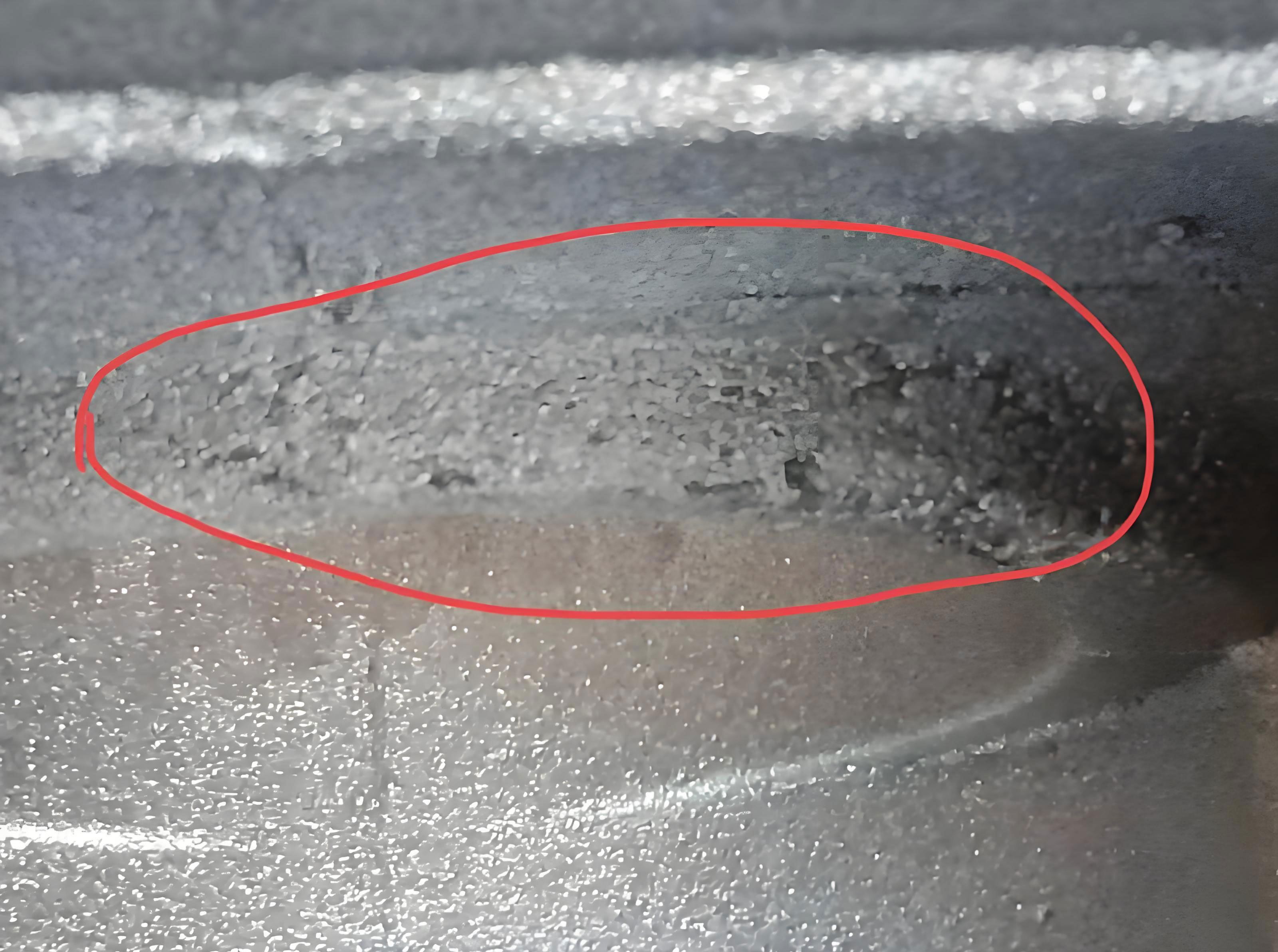
Part III: Mechanism and Prevention of Porosity in Casting
1. Mechanism of Pore Formation
Understanding the morphology of porosity in casting reveals its origin.
Dispersed, Round Porosity: This appears as small, spherical bubbles scattered throughout the casting. It is primarily caused by entrapped air during turbulent cavity filling. When the melt stream breaks into droplets or folds over itself (mistrust), it traps pockets of die air or lubricant vapor. Insufficient intensification pressure fails to sufficiently compress these bubbles.
Flattened or Shrinkage-Linked Porosity: This appears as larger, irregular, often interconnected pores with shiny surfaces. It often originates from a combination of gas and shrinkage. If a large volume of gas is entrapped, the subsequent intensification pressure ($P_i$) compresses it. The final pore volume $V_{pore}$ can be estimated from the ideal gas law, assuming isothermal compression from the initial trapped air volume $V_{air}$ at atmospheric pressure $P_{atm}$:
$$ V_{pore} = \frac{P_{atm} \cdot V_{air}}{P_i} $$
If $P_i$ is high enough, this compressed gas volume can be very small. However, if the feeding pressure is lost due to premature gate solidification, the compressed gas can expand or be unable to compensate for solidification shrinkage, leading to a combined pore. Very low intensification pressure results in large, uncompressed gas pockets.
2. Integrated Preventive Strategy
Mitigating porosity in casting requires a holistic approach addressing both melt and process:
A. Melt Control:
- Implement strict charge control: use dry, clean materials.
- Employ efficient degassing (rotary impeller) and verify effectiveness with reduced pressure tests (RPT).
- Maintain a tight temperature control band, minimizing superheat.
- Use dry, preheated tools and properly dried fluxes.
B. Process Parameter Optimization:
- Adopt the “low temperature, slow gate velocity” philosophy where feasible. This promotes laminar filling.
- Use the maximum practical intensification pressure the machine and die can sustain.
- Optimize slow and fast shot plunger speeds to minimize wave and air entrapment in the shot sleeve.
- Ensure proper timing switchover from filling to intensification.
C. Die and Tooling Contribution:
- Design gating systems for gradual acceleration and laminar flow.
- Incorporate effective venting at the last points to fill, using overflow wells.
- Utilize vacuum-assisted die casting to actively evacuate air from the cavity, dramatically reducing air-related porosity in casting.
- Maintain proper plunger tip-to-sleeve clearance to prevent backward blow-by of metal and air.
- Apply lubricants sparingly and evenly to avoid excessive vapor generation.
In conclusion, the battle against porosity in casting is won through meticulous attention to both metallurgical preparation and process dynamics. It is not solely a mold design issue but a systems engineering challenge. By rigorously controlling hydrogen content through disciplined melting and degassing, and by optimizing die temperatures, fill patterns, and intensification pressures to minimize air entrapment and maximize its compression, foundries can significantly reduce the incidence and severity of porosity in casting. This integrated approach is fundamental to producing aluminum die castings that meet the ever-increasing demands for structural integrity and performance in modern applications.