
As an engineer deeply involved in advanced manufacturing, I find the evolution of investment casting to be one of the most fascinating narratives in modern industrial production. Often termed a “near-net-shape” process, investment casting is unparalleled in its ability to produce components with exceptional dimensional accuracy, complex geometries, and superb surface finishes. This makes it the go-to method for critical parts across aerospace, automotive, medical, and defense sectors. A particularly demanding and growing application is the production of intricate, high-integrity components for robotics, such as joint housings and structural members. However, the very complexity that makes investment casting ideal for these parts also renders the process immensely challenging to optimize. Traditional development relies heavily on empirical trial-and-error, leading to prolonged lead times, material waste, and inconsistent quality. In my work, I have turned to numerical simulation technology as a transformative tool to de-risk, optimize, and accelerate the development of robust investment casting processes, especially for advanced materials like metal matrix composites.
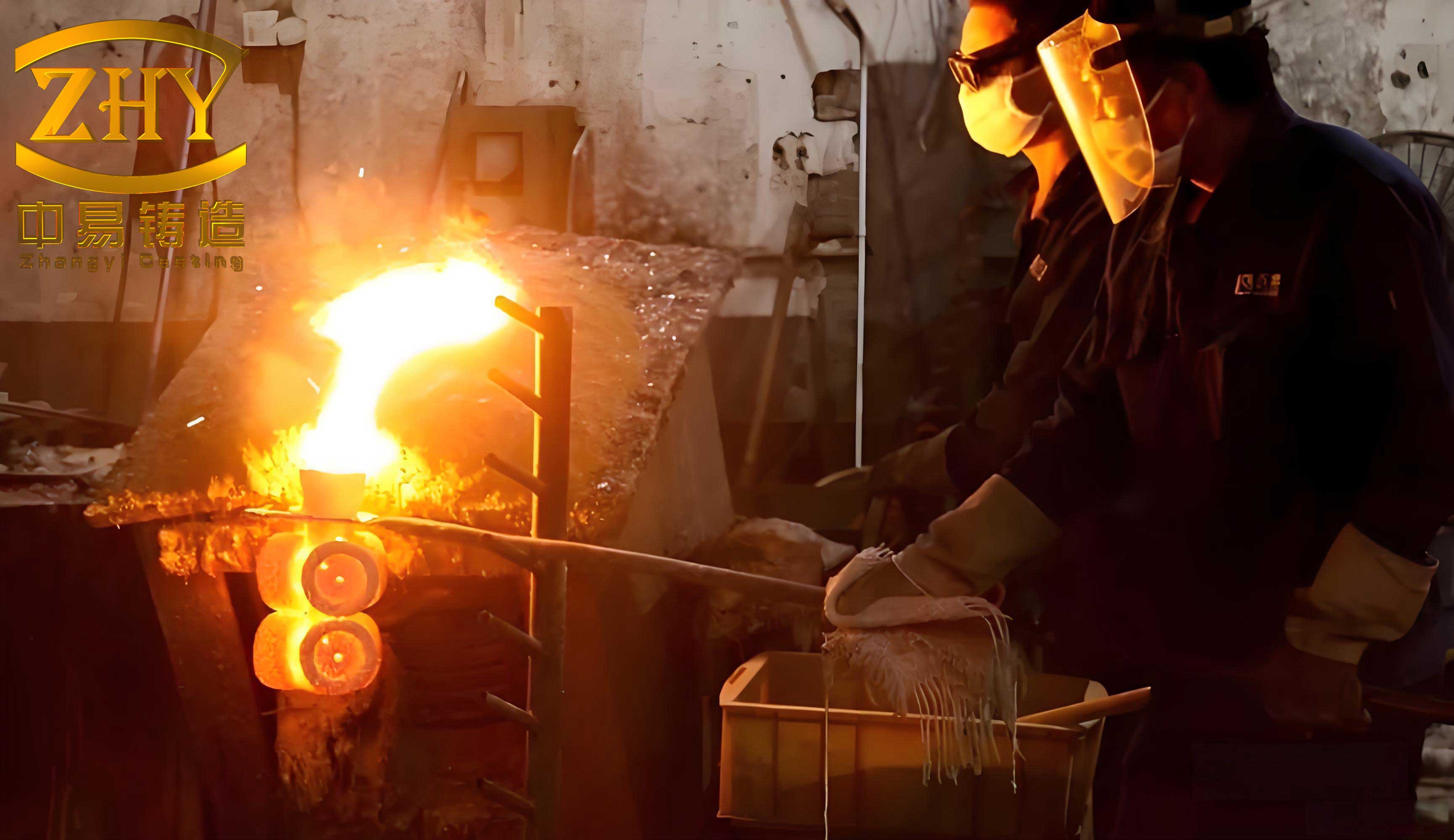
The core challenge in investment casting lies in controlling the solidification behavior of the molten metal within the ceramic shell. Defects such as shrinkage porosity, hot tears, mistruns, and inclusions are born from suboptimal thermal conditions during pouring and cooling. When engineering a process for a new alloy or, more complexly, a metal matrix composite (MMC), predicting these conditions intuitively is nearly impossible. This is where numerical simulation, specifically computational modeling of heat transfer, fluid flow, and stress, becomes indispensable. By creating a virtual twin of the entire investment casting process—from mold preheating and pouring to final solidification—we can probe the effects of different parameters without the cost of physical trials.
The foundational step for any meaningful simulation is the accurate definition of the material’s thermophysical properties. The fidelity of the simulation output is directly tied to the quality of this input data. In a recent project focused on casting a robotic joint component from a TiB2/A356 aluminum matrix composite, establishing this database was the first critical task. For MMCs, properties are not merely those of the base alloy; they are a function of the reinforcement phase’s type, size, shape, and volume fraction. The properties crucial for simulation include temperature-dependent functions for thermal conductivity ($k$), density ($\rho$), specific heat ($C_p$), viscosity ($\mu$), and enthalpy ($H$).
For a particulate-reinforced composite like TiB2/A356, we often apply composite mixing rules. A simplified form for thermal conductivity, assuming a uniform dispersion of particles, can be derived from models like the Maxwell-Eucken relation, though more complex micro-mechanical models may be used for greater accuracy. The key takeaway is that the incorporation of ceramic particles like TiB2 significantly alters the behavior of the melt. For instance, compared to the base A356 alloy, the composite typically exhibits reduced thermal conductivity and altered solidification enthalpy, while showing increased density and dynamic viscosity. Capturing these changes quantitatively is essential.
We developed and imported these tailored thermophysical properties for the TiB2/A356 composite (with 10% volume fraction) into the ProCAST simulation software’s database through its secondary development module. The table below summarizes a comparative analysis of key properties, highlighting the material’s distinct behavior.
| Thermophysical Property | Base A356 Alloy (Typical) | TiB2/A356 Composite (10 vol.%) | Impact on Investment Casting |
|---|---|---|---|
| Thermal Conductivity, $k$ | High | Reduced | Slower heat dissipation, potentially deeper thermal gradients. |
| Density, $\rho$ | ~2.68 g/cm³ | Increased | Higher mass for same volume, affecting feeding dynamics. |
| Dynamic Viscosity, $\mu$ | Relatively Low | Significantly Increased | Impaired fluidity, higher risk of mistruns in thin sections. |
| Solidification Enthalpy, $\Delta H_f$ | Base alloy value | Altered/Reduced | Changes the latent heat release profile during solidification. |
With the material database established, the next phase involves constructing the digital model of the process. The robotic joint component in question featured a complex geometry: a tall structure (122 mm) with a top cylindrical boss and a lower thin-walled cavity, with minimum wall thicknesses of around 4 mm. Such geometry is prone to isolated hot spots and premature solidification in thin sections, making it an excellent test case for simulation. Using CAD software, a 3D model of the part and a proposed top-gating investment casting system were created. This assembly was then imported into the simulation pre-processor (e.g., Visual-Mesh) where it was discretized into a finite element mesh. A mesh size of 2 mm was chosen for both the part and the gating system to balance computational accuracy and time. Material assignments were made: the cast part was defined with our custom TiB2/A356 data, the ceramic shell was assigned properties of a fused silica material, and appropriate interfacial heat transfer coefficients (HTC) were set. The initial process parameters were set based on standard A356 practice: a pouring temperature of 710°C, a mold preheat temperature of 300°C, and a moderate filling speed.
The governing equations solved during such a simulation are primarily the Navier-Stokes equations for fluid flow and the energy equation for heat transfer, incorporating phase change. The energy equation with phase change can be represented using the enthalpy method:
$$ \rho \frac{\partial H}{\partial t} + \rho \vec{u} \cdot \nabla H = \nabla \cdot (k \nabla T) + Q $$
where $H$ is the total enthalpy (sensible + latent), $\vec{u}$ is the velocity vector, $k$ is thermal conductivity, $T$ is temperature, and $Q$ represents other source terms. The fluid flow is coupled to this via temperature-dependent viscosity and buoyancy forces (Boussinesq approximation).
The initial simulation run revealed significant issues. The thin-walled sections cooled and solidified extremely rapidly, creating isolated liquid pockets in thicker regions and disrupting directional solidification from the part extremities toward the feeder. This classic scenario is a recipe for shrinkage porosity. The results were clear: the standard parameters were insufficient for this less-fluid, altered-solidification composite. The need for systematic optimization was evident.
To efficiently optimize the process, we employed a Design of Experiments (DoE) approach, specifically an orthogonal array (L9), to explore the main effects of three key investment casting parameters: Mold Preheat Temperature, Pouring Temperature, and Pouring Speed. Each parameter was tested at three levels.
| Simulation Run # | Mold Preheat Temp. (°C) | Pouring Temp. (°C) | Pouring Speed (m/s) | Key Outcome (Porosity Risk) |
|---|---|---|---|---|
| 1 | 300 | 700 | 0.6 | High |
| 2 | 300 | 720 | 0.8 | Medium-High |
| 3 | 300 | 740 | 1.0 | Medium |
| 4 | 400 | 700 | 0.8 | Medium |
| 5 | 400 | 720 | 1.0 | Low-Medium |
| 6 | 400 | 740 | 0.6 | Lowest |
| 7 | 500 | 700 | 1.0 | Medium |
| 8 | 500 | 720 | 0.6 | Low |
| 9 | 500 | 740 | 0.8 | Low-Medium |
Analyzing the nine simulation runs provided profound insights. A higher mold preheat temperature (400°C) significantly slowed the cooling rate of the thin sections, allowing them to remain “open” for feeding longer and promoting better thermal gradients. An elevated pouring temperature (740°C) directly counteracted the high viscosity of the composite, greatly improving mold filling completeness. However, a very high pouring speed (1.0 m/s) could induce turbulent flow and entrapped gas. A moderately slow speed (0.6 m/s), coupled with the higher temperatures, was found to promote a calm, progressive fill and ideal temperature gradients for directional solidification. Run #6 (400°C preheat, 740°C pour, 0.6 m/s speed) demonstrated the most favorable solidification profile, with a clear progression of the solidus front moving from the thin walls and top of the part back toward the feeder, minimizing isolated liquid pools.
While Run #6 suggested 740°C as optimal, further consideration of practical foundry safety margins and potential gas pickup led to a slight downward adjustment. Therefore, the final optimized parameters validated for physical trial were: Mold Preheat Temperature = 400°C, Pouring Temperature = 720°C, and Pouring Speed = 0.6 m/s. Furthermore, the simulation suggested adding an insulating sleeve to the feeder to extend its solidification time, enhancing its feeding efficiency.
The true test of any simulation lies in physical validation. A full investment casting process was executed for the robotic joint component using the optimized parameters. A medium-temperature wax was used to produce precise patterns. The ceramic shell was built via successive dipping in colloidal silica binder and stuccoing with fused silica sand, followed by dewaxing and firing to 1000°C. The TiB2/A356 composite was melted, degassed, and grain-refined using standard practices for aluminum MMCs. Crucially, to mitigate particle settling, the melt was subjected to vigorous mechanical stirring prior to and during the pour.
The cast component was subsequently examined using non-destructive testing (radiographic inspection) and destructive sectioning. The results were highly encouraging. Compared to earlier casts made with un-optimized parameters, the final part showed:
- Complete Fill: No mistruns or cold shuts were present in the complex thin-walled sections.
- Reduced Porosity: Radiographic analysis indicated a significant reduction in shrinkage porosity. Sectioned areas confirmed that any remaining porosity was finely dispersed and located in non-critical areas, a marked improvement from the large, clustered shrinkage cavities previously observed.
- Particle Distribution: Metallographic analysis revealed a relatively uniform distribution of TiB2 particles without severe agglomeration or sedimentation, attributable to the optimized filling dynamics and pre-pour stirring.
The convergence of simulation predictions and experimental outcomes confirmed the power and accuracy of the numerical model. This case study underscores a broader paradigm: numerical simulation is not merely a complementary tool but a central pillar in the modern investment casting workflow. Its applications extend far beyond parameter optimization for a single part. We are now leveraging this technology for:
- Gating and Riser Design: Rapidly iterating on feeder size, placement, and insulation/chill design to achieve soundness in first-run castings.
- Residual Stress and Distortion Prediction: Modeling the cooling process to predict warpage and lock in stresses, enabling corrective actions in the tooling or heat treatment stages.
- Alloy Development: Screening new alloy or composite formulations virtually by simulating their casting behavior before ever melting them, drastically reducing R&D costs.
- Process Window Definition: Establishing robust operating ranges for parameters, making the investment casting process more resilient to normal production variations.
Looking forward, the integration of numerical simulation with other Industry 4.0 technologies promises even greater leaps. Coupling casting simulation with additive manufacturing for shell or pattern production allows for the creation of conformal cooling channels or graded shell properties that were previously impossible. Furthermore, the concept of the “digital twin”—a live, data-connected virtual model of the casting process that updates with real-time sensor data from the foundry floor—represents the ultimate frontier. This would enable predictive quality control and real-time adaptive process control, pushing the yield and quality of investment casting to unprecedented levels.
In conclusion, the journey from a complex CAD model to a sound, high-performance investment cast component, especially one made from advanced materials like metal matrix composites, is fraught with metallurgical and physical challenges. Numerical simulation technology has emerged as the critical bridge across this gap. By enabling a virtual, risk-free exploration of the entire process physics, it transforms investment casting from an art reliant on experience into a science driven by predictive insight. It slashes development time and cost, enhances first-pass yield, and unlocks the potential for casting ever-more sophisticated geometries in next-generation materials. For engineers and foundries aiming to lead in precision manufacturing, mastering and integrating numerical simulation into the investment casting workflow is no longer an option; it is an imperative for future success.