
Based on extensive process research, repeated experimental trials, and systematic analysis, I successfully addressed the critical technical challenges involved in the vacuum investment casting of a kerosene pump low-pressure housing. This work encompassed the selection of raw materials, the validation of process equipment capabilities, and ultimately resulted in the development of a comprehensive methodology for producing large, complex-cavity components using vacuum investment casting technology. The process for creating these high-integrity shell castings is both intricate and demanding, requiring precise control at every stage to achieve the desired metallurgical and geometrical properties.
The component in question is a critical casting within a liquid oxygen-kerosene rocket engine. Its substantial size, utilization of a novel alloy grade, and exceptionally high-quality requirements rendered traditional casting methods inadequate. This project ventured into a largely unexplored technical domain within domestic manufacturing. While significant research exists globally on high-strength heat-resistant alloys and vacuum investment casting, it has predominantly focused on directionally solidified, near-net-shape blades for aero-engines, which are relatively simple in geometry. The systematic study of vacuum investment casting for large, geometrically complex, high-strength stainless steel components, as undertaken here, represents a significant technological advancement.
Process Scheme and Analysis
Casting Characteristics and Challenges
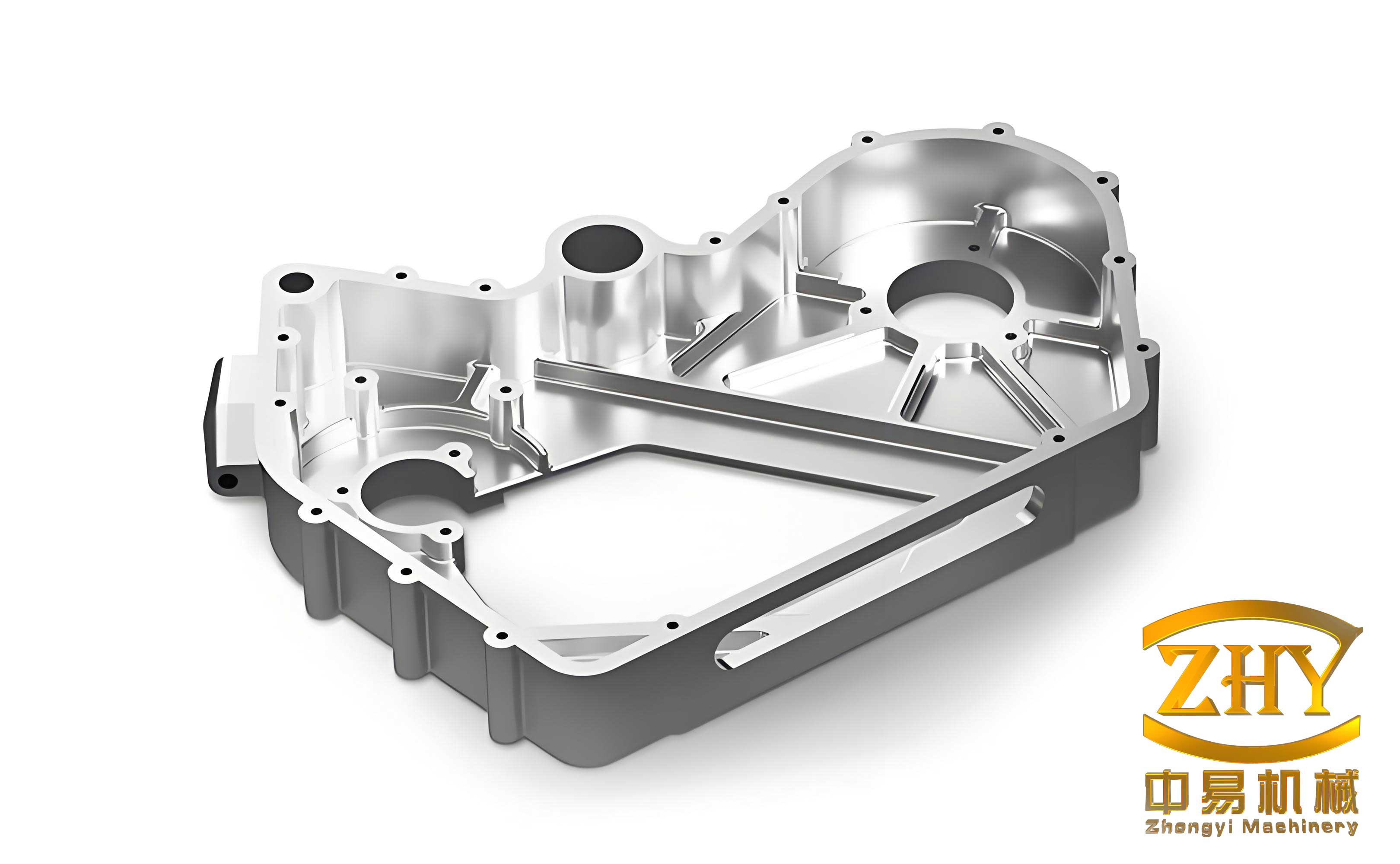
The kerosene pump housing has an overall envelope dimension of 345 mm x 300 mm x 280 mm, classifying it as a large-scale component in the realm of investment casting. Its internal cavity is complex, with varying cross-sections, high dimensional accuracy requirements, and highly non-uniform wall thickness. The wall thickness ranges from 45 mm at its thickest to a mere 6 mm at its thinnest. This disparity presents a high risk for defect formation during solidification. The primary challenges identified were:
- Cracking: Due to thermal stresses arising from uneven cooling.
- Misruns and Cold Shuts: In thin sections due to premature freezing.
- Porosity (Gas and Shrinkage): Entrapped gas from the process or alloy, and shrinkage cavities from inadequate feeding.
- Oxide Inclusions: Resulting from turbulence or insufficient protection during melting and pouring.
These potential defects necessitated a meticulously designed process scheme. The control of porosity and oxide inclusions, in particular, placed stringent demands on the melting process and equipment capabilities. The quality of the final shell castings is directly contingent upon managing these factors.
Wax Pattern Fabrication
Given the component’s size, complexity, and its status within the development phase (where design changes were probable), the conventional route of manufacturing metal dies was deemed unsuitable. It was time-consuming, costly, and inflexible to modifications. To ensure progress and flexibility, an alternative approach was adopted. A three-dimensional CAD model was first created and converted into an STL file format. After applying a comprehensive shrinkage allowance and adding anti-distortion/wax-pattern reinforcement ribs, the model was “sliced.” A rapid prototyping machine (AFS system) then built the pattern layer-by-layer using a laser to sinter thermoplastic powder. The resulting “green” pattern underwent de-powdering, wax infiltration, and precision finishing to produce the final master wax pattern. This method provided excellent dimensional accuracy and surface finish suitable for high-quality shell castings.
Determination of Process Parameters
Gating and Feeding System Design
Two primary gating system designs, referred to as Scheme A and Scheme B, were developed and tested to optimize mold filling and solidification feeding, crucial for defect-free shell castings.
Scheme A (Figure 1): This design prioritized a quiescent mold fill to minimize turbulence and oxide formation. It employed a combined bottom and top gating approach. A primary sprue fed metal to a lower ingate, while a secondary runner supplied an upper ingate. A significant riser was attached to the upper ingate to provide a thermal and metallurgical feed source for the upper sections of the casting, combating shrinkage porosity.
Scheme B (Figure 2): This scheme addressed a practical limitation of Scheme A. In Scheme A, the proximity of the central sprue to the casting created a narrow gap, making shell-building operations (slurry coating, stuccoing, drying) difficult and limiting the achievable shell thickness in that area, increasing the risk of shell fracture during pouring. Scheme B replaced the central sprue with a side-gating system, improving shell-building access and robustness.
In both schemes, additional feeding aids (chill pads or padding) were incorporated at strategic locations on the casting geometry to ensure a directional solidification path towards the risers.
Shell Building (Investing) Process
The dimensional accuracy and surface finish of the casting are fundamentally determined by the ceramic shell. A fully colloidal silica (silica sol) binder system was selected for both the face coat and backup coats to produce high-strength, high-fidelity molds. The process parameters were fine-tuned through experimentation.
Slurry Formulation: The powder-to-binder (P/B) ratio is critical. A higher P/B increases slurry viscosity and coating thickness but can reduce permeability. Two formulations were tested:
| Scheme | Face Coat P/B Ratio | Backup Coat P/B Ratio Range |
|---|---|---|
| Scheme 1 | 3.1 : 1 | 3.0 : 1 to 2.7 : 1 |
| Scheme 2 | 3.3 : 1 | 3.1 : 1 to 2.7 : 1 |
The goal for the face coat was excellent coverage and a smooth, non-dripping application on the wax pattern. For the backup coats, the objective was to build sufficient high-temperature strength to withstand metallostatic pressure and thermal shock during pouring, while maintaining acceptable “green” strength for handling and a low “fired” strength for easy shell removal post-casting.
Stuccoing Strategy: A graded stucco particle size distribution is essential to balance shell strength, permeability, and surface finish. The following sequence was established:
| Shell Layer | Stucco Material & Size (Mesh) | Primary Function |
|---|---|---|
| 1st Coat | Zircon Sand, 70/140 | Provides a smooth, refractory face against the metal. |
| 2nd Coat | Shangdian Sand, 60/80 | Transition layer. |
| 3rd & 4th Coats | Shangdian Sand, 20/40 | Builds intermediate strength. |
| 5th & 6th Coats | Shangdian Sand, 8/10 | Provides structural reinforcement. |
| 7th to 9th Coats | Shangdian Sand, 3/5 | Builds maximum shell strength and thermal mass. |
| 10th Coat | Sealer Slurry (No Stucco) | Seals the surface and improves handling strength. |
Drying between each coat was critical, with a minimum of 12 hours under controlled environment conditions (21-25°C, 50-70% RH). Air circulation (fans) was used to enhance drying efficiency. Prior to applying slurry from the 2nd to the 6th layers, the previous coat was lightly misted with a dilute silica sol solution to improve intercoat bonding—a key factor in creating robust shell castings.
Melting and Pouring Parameters
The vacuum melting process is the heart of achieving clean metal for high-performance shell castings. Three key parameter sets were defined for comparative trials, focusing on vacuum level, refining time, and pouring temperature. The governing equation for gas solubility (Sieverts’ Law) highlights the importance of vacuum:
$$[\%Gas] \propto K \sqrt{P_{gas}}$$
where $[\%Gas]$ is the concentration of dissolved gas (e.g., hydrogen, nitrogen), $K$ is a temperature-dependent equilibrium constant, and $P_{gas}$ is the partial pressure of the gas above the melt. A lower $P_{gas}$ (higher vacuum) leads to lower dissolved gas content, reducing gas porosity.
| Scheme | Vacuum Level (Pa) | Refining Time (min) | Pouring Temperature (°C) |
|---|---|---|---|
| Scheme I | 1.0 | 10 | 1580 |
| Scheme II | 5.0 | 15 | 1550 |
| Scheme III | 1.0 | 20 | 1550 |
The refining time allows for degassing and flotation of non-metallic inclusions. Pouring temperature is a critical compromise: too low risks misruns, too high promotes excessive metal-mold reaction, grain growth, and shrinkage.
Material Selection
Alloy Development
The specific high-strength stainless steel alloy was developed in collaboration with a specialized metallurgical research institute. The technical specifications demanded vacuum melting to align with our casting process. Key material property requirements, such as yield strength ($\sigma_y$), ultimate tensile strength ($\sigma_{uts}$), elongation ($\delta$), and impact toughness, were formally stipulated to ensure the resulting shell castings met the engine’s mechanical demands.
Non-Metallic Materials
The selection of consumables directly impacts shell performance and casting surface quality. A rigorous evaluation was conducted:
- Silica Sol: Products from several manufacturers were tested. The binder from Hebei province was selected for its consistent viscosity, stability, and binding performance.
- Zircon Flour & Sand: High-purity Australian zircon was chosen, with a guaranteed $ZrO_2 + HfO_2$ content >66.5%, essential for chemical inertness and high refractoriness against the molten steel.
- Shangdian Sand (Fused Silica): A domestic product was used for backup coats. Its low thermal expansion coefficient contributes to good shell thermal shock resistance.
- Additives: A proprietary wetting agent and n-octanol (defoamer) were used to optimize slurry rheology and eliminate air bubbles during mixing, which could otherwise create weak spots in the shell castings.
Detailed Process Flow and Implementation
The complete manufacturing sequence for these complex shell castings is as follows:
- Pattern Assembly: Wax patterns, gating systems, and risers are assembled into a cluster.
- Shell Building: The cluster undergoes the multi-layer dipping, stuccoing, and drying process as defined.
- Dewaxing: The shell mold is subjected to steam or flash firing to remove the wax pattern.
- Shell Firing:
- Low-Temperature Firing: ~1000°C to develop handling strength and allow for inspection/repair.
- High-Temperature Firing: Ramped to ~1150°C and held for several hours to achieve maximum ceramic sintering and temperature stability before pouring. The shell must reach a temperature high enough to prevent thermal shock from the metal but not so high as to lose strength. This is often evaluated by the hot modulus of rupture (HMOR): $$HMOR = \frac{3FL}{2bd^2}$$ where $F$ is the fracture load, $L$ is the support span, $b$ is the shell width, and $d$ is the thickness. A high HMOR is desired for large shell castings.
- Molding & Pouring: The fired shell is placed in a flask and surrounded with loose sand or shot for support. It is then transferred to the vacuum casting furnace. The alloy is melted, refined under vacuum, and poured according to the established parameters.
- Cooling & Knock-out: The casting is allowed to solidify and cool within the vacuum furnace for a prescribed time (e.g., 20+ minutes) to prevent oxidation. The shell is then mechanically removed.
- Post-Casting Processing:
- Cut-off: Removal of gating and riser systems.
- Non-Destructive Testing (NDT): Radiographic (X-ray) inspection to detect internal defects like shrinkage or porosity. Fluorescent Penetrant Inspection (FPI) for surface crack detection.
- Hot Isostatic Pressing (HIP): Used to close internal shrinkage porosity and homogenize the microstructure, dramatically improving fatigue life and ductility. The process applies high isostatic pressure (e.g., 100 MPa) at elevated temperature (e.g., 90% of solidus) for several hours.
- Heat Treatment: A tailored solution annealing and aging cycle is applied to achieve the specified mechanical properties.
- Final Inspection: Dimensional check, final NDT, and certification.
Experimental Trials, Results, and Analysis
Surface Quality
The surface finish of the castings was predominantly excellent, a direct result of the controlled shell-building process. The fine zircon face coat and meticulous slurry application yielded shell castings with smooth surfaces and sharp replication of the pattern detail. This minimizes subsequent machining allowance and improves fatigue initiation resistance.
Internal Quality and Mechanical Performance
The experimental phase revealed significant insights, though it was constrained by equipment limitations. The primary vacuum induction furnace (model ZGJB 1.4-250-2.5) suffered from inconsistent ultimate vacuum capability and an inoperative temperature measurement system during much of the trial period. This directly impacted the two most critical melting parameters—vacuum level and pouring temperature—hindering the full optimization envisioned in Schemes I-III.
Consequently, radiographic inspection of initial castings revealed a higher than acceptable level of internal shrinkage porosity and occasional gas pores. This necessitated the mandatory inclusion of Hot Isostatic Pressing (HIP) in the process flow as a remedial consolidation step. Despite these foundry-related defects, the intrinsic mechanical properties of the alloy were excellent. Test coupons sectioned from the risers of the shell castings met and often exceeded all specified minimum values for tensile strength, yield strength, and elongation after HIP and heat treatment.
Analysis of Process Decisions
Through iterative trials, the following conclusions were drawn:
1. Shell-Building Parameters: Based on visual assessment of shell surface smoothness, coating uniformity, and the empirical strength during dewaxing and knockout, Scheme 1 for slurry P/B ratios (Face coat: 3.1, Backup: 3.0-2.7) was selected as it provided a better balance of flowability, coating thickness, and final shell strength for these large shell castings.
2. Gating System Design: A comparative analysis of internal soundness from radiographs indicated that Scheme A (combined top/bottom gating) provided marginally better feeding to the upper sections of the casting, resulting in fewer isolated shrinkage cavities. While Scheme B offered better shell-building practicality, the priority of internal quality led to the selection of Scheme A, with modifications to improve shell access around the central sprue.
3. Melting Parameters: A definitive optimal set from Schemes I-III could not be conclusively determined due to equipment issues. However, the trials strongly underscored the theoretical importance of:
- Ultra-High Vacuum (<1 Pa): For effective degassing per Sieverts’ Law.
- Sufficient Refining Time (>15 min): For inclusion flotation and dissolution.
- Controlled Pouring Temperature: A lower temperature within the fluidity range (e.g., 1550-1560°C) is generally preferred to reduce shrinkage and grain size, provided the gating system design ensures complete filling. The filling time must be less than the critical solidification time of the thin sections, which can be approximated by Chvorinov’s Rule: $$t = B \left(\frac{V}{A}\right)^n$$ where $t$ is solidification time, $V$ is volume, $A$ is surface area, $B$ is a mold constant, and $n$ is an exponent (typically ~2).
The primary barrier to achieving consistent, high-integrity shell castings was identified as equipment capability, not fundamental process flaws. The process methodology developed is sound but requires a furnace with reliable high-vacuum pumping (<0.5 Pa) and accurate temperature control to realize its full potential. Further work on optimizing the thermal gradient within the mold through strategic use of insulating or exothermic materials in the risers could also enhance directional solidification.
Conclusion
The research successfully developed a viable vacuum investment casting process for the large, complex kerosene pump low-pressure housing. By establishing strict controls for environmental conditions, shell-building parameters, and theoretical melting practice, and by selecting high-grade raw materials, the foundation for producing high-quality shell castings was laid. A robust process flow incorporating essential post-casting treatments like HIP was defined. Although equipment limitations during experimentation prevented the full optimization of melting parameters, the project conclusively demonstrated that vacuum investment casting is a suitable manufacturing route for such demanding components. The work provides a comprehensive technical blueprint and highlights that the consistent production of premium shell castings of this scale and complexity hinges on three pillars: a scientifically designed and controlled process, high-quality materials, and crucially, production equipment with guaranteed and reliable performance specifications, particularly in terms of vacuum level and thermal management.