
In the contemporary foundry industry, as a steel castings manufacturer, I recognize that airborne haze and turbidity are unavoidable in production spaces like factories and workshops. To enhance and improve the working environment, achieving first-class casting operations and optimal production conditions requires the integration of advanced, rational ventilation and dust removal systems. A scientifically sound environmental design for factories, including technological upgrades, can yield multiplier effects. Therefore, the application of well-designed ventilation and dust removal systems to achieve excellent environmental outcomes is closely tied to the process design and calculations of these systems.
In foundry workshops, the working environment is characterized by high dust concentrations, particularly in areas such as sand processing, shakeout, and melting departments. Additionally, processes like molding, core-making, cleaning, and pouring emit varying levels of dust, heat flow diffusion, and harmful gases, causing significant environmental pollution. Thus, it is essential to design and configure effective ventilation, exhaust, and dust removal devices to prevent the spread of dust and harmful gases, thereby avoiding environmental contamination. As steel casting manufacturers, we must prioritize these systems to maintain productivity and worker safety.
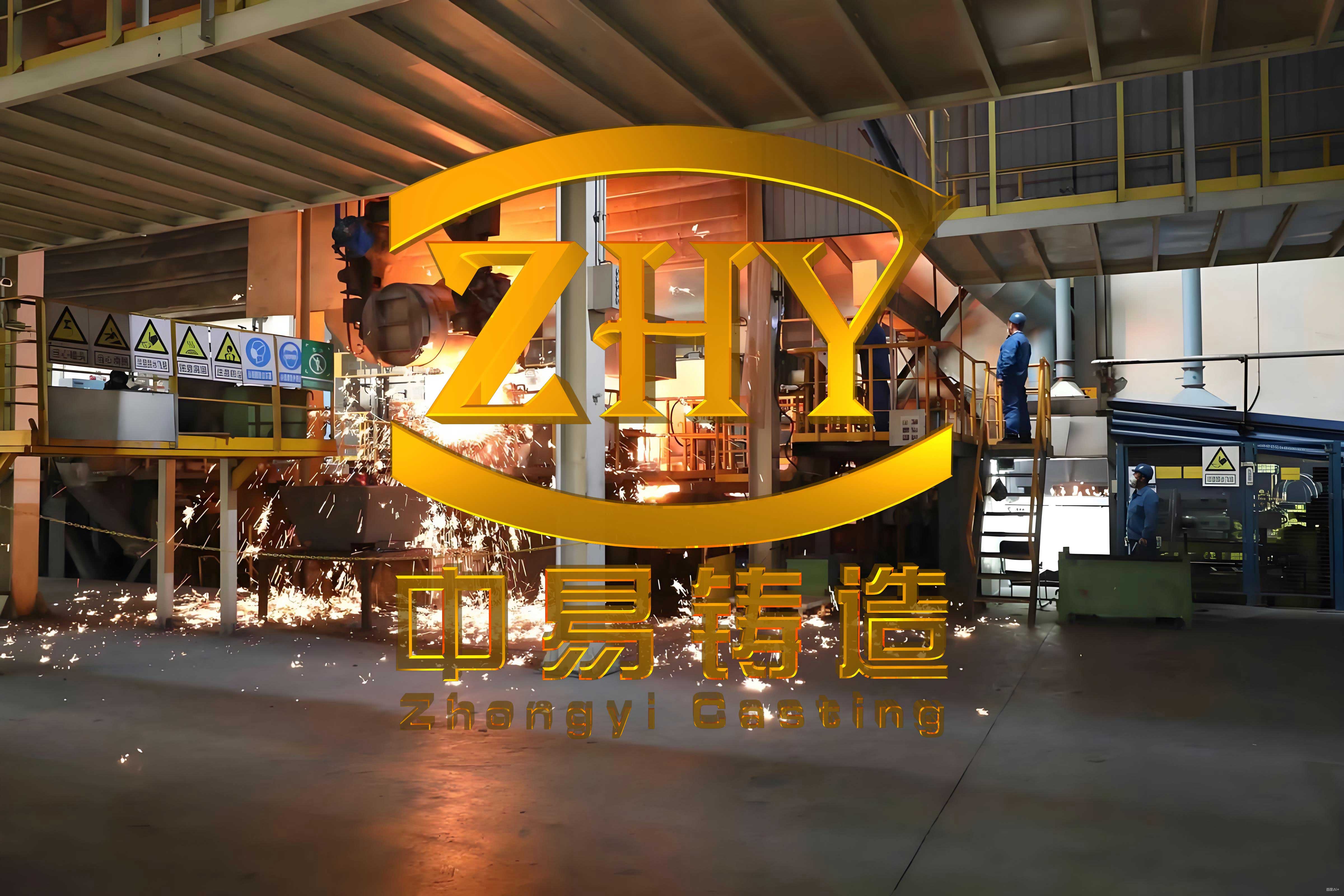
This article focuses on exploring and researching the process design and calculation of ventilation and dust removal systems in foundry workshops, with an emphasis on practices adopted by China casting manufacturers. We will delve into the fundamental concepts of dust formation, its properties, generation, diffusion, and control methods, incorporating tables and formulas to summarize key points.
General Concepts of Dust Formation in Foundry Workshops
Due to the unique production tasks in modern foundry workshops, the variety of casting processes, equipment, and raw materials is complex and diverse, leading to differing dust properties. To correctly understand and control the hazards of various dust types, we must first comprehend their intrinsic characteristics. As a steel castings manufacturer, I classify dust based on its source and essential properties.
Dust in foundries can be divided into inorganic and organic categories. Inorganic dust primarily originates from molding materials like new sand, old sand, clay powder, graphite powder, coal powder, and red mud, as well as from furnace materials such as pig iron, scrap steel, coke, returns, limestone, and iron ore. Organic dust mainly includes organic binders like resins, sodium silicate, hardeners, synthetic fats, tung oil, and mineral oil residues, along with fumes and residue dust from drying furnaces, melting furnaces, and pouring processes.
In terms of essential properties, dust exhibits physical and chemical characteristics. Physical properties include specific gravity, dispersion, electrical resistance, combustibility, explosiveness, wettability, and adhesion, with dispersion being a key focus. Chemical properties involve the composition, where free or combined SiO₂ poses the greatest risk to human health, as residues can cause silicosis. The use of chemical binders, particularly furan resins and catalysts like dimethylamine, is harmful. For steel casting manufacturers, understanding these properties is crucial for effective dust management.
| Dust Category | Sources | Key Characteristics |
|---|---|---|
| Inorganic Dust | Sand, clay, graphite, coal, iron ores, limestone | High specific gravity, variable dispersion, potential for explosiveness |
| Organic Dust | Resins, binders, oils, fumes from furnaces | Combustible, may contain harmful chemicals like SiO₂ |
The generation of dust in modern foundry workshops can be categorized into mechanical operation processes and physico-chemical processes. Mechanical processes involve dust from crushing, screening, drying, and transporting materials like sand and furnace charges, as well as from equipment operation in molding, pouring, sand handling, shakeout, and cleaning. Physico-chemical processes include dust from melting furnaces such as cold-blast cupolas, hot-blast cupolas, electric arc furnaces, and induction melting furnaces, along with dust from front-end treatments.
Dust dispersion in foundry workshops results from continuous actions: primary dusting and secondary airflow. Primary dusting occurs due to high-speed inertial objects or tangential airflow, leading to localized dust-laden air. For instance, grinding with a sandwheel induces directional dust flow. Secondary airflow, caused by irregular air currents from equipment vibration, material falling, or compressed air, spreads the dust to surrounding areas. This combination is a core issue in workshops, similar to urban haze problems. As steel casting manufacturers, we must address both aspects to control pollution effectively.
Environmental Dust Concentration Monitoring
According to the requirements for modern foundry workshops, it is necessary to monitor dust concentrations in the workshop and during no-load and load test runs of main process equipment. Inspections and detections should follow national standards, such as the latest version of regulations for foundry dust prevention, to assess compliance. For China casting manufacturers, adhering to these standards ensures a safe working environment and regulatory compliance.
Dust Control in Foundry Workshops
To prevent dust diffusion and environmental pollution in various departments, dust sources must be strictly controlled. This involves reducing dusting intensity and managing secondary airflow carrying dust. Common measures include wet dust suppression, negative pressure dust reduction, and the use of sealing hoods for source control.
Dust source control is critical because process equipment and sealing hoods often have high-pressure zones due to material-carrying airflow and induced airflow, causing dust-laden air to escape through gaps. By extracting air from equipment interiors or hoods, high-pressure zones can be converted to negative pressure, preventing dust escape. For open operations or equipment where sealing hoods are not feasible, such as vibrating shakeouts or electric arc furnaces, open suction hoods with air curtains are used to control dust sources. As a steel castings manufacturer, I emphasize the importance of these techniques in maintaining clean air.
The basic principles of dust source control include adopting advanced casting processes and technical equipment to reduce dusting intensity, improving workshop building structures and process flow designs to enhance air circulation, utilizing rational ventilation and dust removal systems with wet and negative pressure methods, optimizing material handling to prevent secondary dust dispersion, and employing open suction hoods in high-dust areas to create negative pressure and directional dust collection. These principles are widely implemented by steel casting manufacturers to achieve efficient dust management.
Wet Dust Suppression
Wet dust collectors use water to separate dust from gases, operating on two principles: washing action when dust-laden gas impacts water, and spray methods where dust collides with water droplets to form larger particles for separation. Additionally, gravity settling and inertial effects enhance efficiency. Wet dust collectors offer higher efficiency than mechanical ones, with simple structures and ease of use. They are suitable for high-temperature gases, providing cooling, and are effective for humid, sticky dust. However, they produce wastewater and sludge requiring secondary treatment, are unsuitable for oily or water-hardening dust, and necessitate corrosion protection for equipment. For China casting manufacturers, weighing these pros and cons is essential in system design.
Ventilation and Exhaust in Foundry Workshops
Ventilation in foundry workshops should fully utilize natural ventilation conditions. In technological upgrades, natural ventilation is an economical and environmentally friendly measure to improve working conditions. Only when natural ventilation is insufficient should other ventilation and cooling devices be considered.
Natural ventilation relies on the natural gravity from air density differences between inside and outside or wind forces, providing ventilation exchange. The incoming air must meet hygiene standards and compensate for air exhausted by process equipment and ventilation systems. The main air intake side of the workshop should form a 60°–90° angle with the summer dominant wind direction, avoiding direct western sun exposure. The design should maximize natural ventilation effects while minimizing the spread of harmful substances due to secondary airflow. As steel casting manufacturers, we integrate these considerations into our plant layouts.
For exhaust systems, local exhaust is most effective in areas emitting harmful substances. The choice between natural or mechanical exhaust depends on process equipment, operational conditions, and pollutant characteristics. Independent ventilation and exhaust systems should be set up for different processes or production units. Local exhaust systems must not mix with general ventilation to prevent contamination. Airborne concentrations of harmful gases and dust in work zones must comply with national environmental standards. If natural or local ventilation is inadequate, mechanical comprehensive air exchange systems are necessary. These practices are standard among China casting manufacturers to ensure air quality.
Natural Ventilation Calculations
Various methods exist for natural ventilation calculation; here, I describe the commonly used “thermal pressure calculation method,” which considers only thermal pressure effects, ignoring wind pressure. Calculations typically assume summer conditions.
The required air exchange rate is given by:
$$ G = \frac{m \cdot Q}{0.24 \Delta t} + (1-m) \cdot G_{cp} $$
where \( G \) is the air exchange rate in kg/h, \( Q \) is the total heat emitted in the workshop in kcal/h, \( m \) is the effective heat coefficient in the work zone, \( G_{cp} \) is the air directly exhausted from the work zone in kg/h, and \( \Delta t \) is the temperature difference between the indoor work zone and outdoor air, i.e., \( \Delta t = t_n – t_w \) in °C. Typically, \( \Delta t \) ranges from 3–5°C, but can be 7°C or even 10°C for high heat emission. If temperatures exceed hygiene standards, local ventilation cooling measures are needed.
The thermal pressure in the workshop is calculated as:
$$ \Delta H = h (\gamma_w – \gamma_p) $$
where \( \Delta H \) is the thermal pressure in mm H₂O, \( h \) is the distance from the air inlet center to the exhaust outlet center in m, \( \gamma_w \) is the outdoor air density in kg/m³, and \( \gamma_p \) is the exhaust outlet air density in kg/m³.
The pressure loss through ventilation openings is:
$$ \Delta H = \zeta \cdot \frac{v^2 \gamma}{2g} $$
where \( \Delta H \) is the pressure loss in mm H₂O, \( \zeta \) is the local resistance coefficient for inlet or outlet, \( v \) is the air velocity in m/s, \( \gamma \) is the air density in kg/m³, and \( g \) is the gravitational acceleration in m/s².
A simplified estimate for exhaust volume when only thermal pressure acts and inlet/outlet areas are equal is:
$$ q = 420 \sqrt{H \cdot \Delta t_p} $$
where \( H \) is the distance from inlet to outlet center in m, and \( \Delta t_p \) is the average temperature difference between indoor and outdoor air in °C. These calculations are vital for steel casting manufacturers to optimize natural ventilation.
Dust Removal Equipment in Foundry Workshops
In foundry sand processing, issues like hot, humid old sand, sand cooling, and sand reuse necessitate reasonable dust collectors, systems, and heat air treatment devices to avoid dust and moisture affecting system performance, such as bag condensation. As a steel castings manufacturer, I commonly use dry dust removal equipment, including bag filters and cyclone separators.
Bag dust collectors leverage several effects: screening filtration for larger particles, diffusion adsorption for sub-micron particles, gravity settling for coarse dust, and electrostatic effects for charged particles. Modern designs use low filtration speeds of 1.5–2.0 m/min, water-repellent filter bags, internal-to-external high-pressure cleaning, pulse interval control, and temperature sensors to maintain air above dew point, preventing condensation and ensuring efficiency. These features make them popular among China casting manufacturers for fine dust separation.
Cyclone dust collectors utilize centrifugal force to separate dust from rotating气流, with forces 5–2500 times greater than gravity, offering good efficiency, especially for high-density dust. They are efficient, widely used, and require minimal maintenance. Common types include CLP/B, CLK, XZZ, and XD-1 low-resistance cyclones. For high-dust equipment like vibrating shakeouts or sand regenerators, low-resistance cyclones serve as primary dust removal stages, pre-collecting coarse dust and condensing moisture to protect secondary bag filters.
| Equipment Type | Working Principle | Efficiency | Applications |
|---|---|---|---|
| Bag Filter | Filtration through bags, using screening, diffusion, gravity, electrostatic effects | High for fine particles | High-temperature areas, fine dust separation |
| Cyclone Separator | Centrifugal force separation | Good for coarse particles | Primary dust removal, sand processing |
| Gravity Settler | Gravity settling of large particles | Low, for particles >40μm | Preliminary dust control |
Process Design and Calculation of Dust Removal Systems
Based on design principles for modern foundry production lines, I establish rational ventilation and dust removal system diagrams according to the distribution of dust-emitting process equipment in various departments. This involves determining exhaust air volumes for each dust point, defining dust hood control forms, and identifying pipeline connections like elbows, tees, reducers, square-to-round adapters, caps, and lengths for proper process design and layout.
For duct calculation, first, determine system air volume additional coefficients: duct leakage additional coefficient \( \alpha_1 = 1.1 \) (10% of total suction air volume), and dust collector leakage additional coefficient \( \alpha_2 = 1.1 \) for pulse bag filters. The resistance additional coefficient \( \beta \) is typically 1.1–1.15 (10–15% of total system resistance).
The dust collector air volume is \( Q_{\text{dust}} = \alpha_1 \times Q_{\text{total}} \), and the fan air volume is \( Q_{\text{fan}} = \alpha_1 \times \alpha_2 \times Q_{\text{total}} \). The fan pressure is:
$$ H_{\text{fan}} = (H_{\text{duct}} + H_{\text{dust}}) \times \beta $$
where \( H_{\text{duct}} \) is the total duct resistance and \( H_{\text{dust}} \) is the dust collector resistance. \( Q_{\text{total}} \) is the total system air volume.
In duct design, balance resistance across suction points, ensure ducts do not accumulate dust, minimize air velocity to reduce resistance and wear, and avoid excessive bends. For systems with over five suction points, use manifold forms with air velocity not exceeding 5 m/s. Circular ducts are preferred, with bend curvature radii greater than duct diameter (R/D > 1.0). As steel casting manufacturers, we adhere to these guidelines for efficient system performance.
System duct resistance calculation accounts for frictional and local resistance when dust-laden air passes through ducts. Frictional resistance for circular ducts is:
$$ H = \frac{v^2 \gamma L}{2g} \cdot \frac{\lambda}{D} $$
where \( \lambda \) is the friction coefficient, \( \gamma \) is air density in kg/m³, \( v \) is air velocity in m/s, \( g \) is gravitational acceleration in m/s², \( D \) is duct diameter in m, and \( L \) is duct length in m.
Local resistance is:
$$ h = \zeta \cdot \frac{v^2 \gamma}{2g} $$
where \( \zeta \) is the local resistance coefficient for components like hoods, elbows, tees, and caps.
Total duct resistance is:
$$ \sum H = \frac{v^2 \gamma}{2g} \left( \sum \frac{\lambda L}{D} + \sum \zeta \right) $$
By calculating these resistances and balancing them through duct diameter adjustments, we optimize system design. China casting manufacturers often use these methods to ensure effective dust control.
Conclusion
In summary, the design and calculation of ventilation and dust removal systems are paramount for modern foundry operations. As a steel castings manufacturer, I emphasize the importance of integrating advanced technologies, monitoring environmental conditions, and applying scientific principles to control dust and ensure a healthy workplace. By leveraging natural ventilation, precise calculations, and efficient equipment like bag filters and cyclones, we can achieve significant improvements in air quality. China casting manufacturers are at the forefront of adopting these systems, contributing to sustainable and productive casting processes. Continuous innovation in process design will further enhance the effectiveness of ventilation and dust control, supporting the growth of the global steel castings industry.