
In the field of mining machinery, high manganese steel castings serve as critical components that endure high stress and severe wear. The selection of materials and optimization of processing techniques for these high manganese steel castings have always been a focal point of research. High manganese steel is renowned for its excellent wear resistance, impact toughness, and remarkable work-hardening capability, making it one of the preferred materials for耐磨铸件 in mining equipment. However, the combination of high hardness and toughness in high manganese steel castings poses significant challenges in traditional cutting processes, such as high cutting forces, rapid tool wear, and difficulties in controlling surface quality. These issues not only reduce processing efficiency but also increase production costs, thereby limiting the further enhancement of mining machinery performance. Vibration cutting technology, as an advanced machining method, introduces high-frequency vibrations during the cutting process to effectively improve cutting conditions, reduce cutting forces and thermal effects, and enhance machining accuracy and surface quality. Therefore, this study focuses on the vibration cutting methods for high manganese steel castings in mining machinery, aiming to overcome these challenges and optimize the manufacturing process.
The design of a specialized processing apparatus is crucial for the vibration cutting of high manganese steel castings in mining machinery. Considering the specific machining requirements of these components, I have developed an ultrasonic vibration cutting device that comprises an ultrasonic generator, a transducer, a horn, a cutting tool, and other essential components. The ultrasonic generator, sourced from a reputable research institute, operates at a voltage of 220 kV with an output frequency of (25 ± 1) kHz and features automatic frequency tracking capability. For the transducer, I selected high-performance piezoelectric ceramic materials due to their superior electromechanical coupling properties and high energy density, enabling efficient conversion of electrical energy into high-frequency mechanical vibrations. The horn, a key component for amplitude transformation, is designed based on the relationship between its length and the wavelength, expressed as: $$ l = k \gamma $$ where \( l \) is the horn length in meters, \( \gamma \) is the wavelength in meters, and \( k \) is an arbitrary integer. In the device structure, I connected a stepped horn to the transducer via bolts, allowing for amplitude adjustment by varying the horn length to maximize the utilization of vibrational energy. To address the high hardness and wear resistance of high manganese steel castings, I fabricated a first-mode cutting tool using high-performance hard alloy materials. This tool incorporates a bending vibration blade, whose natural frequency \( P \) is given by: $$ P = \frac{\mu}{2\pi L} \sqrt{\frac{E J}{\rho S}} $$ where \( \mu \) is the blade vibration coefficient, \( L \) is the length of the bending vibration blade in mm, \( S \) is the cross-sectional area in mm², \( E \) is the modulus of elasticity, \( J \) is the moment of inertia of the cross-section in mm⁴, and \( \rho \) is the density of the blade material in kg/m³. The tool is attached to the horn using a threaded connection method, forming a resonant system for casting processing. Through the precise integration of these key components, I have successfully designed the ultrasonic vibration cutting apparatus, providing a solid foundation for the subsequent machining of high manganese steel castings in mining machinery.
Generally, high manganese steel exhibits high toughness, significant work-hardening capacity, and outstanding wear resistance, which can lead to severe work-hardening, elevated cutting temperatures, and accelerated tool wear during vibration cutting. Therefore, to ensure the effective implementation of the aforementioned device for processing high manganese steel castings, it is essential to establish optimal machining parameters. First, the cutting speed is a critical parameter influencing cutting force, temperature, and tool wear. Taking into account the material properties and vibration parameters, I estimate the cutting speed using the following formula: $$ V = 2 \pi F f $$ where \( V \) is the cutting speed in m/s during the vibration cutting of high manganese steel castings, \( F \) is the amplitude in meters, and \( f \) is the vibration frequency in Hz. This formula incorporates vibration frequency and amplitude to ensure the smooth progression of the vibration cutting process at the calculated speed. For high manganese steel, due to its pronounced work-hardening phenomenon, the depth of cut should be appropriately increased to penetrate the hardened layer while avoiding excessive values that could cause a sharp rise in cutting force and tool damage. I control the vibration cutting depth for high manganese steel castings within the range of 10 to 30 μm. In the vibration cutting of high manganese steel castings, the feed rate must balance processing efficiency and tool wear. Excessively high feed rates increase cutting forces and heat, accelerating tool wear, while overly low rates result in inefficient processing. Thus, I set the feed rate for high manganese steel castings between 0.1 and 0.15 mm/rev. To summarize these parameters, I present the following table:
| Parameter | Value Range |
|---|---|
| Cutting Speed (V) | Calculated via \( V = 2 \pi F f \) |
| Cutting Depth | 10 – 30 μm |
| Feed Rate | 0.1 – 0.15 mm/rev |
When applying the ultrasonic vibration cutting apparatus to machine high manganese steel castings, precise control is essential. First, to achieve accurate cutting, I establish a cutting trajectory equation based on the geometric characteristics of the tool in the ultrasonic vibration cutting device and the material properties of the high manganese steel castings. Taking an arbitrary point O on the surface of the high manganese steel casting as the origin, I set up a Cartesian coordinate system where the X-axis is opposite to the cutting direction and the Y-axis is opposite to the depth of cut direction. Given the cutting speed \( V \), feed rate \( V_0 \), cutting depth \( H \), and elliptical trajectory amplitude parameters, the elliptical trajectory equations for the tool tip are derived as: $$ X(t) = D \cos(\omega t) + V_0 t $$ $$ Y(t) = h \sin(\omega t) + H $$ where: $$ \omega = 2\pi p $$ $$ D = \frac{R}{Z} $$ and \( D \) is the cutting axis length in mm, \( \omega \) is the angular vibration frequency in rad/s, \( h \) is the depth axis length in mm, \( R \) is the circumferential length in m, \( Z \) is the machine tool spindle speed in rpm, \( r \) is the radius of the high manganese steel casting in m, and \( p \) is the elliptical vibration frequency in Hz. Next, to transform the continuous cutting trajectory into a practical sequence of discrete control points, I discretize the elliptical vibration trajectory. By selecting an appropriate time step \( \Delta t \), the continuous time \( t \) is divided into a series of discrete time points: $$ t_m = m \Delta t $$ where \( t_m \) is the discrete time point and \( m \) is a natural number. At each discrete time point, the corresponding \( X(t_m) \) and \( Y(t_m) \) are calculated using equations (4) and (5), yielding the control point sequence for the elliptical vibration trajectory. After obtaining this sequence, I further decompose the elliptical trajectory into a superposition of simple harmonic motions using the Discrete Fourier Transform (DFT) method to determine the excitation amplitudes for each harmonic order. DFT converts discrete signals in the time domain into frequency domain representations, revealing the frequency components and their corresponding amplitudes and phase information. For the X and Y components of the elliptical trajectory, the DFT decomposition expressions are as follows: $$ X_N = \sum_{i=0}^{M-1} X_i e^{-j 2\pi N i / M} $$ $$ Y_N = \sum_{i=0}^{M-1} Y_i e^{-j 2\pi N i / M} $$ where \( X_N \) is the amplitude component of the elliptical cutting trajectory on the X-axis in meters, \( Y_N \) is the amplitude component on the Y-axis in meters, \( N \) is the frequency index in Hz, \( X_i \) is the i-th control point on the X-axis, \( Y_i \) is the i-th control point on the Y-axis, \( M \) is the total number of control points, and \( j \) is the imaginary unit. Through this computation, I obtain the amplitudes of each harmonic on the X and Y axes, which directly reflect their contributions to the elliptical trajectory. Finally, since the ultrasonic vibration cutting device requires vibrations of specific frequencies and amplitudes to drive the tool, I convert these amplitude data into excitation signals suitable for the control system. Considering that the elliptical trajectory is synthesized from multiple simple harmonic motions, the excitation amplitude control sequence \( Q_N \) should comprehensively account for the contributions of each harmonic and may require adjustments based on system characteristics, as expressed by: $$ Q_N = \sum_{N} W_N (x_N^2 + y_N^2)^{1/2} $$ where \( Q_N \) is the excitation amplitude control sequence and \( W_N \) is the weighting coefficient. After deriving the sequence \( Q_N \) from equation (9), I use LabVIEW to convert it into control signals input to the ultrasonic vibration cutting apparatus. The device then generates ultrasonic vibrations with corresponding frequencies and amplitudes based on these signals, driving the tool to cut along the elliptical trajectory and thereby achieving vibration cutting for high manganese steel castings in mining machinery.
To validate the effectiveness of the vibration cutting technology for high manganese steel castings, I conducted an experimental analysis using a typical mining machinery component—the ball mill liner—as the test specimen. First, I prepared the experimental setup with a vibration cutting machine equipped with an ultrasonic generator, transducer, horn, and other devices, alongside a traditional cutting machine with conventional tools. Addressing the actual processing needs of the high manganese steel ball mill liner, I established the following experimental parameters as shown in the table below:
| Parameter Name | Vibration Cutting Machine | Traditional Cutting Machine |
|---|---|---|
| Cutting Speed (m/min) | 80 | 60 |
| Feed Speed (mm/min) | 120 | 90 |
| Cutting Depth (mm) | 0.5 | 0.5 |
| Vibration Frequency (Hz) | 20 | None |
| Vibration Direction | Main Cutting Force Direction | No Vibration |
| Cutting Tool | Hard Alloy Tool | Hard Alloy Tool |
| Cutting Fluid Type | Water-soluble Cutting Fluid | Water-soluble Cutting Fluid |
| Cutting Fluid Flow Rate (L/min) | 5 | 5 |
I fixed the high manganese steel raw materials on the processing platforms of both machines, adjusted the machines to the predetermined parameters listed in the table, and initiated the vibration cutting machine to perform the cutting process on the ball mill liner. After cutting, I compared the results of the high manganese steel castings. To evaluate the machining effects of both technologies on the high manganese steel castings, I measured the surface roughness of the two castings using the light-section method. The instrument’s built-in calculation function provided the arithmetic average \( Ra \), root mean square \( Rq \), sum of the maximum profile peak height and maximum profile valley depth \( Rt \), and the average distance \( Rz \) derived from the five highest points on the light band. These parameters served as the roughness measurements for the high manganese steel castings, indicating the surface roughness condition. The specific data are presented in the table below:
| Parameter | Vibration Cutting Technology | Traditional Cutting Technology |
|---|---|---|
| Ra (μm) | 0.8 | 1.20 |
| Rq (μm) | 1.05 | 1.55 |
| Rz (μm) | 5.20 | 7.80 |
| Rt (μm) | 6.50 | 9.30 |
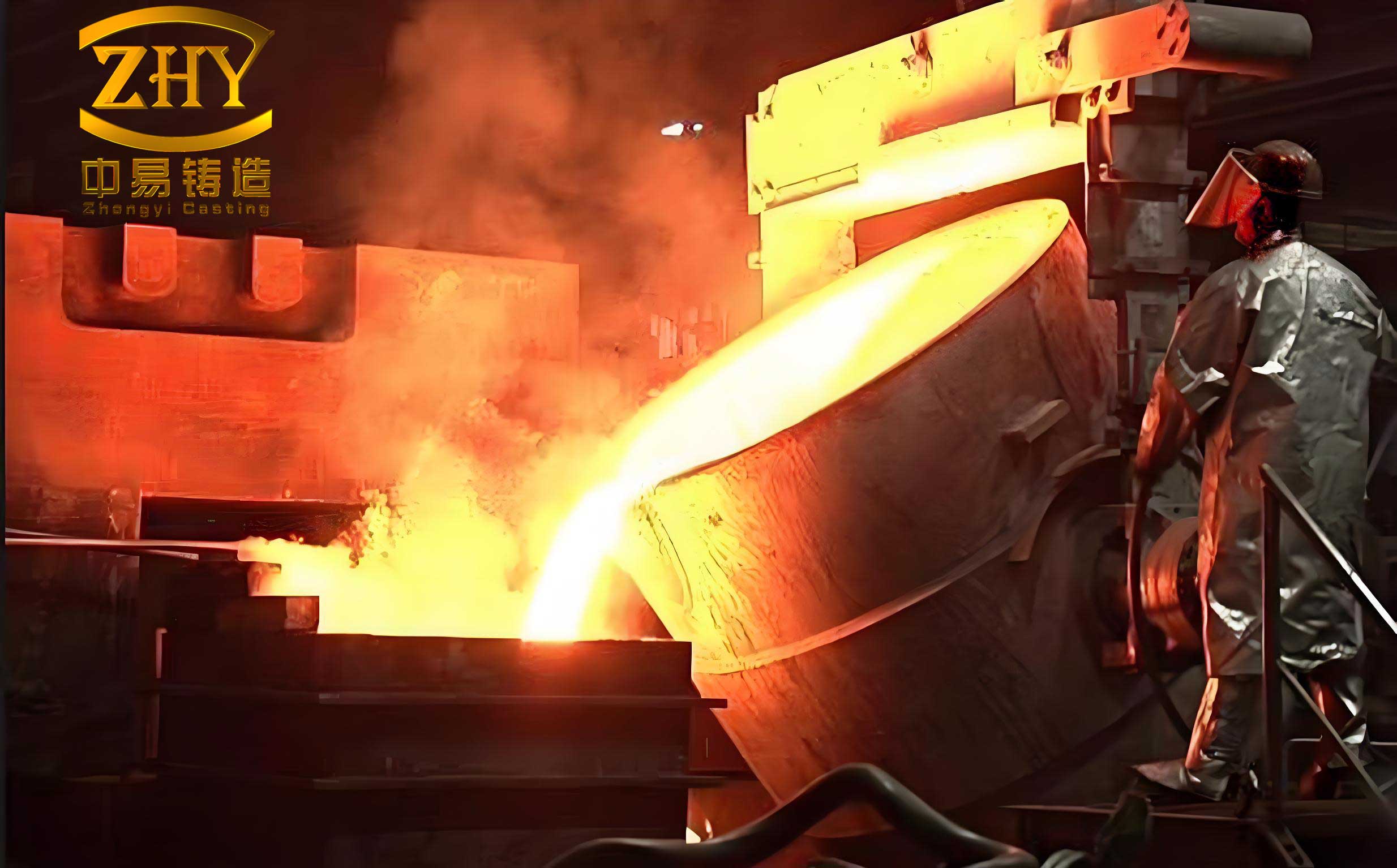
According to the data in the table, compared to the traditional cutting technology, the use of vibration cutting technology for high manganese steel castings results in lower values for all four roughness indicators—Ra, Rq, Rz, and Rt—indicating a smoother and more uniform surface. This improvement is primarily because vibration cutting effectively reduces cutting forces and heat, optimizing cutting conditions and thereby lowering the surface roughness of the high manganese steel castings for better machining outcomes. Furthermore, to further verify the superiority of the vibration cutting technology, I examined the wear on the tool’s rake face of both machines using scanning electron microscopy (SEM). The observation revealed that the traditional cutting machine tool exhibited severe wear on the rake face, with large areas of material detachment forming uneven pits, significantly degrading its cutting performance. In contrast, the vibration cutting machine tool showed only fine scratches and slight ploughing marks on the rake face, parallel to the cutting direction, with its cutting performance largely maintained. Therefore, applying vibration cutting technology to machine high manganese steel castings not only yields castings with superior surface quality but also substantially reduces tool wear. Below is an illustrative image of a high manganese steel casting, which highlights the typical structure and application in mining machinery:
In conclusion, this research concentrates on the ultrasonic vibration cutting technology for high manganese steel castings in mining machinery. By designing an ultrasonic vibration cutting device, determining appropriate cutting parameters, and deriving excitation amplitude control sequences, I have achieved efficient and high-precision machining of high manganese steel castings. The results demonstrate that vibration cutting technology significantly reduces tool wear and improves processed surface quality, offering a novel solution for manufacturing key components in mining machinery. The repeated emphasis on high manganese steel castings throughout this study underscores their importance and the effectiveness of the proposed method in enhancing their processing, paving the way for broader applications in industrial settings.