
Nodular cast iron, characterized by its unique graphite spheroids within a metallic matrix, has established itself as a cornerstone material in heavy-duty engineering applications. Its combination of reasonable castability, good machinability, and favorable mechanical properties derived from the spheroidal graphite morphology offers a compelling cost-to-performance ratio. Traditionally, enhancing the strength of nodular cast iron often came at the expense of ductility, typically requiring post-casting heat treatments like quenching and tempering or austempering to achieve higher grades. These processes, while effective, introduce additional cost, energy consumption, and operational complexity. Consequently, the development of high-strength, high-toughness grades of nodular cast iron directly in the as-cast condition presents a significant technological and economic advantage for modern manufacturing.
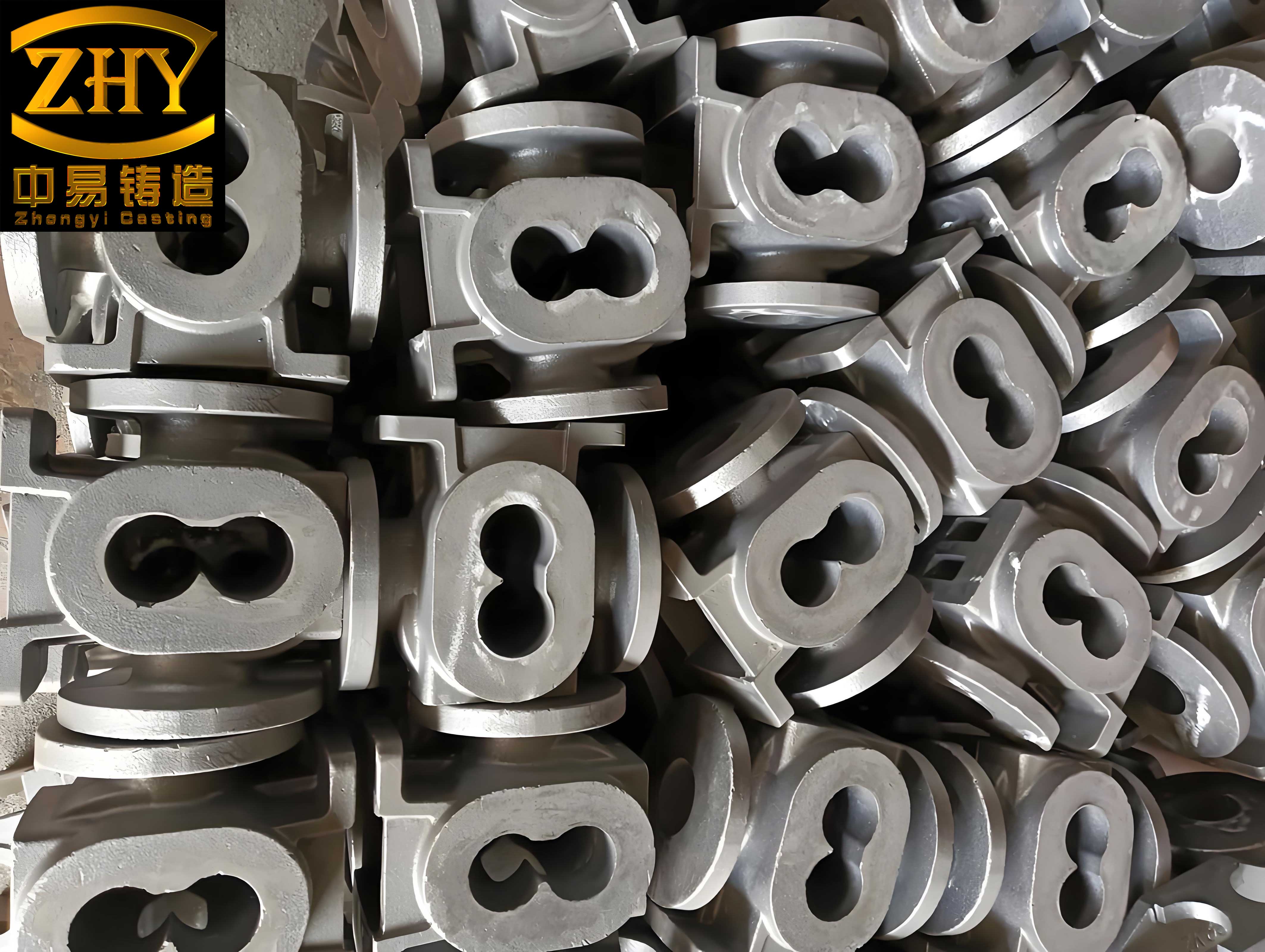
This article focuses on the wear resistance of a specifically engineered as-cast QT800-5 grade of nodular cast iron. Achieving this grade in the as-cast state typically necessitates sophisticated alloy design and precise foundry control. The material under discussion is produced via a compound alloying strategy using silicon (Si), copper (Cu), nickel (Ni), molybdenum (Mo), and tin (Sn), combined with an intensified inoculation practice. This approach yields a microstructure that balances a high pearlite fraction (approximately 88%) with a controlled amount of ferrite (about 12%), resulting in an excellent combination of tensile strength (>800 MPa), elongation (>5%), and hardness (~260 HB). Understanding the tribological behavior of this advanced as-cast nodular cast iron is crucial for its reliable deployment in demanding applications such as automotive powertrains, heavy machinery components, and industrial equipment where sliding wear is a primary failure mode.
Material Characteristics and Experimental Methodology
The fundamental wear performance of any material is intrinsically linked to its microstructure and mechanical properties. The subject as-cast nodular cast iron exhibits a refined and uniform microstructure. The graphite nodularity exceeds 90%, with a high nodule count and a fine average nodule diameter. The matrix is predominantly pearlitic with a thin interlamellar spacing, contributing significantly to its strength. The alloying elements play multiple roles: Cu and Sn promote pearlite formation and stabilize it; Ni strengthens the matrix without adversely affecting toughness; Mo assists in refining the matrix and enhancing hardenability; while Si provides solid solution strengthening. The resulting mechanical profile provides a robust foundation for resistance against surface degradation mechanisms.
To systematically evaluate the wear performance, dry sliding wear tests were conducted using a ball-on-disc configuration on a high-temperature tribometer. The counterbody was an Al2O3 ceramic ball, chosen for its high hardness and chemical inertness. The nodular cast iron specimens were machined into discs. The investigation was structured to isolate and analyze the influence of three critical operational parameters:
- Normal Load: Varied between 5 N and 20 N, with constant sliding speed and ambient temperature.
- Sliding Speed: Varied between 0.1 m/s and 0.4 m/s, under a constant normal load.
- Ambient Temperature: Varied from room temperature (25°C) up to 100°C.
The wear rate, a fundamental metric for material loss, was calculated from the measured dimensions of the wear track. The specific wear rate \(W_s\) is given by the volume loss per unit sliding distance and per unit normal load, often expressed as:
$$W_s = \frac{\Delta V}{F_N \cdot L}$$
where \(\Delta V\) is the worn volume, \(F_N\) is the normal load, and \(L\) is the sliding distance. Post-test analysis involved scanning electron microscopy (SEM) for detailed morphological examination of wear tracks and 3D optical profilometry for quantitative assessment of track width, depth, and volume.
Influence of Normal Load on Wear Behavior
The applied normal load is a primary factor governing contact stresses and the severity of interfacial interaction. For the as-cast nodular cast iron, the wear rate demonstrated a dependency on load, as summarized below:
| Normal Load (N) | Average Wear Rate (10-6 mm3/Nm) | Wear Track Width (µm) | Wear Track Depth (µm) |
|---|---|---|---|
| 5 | ~5.2 | ~450 | ~0.26 |
| 10 | ~6.8 | ~510 | ~0.41 |
| 15 | ~8.1 | ~542 | ~0.54 |
| 20 | ~16.3 | ~567 | ~0.94 |
The data indicates a transition in wear behavior. At lower loads (≤15 N), the increase in wear rate is relatively gradual. However, at 20 N, a marked increase in wear rate and particularly in track depth is observed. This suggests the activation of more severe wear mechanisms beyond a certain critical load threshold. The contact mechanics for a spherical-on-flat configuration can be described by Hertzian theory. The maximum contact pressure \(\sigma_{max}\) and the relative displacement \(S_{max}\) are given by:
$$\sigma_{\text{max}} = 0.388 \sqrt[3]{\frac{PE^2}{R^2}}$$
$$S_{\text{max}} = 1.231 \sqrt[3]{\frac{P^2}{E^2 R}}$$
where \(P\) is the load, \(E\) is the composite modulus, and \(R\) is the ball radius. While calculated contact stresses are high, the nodular cast iron maintains a mild wear regime until the highest load.
SEM analysis of the wear tracks reveals the underlying mechanisms. At 5 N, the surface is relatively smooth with only minor grooves and small pits. Graphite nodules within the track appear largely intact, suggesting they may act as solid lubricants, smearing to form a protective layer. As the load increases to 15 N and 20 N, the surface morphology changes significantly. The graphite nodules are severely deformed or fragmented. The number and size of material delamination pits increase substantially. Adhesive transfer of material becomes more pronounced, evidenced by patches of adhered debris on the surface. The primary wear mechanism under varying normal load is identified as adhesive wear. The increased load enhances the true area of contact and the adhesion between the asperities of the nodular cast iron and the Al2O3 ball. Subsequent sliding leads to shear failure at these junctions, resulting in material transfer and the formation of pits upon particle detachment.
Influence of Sliding Speed on Wear Behavior
Sliding speed influences the strain rate, frictional heating, and the dynamics of surface layer formation. The wear response of the as-cast nodular cast iron to speed variation is captured in the following data:
| Sliding Speed (m/s) | Average Wear Rate (10-6 mm3/Nm) | Wear Track Width (µm) | Wear Track Depth (µm) |
|---|---|---|---|
| 0.1 | ~8.5 | ~295 | ~0.34 |
| 0.2 | ~8.1 | ~542 | ~0.54 |
| 0.3 | ~15.7 | ~690 | ~1.22 |
| 0.4 | ~19.2 | ~763 | ~1.68 |
A clear trend of increasing wear rate with sliding speed is observed, with a particularly sharp rise between 0.2 and 0.3 m/s. The wear track dimensions also expand considerably. The initial increase in speed to 0.2 m/s does not drastically worsen wear under the applied load, but beyond this point, the tribological system becomes more severe. At 0.1 m/s, the wear surface shows grooves and delamination pits, indicative of combined abrasion and adhesion. As speed increases to 0.3 m/s, the surface appears smoother but with more numerous pits, and the beginnings of oxidized patches are visible. At the highest speed of 0.4 m/s, the wear track is characterized by extensive, continuous layers of adhered/oxidized material.
The evolution is driven by frictional heating. Higher sliding speeds generate more frictional energy at the contact interface, raising the localized temperature. This thermal softening reduces the yield strength of the nodular cast iron subsurface, making it more susceptible to plastic deformation and adhesive material transfer. Simultaneously, the increased temperature accelerates the oxidation of freshly exposed metallic surfaces and wear debris. Initially, this leads to severe adhesive wear. At sufficiently high speeds, the formation of oxide layers becomes significant. These oxides can act as a protective glaze, but they are also brittle and can fracture to form hard abrasive particles. Therefore, the wear mechanism under sliding speed transitions from adhesive wear (dominant at lower speeds) to a mixed regime of severe adhesive wear and oxidative wear at higher speeds. The plateauing of the wear rate increase at 0.4 m/s may be attributed to the partial protective effect of a more stable, if continuously regenerated, oxide layer.
Influence of Ambient Temperature on Wear Behavior
Elevated ambient temperature pre-heats the entire specimen, fundamentally altering its bulk properties and surface reactivity before sliding even begins. The impact on the as-cast nodular cast iron is dramatic, as shown below:
| Ambient Temperature (°C) | Average Wear Rate (10-6 mm3/Nm) | Wear Track Width (µm) | Wear Track Depth (µm) |
|---|---|---|---|
| 25 | ~7.3 | ~542 | ~0.54 |
| 50 | ~32.8 | ~692 | ~1.54 |
| 100 | ~55.5 | ~797 | ~2.26 |
The wear rate increases by an order of magnitude when the temperature rises from 25°C to 100°C. This is the most severe degradation observed among all tested parameters. The profilometry data confirms extensive material removal, with both track width and depth increasing substantially. SEM examination reveals a complete transformation of the wear surface morphology. At 50°C, deep, coarse grooves are evident, alongside large delamination pits and isolated islands of adhered material. At 100°C, the surface is dominated by thick, plate-like layers of heavily oxidized and compacted debris. The grooves are still present but are often seen cutting through these layers.
The mechanism here is a complex synergy of several factors. First, the bulk hardness and strength of the nodular cast iron decrease with increasing temperature. The softened material is more easily ploughed and deformed by asperities and hard particles, leading to pronounced abrasive wear features (coarse grooves). Second, the propensity for adhesion remains high due to thermal softening, leading to significant material transfer. Third, and most critically, oxidation is massively accelerated. The combined effect of pre-heating and frictional heating creates an environment where iron oxides (primarily Fe2O3 and Fe3O4) form rapidly. These oxides are brittle. They may form a temporary protective glaze, but under continuous sliding, they fracture and spall, generating a constant supply of hard abrasive particles that further gouge the surface. Thus, the dominant wear mechanism at elevated ambient temperature is a synergistic mixture of oxidative wear and adhesive wear, with a significant contribution from abrasive wear caused by the oxide debris. The excellent room-temperature wear resistance of this nodular cast iron is thus highly temperature-sensitive.
Discussion and Wear Mechanism Maps
The comprehensive data allows for a generalized discussion on the wear performance of this high-strength as-cast nodular cast iron. Its good wear resistance at room temperature, low load, and low speed can be attributed to its high matrix hardness and the potential lubricating effect of graphite. The graphite nodules, by smearing or releasing tiny particles, can form a tribofilm that reduces metal-to-metal contact and friction. The Archard wear equation, a simplified model for adhesive wear, is often written as:
$$W_s = K \frac{H}{F_N}$$
where \(K\) is the wear coefficient and \(H\) is the hardness. The high initial hardness \(H\) of this nodular cast iron contributes to a lower wear volume, aligning with the mild wear observed at benign conditions.
However, the wear coefficient \(K\) is not a constant but a function of the operating conditions and the ensuing wear mechanisms. The transition to severe wear with increasing load, speed, or temperature corresponds to a dramatic increase in the effective \(K\). This is conceptually summarized in the following qualitative wear mechanism table for this specific as-cast nodular cast iron:
| Dominant Test Parameter | Condition | Primary Wear Mechanism(s) | Surface Features |
|---|---|---|---|
| Normal Load | Low to Medium (≤15 N) | Mild Adhesive Wear | Smooth tracks, minor pits, intact graphite. |
| High (20 N) | Severe Adhesive Wear | Large delamination pits, material transfer, deformed graphite. | |
| Sliding Speed | Low (≤0.2 m/s) | Adhesive Wear | Grooves and pits. |
| High (≥0.3 m/s) | Adhesive + Oxidative Wear | Smoother surfaces with oxide patches, severe pitting. | |
| Ambient Temperature | Room Temp (25°C) | Mild Adhesive/Abrasive Wear | Fine grooves, minimal oxidation. |
| Elevated (≥50°C) | Oxidative + Abrasive + Adhesive Wear | Coarse grooves, thick oxide layers, severe material removal. |
The 3D profilometry data provides a crucial link between mechanism and quantitative material loss. The depth of the wear track is a direct indicator of severity. The jump in depth at 20 N load, between 0.2 and 0.3 m/s speed, and with rising temperature visually correlates with the shift in mechanism from mild to severe regimes. The formation of oxide layers at high speed and temperature, while sometimes protective in other alloy systems, appears to be destabilizing for this nodular cast iron under the tested conditions, leading to accelerated wear through a third-body abrasion process.
Conclusion
In conclusion, the compound-alloyed, as-cast QT800-5 nodular cast iron demonstrates a strong potential for applications where high strength and toughness are required without post-casting heat treatment. Its wear resistance is highly competitive under moderate service conditions—specifically at room temperature, with low to medium contact pressures, and low sliding speeds. In such a regime, the primary wear mechanism is mild adhesive wear, and material loss is minimal. This performance is a direct consequence of its engineered microstructure: a fine, strong pearlitic matrix and well-distributed graphite nodules.
However, the tribological performance of this nodular cast iron exhibits clear thresholds. Significant increases in normal load beyond a critical point, sliding speed, and especially ambient temperature can precipitate a transition to severe wear regimes characterized by intense adhesion, oxidation, and abrasion. Elevated temperature is the most detrimental factor, causing an exponential rise in wear rate due to material softening and rapid oxide formation and fragmentation. Therefore, for successful application of this advanced as-cast nodular cast iron in components subject to sliding wear, careful consideration of the operational envelope—particularly avoiding sustained high-temperature exposure—is paramount. The material offers an excellent balance of properties for many demanding environments, but its limits must be respected in design. Future work could explore the role of solid lubricant coatings or slight compositional modifications to extend its high-wear-resistance envelope to more severe thermal conditions.