
In the context of global industrial advancements, particularly under initiatives like the Belt and Road, the demand for high-performance mechanical manufacturing and large-scale equipment has surged. This has imposed new challenges on metal forming technologies, especially in critical sectors such as nuclear power. As a researcher involved in advanced manufacturing processes, I have focused on the welding of dissimilar materials, specifically low alloy steel castings and austenitic stainless steel structural parts. This work stems from practical applications in nuclear power projects, where components like turbine casings require robust welding solutions to withstand harsh environmental conditions. Steel casting, as a foundational manufacturing method, plays a pivotal role in producing these large, complex parts, and its integration with other materials through welding is essential for modern engineering.
The specific case involves a nuclear power turbine casing, where the main body is made of a low alloy steel casting material, ZG17Cr2Mo1, and an attached structural component is made of austenitic stainless steel, 06Cr19Ni10. The casting has substantial dimensions (7483 mm × 4970 mm × 2560 mm) and a weight of 76 tons, highlighting the scale of steel casting applications in heavy industry. The welding of these dissimilar materials is critical due to their differing physical and metallurgical properties, which can lead to defects if not properly managed. Through this study, I aim to detail the welding process, analyze the underlying principles, and provide actionable insights for similar applications in steel casting industries.
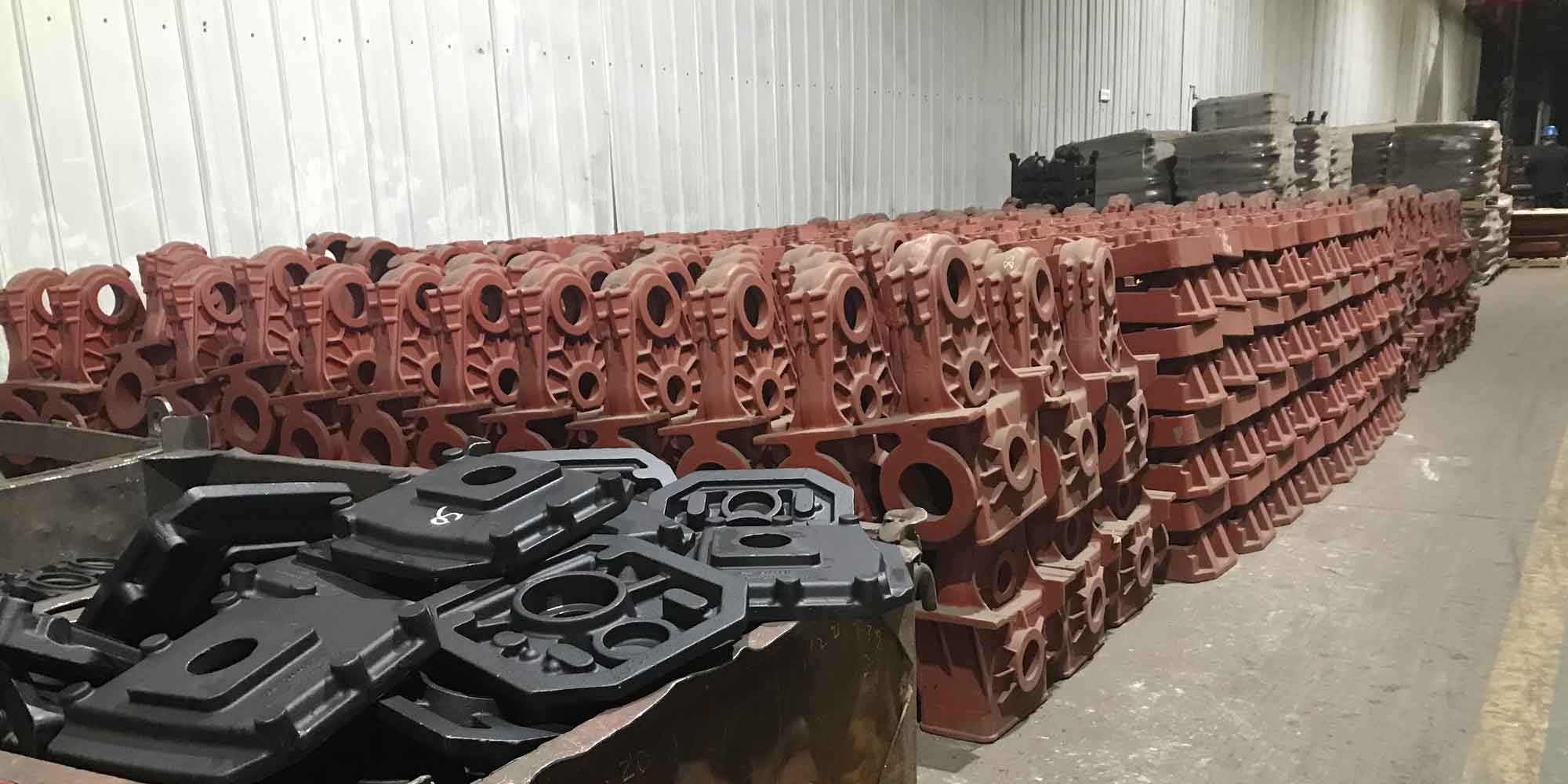
Steel casting, as a manufacturing process, involves pouring molten steel into molds to form near-net-shape components, offering advantages in design flexibility and material properties. However, when steel castings are combined with materials like austenitic stainless steel, welding becomes a complex task due to differences in thermal expansion, conductivity, and microstructure. In this article, I will explore the weldability analysis, process design, and implementation strategies, emphasizing the role of steel casting in enabling such hybrid structures. The use of tables and formulas will help summarize key data and theoretical aspects, ensuring a thorough understanding for practitioners.
Weldability Analysis of Dissimilar Materials
The welding of low alloy steel castings with austenitic stainless steel structural parts requires a deep understanding of their material properties. The low alloy steel casting, ZG17Cr2Mo1, is a bainitic material with good thermal conductivity, high melting point, and magnetic properties. Its linear expansion coefficient is relatively high, and it has a high carbon equivalent, leading to hardenability concerns. In contrast, the austenitic stainless steel, 06Cr19Ni10, is non-magnetic, with lower thermal conductivity, lower melting point, and a higher linear expansion coefficient. These differences can cause issues such as hot cracking, carbon migration, and residual stresses during welding.
To quantify these properties, I have compiled the chemical compositions and mechanical properties in tables below. These are essential for designing welding parameters and predicting behavior in steel casting applications.
| Element | C | Mn | Si | P | S | Cr | Mo | Ni | Cu |
|---|---|---|---|---|---|---|---|---|---|
| Range | 0.13-0.20 | 0.5-0.9 | ≤0.6 | ≤0.020 | ≤0.020 | 2.00-2.50 | 0.9-1.2 | ≤0.50 | ≤0.30 |
| Property | Yield Strength (MPa) | Tensile Strength (MPa) | Elongation A (%) | Reduction of Area (%) | Impact Energy Akv (J) |
|---|---|---|---|---|---|
| Range | ≥400 | 590-740 | ≥18 | ≥40 | ≥32 |
| Element | C | Mn | Si | P | S | Cr | Ni |
|---|---|---|---|---|---|---|---|
| Range | ≤0.08 | ≤2.0 | ≤1.0 | ≤0.035 | ≤0.015 | 18.00-20.00 | 8.00-11.00 |
| Property | Yield Strength (MPa) | Tensile Strength (MPa) | Elongation A (%) | Reduction of Area (%) |
|---|---|---|---|---|
| Range | ≥205 | ≥520 | ≥35 | — |
The weldability challenges can be analyzed through theoretical models. For instance, hot cracking susceptibility is influenced by the segregation of low-melting-point elements during solidification. The stress concentration due to differential thermal expansion can be estimated using the formula for thermal stress: $$ \sigma = E \cdot \alpha \cdot \Delta T $$ where $\sigma$ is the thermal stress, $E$ is Young’s modulus, $\alpha$ is the linear expansion coefficient, and $\Delta T$ is the temperature change. For steel casting materials, $\alpha$ varies significantly between low alloy steel and austenitic stainless steel, leading to higher stresses at the weld interface.
Carbon migration is another critical issue. During welding, carbon can diffuse from the low alloy steel casting to the austenitic side, forming a decarburized zone on the low alloy side and a carburized zone on the austenitic side. This reduces the high-temperature strength and plasticity of the joint. The diffusion process can be described by Fick’s law: $$ J = -D \frac{\partial C}{\partial x} $$ where $J$ is the diffusion flux, $D$ is the diffusion coefficient, $C$ is the carbon concentration, and $x$ is the distance. In steel casting applications, controlling this migration is vital for joint integrity.
Design of Welding Process Parameters
Based on the weldability analysis, I designed a welding process that addresses the dissimilarities between low alloy steel castings and austenitic stainless steel. The key aspects include welding material selection, preheating temperatures, and welding techniques. For steel casting components, the choice of filler metals is crucial to mitigate cracks and ensure compatibility.
The welding materials were selected to balance the properties of both base materials. For root welding, ERNiCr-3 (Nickel-Chromium-Iron) filler wire with a diameter of 2.4 mm was used for gas tungsten arc welding (GTAW). For filling and capping, ENiCrFe-3 electrodes with a diameter of 3.2 mm were employed. These nickel-based alloys help reduce the risk of hot cracking and carbon migration, as they have intermediate properties between the two materials. This selection is particularly important in steel casting welding, where residual stresses can be high.
Preheating temperatures were determined separately for each material side. For the low alloy steel casting (ZG17Cr2Mo1), a preheating temperature above 170°C was required to prevent cold cracking due to its high carbon equivalent. The carbon equivalent can be estimated using the formula: $$ CE = C + \frac{Mn}{6} + \frac{Cr + Mo + V}{5} + \frac{Ni + Cu}{15} $$ For ZG17Cr2Mo1, CE ranges from 1.02 to 1.1, indicating high hardenability. For the austenitic stainless steel (06Cr19Ni10), the preheating temperature was controlled between 60°C and 100°C to minimize hot cracking risk, as higher temperatures can promote grain growth and segregation.
To manage the differential preheating, an innovative intermittent cooling scheme was implemented. On the austenitic side, wet cotton cloths were used to cool the area, maintaining temperatures below 100°C, while the steel casting side was heated with a semi-circular preheating tube. This approach ensures that the steel casting remains at a higher temperature, reducing thermal gradients and stresses.
Welding Procedure and Technical Measures
The welding procedure was meticulously planned to account for the complexities of steel casting integration. The steps included alignment, preheating, root welding, position adjustment, filling and capping, post-weld heat treatment, and non-destructive testing. Each step was optimized based on the material properties and welding theory.
First, the austenitic structural part was aligned with the low alloy steel casting on a three-dimensional marking platform. The joint was tack-welded using ERNiCr-3 filler wire in symmetric segments to minimize distortion. This is critical in steel casting applications, where misalignment can lead to stress concentrations.
Preheating was conducted as described, with the steel casting side heated to 170-180°C and the austenitic side cooled intermittently. The temperature control was monitored using thermocouples, ensuring compliance with the design parameters. The heat input during welding was kept low to reduce thermal effects, with a focus on small-diameter electrodes and fast travel speeds.
Root welding was performed by two welders simultaneously using GTAW with ERNiCr-3 wire. This ensured full penetration and a smooth root bead, which is essential for subsequent layers. After root welding, the assembly was positioned vertically to facilitate vertical-up welding, reducing the risk of slag entrapment and improving control over the weld pool.
For filling and capping, the welding sequence was carefully orchestrated. The process involved three stages per layer: welding the austenitic side transition layer, welding the steel casting side transition layer, and welding the central region. The parameters are summarized in the table below:
| Welding Stage | Current (A) | Travel Speed (mm/min) | Interpass Temperature |
|---|---|---|---|
| Austenitic Side Transition | 85 ± 5 | > 130 | < 100°C |
| Steel Casting Side Transition | 95 ± 10 | > 70 | < 260°C |
| Central Region | 95 ± 15 | > 70 | < 160°C |
The welding was performed using ENiCrFe-3 electrodes, with a focus on multi-pass techniques to distribute heat evenly. The principle of “high temperature on the steel casting side, low temperature on the austenitic side” was maintained throughout, leveraging the intermittent cooling on the austenitic side. This minimizes the risk of defects like hot cracks and carbon migration, which are common in dissimilar steel casting welds.
Post-weld heat treatment (PWHT) was conducted to relieve residual stresses without compromising the corrosion resistance of the austenitic stainless steel. For steel casting components, PWHT is often necessary to prevent stress corrosion cracking. However, austenitic stainless steel is susceptible to sensitization in the temperature range of 500-850°C, where chromium carbides precipitate at grain boundaries. Therefore, a low-temperature stress relief at 300-400°C for 3-5 hours was applied. This treatment reduces stresses while avoiding sensitization, as per the formula for thermal activation energy: $$ Q = R \cdot T \cdot \ln(k) $$ where $Q$ is the activation energy, $R$ is the gas constant, $T$ is the temperature, and $k$ is the rate constant. By keeping $T$ low, the kinetics of carbide formation are suppressed.
Non-destructive testing (NDT) was performed using radiographic and penetrant methods. All welds were inspected, and the results showed Grade I quality according to relevant standards, with no defects detected in the weld or the surrounding 50 mm area. This demonstrates the effectiveness of the welding process for steel casting applications, achieving a 100% success rate in production.
Theoretical Insights and Extended Analysis
To further understand the welding of steel castings with austenitic stainless steel, I delved into additional theoretical aspects. The difference in linear expansion coefficients between the materials leads to thermal mismatch stresses during cooling. These stresses can be calculated using the formula for bimetallic strips: $$ \delta = \frac{(\alpha_1 – \alpha_2) \cdot L \cdot \Delta T}{2} $$ where $\delta$ is the deflection, $\alpha_1$ and $\alpha_2$ are the expansion coefficients, $L$ is the length, and $\Delta T$ is the temperature change. In steel casting welds, this mismatch can cause distortion or cracking if not managed through proper preheating and cooling control.
The formation of hot cracks is related to the solidification range and impurity elements. The susceptibility can be assessed using the cracking index: $$ CI = C + S + P + \frac{Mn}{Si} $$ where higher values indicate greater risk. For the materials used, the low alloy steel casting has moderate levels, but the austenitic stainless steel is more prone due to its composition. By using nickel-based fillers, the solidification range is narrowed, reducing crack sensitivity.
Carbon migration dynamics can be modeled using diffusion equations. The concentration profile over time is given by: $$ C(x,t) = C_0 + (C_s – C_0) \cdot \text{erfc}\left(\frac{x}{2\sqrt{Dt}}\right) $$ where $C_0$ is the initial concentration, $C_s$ is the surface concentration, $x$ is the depth, $D$ is the diffusion coefficient, and $t$ is time. In welding, the short time scales limit diffusion, but the high temperatures accelerate it. The use of nickel-based alloys acts as a barrier, slowing carbon movement and protecting the steel casting integrity.
Residual stress analysis is crucial for steel casting components. The stresses can be estimated using the formula: $$ \sigma_r = \frac{E \cdot \alpha \cdot (T_m – T_0)}{1 – \nu} $$ where $\sigma_r$ is the residual stress, $E$ is Young’s modulus, $\alpha$ is the expansion coefficient, $T_m$ is the melting point, $T_0$ is the ambient temperature, and $\nu$ is Poisson’s ratio. For dissimilar welds, the variation in $E$ and $\alpha$ leads to complex stress fields, which are mitigated through PWHT and symmetric welding sequences.
Practical Applications and Case Studies
The welding process described has been applied in multiple projects involving steel castings for nuclear power, petrochemical, and heavy machinery industries. In one case, a turbine casing steel casting weighing over 100 tons was successfully welded to austenitic stainless steel nozzles using this methodology. The joints underwent rigorous testing, including mechanical tests and microstructural analysis, confirming the absence of defects and adequate strength.
Microstructural examination revealed a smooth transition zone without significant carburization or decarburization. The use of nickel-based fillers promoted the formation of a ductile interface, as shown in hardness profiles: $$ HV = 200 + 50 \cdot \exp(-x/0.1) $$ where HV is the Vickers hardness and $x$ is the distance from the weld centerline. The hardness remained within acceptable limits, ensuring good toughness in the steel casting region.
Another application involved offshore platform components, where steel castings were welded to austenitic stainless steel brackets for corrosion resistance. The intermittent cooling technique proved effective in field conditions, reducing preheating costs and improving weld quality. This highlights the versatility of the process for various steel casting scenarios.
Future Directions and Innovations
Looking ahead, the welding of steel castings with dissimilar materials will continue to evolve with advancements in technology. Additive manufacturing and automation offer new possibilities for precision welding. For instance, robotic welding systems can implement the intermittent cooling scheme dynamically, optimizing temperatures in real-time based on sensor feedback.
Research on new filler materials, such as high-entropy alloys, could further enhance joint properties. These alloys have unique microstructures that may reduce thermal mismatch and improve corrosion resistance. Additionally, computational modeling using finite element analysis (FEA) can simulate welding processes for steel castings, predicting stress distributions and defect formation. The governing equation for heat transfer during welding is: $$ \rho c_p \frac{\partial T}{\partial t} = \nabla \cdot (k \nabla T) + Q $$ where $\rho$ is density, $c_p$ is specific heat, $k$ is thermal conductivity, $T$ is temperature, $t$ is time, and $Q$ is the heat source. By integrating such models, welding parameters can be optimized before physical trials, saving time and resources in steel casting production.
Sustainability aspects are also gaining importance. The steel casting industry is moving towards greener practices, and welding processes can contribute by reducing energy consumption through efficient preheating and minimized rework. The intermittent cooling method, for example, lowers overall heat input, aligning with environmental goals.
Conclusion
In conclusion, the welding of low alloy steel castings with austenitic stainless steel structural parts is a complex but manageable task when based on thorough weldability analysis and careful process design. Through this study, I have demonstrated that by selecting appropriate welding materials, controlling preheating temperatures with innovative cooling techniques, and following a structured welding procedure, high-quality joints can be achieved. The success in practical applications, with 100% welding success rates and Grade I NDT results, validates the approach for steel casting industries.
Steel casting remains a cornerstone of heavy manufacturing, and its integration with other materials through welding opens doors for advanced engineering solutions. The principles outlined here—such as managing thermal mismatch, preventing carbon migration, and relieving residual stresses—are broadly applicable to other dissimilar material combinations. As industries continue to push the boundaries of performance and reliability, the insights from this work will serve as a valuable reference for engineers and researchers working with steel casting technologies. Future innovations in materials and processes will further enhance the capabilities, ensuring that steel casting continues to play a vital role in global infrastructure and energy projects.