
High-chromium white cast iron, renowned for its outstanding abrasion resistance, is extensively utilized for critical wear parts in equipment such as coal mills, mineral crushers, cement mill liners, shot blasting machines, and slurry pumps. The fundamental appeal of this white cast iron lies in its ability to withstand severe abrasive environments. However, a significant intrinsic challenge with high-chromium white cast iron is its inherent brittleness. While advancements through heat treatment and strategic alloying have improved its impact toughness, the material often still falls short under high-impact operational conditions. Resolving the toughness limitation in high-chromium white cast iron is a complex, multifactorial problem. The evolution of this white cast iron is essentially a pursuit of the optimal balance between hardness and toughness. My analysis, based on extensive study, concludes that achieving this balance requires careful consideration and control over several interdependent factors: the quantity, morphology (size, spheroidization, network continuity), and distribution (isolated or interconnected) of carbides; the matrix microstructure; the amount of retained austenite; and the presence of internal and external casting defects. To effectively enhance the service life of components made from this white cast iron, a detailed understanding of how each factor specifically influences wear performance is paramount.
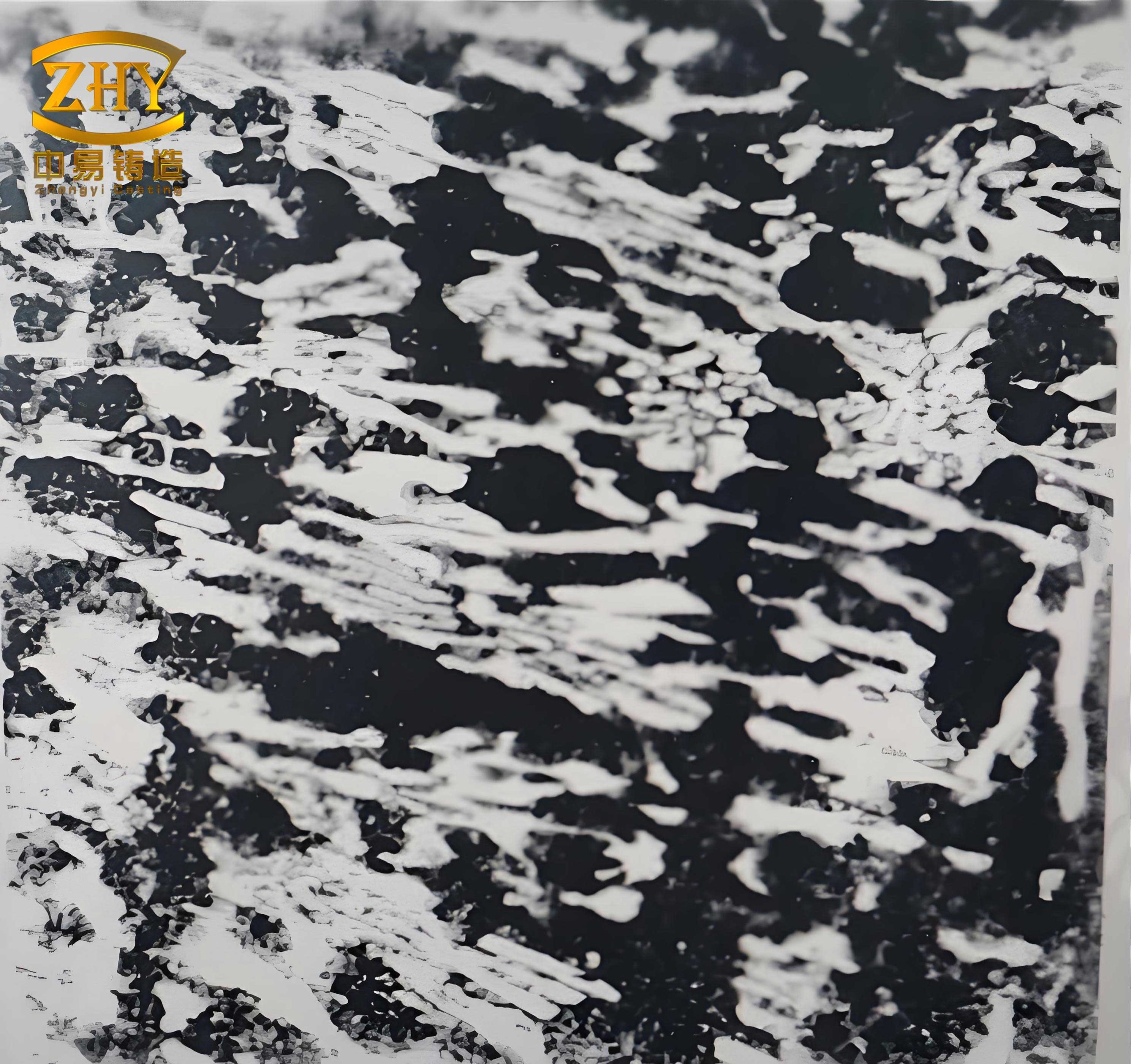
The Relationship Between Hardness and Abrasion Resistance
The wear resistance of any material, including white cast iron, is intimately related to its hardness. Generally, provided catastrophic fracture is avoided, a direct proportionality exists between abrasion resistance and material hardness. However, practical experience demonstrates that wear is not solely a function of the material’s hardness but also critically depends on the characteristics of the abrasive media. When the hardness of the grinding media or counterpart surface exceeds that of the abrasive particles, mechanisms like gouging and cutting are suppressed, and fatigue wear often becomes the dominant failure mode. This type of wear involves subsurface crack initiation and propagation, leading to spalling or delamination. In such a scenario, if the white cast iron possesses very high hardness but correspondingly low toughness, its susceptibility to fatigue-induced fracture increases markedly, leading to higher breakage rates in components like grinding balls.
Furthermore, for impact-abrasion conditions, performance is governed by a synergistic combination of hardness and toughness, and this relationship is heavily influenced by the magnitude of the impact energy. For low-impact energies, hardness is the primary determinant of wear resistance. As the impact energy increases, the contribution of material toughness to overall wear resistance becomes progressively more significant. Therefore, within the framework of maintaining a high-hardness white cast iron matrix, any improvement in toughness will directly enhance its performance under impact-abrasive wear.
This relationship can be conceptualized by a simplified wear resistance index, $W_R$:
$$W_R = k_H \cdot H^a + k_K \cdot K_{IC}^b \cdot f(E_{imp})$$
where $H$ is hardness, $K_{IC}$ is fracture toughness, $E_{imp}$ is impact energy, $k_H$ and $k_K$ are weighting constants, and $a$ and $b$ are exponents. The function $f(E_{imp})$ modulates the influence of toughness, increasing its weight with higher impact energy.
| Dominant Wear Mechanism | Key Material Property | Optimum White Cast Iron Matrix | Typical Application Context |
|---|---|---|---|
| Low-Stress Abrasion / Scratching | Macro-Hardness (HV, HRC) | High-Carbon Martensite | Slurry Pump Liners, Chutes |
| High-Stress Abrasion / Crushing | Hardness + Moderate Toughness | Tempered Martensite | Crusher Rolls, Jaw Plates |
| Impact-Abrasion (Low Energy) | Hardness / Toughness Balance | Martensite with Retained Austenite | Small-Diameter Mill Balls |
| Impact-Abrasion (High Energy) | Fracture Toughness | Austenitic or Austempered Matrix | Large-Diameter Mill Balls, Hammer Heads |
The Relationship Between Toughness and Abrasion Resistance
Components subjected to abrasive wear in industrial settings almost invariably also endure significant mechanical shock or impact loads. Failure analysis of various wear parts—hammer heads, jaw plates, mill liners, and grinding balls—frequently identifies insufficient toughness as the root cause of premature failure. Therefore, ensuring adequate toughness is non-negotiable. However, quantitatively determining the precise toughness requirement for a given part in service is notoriously difficult. Consequently, in industrial practice, a compromise is often made: sacrificing some degree of hardness (and thus potential wear resistance) to guarantee a safe level of toughness for the white cast iron component.
The fracture toughness of high-chromium white cast iron with an austenitic matrix is generally superior to that with a martensitic matrix. This difference is more pronounced at lower carbide volume fractions and diminishes as the carbide content increases. This indicates that at low carbide levels, the matrix microstructure governs fracture toughness, allowing for its improvement through heat treatment. As the volume fraction of hard, brittle carbides rises, they become the dominant factor controlling the toughness of the white cast iron. In this regime, enhancing toughness requires modifying the carbide structure, morphology, and distribution via alloying and/or melt inoculation (modification).
When carbides form a continuous, three-dimensional network, their morphology is the principal factor controlling fracture. Cracks propagate preferentially along these brittle carbide networks. As crack tips meet and connect, carbides fracture, and the crack continues to travel along the carbide paths (often initiated at sharp carbide corners). In this scenario, the crack-blunting effect of the ductile matrix is largely ineffective. Thus, for wear resistance, it is crucial to strengthen the matrix to better support the carbide network and prevent its early fracture.
When carbides are present as a broken network or isolated particles, the matrix becomes the critical factor influencing fracture toughness. Now, crack propagation must traverse the matrix. The matrix’s ability to blunt and deflect cracks creates significant resistance to fracture, making the strength and ductility of the matrix the key to controlling crack growth in this type of white cast iron.
In summary, selecting the optimal matrix for a balance of wear resistance and toughness depends on service conditions: for soft abrasives and low-impact energy, a martensitic matrix is preferred; for high-impact conditions, an austenitic matrix offers better performance. Research correlating matrix structure to relative wear resistance under varying impact energies suggests the following ranking (from best to worst):
- Impact Energy ~1.2 J: Martensite > Tempered Duplex > Austenite > Pearlite
- Impact Energy ~3.0 J: Tempered Duplex > Martensite > Austenite > Pearlite
- Impact Energy ~4.5 J: Austenite > Tempered Duplex > Martensite > Pearlite
Influence of Retained Austenite on Wear Resistance
The role of retained austenite in white cast iron is a nuanced subject. A widely accepted view is that in low-stress, sliding wear applications (e.g., cylinder liners in slurry pumps), retained austenite is detrimental to wear resistance and its content is strictly controlled. Conversely, under high-stress or impact-abrasion conditions, a controlled amount of retained austenite can be beneficial, enhancing the overall toughness and resulting in superior wear performance compared to a fully martensitic white cast iron matrix.
Effect on Crack Initiation
During impact-abrasion, metastable retained austenite in the white cast iron can undergo a strain-induced transformation to martensite. The magnitude of this transformation increases with the applied impact energy. This transformation process consumes a portion of the impact energy from the system. Essentially, external mechanical work is used to drive the phase transformation, which in turn helps to absorb energy that would otherwise contribute to crack initiation, thereby improving the material’s resistance to wear.
Effect on Crack Propagation
With low levels of retained austenite, cracks tend to propagate in a relatively straight path, following the brittle carbide network where resistance is low. When retained austenite content is higher, the crack path becomes more tortuous. Cracks are forced to traverse through the tougher austenitic matrix, encountering greater resistance. The strong interfacial bond between carbides and austenite, combined with the crack-blunting capability of the ductile austenite, effectively hinders crack propagation along the carbide interfaces in the white cast iron.
Effect on Fatigue Life
Studies on impact fatigue life support this view. Specimens with low retained austenite (below ~17%, typically from quenching temperatures under 950°C) withstand fewer impact cycles before failure. Those with moderate retained austenite (~30%, from quenching around 1000°C) show improved fatigue life. Specimens with high retained austenite content (exceeding 50%, from quenching at 1050-1100°C) demonstrate dramatically increased fatigue life, surviving thousands of impacts without failure. However, a counterpoint exists: some research indicates that the volume expansion associated with the transformation of retained austenite to martensite during service can generate internal stresses, potentially promoting spalling and cracking. Therefore, optimal performance requires careful control over the amount and stability of retained austenite in the white cast iron.
Influence of Carbide Quantity, Morphology, and Distribution
The microstructure of high-chromium white cast iron typically consists of hard (Cr,Fe)7C3 carbides embedded in a matrix that may be martensitic, austenitic, or a mixture thereof. The carbides act as the primary wear-resistant skeleton. Consequently, their volume fraction, shape, and spatial arrangement are critically linked to the abrasion resistance of the white cast iron.
- Quantity: Generally, a higher volume fraction of carbides increases the macro-hardness of the white cast iron. Provided the component does not suffer brittle fracture, increased carbide content usually correlates with improved wear resistance against abrasion. However, this comes at the expense of reduced toughness.
- Morphology and Distribution: To prevent easy crack propagation, the ideal carbide morphology in white cast iron is spheroidal, clustered, isolated (“island”), or as a broken network. Continuous networks and sharp, spear-like (radial) formations should be avoided. This can be achieved through:
- Alloying and Inoculation: Adding elements like Ti, Nb, or rare earths can modify solidification, promoting finer, more isolated carbides.
- Heat Treatment: High-temperature austenitizing can partially dissolve carbide networks, and subsequent controlled cooling can influence their reprecipitation.
The effectiveness of carbides can be related to their mean free path in the matrix, $\lambda$, and their contiguity, $C$. A lower contiguity and a shorter, controlled mean free path are desirable for toughness. The contiguity $C$ can be expressed as:
$$C = \frac{2N_{CC}}{2N_{CC} + N_{CM}}$$
where $N_{CC}$ is the number of carbide-carbide interfaces and $N_{CM}$ is the number of carbide-matrix interfaces per unit area. A low $C$ value indicates isolated carbides.
| Carbide Morphology | Typical Formation Method | Effect on Toughness | Effect on Abrasion Resistance | Suitability for White Cast Iron in Impact Service |
|---|---|---|---|---|
| Continuous Network | High C/Cr ratio, Fast Cooling | Very Poor (Brittle) | High (if matrix supports) | Low |
| Broken Network / Rod-like | Moderate Cooling, Alloying | Poor to Moderate | High | Moderate (Low-Impact) |
| Isolated Eutectic Colonies | Inoculation, Controlled Solidification | Good | High | Good |
| Spheroidized / Globular | Long High-Temp Heat Treatment | Excellent | Moderate to High (Depends on Size) | Excellent |
Matrix Microstructure and Its Relation to Wear Resistance
The wear resistance of any material, including white cast iron, is profoundly influenced by its matrix microstructure. The intrinsic strength of the matrix and the cohesion strength at the matrix-carbide interface are equally crucial. The superior wear resistance of high-chromium white cast iron is not solely due to the hard carbides; the matrix plays a vital supporting role. The matrix must possess sufficient hardness and exhibit high cohesive strength with the carbides. Otherwise, under load, the matrix may undergo severe plastic deformation or wear away prematurely, causing the carbides to lose their support. This leads to carbides bending, fracturing, or becoming protrusions that are easily knocked out, drastically accelerating wear.
Common strategies to strengthen the matrix in white cast iron include:
- Alloying: Adding elements like Molybdenum (Mo), Nickel (Ni), and Copper (Cu) to increase hardenability, allowing the formation of martensite or bainite in thicker sections, and to strengthen solid solution.
- Melt Treatment: Using inoculants or modifiers to refine grains, purify grain boundaries (deoxidize/degas), and enhance intergranular cohesion strength. This also often helps in rounding carbide edges.
- Heat Treatment: The most direct method. Through austenitizing, quenching, and tempering, the matrix can be transformed into martensite, lower bainite, or a controlled mixture with retained austenite, optimizing the hardness-toughness combination for the specific white cast iron grade and application.
Analysis of Grinding Ball Operating Conditions and Resultant Material Requirements
Operating Condition Analysis in Mills
The fundamental operating condition within a ball mill or similar grinding apparatus is as follows. As the mill rotates, grinding balls and ore charge are mixed. Due to centrifugal and frictional forces, the balls are lifted along the liner to a certain height. Upon reaching a dynamic equilibrium, they either cascade down the surface of the charge (“cataracting”) or break free and fall in a parabolic trajectory, impacting the toe of the charge (“cataracting”). This imparts direct impact on both the ore and other balls. Additionally, the tumbling and sliding of balls within the charge create shear and compressive (nipping) forces, leading to abrasive and crushing wear. Thus, grinding balls are subjected to a complex, repetitive cycle of impacts (ball-on-ball, ball-on-liner, ball-on-ore), rolling, and sliding contact.
This analysis reveals that despite their simple geometry, grinding balls operate under exceptionally complex stress conditions that are difficult to model precisely. They endure shear, compression, and significant impact loads. Therefore, the ideal white cast iron for grinding balls must possess not only high hardness for abrasion resistance but also sufficient toughness to withstand impact without fracturing. The failure mode is governed by these two contradictory factors. In wet grinding applications, corrosion resistance of the white cast iron also becomes a critical consideration.
Material Performance Requirements for Grinding Balls
Hardness: Based on mill diameter and rotational speed, the hardness of white cast iron grinding balls should typically not be lower than HRC 48. Wear resistance generally increases with hardness, but excessive hardness (above approximately HRC 60) can lead to surface spalling and micro-fracture, which may actually reduce overall wear life. For most ores, an optimal hardness range for white cast iron balls is between HRC 55 and HRC 62.
Toughness: The required toughness is primarily a function of mill diameter (which correlates with potential impact energy). Research using simulated impact-abrasion testers (e.g., MLD-10) and field trials suggests the following approximate average impact energies:
- Mills with diameter < 1.5 m: 1.0 – 1.5 J
- Mills with diameter ~2.4 m: 2.5 – 3.5 J
- Mills with diameter > 4.5 m: 4.2 – 5.0 J
To ensure safe operation with a margin of safety, the actual impact toughness (often measured by Charpy Unnotched or Ak value) of the white cast iron grinding ball material should be 2 to 3 times the simulated impact energy for a mill of equivalent size. This translates to a general requirement for an impact value in the range of 6 J/cm² to 12 J/cm². For very large-diameter mills (>4 m) or for large-diameter balls (>100 mm), even higher toughness must be specifically targeted in the white cast iron composition and processing.
It is important to note that actual impact forces on balls are often less than theoretical free-fall predictions because falling balls first hit the moving charge of material and other balls, which cushions the impact and reduces the kinetic energy.
Importance of Soundness: High-chromium white cast iron has good resistance to crack initiation but relatively low resistance to crack propagation. Casting defects (shrinkage porosity, inclusions, cold shuts) act as pre-existing crack nuclei in the unloaded state. Their presence can dramatically reduce the effective fracture toughness of the material. Therefore, meticulous foundry practice to minimize internal and external casting defects is essential to unlock the full inherent potential of the white cast iron. Field statistics indicate that for grinding balls under 100 mm in diameter, an impact toughness of $a_k \geq 6.5 \, \text{J/cm}^2$ is generally reliable if the casting is sound. The presence of significant defects, however, makes even a tougher white cast iron susceptible to failure.
In conclusion, formulating a production process for white cast iron grinding balls requires a holistic, systems-based approach. The service conditions must be thoroughly analyzed to inform the rational design of chemical composition, molding and gating techniques, melting and inoculation practice, and precise heat treatment cycles. The goal is to harmoniously resolve the inherent contradictions between hardness, toughness, carbide structure, and matrix properties in the white cast iron, achieving the optimal compromise for a specific grinding application, thereby maximizing service life and operational economy.