
As a practitioner in the field of additive manufacturing for foundry applications, I have witnessed the transformative impact of 3D sand printing technology on the production of sand casting products. This technology, also known as patternless casting manufacturing, represents a paradigm shift from traditional resin sand casting methods. In this comprehensive analysis, I will delve into the application principles, process flows, key performance metrics, and critical selection criteria for 3D sand printing systems, with a focused lens on optimizing the manufacturing of diverse sand casting products. The integration of this technology enables unprecedented flexibility, cost-efficiency, and design freedom for producing complex and high-quality sand casting products, from prototypes to small-batch production runs.
The core principle of 3D sand printing for creating molds and cores for sand casting products is based on binder jetting technology. It begins with the digital CAD model of the desired casting. This model is converted into a mold model, exported as an STL file, and then sliced into thin cross-sectional layers by specialized software. The printing process involves a recoater spreading a thin layer of sand mixed with a catalyst uniformly across the build platform. A print head, typically using piezoelectric inkjet technology, then selectively deposits a liquid binder onto the sand layer according to the slice data. The binder reacts with the catalyst, curing and bonding the sand particles together in the desired pattern. This cycle repeats layer by layer until the complete sand mold or core is fabricated. The unbound sand remains loose, serving as support during printing and is easily removed after the build, leaving a precise, ready-to-use mold for casting. This direct digital-to-physical process eliminates the need for physical patterns, which is a significant advantage for complex geometries common in advanced sand casting products.
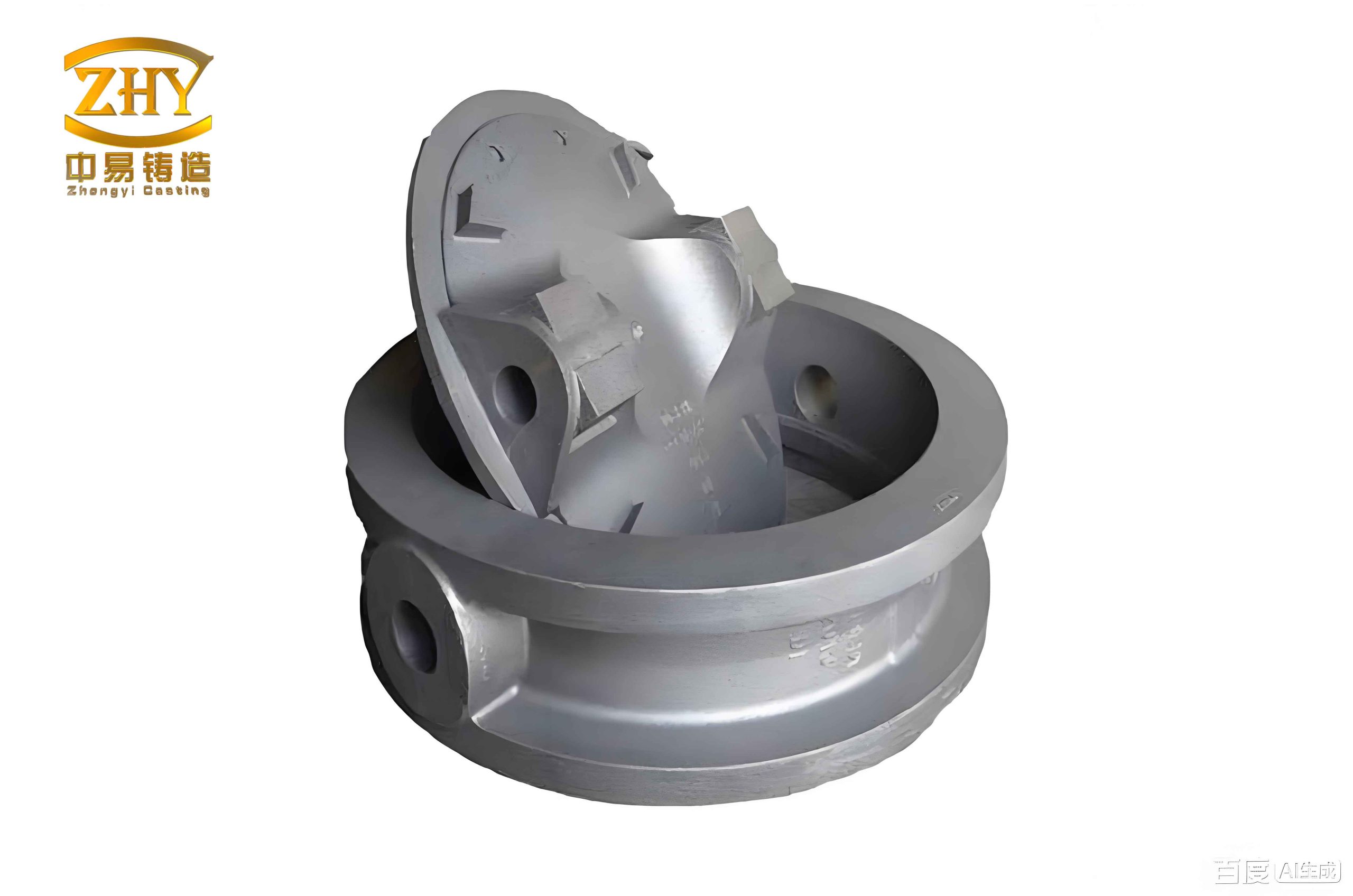
The standard workflow for producing sand casting products via 3D sand printing can be summarized in a sequential process. It starts with CAD design and simulation of the part and its gating system. The mold design is then digitally created, often integrating cores and cavities into a single print to minimize assembly error. After slicing, the printer executes the build job. Post-processing steps include depowdering (removing loose sand), optional curing or drying, application of refractory coatings to improve surface finish and metal penetration resistance, drying the coating, and finally assembly (closing the mold) for metal pouring. After casting and cooling, the sand mold is broken away, and the raw casting is cleaned, finished, and inspected. This streamlined digital workflow drastically reduces lead times for sand casting products, especially for prototypes and complex components.
To quantify the advantages, a direct comparison between 3D sand printing and traditional pattern-based molding for sand casting products is essential. The following table outlines key differentiating factors:
| Aspect | 3D Sand Printing (PCM) | Traditional Pattern Molding |
|---|---|---|
| Tooling Requirement | No physical patterns or core boxes needed. | Requires costly and time-consuming pattern and core box fabrication. |
| Lead Time | Very short (typically 3-5 days from CAD to mold). Ideal for rapid iteration of sand casting products. | Long (weeks to months) due to pattern manufacturing. |
| Design Complexity | Virtually unlimited. Allows for integrated cores, complex internal channels, and zero draft angles, optimizing the design of sand casting products. | Limited by pattern draft, parting lines, and core assembly limitations. |
| Changeover & Flexibility | Instantaneous via digital file change. Perfect for high-mix, low-volume production of sand casting products. | Slow and costly, requiring new patterns. |
| Skill Requirement | Lower; operation is highly automated. | Higher; requires skilled patternmakers and molders. |
| Material Waste | Minimal; unbound sand is nearly 100% recyclable. | Higher waste from pattern machining and mold making. |
| Economic Breakeven | Excellent for prototypes, complex parts, and batches under approximately 100-200 units of sand casting products. | Economical for very high-volume production runs. |
The performance of a 3D sand printer is characterized by several technical indicators that directly influence its suitability for manufacturing specific sand casting products. Understanding these metrics is crucial for selection.
| Performance Indicator | Description & Impact | Typical Units/Values |
|---|---|---|
| Build Envelope (Max Print Size) | The maximum mold dimensions (L x W x H) achievable in one build. Determines the size range of possible sand casting products. | e.g., 1500 x 1000 x 700 mm |
| Layer Thickness | Thickness of each deposited sand layer. Affects surface finish, accuracy, and build speed. | 0.2 – 0.5 mm |
| Print Speed / Layer Time | The average time to complete one full layer cycle (recoating, printing). Primary driver of throughput for sand casting products. | e.g., 20-60 seconds/layer |
| Volumetric Build Rate (成型效率) | The volume of bonded sand produced per hour. A key productivity metric. | Liters/hour (L/h) $$ \text{Build Rate} = V_{\text{layer}} \times \frac{3600}{T_{\text{layer}}} $$ where \( V_{\text{layer}} \) is bonded volume per layer and \( T_{\text{layer}} \) is layer time in seconds. |
| Print Resolution (dpi) | Dots per inch in X-Y plane. Influences feature sharpness and surface quality of the sand casting products. | 300 – 600 dpi |
| Dimensional Accuracy | Deviation of printed mold dimensions from CAD data. Affects final casting tolerances. | ± 0.2% to ± 0.5% (or ± 0.3 mm) |
| Bending/Tensile Strength | Mechanical strength of the printed sand. Critical for mold handling and resisting metal pressure during pouring for sand casting products. | 1.0 – 4.0 MPa (for “8”-shaped test specimens) |
| Gas Evolution | Volume of gas generated by mold during pouring. Must be managed to avoid defects in sand casting products. | e.g., 10-25 ml/g at 850°C |
| Permeability | Ability of the molded sand to allow gases to escape. Vital for casting quality. | Standard foundry permeability number |
Selecting the right 3D sand printer for your operations requires a multi-faceted analysis tailored to your portfolio of sand casting products. I recommend evaluating based on the following pillars, often involving trade-offs.
1. Efficiency and Productivity Analysis: The printer is a capital investment, and its productivity dictates return on investment. The core metric is the volumetric build rate. A higher build rate means lower cost per mold and higher capacity for producing sand casting products. Stability and uptime are equally critical; a fast but unreliable machine is counterproductive. The total print time for a job can be estimated as: $$ T_{\text{total}} = \frac{H_{\text{total}}}{\delta} \times t_{\text{layer}} $$ where \( H_{\text{total}} \) is the total mold height in mm, \( \delta \) is the layer thickness in mm, and \( t_{\text{layer}} \) is the average layer time in seconds.
2. Economic and Operational Cost Assessment: The total cost of ownership extends beyond the purchase price.
| Cost Factor | Considerations for Sand Casting Products |
|---|---|
| Material Compatibility | Can the printer use locally sourced, lower-cost sands (silica, chromite, zircon) or premium sands (ceramic, fused silica)? Flexibility reduces material cost for different grades of sand casting products. |
| Material Conservation | Features like automatic sand recycling, minimal base layers, and “print-on-the-fly” or partial build area printing reduce raw material (sand & binder) consumption. |
| Consumable Cost | Print head life is the largest maintenance cost. Compatibility with different binders (furan, phenolic, inorganic) affects head longevity and operating cost. Inorganic binders promise better environmental and cost profiles for future sand casting products. |
| Energy Consumption | Power usage of heaters, actuators, and servers contributes to ongoing costs. |
3. Usability and Operational Flexibility: A user-friendly system lowers labor costs and accelerates adoption.
- Automation: High automation in sand handling, leveling, and cleaning reduces skill requirements and labor.
- Parameter Management: The ability to save and quickly switch between “print recipes” for different sand/binder combinations or quality requirements (e.g., fine surface vs. fast draft for sand casting products) is invaluable for job shops.
- Software Ecosystem: Robust software for file repair, scaling, nesting, and support generation streamlines pre-processing.
4. Specialized Capabilities for Niche Sand Casting Products: Some applications demand unique features. For instance, research institutions might need gradient printing (varying binder saturation) or the ability to print inserts. Manufacturers of very large but sparse sand casting products might value “local printing” functions to save time and material when only a portion of the build area is used.
5. Strategic Alignment with Production Model: Your primary use case should guide the choice.
| Production Model | Printer Selection Focus for Sand Casting Products |
|---|---|
| High-Volume, Large Parts (e.g., automotive, pump housings) |
Prioritize maximum build rate, large build envelope, and integration into automated foundry lines (like smart factories). Reliability is paramount. |
| R&D, Prototyping, Complex Low-Volume (e.g., aerospace, defense, custom machinery) |
Focus on accuracy, surface finish, material versatility, and operational flexibility. Single standalone machines are common. |
6. Vendor Evaluation: The printer’s long-term viability depends on the manufacturer. Assess their R&D capability, patent portfolio, installed base, financial stability, and quality of after-sales service and technical support. This ensures ongoing support for the evolving needs of your sand casting products.
Determining the appropriate printer size involves a statistical analysis of your historical or projected sand casting products. Compile the 3D bounding box dimensions (length, width, height) of the required molds and cores. Plotting this data helps identify the minimum build envelope that accommodates, for example, 80-90% of your parts. Oversizing leads to inefficient use of space and material; undersizing limits application scope. The chosen printer’s build volume \( V_{\text{printer}} = L_{\text{box}} \times W_{\text{box}} \times H_{\text{box}} \) should envelope the calculated percentile of your part envelope distribution.
Accurate production planning requires forecasting the yield of sand casting products from a printer. The calculation involves several steps and ratios specific to your product mix:
- Job Time per Build: $$ T_{\text{build}} = \frac{H_{\text{mold}}}{\delta} \times \frac{t_{\text{layer}}}{3600} \text{ hours} $$
- Daily Build Capacity: $$ N_{\text{builds/day}} = \frac{\text{Operational Hours per Day}}{T_{\text{build}}} $$
- Mold Yield per Build: Not all sand in the box becomes mold. Define a Mold Yield Factor \( f_{\text{mold}} \) (typically 0.1 to 0.5 depending on part density and spacing). $$ V_{\text{mold/build}} = V_{\text{printer}} \times f_{\text{mold}} $$
- Daily Mold Sand Volume: $$ V_{\text{mold, daily}} = N_{\text{builds/day}} \times V_{\text{mold/build}} $$
- Daily Casting Mass Yield: This requires the Sand-to-Metal Ratio \( R_{\text{sm}} \) (e.g., 5:1 for iron, 3:1 for aluminum), which is highly dependent on the geometry of your sand casting products. $$ M_{\text{castings, daily}} = \frac{V_{\text{mold, daily}} \times \rho_{\text{sand}}}{R_{\text{sm}}} $$ where \( \rho_{\text{sand}} \) is the bulk density of the printing sand (approx. 1.4 – 1.6 g/cm³).
These formulas allow for scenario planning. For instance, increasing layer thickness \( \delta \) reduces \( T_{\text{build}} \) but may affect surface quality of the final sand casting products. Optimizing \( f_{\text{mold}} \) through efficient nesting in the software is crucial for profitability.
In conclusion, 3D sand printing has matured into a reliable and highly advantageous technology for the creation of molds and cores for a vast array of sand casting products. Its strengths in design freedom, speed for prototypes and complex geometries, and cost-effectiveness for low to medium volumes are well-proven. The selection of an optimal 3D sand printing system is not a one-size-fits-all process. It demands a careful, quantitative assessment of your specific product portfolio, production volume, quality requirements, and total cost objectives for sand casting products. By systematically evaluating efficiency metrics, economic factors, operational needs, and vendor credentials, foundries and manufacturers can make an informed investment that leverages this transformative technology to enhance competitiveness, accelerate innovation, and reliably produce high-quality sand casting products in a digital, agile manufacturing environment. The future will see further integration with simulation, AI-driven process optimization, and broader material systems, solidifying 3D sand printing’s role as a cornerstone of advanced foundry practice.