
Under the global trend of automotive lightweighting and emission reduction, high-performance ductile iron casting has emerged as a critical material for commercial vehicle chassis due to its exceptional strength-to-weight ratio, wear resistance, and vibration damping properties. This article explores the application of 800–1,000 MPa grade ductile iron casting in heavy-duty truck chassis, focusing on material properties, manufacturing processes, and lightweighting strategies.
Material Properties and Classification
High-performance ductile iron casting for chassis components is categorized into two groups: as-cast grades and austempered ductile iron (ADI). The as-cast QT800-5 grade demonstrates the following mechanical properties:
- Tensile strength: $$ R_m \geq 800 \, \text{MPa} $$
- Yield strength: $$ R_{p0.2} \geq 480 \, \text{MPa} $$
- Elongation: $$ A \geq 5\% $$
- Hardness: 245–335 HBW
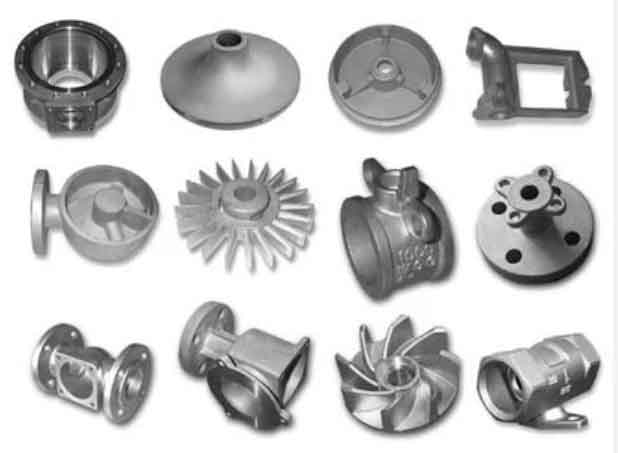
For ADI components processed through isothermal quenching, the enhanced properties are achieved through precise heat treatment parameters:
$$ T_{\text{austenitizing}} = 850-950 \, ^\circ\text{C} $$
$$ T_{\text{quenching}} = 250-400 \, ^\circ\text{C} $$
$$ t_{\text{holding}} = 1-4 \, \text{hours} $$
| Grade | Tensile Strength (MPa) | Yield Strength (MPa) | Elongation (%) |
|---|---|---|---|
| QTD800-10 | 800 | 500 | 10 |
| QTD900-8 | 900 | 600 | 8 |
| QTD1050-6 | 1,050 | 700 | 6 |
Manufacturing Process Optimization
The production of high-performance ductile iron casting requires strict control of metallurgical processes:
- Nodularization: Pure magnesium treatment achieves 60% Mg absorption with 0.2% sulfur tolerance
- Inoculation: Three-stage inoculation using Ba-containing FeSi alloys
- Alloy Design:
$$ \text{C} = 3.3-3.5\%, \, \text{Si} = 2.3-2.5\%, \, \text{Mn} = 0.8-1.0\%, \, \text{Cu} = 0.7-0.9\% $$
Lightweighting Case Study: Balance Shaft Bracket
A 29% mass reduction was achieved in a heavy truck balance shaft bracket through ductile iron casting optimization:
| Parameter | Original Design | Optimized Design |
|---|---|---|
| Mass (kg) | 51 | 36 |
| Wall Thickness (mm) | 14–16 | 12 |
| Safety Factor | 2.1 | 2.3 |
Finite element analysis confirmed stress distribution improvement:
$$ \sigma_{\text{max, vertical}} = 220 \, \text{MPa} $$
$$ \sigma_{\text{max, braking}} = 185 \, \text{MPa} $$
Technical Challenges in Ductile Iron Casting
Three critical barriers limit wider adoption of high-performance ductile iron casting:
- Cost Dynamics:
$$ C_{\text{material}} = 1.2C_{\text{standard}} + 0.3C_{\text{alloy}} + 0.15C_{\text{process}} $$ - Process Stability: Batch-to-batch variation in nodularity (70–90%) and pearlite content (75–90%)
- Design-Process Integration: Lack of concurrent engineering between OEMs and foundries
Future Development Directions
Emerging technologies in ductile iron casting include:
- Hybrid casting-forging processes for complex geometries
- AI-driven defect prediction:
$$ P_{\text{shrinkage}} = f(T_{\text{pouring}}, V_{\text{filling}}, C_{\text{equivalent}}) $$ - Low-carbon production methods reducing CO₂ emissions by 30–40%
The continuous advancement in ductile iron casting technologies demonstrates significant potential for achieving 40–50% mass reduction in commercial vehicle chassis systems while maintaining structural integrity and cost competitiveness.