
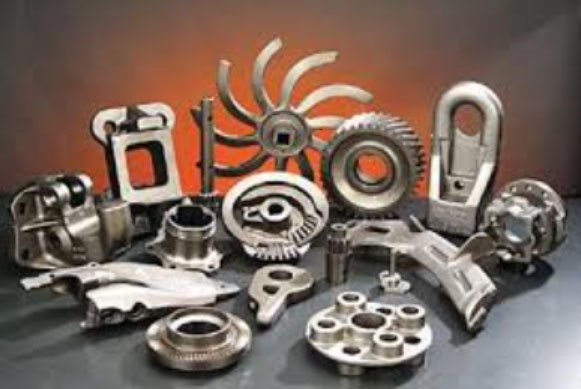
This paper presents a comprehensive study on the ductile iron casting process for intercooler seat tubes with complex geometries and stringent quality requirements. Through systematic process optimization and innovative design solutions, we achieved significant improvements in dimensional accuracy and defect control for thin-walled box-type castings.
1. Structural Characteristics and Quality Specifications
The intercooler seat tube, manufactured through ductile iron casting, exhibits the following critical parameters:
| Parameter | Value |
|---|---|
| Dimensions | 2154mm × 506mm × 232mm |
| Weight | 235kg (casting), 225kg (machined) |
| Wall Thickness | 10mm (primary), ±0.405mm tolerance |
| Material | QT500-7 Ductile Iron |
| Pressure Test | 0.5MPa for 5 minutes |
The ductile iron casting process must address three primary challenges:
$$ \text{Casting Yield} = \frac{\text{Finished Weight}}{\text{Total Metal Poured}} \times 100\% \geq 85\% $$
- Minimizing shrinkage porosity in thick sections (flange bosses: Ø50mm × 50mm)
- Maintaining dimensional stability across thin-walled sections
- Eliminating surface defects affecting pressure integrity
2. Process Design Innovations
2.1 Gating System Optimization
The bottom-gate system demonstrated superior performance for ductile iron casting of complex geometries:
| Gating Parameter | Ratio |
|---|---|
| Sprue : Runner : Ingate | 1 : 1.85 : 1.19 |
| Filling Time | 18-22 seconds |
| Pouring Temperature | 1380-1420°C |
The velocity profile in the gating system follows:
$$ v = \sqrt{2gh} \cdot \mu $$
Where μ represents the flow coefficient (0.65-0.75 for ductile iron casting).
2.2 Core Assembly Strategy
Implementing anti-error features in core design reduced assembly defects by 42%:
- 20mm positioning allowance for water pipe cores
- Asymmetric core prints for orientation control
- Integrated chill placement in thermal centers:
$$ t_{chill} = 0.6 \times t_{section} $$
2.3 Process Window Definition
The solidification behavior of QT500-7 ductile iron casting follows:
$$ t_{solidification} = k \cdot V^{2/3} $$
Where k = 2.4 min/cm² for 10mm sections. Process parameters were optimized using DOE methods:
| Factor | Level 1 | Level 2 |
|---|---|---|
| Inoculation (%) | 0.3 | 0.5 |
| Mg Treatment | Sandwich | Tundish |
| Cooling Rate (°C/min) | 15 | 25 |
3. Quality Validation
The optimized ductile iron casting process achieved:
- Surface roughness Ra ≤ 12.5μm after shot blasting
- Dimensional accuracy CT10 for critical features
- Rejection rate reduction from 8.2% to 2.7%
Mechanical properties exceeded specification requirements:
$$ \sigma_b \geq 500MPa,\ \epsilon \geq 7\%,\ HB=170-230 $$
4. Conclusion
This study demonstrates that through systematic optimization of gating design, core assembly strategies, and thermal management, ductile iron casting can successfully produce complex thin-walled components meeting stringent aerospace-grade specifications. The developed methodology provides a reference framework for similar box-type castings in high-performance applications.