
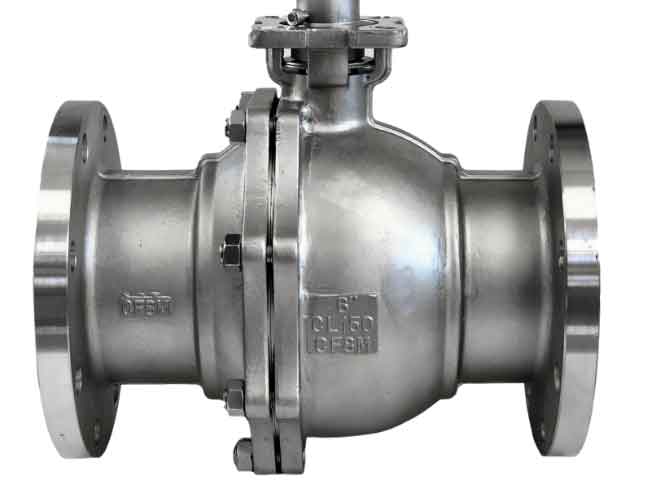
Valve body castings operate under high-temperature and high-pressure conditions, typically manufactured through sand casting. Based on wall thickness, they are classified as thin-walled (outer-to-inner diameter ratio K = 1.1–1.2) or thick-walled. Internal cavities are formed using sand cores supported by core prints at both ends. During pouring, molten steel exerts an upward buoyant force (Fb) 4–5 times the core weight (Wc):
$$F_b = \rho_{steel} \cdot g \cdot V_{displaced} \approx (4 \text{ to } 5) \cdot W_c$$
$$W_c = \rho_{sand} \cdot g \cdot V_{core}$$
This imbalance causes core floating (“floating core”), leading to non-uniform wall thickness (upper section thinner, lower section thicker), dimensional inaccuracies, shrinkage porosity, and scrap. For example, a thin-walled main steam valve body casting (dimensions: 2,990 mm × 2,200 mm × 1,550 mm; weight: 18 tons; min. wall thickness: 100 mm) exhibited these defects. The core spanned 2,700–3,590 mm, with traditional single-row core bones (ϕ100–120 mm round steel) proving inadequate against buoyancy.
1. Analysis of Floating Core Defects
Measured wall thickness deviations in six valve body castings revealed consistent floating core patterns (Table 1). Core displacement (δ) correlated with core span length (L):
$$\delta \propto \frac{F_b \cdot L^3}{E \cdot I}$$
where E is Young’s modulus and I is the moment of inertia of the core bone. Shrinkage porosity occurred due to altered solidification paths from wall thickness variations.
| Valve Body | Core Span (mm) | Core Bone Dia. (mm) | Theoretical Wall (mm) | Measured Wall Thickness (mm) | Displacement (mm) | |||||
|---|---|---|---|---|---|---|---|---|---|---|
| a | b | c | d | e | f | |||||
| 1 | 2,700 | 100 | 90 | 75 | 81 | 90 | 98 | 105 | 97 | 15 |
| 2 | 2,700 | 100 | 90 | 73 | 80 | 89 | 99 | 107 | 98 | 17 |
| 3 | 2,700 | 100 | 90 | 74 | 81 | 91 | 97 | 106 | 97 | 16 |
| 4 | 3,590 | 120 | 100 | 77 | 87 | 99 | 110 | 122 | 110 | 23 |
| 5 | 3,590 | 120 | 100 | 80 | 89 | 100 | 110 | 120 | 109 | 20 |
| 6 | 3,590 | 120 | 100 | 79 | 88 | 100 | 111 | 121 | 110 | 21 |
2. Anti-Floating Core Solutions for Valve Body Castings
2.1 Double-Row Core Bone Design
Traditional single-row core bones were replaced with a double-row system (Figure 1), increasing the moment of inertia (I) and stiffness. The design uses sprue bars (ϕ100–120 mm) for cost efficiency, welded into a T-configuration. Transverse reinforcement bars (ϕ20–30 mm; spacing: 500–600 mm) and stabilizing square rods (60–80 mm) connect both rows. Stiffness enhancement is quantified as:
$$\Delta I = \frac{\pi (d_2^4 – d_1^4)}{64} \approx 1.5 \text{ to } 2 \times I_{\text{single-row}}$$
where d2 and d1 are effective diameters of double-row and single-row systems.
2.2 Core Print Fixation
Pre-embedded square rods (60–80 mm) were installed in the lower mold (Core Mark 1). Matching rods (Core Mark 2) were welded to core prints. After core setting, both marks were welded, rigidly fixing the core to the drag.
2.3 Core Print Gap Verification
Clay strips (ϕ8–10 mm) were placed on core prints before closing the cope. After partial assembly, the cope was lifted to inspect clay compression. Gaps >3 mm required steel shim insertion to ensure full print contact.
2.4 Reverse Deformation Compensation
A reverse distortion allowance (δcomp) was added to the upper cavity of the core box:
$$\delta_{comp} = \delta_{\text{max}} + \Delta_{\text{tolerance}}$$
where δmax is historical max displacement and Δtolerance is casting allowance.
3. Implementation Results
Post-implementation data confirmed significant improvements in valve body casting quality (Table 2). Floating core displacement fell to 1–3 mm, shrinkage porosity decreased, and rework rates dropped by 85%.
| Parameter | Pre-Improvement | Post-Improvement | Reduction |
|---|---|---|---|
| Core Displacement (mm) | 10–25 | 1–3 | 85–90% |
| Shrinkage Volume (dm³) | 2.5–3.0 | 0.3–0.5 | 83–87% |
| Rework Rate (dm³/t) | 1.64 | 0.24 | 85% |
4. Conclusion
The double-row core bone design enhanced stiffness by 150–200% while utilizing cost-effective sprue bars. Combined with core print fixation, gap control, and reverse distortion compensation, floating core displacement in valve body castings was reduced to within 1–3 mm. This eliminated related shrinkage defects and cut rework by 85%. The integrated approach ensures dimensional accuracy and reliability for large valve body castings under high metallostatic pressure.