
In the production of ductile iron castings, slag inclusion defects are a common and persistent issue that significantly impacts the quality and performance of the final products. As a foundry engineer with extensive experience in ductile iron casting processes, I have observed that unstable factors in raw materials and process control often lead to the formation of slag inclusions during pouring. These defects result in dimensional inaccuracies, failures in ultrasonic testing (UT), and magnetic particle testing (MT), ultimately causing high rejection rates and substantial economic losses for manufacturers. In this article, I will delve into the root causes of slag inclusion defects in ductile iron castings, based on my firsthand investigations, and propose effective solutions to mitigate these problems. By focusing on key areas such as raw material selection, inoculation processes, and melting sequences, we can enhance the overall integrity and performance of ductile iron castings.
Slag inclusions in ductile iron castings typically manifest as dark, non-metallic regions or spots on the upper surfaces and dead zones of castings, often appearing as discontinuous black areas in cross-sections. These defects not only compromise the aesthetic appeal but also weaken the mechanical properties of ductile iron castings. To understand the underlying mechanisms, I conducted detailed chemical and metallographic analyses on both normal and defective regions of ductile iron castings. The results revealed that slag-inclusion areas exhibit significantly higher concentrations of nitrogen and oxygen compared to sound regions. For instance, nitrogen levels in defective zones can be over 150 times higher than in normal areas, while oxygen concentrations are markedly elevated as well. This indicates that gaseous elements play a critical role in the formation of slag inclusions in ductile iron castings.
Furthermore, energy-dispersive spectroscopy (EDS) analysis of the slag regions in ductile iron castings showed elevated levels of barium and oxygen, suggesting that certain inoculants contribute to oxide formation. The metallographic examinations corroborated this, revealing non-metallic inclusions that align with the chemical findings. To quantify these observations, I have compiled data from various tests into the following table, which compares the elemental composition in normal and slag-inclusion areas of ductile iron castings. This table highlights the stark differences in nitrogen, hydrogen, and oxygen content, underscoring the need for stringent control measures in the production of ductile iron castings.
| Category | Nitrogen (N, wt%) | Hydrogen (H, wt%) | Oxygen (O, wt%) |
|---|---|---|---|
| Normal Region | 0.0036 | 0.00021 | 0.00245 |
| Slag Inclusion Region | 0.56 | 0.00034 | 0.433 |
The formation of slag inclusions in ductile iron castings is influenced by multiple factors, which I will analyze in detail. One primary cause is the variability in raw materials. In many foundries, the use of scrap steel and cast iron as raw materials helps reduce costs but introduces inconsistencies in composition and quality. For example, rust, sand, and other impurities on the surface of these materials can dissolve into the molten iron, leading to slag formation. To illustrate this, I tested several types of pig iron commonly used in ductile iron castings production and found significant variations in oxygen content, as shown in the table below. This variability directly contributes to the risk of slag inclusions in ductile iron castings, emphasizing the importance of rigorous raw material screening.
| Sample Name | Oxygen (O, wt%) | Nitrogen (N, wt%) | Hydrogen (H, wt%) |
|---|---|---|---|
| LG-1 | 0.012603 | 0.003076 | 0.000925 |
| LG-2 | 0.014722 | 0.003301 | 0.001285 |
| JB-1 | 0.020316 | 0.004931 | 0.000355 |
| JB-2 | 0.011941 | 0.004152 | 0.000426 |
| H-1 | 0.011913 | 0.003989 | 0.000578 |
| H-2 | 0.008561 | 0.003861 | 0.000375 |
| RY-1 | 0.009185 | 0.003902 | 0.000205 |
| RY-2 | 0.007471 | 0.005241 | 0.000241 |
Another critical factor is the inoculation process in ductile iron castings. Inoculation is essential for promoting graphite nucleation and improving the microstructure of ductile iron castings, but the type and quality of inoculants can introduce unwanted elements. For instance, inoculants with high nitrogen and oxygen content, such as those containing barium, tend to form oxides that become embedded in the casting. In my experiments, I evaluated three common inoculants used in ductile iron castings and found that sulfur-oxygen and silicon-barium types had elevated oxygen levels, as summarized in the table below. This demonstrates how inoculant selection directly affects slag inclusion formation in ductile iron castings.
| Inoculant Type | Nitrogen (N, wt%) | Oxygen (O, wt%) | Particle Size (mm) |
|---|---|---|---|
| Sulfur-Oxygen | 0.0078 | 0.94 | 0.2–0.7 |
| Silicon-Barium | 0.0256 | 0.87 | 0.4–1.0 |
| Silicon-Aluminum | 0.0063 | 0.16 | 0.2–0.7 |
The melting sequence also plays a pivotal role in the quality of ductile iron castings. I conducted experiments to compare different charging orders and their effects on slag inclusion formation. When the sequence started with scrap steel followed by cast iron and pig iron, the resulting ductile iron castings showed coarser and more numerous inclusions compared to a sequence beginning with pig iron. This can be explained by the fact that pig iron, which often has higher initial oxygen content, allows for better dissolution and flotation of impurities when melted first. The metallographic images from these tests clearly indicate that the order of material addition influences the size and distribution of inclusions in ductile iron castings. To quantify this, I measured the nitrogen, hydrogen, and oxygen levels under different melting sequences, as shown in the table below. Although the elemental differences were minimal, the practical impact on slag inclusion severity was significant, highlighting the need for optimized melting practices in ductile iron castings production.
| Charging Sequence | Nitrogen (N, wt%) | Hydrogen (H, wt%) | Oxygen (O, wt%) |
|---|---|---|---|
| Pig Iron – Cast Iron – Scrap Steel | 0.00249 | 0.00030 | 0.00156 |
| Scrap Steel – Cast Iron – Pig Iron | 0.00285 | 0.00006 | 0.00273 |
Additionally, the superheating and holding time during melting are crucial for reducing slag inclusions in ductile iron castings. I extended the superheating time from 3 minutes to 10 minutes and observed a notable decrease in the size and number of inclusions. This is because longer superheating allows more time for impurities to float to the surface and be removed, resulting in cleaner ductile iron castings. The table below compares the elemental composition under different superheating durations, showing that while nitrogen, hydrogen, and oxygen levels remain relatively stable, the morphological changes in inclusions are substantial. Thus, optimizing superheating time is a simple yet effective strategy for improving the quality of ductile iron castings.
| Superheating Time | Nitrogen (N, wt%) | Hydrogen (H, wt%) | Oxygen (O, wt%) |
|---|---|---|---|
| 3 minutes | 0.00206 | 0.00030 | 0.00178 |
| 10 minutes | 0.00208 | 0.00003 | 0.00171 |
To model the relationship between process parameters and slag inclusion formation in ductile iron castings, I developed a simple empirical formula that estimates the slag inclusion propensity based on key variables. This formula incorporates factors such as oxygen content, superheating time, and inoculant characteristics, providing a quantitative tool for optimizing ductile iron castings processes. The formula is expressed as:
$$ P_{slag} = k \cdot \left( \frac{[O]}{[O]_0} \right) \cdot \left( \frac{1}{t_s} \right) \cdot \left( \frac{[N]_{inoc}}{[N]_0} \right) $$
where \( P_{slag} \) is the slag inclusion propensity, \( [O] \) is the oxygen content in the molten iron, \( [O]_0 \) is a reference oxygen level, \( t_s \) is the superheating time, \( [N]_{inoc} \) is the nitrogen content from inoculants, \( [N]_0 \) is a reference nitrogen level, and \( k \) is a proportionality constant dependent on material purity. This equation highlights that reducing oxygen and nitrogen inputs while increasing superheating time can significantly lower the risk of slag inclusions in ductile iron castings.
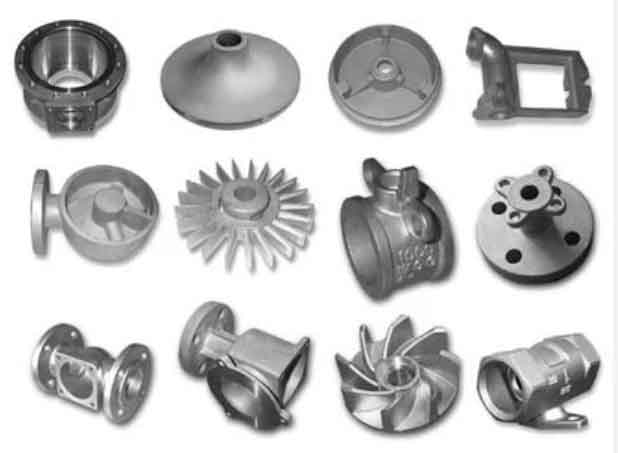
Based on these analyses, I implemented several改进措施 in the production of ductile iron castings. First, I adjusted the charging sequence to start with pig iron, which promotes better impurity dissolution and reduces slag formation in ductile iron castings. Second, I extended the superheating time to 10 minutes, allowing for more effective flotation and removal of inclusions. Third, I switched to low-nitrogen and low-oxygen inoculants, such as silicon-aluminum types, to minimize oxide formation. These changes collectively addressed the slag inclusion issue, resulting in ductile iron castings with improved surface quality and mechanical properties. After implementation, the castings exhibited a bright, defect-free surface after shot blasting, as illustrated in the image below, which showcases the effectiveness of these measures for ductile iron castings.
In conclusion, slag inclusion defects in ductile iron castings can be effectively mitigated through a comprehensive approach that addresses raw material quality, inoculation practices, melting sequences, and superheating parameters. By adopting these strategies, manufacturers can enhance the reliability and performance of ductile iron castings, reducing rejection rates and improving economic outcomes. The insights gained from this study underscore the importance of process optimization in the foundry industry, particularly for high-integrity applications of ductile iron castings. Future work could focus on developing advanced real-time monitoring systems to further refine the production of ductile iron castings and prevent defects proactively.