
In my extensive experience working with ductile iron castings, I have observed that small ductile iron castings often suffer from shrinkage defects such as micro-shrinkage and sink marks. These defects arise due to the unique solidification characteristics of ductile iron, which include a mushy solidification mode, a broad solidification temperature range, and a low temperature gradient during cooling. Small ductile iron castings typically have thin sections, low modulus, and low yield rates, making it challenging to utilize graphite expansion for self-feeding during solidification. This article delves into the root causes of these defects and presents effective solutions based on controlling silicon content and employing specialized nodularizers, particularly pure lanthanum-based agents. I will use tables and equations to summarize key points, ensuring a comprehensive understanding of how to mitigate these issues in ductile iron casting production.
The formation of shrinkage defects in ductile iron castings is closely tied to the alloy’s solidification behavior. Ductile iron undergoes a mushy solidification process, where graphite nodules grow within an austenite shell, leading to a delayed formation of a solid outer layer. This results in a dispersed liquid and solid phase, causing shrinkage pores to form and remain unfilled due to inadequate liquid metal feeding. The solidification temperature range plays a critical role; a wider range increases the tendency for micro-shrinkage and sink defects. In contrast, alloys with a narrow solidification range, exhibiting directional solidification, are more prone to macro-shrinkage but less likely to develop micro-shrinkage. The relationship between solidification mode and defect formation can be expressed using the following equation for the solidification temperature range, ΔT: $$ \Delta T = T_l – T_s $$ where \( T_l \) is the liquidus temperature and \( T_s \) is the solidus temperature. For ductile iron castings, a larger ΔT correlates with a higher risk of shrinkage defects, as it prolongs the time during which graphite expansion occurs inefficiently.
| Element | Effect on Solidification Range | Impact on Shrinkage Defects |
|---|---|---|
| Silicon (Si) | Increases range significantly | High tendency for micro-shrinkage and sink |
| Carbon (C) | Moderate increase | Can reduce defects if balanced with Si |
| Manganese (Mn) | Slight increase | Minor effect |
| Phosphorus (P) | Increases range | Increases shrinkage risk |
| Lanthanum (La) | May narrow effective range | Reduces defects by delaying graphite precipitation |
Silicon is a pivotal element in ductile iron castings, as it significantly widens the solidification range and enhances carbon activity, leading to early graphite precipitation during solidification. In my work, I have found that higher silicon content, often used to prevent chill and improve ductility in low-grade ductile iron castings, can exacerbate shrinkage issues. For instance, when silicon levels exceed 2.8%, the solidification range expands, causing more graphite to precipitate in the initial stages. This early graphite expansion fails to compensate for liquid shrinkage because the feeding channels remain open, and the weak solid shell cannot withstand atmospheric pressure, resulting in sink marks. The effect of silicon on the solidification range can be modeled using an empirical formula: $$ \Delta T_{Si} = k \cdot [Si] $$ where \( \Delta T_{Si} \) is the increase in solidification range due to silicon, [Si] is the silicon concentration, and k is a constant dependent on the alloy composition. For small ductile iron castings, maintaining silicon between 2.5% and 2.8% is optimal to minimize defects while ensuring mechanical properties.
To address shrinkage defects in ductile iron castings, I recommend a dual approach: controlling silicon content and using pure lanthanum-based nodularizers. Controlling silicon involves balancing the carbon equivalent (CE) to maximize carbon content, which promotes later graphite expansion for self-feeding. The carbon equivalent is given by: $$ CE = C + \frac{1}{3}(Si + P) $$ where C, Si, and P are the percentages of carbon, silicon, and phosphorus, respectively. By aiming for a higher C and lower Si, the solidification range narrows, reducing early graphite precipitation. In practice, I have seen that adjusting silicon to 2.7% and carbon to 3.7% in small ductile iron castings can eliminate micro-shrinkage, as it shifts graphite formation to the later stages of solidification, where expansion effectively counteracts shrinkage.
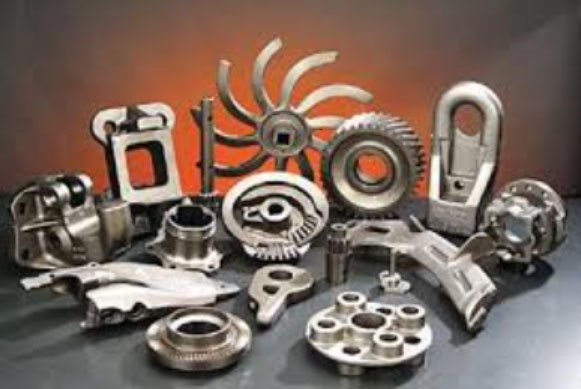
Pure lanthanum nodularizers offer a transformative solution for ductile iron castings by delaying graphite precipitation and enhancing late-stage expansion. In my observations, ductile iron treated with lanthanum-based agents exhibits a distinct microstructure with a mix of small and large graphite nodules, as opposed to the uniform-sized nodules from cerium-based treatments. This heterogeneity ensures that graphite forms predominantly in the final solidification zones, providing sufficient expansion to compensate for shrinkage. The effectiveness of lanthanum can be quantified through the graphite nodule count and size distribution. For example, the number of nodules per unit area, N, and the average diameter, d, can be related to the shrinkage tendency. A higher N with a broad size distribution reduces defects, whereas a high N with uniform d increases risk. This relationship highlights why pure lanthanum nodularizers are superior for small ductile iron castings, as they optimize the timing of graphite expansion.
| Nodularizer Type | Graphite Precipitation Timing | Shrinkage Defect Tendency | Recommended Applications |
|---|---|---|---|
| Pure Lanthanum-Based | Delayed, with late-stage dominance | Low | Small, thin-section ductile iron castings |
| Cerium-Based | Early and uniform | High | Less critical applications |
| Magnesium-Silicon | Moderate | Medium | General ductile iron castings |
In practical applications, I have encountered numerous cases where adjusting process parameters resolved shrinkage issues in ductile iron castings. For instance, in one scenario involving shell molding with iron shot backing for QT450-10 grade small ductile iron castings, micro-shrinkage was prevalent. The original composition had elevated silicon levels, which widened the solidification range. By reducing the final silicon content to 2.7% and increasing carbon to 3.7%, while keeping other conditions constant, the defects were eliminated. This adjustment narrowed the solidification range, allowing for more effective use of graphite expansion in the later stages. The improvement can be expressed using a solidification model: $$ V_s = \int_{T_s}^{T_l} \alpha_g \cdot dT $$ where \( V_s \) is the volume of shrinkage, and \( \alpha_g \) is the coefficient of graphite expansion. Lower silicon reduces \( \alpha_g \) in early stages, minimizing \( V_s \).
Another example involved ductile iron pipe fittings and flanges that exhibited sink marks and subsequent micro-shrinkage after machining. Initial measures included process optimization and silicon control, which addressed the sink marks but not the underlying shrinkage. Switching to a pure lanthanum nodularizer via cored wire treatment transformed the microstructure, resulting in a bimodal graphite size distribution that enhanced late expansion and eliminated defects. This case underscores the importance of selecting the right nodularizer for ductile iron castings, particularly when traditional methods like risers or chills are impractical due to design constraints. The effectiveness of lanthanum can be further illustrated through its impact on the solidification kinetics, where it alters the nucleation rate of graphite, leading to more nodules in the final solidification regions.
In conclusion, my experience with ductile iron castings confirms that shrinkage defects such as micro-shrinkage and sink marks are primarily influenced by the solidification mode and temperature range. A mushy solidification mode and a wide solidification range, often exacerbated by high silicon content, increase the propensity for these defects. For small ductile iron castings, effective solutions involve controlling silicon levels to within 2.5% to 2.8% and employing pure lanthanum-based nodularizers to delay graphite precipitation and maximize late-stage expansion. These strategies leverage the fundamental principles of solidification to enhance the quality and reliability of ductile iron castings, ensuring they meet mechanical requirements without compromising integrity. Through continued research and application, I believe these approaches will remain vital for advancing ductile iron casting technologies.