
In the production of large-scale components like wind power hubs, ductile iron castings offer exceptional strength and durability. This article details the development of a riserless casting process for a 2.5 MW wind power hub made from ductile iron, focusing on material selection, process design, and quality assurance. The use of riserless casting in ductile iron castings reduces material waste and improves efficiency, making it a preferred method for high-performance applications. We will explore how controlled metallurgy and innovative casting techniques enable the production of defect-free ductile iron castings.
The wind power hub, with a mass of 13.5 tons and wall thicknesses ranging from 50 mm to 280 mm, requires stringent mechanical properties, including high impact resistance at low temperatures. By leveraging the graphite expansion principle in ductile iron, we achieved a riserless design that minimizes shrinkage defects. This approach not only enhances the integrity of ductile iron castings but also streamlines production. Throughout this process, we emphasize the importance of precise control in every stage, from melting to solidification, to ensure the reliability of ductile iron castings in demanding environments.
Melting Process Control for Ductile Iron Castings
The foundation of high-quality ductile iron castings lies in the melting process. We selected high-purity raw materials, including low-manganese, low-phosphorus, and low-sulfur pig iron, along with clean steel scrap, to minimize detrimental elements like titanium, chromium, and lead. The charge composition was carefully balanced, typically consisting of 35-55% pig iron, 25-35% steel scrap, and 15-25% returns, with graphite-based carburizers used to adjust carbon content. This ensures a consistent base for producing superior ductile iron castings.
Chemical composition is critical for achieving the desired properties in ductile iron castings. We aimed for a carbon equivalent (CE) between 4.3% and 4.5% to promote graphite expansion, which compensates for solidification shrinkage. The CE is calculated using the formula: $$CE = \%C + \frac{\%Si + \%P}{3}$$ where C, Si, and P represent the weight percentages of carbon, silicon, and phosphorus, respectively. By maintaining tight control over these elements, we optimize the microstructure of ductile iron castings, enhancing their mechanical performance.
| Element | Target Range (wt%) | Role in Ductile Iron |
|---|---|---|
| Carbon (C) | 3.60 – 3.75 | Promotes graphite formation and fluidity |
| Silicon (Si) | 1.8 – 2.1 | Enhances graphitization and strength |
| Manganese (Mn) | < 0.2 | Reduces segregation and improves hardness |
| Phosphorus (P) | < 0.04 | Minimizes brittleness |
| Sulfur (S) | < 0.01 | Prevents sulfide inclusions |
| Residual Magnesium (Mg) | 0.04 – 0.055 | Facilitates nodular graphite formation |
Nodularization and inoculation are vital steps in producing ductile iron castings. We employed a low-rare-earth ferrosilicon-magnesium nodularizer with 5.5-6.5% Mg and 0.8-1.5% RE, added at 1-1.3% of the iron weight based on sulfur content. The treatment was conducted using the sandwich method at 1420-1450°C. Multiple inoculations were performed: primary inoculation with 0.2% ferrosilicon (70% Si, 3-10 mm size) over the nodularizer, secondary inoculation with 0.45% ferrosilicon after slag removal, and stream inoculation with 0.15% specialized inoculant (0.3-1 mm size) during pouring. This multi-stage approach ensures a fine graphite structure in ductile iron castings, improving toughness and reducing shrinkage tendencies.
The kinetics of graphite nucleation in ductile iron castings can be described by the equation: $$N = N_0 \exp\left(-\frac{\Delta G}{kT}\right)$$ where N is the number of nuclei, N_0 is a constant, ΔG is the activation energy for nucleation, k is Boltzmann’s constant, and T is temperature. By controlling inoculation, we maximize graphite nodule count, which is essential for the riserless casting of ductile iron castings. The resulting iron exhibits excellent fluidity and low shrinkage, key for complex geometries like wind power hubs.
Casting Process Design for Riserless Ductile Iron Castings
The design of the casting process for ductile iron castings focuses on achieving uniform solidification without traditional risers. We used a low-nitrogen furan resin sand with a binder content of 1-1.2% and a compressive strength exceeding 4.0 MPa to withstand the graphite expansion pressures. The mold was parted along the hub’s centerline, with the main shaft bore facing downward, and incorporated integral sand cores with specialized reinforcements to prevent core shifts and sand inclusions. This setup ensures dimensional stability and reduces the risk of defects in ductile iron castings.
To facilitate riserless casting, we implemented a bottom-gating system with open characteristics, minimizing turbulence and slag entrapment. The gating ratio was set as ∑F_vertical : ∑F_horizontal : ∑F_ingate = 1 : 1.5 : 2. A φ140 mm ceramic tube served as the sprue, connecting to horizontal runners at the core base, which included 150 mm × 150 mm × 40 mm foam ceramic filters. Ingates, made of ceramic tubes, linked the filters to the flange area, enabling a smooth fill. Vent holes (φ30 mm) were placed on the cope, and a φ200 mm pipe aided core venting. Chills (φ150 mm × 150 mm) were strategically positioned at thick sections to promote directional solidification, leveraging the equation for heat transfer: $$q = -k \frac{\partial T}{\partial x}$$ where q is heat flux, k is thermal conductivity, and ∂T/∂x is the temperature gradient. This design ensures that ductile iron castings solidify evenly, avoiding shrinkage porosity.
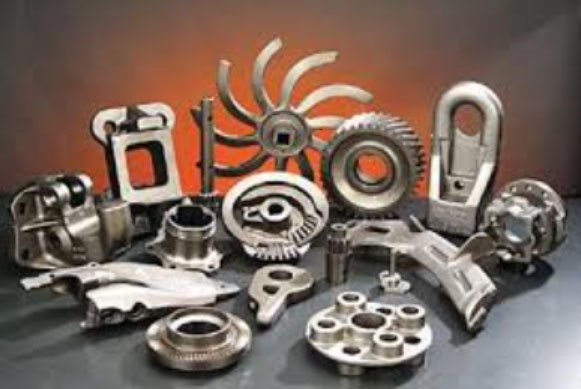
The riserless approach for ductile iron castings relies on the graphite expansion pressure to counter liquid shrinkage. The pressure generated during solidification can be estimated as: $$P = \frac{E \cdot \Delta V}{V}$$ where P is the pressure, E is the modulus of elasticity of the mold, ΔV is the volume change due to graphite expansion, and V is the initial volume. By using rigid steel frames (25 mm thick) and high-strength molds, we contained this pressure, enabling successful riserless production of ductile iron castings. Pouring parameters were critical: temperature of 1310-1330°C and time of 80-90 seconds for a total mass of 16 tons, ensuring rapid filling to reduce thermal gradients.
| Parameter | Value | Impact on Ductile Iron Castings |
|---|---|---|
| Pouring Temperature | 1310 – 1330°C | Reduces liquid contraction and improves fluidity |
| Pouring Time | 80 – 90 s | Minimizes temperature loss and turbulence |
| Mold Strength | > 4.0 MPa | Resists expansion forces during solidification |
| Chill Usage | 16 units at thick sections | Accelerates cooling to prevent shrinkage |
| Gating Ratio | 1 : 1.5 : 2 | Ensures smooth metal flow and slag trapping |
Post-casting handling involved a 4-hour mold cooling period before coating application to preserve mold integrity. We used alcohol-based anti-penetration coatings with a Baume degree of 38-45°Bé, applied in two layers. Core assembly included thorough cleaning of ceramic passages and dimensional checks. Prior to closing the mold, chills were lightly heated to remove moisture, ensuring a dry environment for the ductile iron castings. This meticulous process guarantees that the final ductile iron castings meet high-quality standards without the need for extensive finishing.
Testing and Performance of Ductile Iron Castings
Quality assessment of the ductile iron castings involved destructive and non-destructive tests. For the 70 mm thick attached test block, we observed a nodularity of 95% and graphite size of 6, indicating excellent graphitization. Mechanical properties exceeded requirements: tensile strength of 375 MPa, yield strength of 240 MPa, elongation of 24%, hardness of 130 HB, and an average impact energy of 14 J at -40°C. These results demonstrate the superior performance of ductile iron castings in low-temperature applications, such as wind power hubs.
The impact toughness of ductile iron castings at low temperatures can be modeled using the equation: $$CVN = A \exp\left(-\frac{B}{T}\right)$$ where CVN is the Charpy V-notch energy, A and B are material constants, and T is temperature. Our tests confirmed that the ductile iron castings maintain high toughness even under severe conditions. Non-destructive testing included magnetic particle inspection and ultrasonic examination, both complying with European standards EN 1369-3 Level 2 and EN 12680-3 Level 2, respectively. This validates the integrity of the riserless ductile iron castings, with no internal defects detected in production batches.
| Property | Requirement | Actual Value |
|---|---|---|
| Tensile Strength | ≥ 350 MPa | 375 MPa |
| Yield Strength | ≥ 220 MPa | 240 MPa |
| Elongation | ≥ 15% | 24% |
| Hardness | Not specified | 130 HB |
| Impact Energy (-40°C) | ≥ 10 J (avg), ≥ 7 J (min) | 14 J (avg) |
| Nodularity | ≥ 90% | 95% |
Microstructural analysis revealed a pearlite-ferrite matrix with well-dispersed graphite nodules, typical of high-quality ductile iron castings. The absence of shrinkage and slag inclusions underscores the effectiveness of the riserless method. In bulk production, every ductile iron casting underwent similar tests, consistently meeting specifications. This reliability makes ductile iron castings ideal for critical components where failure is not an option.
Conclusion
The riserless casting technique for ductile iron castings, as applied to the 2.5 MW wind power hub, demonstrates how advanced metallurgy and process control can eliminate traditional risers while maintaining quality. By optimizing chemical composition, employing multiple inoculations, and designing robust gating and cooling systems, we achieve ductile iron castings with excellent mechanical properties and defect-free structures. The success of this method highlights the potential for broader adoption in heavy-section ductile iron castings, reducing costs and improving sustainability. Future work could focus on refining predictive models for graphite expansion in ductile iron castings, further enhancing process efficiency.
In summary, the production of ductile iron castings via riserless casting requires a holistic approach, from raw material selection to final inspection. The integration of ceramic filters, low-temperature fast pouring, and precise chill placement ensures that ductile iron castings meet stringent standards. As industries demand more efficient and reliable components, ductile iron castings will continue to play a pivotal role, driven by innovations like riserless casting. This methodology not only benefits wind energy but also other sectors relying on high-performance ductile iron castings.