
In modern foundry technology, sand-coated iron mold casting has emerged as a highly efficient method that combines the advantages of metal mold and sand casting processes. As a practitioner in this field, I have observed that this technique involves coating a thin layer of sand onto the inner surface of an iron mold to form the casting cavity. By precisely controlling the weight, wall thickness of the iron mold, and the thickness of the sand layer, the filling, solidification, and cooling processes of castings can be optimized under ideal conditions. The high strength and rigidity of the mold allow the graphite expansion during iron solidification to counteract shrinkage, effectively eliminating defects like shrinkage cavities and porosity. The cooling rate of molten iron in this foundry technology is approximately three times faster than in conventional sand casting, resulting in fine graphite structures, dense microstructures, increased pearlite content with fine interlamellar spacing, and enhanced strength, hardness, and wear resistance of castings. Compared to green sand molding, sand-coated iron mold casting produces castings with superior surface quality and internal integrity, elevating the overall grade of the product.
The core of this foundry technology lies in the meticulous design of the iron mold and the sand layer. The iron mold, typically cast from HT200 gray iron, undergoes artificial aging and machining to create射砂孔 (shooting holes) on flat surfaces, usually positioned at the highest points of the pattern to ensure the sand fills the cavity completely. The weight of the iron mold is generally 7 to 10 times that of the casting, balancing durability and process efficiency. For complex castings, this ratio may be reduced to around 5 times to maintain mold temperatures above 200°C after pouring, facilitating subsequent sand coating. The relationship between iron mold thickness and sand layer thickness is critical; a thicker iron mold accelerates cooling, while a thicker sand layer slows it down. The sand layer thickness typically ranges from 4 to 8 mm, with variations across different sections of the casting to promote uniform solidification—thinner sand in thick areas and thicker sand in thin areas. In浇注系统 (gating systems), the sand layer is often 10–15 mm thick to manage heat flow. This balance can be expressed using a simplified thermal model for cooling rate: $$ \frac{dT}{dt} = -k \cdot \frac{A}{V} \cdot \frac{T – T_{\text{mold}}}{d_s} $$ where \( \frac{dT}{dt} \) is the cooling rate, \( k \) is a constant dependent on material properties, \( A \) is the surface area, \( V \) is the volume of the casting, \( T \) is the casting temperature, \( T_{\text{mold}} \) is the mold temperature, and \( d_s \) is the sand layer thickness. This equation highlights how foundry technology leverages these parameters to control solidification.
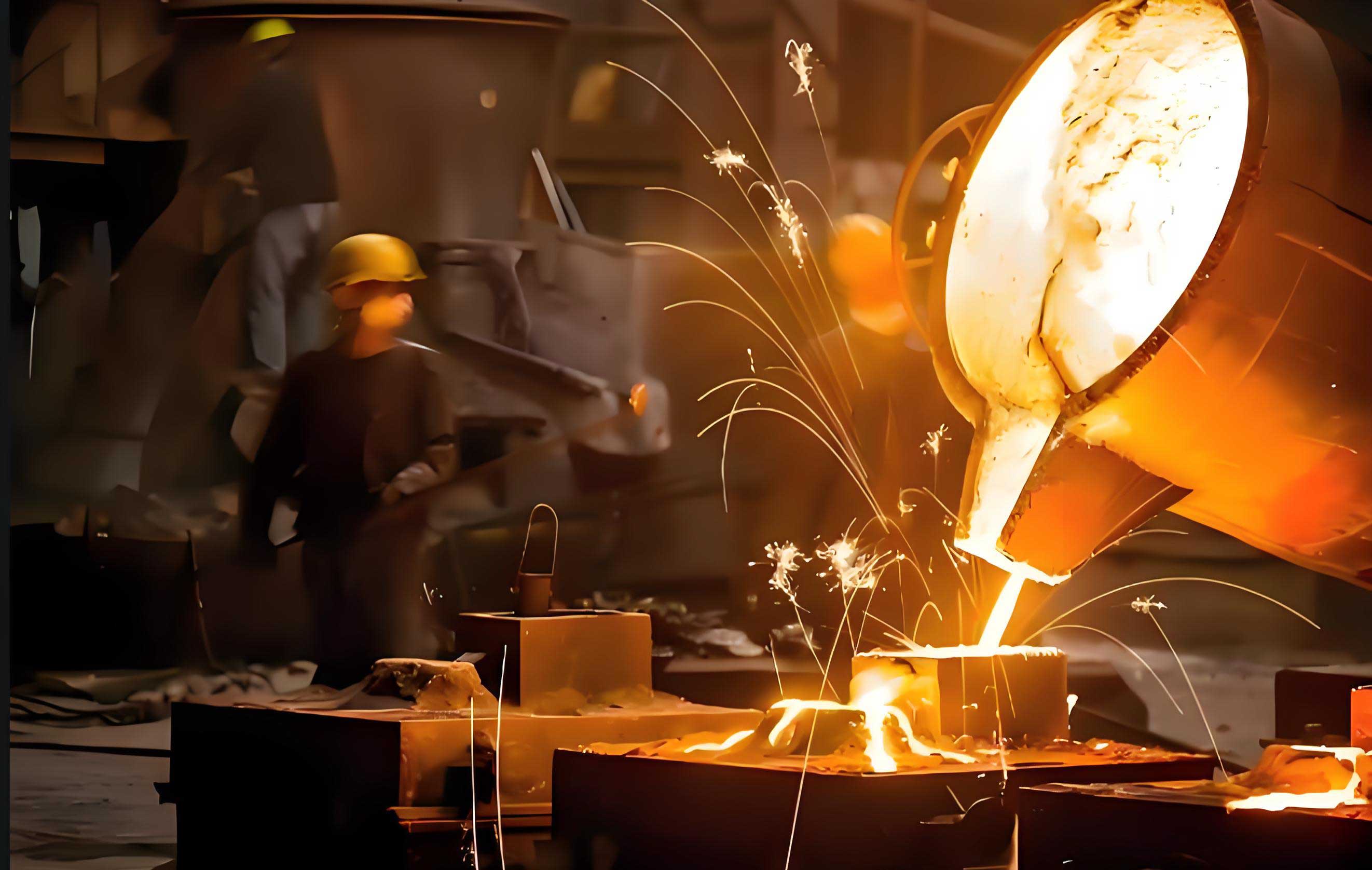
The selection of coating sand is another vital aspect of this foundry technology. Thermosetting phenolic resin-coated sand is commonly used, applied via shooting to form a layer of 5–8 mm, with an iron-to-sand ratio of approximately 1:0.18. The sand consists of 50–75 mesh calcined silica sand mixed with about 5% phenolic resin. In some advanced applications, artificial ceramic sand replaces silica sand to improve tensile strength, wear resistance, and thermal stability. To minimize defects like gas holes and sand inclusions, the coated sand must exhibit low gas evolution and high strength, with typical specifications including a room-temperature bending strength ≥7 MPa, ignition loss <3%, and gas evolution ≤12 mL/g. Due to the minimal sand usage, it is often sourced from specialized producers without the need for an in-house sand treatment system. This approach underscores the efficiency of foundry technology in resource management.
In terms of gating and riser design, this foundry technology typically employs a semi-closed gating system to facilitate the flotation of inclusions, coupled with filtration using ceramic or fiber filters. For ductile iron castings, the process harnesses the self-feeding characteristics of eutectic graphite expansion, often eliminating the need for risers when the modulus exceeds 2.5 cm. However, small ductile iron castings and gray iron castings usually require risers to address shrinkage, positioned at the ends of runners or near ingates. The design considerations can be summarized using the Chvorinov’s rule for solidification time: $$ t = B \cdot \left( \frac{V}{A} \right)^2 $$ where \( t \) is the solidification time, \( B \) is a mold constant, \( V \) is the casting volume, and \( A \) is the surface area. This principle is integral to optimizing riser placement in foundry technology.
| Element | Range in Base Iron (%) | Range After Treatment (%) | Remarks |
|---|---|---|---|
| C | 3.6–3.9 | 3.7–3.8 | Higher carbon equivalent reduces chilling |
| Si | 1.0–1.5 | 2.1–2.3 | Enhanced for improved graphitization |
| Mn | 0.3–0.5 | 0.3–0.5 | Controlled to avoid brittleness |
| S | ≤0.03 | ≤0.02 | Low sulfur for better nodulization |
| P | ≤0.05 | ≤0.05 | Minimized to prevent segregation |
| Mg | – | 0.04–0.06 | Residual from nodulization |
| RE | – | 0.02–0.04 | Rare earth for enhanced properties |
Alloy composition and melt treatment are pivotal in this foundry technology to counteract the rapid cooling that may cause chill formation. For ductile iron, the base iron typically has a carbon equivalent higher than in green sand processes, with compositions around C: 3.8–3.9%, Si: 1.0–1.5%, Mn: 0.3–0.5%, S ≤ 0.03%, and P ≤ 0.05%. After treatment, the carbon content adjusts to 3.7–3.8%, and silicon increases to 2.1–2.3%, along with additions of copper (0.4–0.6%) for strength. Residual magnesium and rare earth elements are kept low to reduce slag formation. Melting is often done in medium-frequency induction furnaces, with tapping temperatures around 1500°C and pouring temperatures controlled between 1320°C and 1450°C. Nodulization employs lower-grade agents like FeSiMg6RE2, applied via冲入法 (pouring-in method) or advanced techniques such as covered ladle or wire feeding to minimize fumes and agent consumption. Inoculation involves two stages: primary addition of 0.2–0.3% ferrosilicon during nodulization and secondary随流孕育 (stream inoculation) with 0.1% composite inoculants containing calcium and barium for improved effectiveness. The particle size of inoculants is typically 60 mesh. For gray iron, compositions include C: 3.1–3.3%, Si: 1.8–2.2%, Mn: 0.6–0.8%, and Cu: 0.3–0.5%, with pouring temperatures of 1400–1450°C. The efficiency of inoculation can be modeled using: $$ \eta = C_0 \cdot e^{-k \cdot t} $$ where \( \eta \) is the inoculation efficiency, \( C_0 \) is the initial concentration, \( k \) is a decay constant, and \( t \) is time, emphasizing the time-sensitive nature of foundry technology treatments.
| Process Step | Temperature Range (°C) | Agent Type | Addition Rate (%) | Method |
|---|---|---|---|---|
| Melting | 1500–1550 | – | – | Medium-frequency furnace |
| Nodulization | – | FeSiMg6RE2 | 1.0–1.2 | Pouring-in or wire feeding |
| Primary Inoculation | – | Composite inoculant | 0.2–0.3 | Added during nodulization |
| Secondary Inoculation | – | Ca-Ba inoculant | 0.1 | Stream inoculation |
| Pouring | 1320–1450 | – | – | With filtration |
The microstructural and mechanical properties of castings produced through this foundry technology are exceptional. Ductile iron castings exhibit graphite spheroids of grades 1–2 with sizes of 7–8, high nodularity (e.g., 90–95%), and a pearlite-ferrite matrix that can be tailored for specific applications. For instance, pearlite content may range from 30% to 95% depending on the grade, resulting in tensile strengths of 550–936 MPa, elongation of 3–13%, and hardness of 180–300 HBW. The rapid cooling fosters fine graphite and pearlite, which can be quantified using the Hall-Petch relationship for strength: $$ \sigma_y = \sigma_0 + k_y \cdot d^{-1/2} $$ where \( \sigma_y \) is the yield strength, \( \sigma_0 \) and \( k_y \) are constants, and \( d \) is the grain size, illustrating how finer structures enhance mechanical properties in foundry technology. Surface roughness achieves 12.5–25.0 μm, and dimensional accuracy reaches CT7-8 levels, significantly reducing defects like gas holes, shrinkage, and sand inclusions compared to traditional methods.
Applications of this foundry technology span various industries, including automotive components like crankshafts, brake drums, and flywheels, as well as machinery parts such as pump valves and elevator traction sheaves. The adaptability of the process allows for the production of both small and large castings, with ongoing advancements focusing on optimizing sand materials—such as using ceramic sands—and improving automation in mold handling. The integration of numerical simulation in design further enhances the precision of this foundry technology, enabling predictive control of solidification and cooling patterns. For example, thermal simulations can model the effect of sand layer thickness on temperature gradients, aiding in the customization of processes for complex geometries.
| Property | Typical Range | Influencing Factors |
|---|---|---|
| Tensile Strength | 550–936 MPa | Pearlite content, graphite size |
| Elongation | 3–13% | Ferrite proportion, inoculation |
| Hardness | 180–300 HBW | Cooling rate, alloy composition |
| Graphite Nodularity | 90–95% | Nodulization efficiency |
| Surface Roughness | 12.5–25.0 μm | Sand layer quality, mold finish |
In conclusion, sand-coated iron mold casting represents a sophisticated foundry technology that excels in producing high-quality castings with superior microstructures and surface integrity. The iron mold, with a weight 7–10 times that of the casting, and the sand layer of 5–8 mm thickness, are meticulously designed to control cooling rates. The use of semi-closed gating systems with filtration, along with tailored riser designs for specific casting types, ensures soundness. Alloy compositions with higher carbon equivalents, combined with advanced nodulization and inoculation practices, mitigate the risks of chilling and defects. The resulting castings demonstrate fine graphite, high strength, and excellent dimensional accuracy, underscoring the efficacy of this foundry technology. As innovations continue, such as the adoption of eco-friendly materials and digital simulations, this method is poised to further revolutionize the casting industry, solidifying its role as a cornerstone of modern foundry technology.
From my experience, the mathematical modeling of heat transfer in this foundry technology can be extended to include the effects of mold preheating. For instance, the temperature distribution in the iron mold and sand layer can be described by the heat equation: $$ \frac{\partial T}{\partial t} = \alpha \nabla^2 T $$ where \( \alpha \) is the thermal diffusivity, and boundary conditions account for the sand layer’s insulation. This approach allows for the optimization of process parameters, such as determining the ideal sand thickness for a given casting geometry to achieve uniform cooling. Additionally, the economic benefits of this foundry technology, including reduced scrap rates and higher productivity, make it a sustainable choice for mass production. As foundry technology evolves, the integration of real-time monitoring and AI-driven adjustments could further enhance the consistency and quality of castings, paving the way for smarter manufacturing ecosystems.