
From my vantage point within the field, precision investment casting, often termed simply as investment casting or the lost-wax process, represents not merely a manufacturing method but a confluence of art, ancient tradition, and cutting-edge science. My engagement with this process has revealed it as the definitive solution for producing metal components of exceptional geometric complexity, superb surface finish, and high dimensional accuracy that are often difficult or impossible to achieve through other casting or machining techniques. The core principle, which has fascinated me since my first encounter, involves creating a precise, disposable pattern—historically wax, now often a polymer—investing it within a refractory ceramic shell, removing the pattern via melting or dissolution, and subsequently pouring molten metal into the resulting cavity. The final act of breaking away the ceramic mold reveals a near-net-shape metal part, frequently requiring only minimal finishing. My objective in this discourse is to delve deeply into the technical intricacies, material science, process controls, and future trajectories of precision investment casting, structuring this knowledge through analytical tables and fundamental engineering formulas.
The historical lineage of precision investment casting is profound, tracing back millennia to artisans crafting intricate jewelry and artifacts. However, the transformation into a modern, industrially scalable process for engineering components—from turbine blades to biomedical implants—is a relatively recent chapter. This evolution has been fundamentally driven by parallel advancements in pattern materials, refractory systems, alloy development, and process simulation. In my practice, I have observed that the modern iteration of the process is characterized by rigorous control over every variable: pattern dimensional stability, ceramic slurry rheology, thermal profiles during dewaxing and sintering, and solidification dynamics of the metal. It is this relentless pursuit of control that justifies the “precision” in its name.
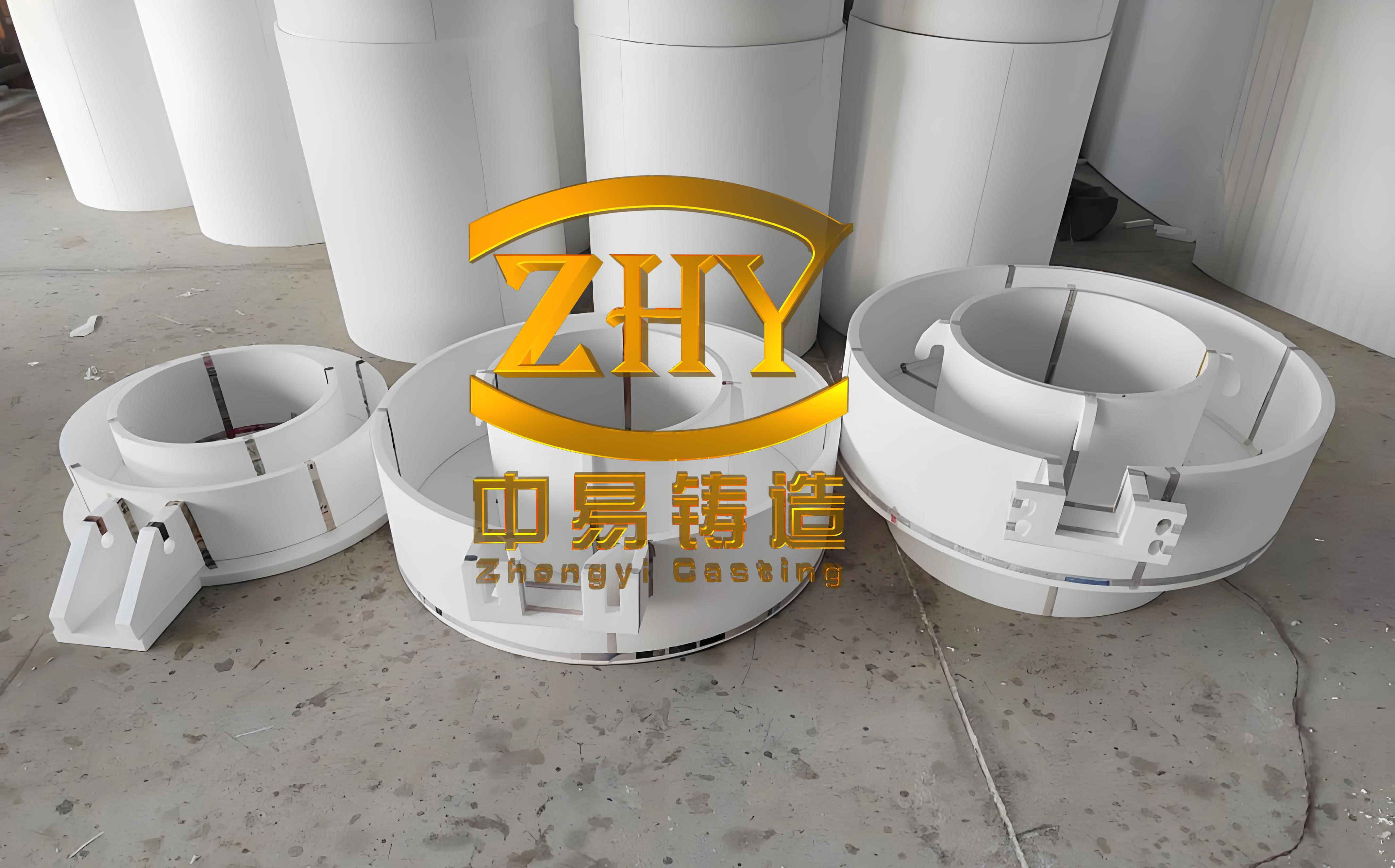
The fundamental advantage I consistently leverage is the ability to replicate intricate details. Because the pattern is formed in a mold (often itself produced via injection molding), features like thin walls, internal passages, undercuts, and fine surface textures can be imparted onto the wax and then faithfully transferred to the final metal casting. This eliminates the need for complex core assemblies or multiple machining operations required in other processes like sand casting. The resultant surface finish, typically in the range of 1.6 to 3.2 μm Ra, is another hallmark, often reducing post-cast machining to a simple cleanup operation.
1. The Process Flow: A Step-by-Step Deconstruction
My systematic approach to understanding or executing a precision investment casting project always follows a defined sequence. Each stage introduces specific challenges and control parameters.
1.1 Pattern & Assembly Production: The genesis of every casting is the pattern. I primarily work with injectable wax blends or soluble polymers. The key properties I monitor are:
- Shrinkage: Must be predictable and uniform to ensure final casting dimensions.
- Melting Point & Viscosity: Critical for clean, complete removal without damaging the ceramic shell.
- Ash Content: Must be minimal to avoid ceramic shell contamination.
Multiple wax patterns are attached to a central wax “sprue” or “tree” to form an assembly, enabling the casting of multiple parts in a single mold pour. The gating system design on this tree is a critical exercise in fluid dynamics and solidification feeding, which I often simulate in advance.
1.2 Shell Building (The “Investment”): This is where the process earns its name. The wax assembly is repeatedly dipped into a ceramic slurry (a colloidal silica or ethyl silicate binder with fine refractory flour like zircon, fused silica, or alumina) and then stuccoed with coarse refractory sand. Each layer is dried thoroughly before the next is applied. The shell thickness, typically 6-10 mm, is built up over 6-9 such cycles. The properties of the ceramic shell are paramount:
| Shell Property | Influence on Casting | Control Parameters |
|---|---|---|
| Green Strength | Resists damage during handling before firing. | Binder chemistry, drying time/temp. |
| Fired Strength | Contains metallostatic pressure during pour. | Firing temperature & time. |
| Permeability | Allows air/gas escape; critical for filling thin sections. | Stucco particle size distribution, layer count. |
| Thermal Shock Resistance | Prevents shell cracking when contacted by molten metal. | Refractory type, coefficient of thermal expansion (CTE) matching. |
| Chemical Inertness | Prevents metal-shell reaction and surface defects. | Refractory purity, binder type. |
1.3 Dewaxing & Shell Firing: The invested shell must have the wax pattern removed. My preferred modern method is autoclave dewaxing, where high-pressure steam rapidly heats the shell, melting and flushing out the majority of the wax. The shell is then fired in a furnace at temperatures between 870°C and 1095°C (1600°F and 2000°F) to achieve three goals: burn out any residual pattern material, sinter the ceramic particles for strength, and preheat the mold to control metal cooling rates.
1.4 Melting & Pouring: The alloy is melted, often in vacuum or under a protective atmosphere (especially for reactive alloys like titanium or superalloys), to minimize gas pickup and oxidation. The preheated ceramic mold is filled, either by gravity, pressure, or centrifugal force. The thermal interaction here is complex. The heat transfer from the molten metal to the ceramic shell governs the solidification structure. A key formula I consider is the fundamental heat flux, $q$, at the metal-shell interface:
$$ q = h \cdot (T_m – T_s) $$
where $h$ is the interfacial heat transfer coefficient, $T_m$ is the metal temperature, and $T_s$ is the shell inner surface temperature. This coefficient $h$ is highly dynamic, depending on air gap formation due to metal shrinkage away from the shell.
1.5 Knock-out, Cut-off, & Finishing: After solidification and cooling, the ceramic shell is mechanically broken away. The individual castings are cut from the sprue tree. Subsequent processes like heat treatment (solutionizing and aging for precipitation-hardened alloys), shot peening, HIPping (Hot Isostatic Pressing to close internal porosity), and final machining to critical dimensions complete the component.
2. Material Science: Alloys, Ceramics, and Interactions
The versatility of precision investment casting is most evident in the vast range of alloys it can process. In my work, I categorize them broadly:
| Alloy Family | Common Examples | Key Applications in Precision Investment Casting | Special Process Considerations |
|---|---|---|---|
| Superalloys (Ni/Co-based) | Inconel 718, Rene 108, Mar-M247 | Gas turbine blades, vanes, combustor parts. | Vacuum melting/pouring, directional/single crystal solidification, complex core technology for internal cooling channels. |
| Titanium Alloys | Ti-6Al-4V, TiAl intermetallics | Aerospace structural components, biomedical implants (knees, hips). | Extreme reactivity necessitates vacuum melting and use of inert/oxide facecoats (e.g., yttria). |
| Stainless Steels | 316L, 17-4PH, 440C | Medical instruments, marine fittings, food processing parts. | Atmosphere control to prevent chromium oxidation; heat treatment for martensitic grades. |
| Aluminum Alloys | A356, A357 | Aerospace brackets, automotive components, electronic housings. | Low pouring temperature simplifies shell requirements; often used for high-integrity structural parts. |
| Cobalt Alloys | CoCrMo (ASTM F75) | Dental implants, orthopedic replacements. | Biocompatibility is critical; requires excellent surface finish and cleanliness. |
The choice of ceramic system is tailored to the alloy. For superalloys, zircon-based shells are standard due to their high refractoriness and chemical stability. For reactive titanium, expensive but inert yttria or calcia-stabilized zirconia facecoats are essential. The thermal expansion mismatch between metal and ceramic, $\Delta \alpha = \alpha_m – \alpha_c$, is a critical design factor. Excessive mismatch can cause hot tearing in the metal or cracking of the shell. The stress, $\sigma$, induced can be approximated for elastic conditions by:
$$ \sigma = E \cdot \Delta \alpha \cdot \Delta T $$
where $E$ is the effective modulus of the constrained material (often the metal skin) and $\Delta T$ is the temperature range over which the constraint is active.
3. Process Modeling & Simulation: The Digital Twin
A transformative aspect of modern precision investment casting is the pervasive use of computational simulation. I employ these tools to predict and optimize outcomes, reducing costly trial-and-error. The simulation domains include:
3.1 Filling & Solidification: Solving the Navier-Stokes equations for fluid flow coupled with energy equation for heat transfer. The governing equations for an incompressible flow with phase change are simplified as:
Continuity: $$ \nabla \cdot \vec{v} = 0 $$
Momentum (Navier-Stokes): $$ \rho \left( \frac{\partial \vec{v}}{\partial t} + \vec{v} \cdot \nabla \vec{v} \right) = -\nabla p + \mu \nabla^2 \vec{v} + \rho \vec{g} + \vec{S}_{mushy} $$
Energy: $$ \rho C_p \left( \frac{\partial T}{\partial t} + \vec{v} \cdot \nabla T \right) = \nabla \cdot (k \nabla T) – \rho L \frac{\partial f_s}{\partial t} $$
Here, $\vec{v}$ is velocity, $p$ pressure, $\rho$ density, $\mu$ viscosity, $g$ gravity, $C_p$ specific heat, $k$ thermal conductivity, $L$ latent heat, and $f_s$ solid fraction. The source term $\vec{S}_{mushy}$ represents the damping of flow in the mushy (semi-solid) zone, often modeled using the Carman-Kozeny relation. These simulations predict mist runs, cold shuts, porosity due to shrinkage, and hot spots.
3.2 Stress & Distortion Analysis: After predicting the thermal history $T(x,y,z,t)$, a thermo-mechanical simulation calculates residual stresses and final part distortion. The constitutive model for the cooling metal must account for elastic, plastic, and creep deformation. The total strain increment, $d\epsilon_{total}$, is decomposed:
$$ d\epsilon_{total} = d\epsilon_{el} + d\epsilon_{pl} + d\epsilon_{th} + d\epsilon_{cr} $$
where $d\epsilon_{el}$ is elastic, $d\epsilon_{pl}$ is plastic, $d\epsilon_{th} = \alpha \cdot dT$ is thermal strain, and $d\epsilon_{cr}$ is creep strain. These simulations guide the design of fixtures for heat treatment and predict final dimensional compliance.
3.3 Microstructure Prediction: Advanced models like Cellular Automaton (CA) or Phase Field are coupled with thermal simulations to predict grain size, dendrite arm spacing (SDAS), and phase distribution. For example, secondary dendrite arm spacing, $\lambda_2$, is crucial for mechanical properties and is empirically related to local solidification time, $t_f$:
$$ \lambda_2 = A \cdot (t_f)^n $$
where $A$ and $n$ are alloy-dependent constants. A finer $\lambda_2$ (shorter $t_f$) generally correlates with higher strength and ductility.
4. Defects & Quality Control: A Persistent Focus
Despite its capabilities, precision investment casting is susceptible to specific defects. My quality philosophy is one of prevention through process control. Key defects and their mitigation strategies include:
| Defect | Root Cause | Preventive/Mitigation Actions |
|---|---|---|
| Shrinkage Porosity | Inadequate feeding during solidification; improper gating/risering. | Optimize feeder size & placement using simulation; use chills to direct solidification; adjust pouring temperature. |
| Gas Porosity (Pin-holes) | Entrapped air from turbulent filling; gas evolution from shell or alloy. | Design gating for laminar fill; ensure proper shell permeability & baking; use degassed metal; vacuum assist. |
| Inclusions (Ceramic/Slag) | Shell spalling, slurry contamination, oxide films. | Control shell strength & handling; filter metal during pouring; use clean charge materials. |
| Mold Cracking/Metal Flash | Thermal shock during pouring; low shell strength. | Control mold preheat temperature; optimize shell composition & firing cycle. |
| Wax Pattern Distortion | Insufficient cooling in pattern die; improper handling/storage. | Optimize injection parameters (temp, pressure, time); use temperature-controlled storage. |
| Surface Scale/Reaction Layer | Chemical interaction between metal and shell (esp. for Ti alloys). | Use inert facecoat materials (Yttria); strictly control pouring atmosphere and temperature. |
Non-destructive testing (NDT) is integral. I rely on X-ray radiography to detect internal porosity and inclusions, fluorescent penetrant inspection (FPI) for surface cracks, and coordinate measuring machines (CMM) for dimensional verification. For critical aerospace components, computed tomography (CT) scanning provides a complete 3D volumetric analysis.
5. Advanced Frontiers & Future Trajectories
The evolution of precision investment casting continues. From my perspective, several frontiers are particularly compelling:
5.1 Additive Manufacturing (AM) Integration: This is a paradigm shift. AM, specifically Stereolithography (SLA) or Binder Jetting, is used to produce direct ceramic molds (DCP – Direct Ceramic Printing) or intricate sand molds for cores. More profoundly, AM is used to fabricate the sacrificial patterns themselves. This eliminates the need for expensive hard tooling (dies) for wax injection, making it economical for very low-volume production, rapid prototyping, and geometries previously impossible to mold. The formula for economic viability shifts from tooling amortization to digital file preparation and build time.
5.2 Directed Energy Deposition (DED) Hybridization: I see potential in combining a precision investment cast near-net-shape with localized DED (e.g., laser cladding) to add features, repair defects, or apply wear-resistant coatings, creating a hybrid manufacturing solution.
5.3 Data Analytics & AI-driven Process Control: The future lies in connecting sensor data from every stage—pattern injection parameters, slurry viscosity, drying chamber humidity, furnace thermal profiles, pour data—into a central database. Machine learning algorithms can then identify subtle correlations between process variables and final part quality metrics (e.g., tensile strength, defect rate), enabling predictive quality control and real-time process optimization. This moves the practice from a craft-based expertise to a digitally quantified science.
5.4 Sustainability Initiatives: The environmental footprint is under scrutiny. My focus areas include developing binder systems for ceramic shells that are more environmentally benign, implementing closed-loop systems for water and slurry recovery, and recycling spent ceramic shell material into other industrial applications. The life-cycle analysis (LCA) of a precision investment cast component often shows advantage over subtractive machining from billet due to significant material savings, but energy use in melting and shell production remains a key area for improvement.
6. Concluding Synthesis
In my comprehensive view, precision investment casting stands as a uniquely capable manufacturing process, bridging dimensions from micrometers in surface detail to meters in part size (for large industrial castings), and handling alloys from aluminum to refractory metals. Its success is predicated on a deep, multidisciplinary understanding of materials behavior, fluid dynamics, heat transfer, and solidification mechanics. The relentless integration of simulation and digital technologies is transforming it from an artisanal craft into a predictable, engineering-driven discipline. While challenges in defect control, cost, and production speed persist, ongoing innovations in additive manufacturing, advanced ceramics, and data science are expanding its boundaries. For anyone involved in creating complex, high-performance metal components, a mastery of the principles and nuances of precision investment casting is not just an asset; it is an essential pillar of modern manufacturing capability. The process’s enduring relevance is assured by its fundamental ability to turn intricate design intent into robust metallic reality, a capability that remains at the heart of advanced engineering across aerospace, energy, medical, and industrial sectors.